CRISPR-cas-mediated targeted genome editing in human cells
The clustered regularly interspaced short palindromic repeats (CRISPR) and CRISPR-associated (Cas) systems have evolved as an adaptive surveillance and defense mechanism in bacteria and archaea that uses short RNAs to direct degradation of foreign genetic elements. Here,we present our protocol for utilizing the S. pyogenes type II bacterial CRISPR system to achieve sequence-specific genome alterations in human cells. In principle,any genomic sequence of the form N(19)NGG can be targeted with the generation of custom guide RNA (gRNA) which functions to direct the Cas9 protein to genomic targets and induce DNA cleavage. Here,we describe our methods for designing and generating gRNA expression constructs either singly or in a multiplexed manner,as well as optimized protocols for the delivery of Cas9-gRNA components into human cells. Genomic alterations at the target site are then introduced either through nonhomologous end joining (NHEJ) or through homologous recombination (HR) in the presence of an appropriate donor sequence. This RNA-guided editing tool offers greater ease of customization and synthesis in comparison to existing sequence-specific endonucleases and promises to become a highly versatile and multiplexable human genome engineering platform.
View Publication
产品类型:
产品号#:
05850
05857
05870
05875
85850
85857
85870
85875
产品名:
mTeSR™1
mTeSR™1
Yoshida T et al. (APR 2006)
Nature immunology 7 4 382--91
Early hematopoietic lineage restrictions directed by Ikaros.
Ikaros is expressed in early hematopoietic progenitors and is required for lymphoid differentiation. In the absence of Ikaros,there is a lack of markers defining fate restriction along lympho-myeloid pathways,but it is unclear whether formation of specific progenitors or expression of their markers is affected. Here we use a reporter based on Ikaros regulatory elements to separate early progenitors in wild-type and Ikaros-null mice. We found previously undetected Ikaros-null lympho-myeloid progenitors lacking the receptor tyrosine kinase Flt3 that were capable of myeloid but not lymphoid differentiation. In contrast,lack of Ikaros in the common myeloid progenitor resulted in increased formation of erythro-megakaryocytes at the expense of myeloid progenitors. Using this approach,we identify previously unknown pivotal functions for Ikaros in distinct fate 'decisions' in the early hematopoietic hierarchy.
View Publication
产品类型:
产品号#:
03334
产品名:
MethoCult™ M3334
Agosti V et al. (MAR 2004)
The Journal of experimental medicine 199 6 867--78
Critical role for Kit-mediated Src kinase but not PI 3-kinase signaling in pro T and pro B cell development.
The Kit receptor functions in hematopoiesis,lymphocyte development,gastrointestinal tract motility,melanogenesis,and gametogenesis. To investigate the roles of different Kit signaling pathways in vivo,we have generated knock-in mice in which docking sites for PI 3-kinase (KitY719) or Src kinase (KitY567) have been mutated. Whereas steady-state hematopoiesis is normal in KitY719F/Y719F and KitY567F/Y567F mice,lymphopoiesis is affected differentially. The KitY567F mutation,but not the KitY719F mutation,blocks pro T cell and pro B cell development in an age-dependent manner. Thus,the Src family kinase,but not the PI 3-kinase docking site in Kit,mediates a critical signal for lymphocyte development. In agreement with these results,treatment of normal mice with the Kit tyrosine kinase inhibitor imatinib (Gleevec) leads to deficits in pro T and pro B cell development,similar to those seen in KitY567F/Y567F and KitW/W mice. The two mutations do not affect embryonic gametogenesis but the KitY719F mutation blocks spermatogenesis at the spermatogonial stages and in contrast the KitY567F mutation does not affect this process. Therefore,Kit-mediated PI 3-kinase signaling and Src kinase family signaling is highly specific for different cellular contexts in vivo.
View Publication
产品类型:
产品号#:
09600
09650
产品名:
StemSpan™ SFEM
StemSpan™ SFEM
Shetty DK and Inamdar MS (MAR 2016)
Stem Cell Research 16 2 207--209
Generation of a heterozygous knockout human embryonic stem cell line for the OCIAD1 locus using CRISPR/CAS9 mediated targeting: BJNhem20-OCIAD1-CRISPR-20.
Ovarian carcinoma immuno-reactive antigen domain containing 1(OCIAD1) single copy was knocked out generating an OCIAD1 heterozygous knockout human embryonic stem line named BJNhem20-OCIAD1-CRISPR-20. The line was generated using CRISPR-Cas9D10A double nickase knockout strategy (Mali et al.,2013).
View Publication
产品类型:
产品号#:
05850
05857
05870
05875
85850
85857
85870
85875
产品名:
mTeSR™1
mTeSR™1
Carella C et al. (FEB 2006)
Blood 107 3 1124--32
The ETS factor TEL2 is a hematopoietic oncoprotein.
TEL2/ETV7 is highly homologous to the ETS transcription factor TEL/ETV6,a frequent target of chromosome translocation in human leukemia. Although both proteins are transcriptional inhibitors binding similar DNA recognition sequences,they have opposite biologic effects: TEL inhibits proliferation while TEL2 promotes it. In addition,forced expression of TEL2 but not TEL blocks vitamin D3-induced differentiation of U937 and HL60 myeloid cells. TEL2 is expressed in the hematopoietic system,and its expression is up-regulated in bone marrow samples of some patients with leukemia,suggesting a role in oncogenesis. Recently we also showed that TEL2 cooperates with Myc in B lymphomagenesis in mice. Here we show that forced expression of TEL2 alone in mouse bone marrow causes a myeloproliferative disease with a long latency period but with high penetrance. This suggested that secondary mutations are necessary for disease development. Treating mice receiving transplants with TEL2-expressing bone marrow with the chemical carcinogen N-ethyl-N-nitrosourea (ENU) resulted in significantly accelerated disease onset. Although the mice developed a GFP-positive myeloid disease with 30% of the mice showing elevated white blood counts,they all died of T-cell lymphoma,which was GFP negative. Together our data identify TEL2 as a bona fide oncogene,but leukemic transformation is dependent on secondary mutations.
View Publication
产品类型:
产品号#:
03434
03444
05350
产品名:
MethoCult™ GF M3434
MethoCult™ GF M3434
Sriram G et al. (DEC 2015)
Stem cell research & therapy 6 1 261
Efficient differentiation of human embryonic stem cells to arterial and venous endothelial cells under feeder- and serum-free conditions.
BACKGROUND Heterogeneity of endothelial cells (ECs) is a hallmark of the vascular system which may impact the development and management of vascular disorders. Despite the tremendous progress in differentiation of human embryonic stem cells (hESCs) towards endothelial lineage,differentiation into arterial and venous endothelial phenotypes remains elusive. Additionally,current differentiation strategies are hampered by inefficiency,lack of reproducibility,and use of animal-derived products. METHODS To direct the differentiation of hESCs to endothelial subtypes,H1- and H9-hESCs were seeded on human plasma fibronectin and differentiated under chemically defined conditions by sequential modulation of glycogen synthase kinase-3 (GSK-3),basic fibroblast growth factor (bFGF),bone morphogenetic protein 4 (BMP4) and vascular endothelial growth factor (VEGF) signaling pathways for 5 days. Following the initial differentiation,the endothelial progenitor cells (CD34(+)CD31(+) cells) were sorted and terminally differentiated under serum-free conditions to arterial and venous ECs. The transcriptome and secretome profiles of the two distinct populations of hESC-derived arterial and venous ECs were characterized. Furthermore,the safety and functionality of these cells upon in vivo transplantation were characterized. RESULTS Sequential modulation of hESCs with GSK-3 inhibitor,bFGF,BMP4 and VEGF resulted in stages reminiscent of primitive streak,early mesoderm/lateral plate mesoderm,and endothelial progenitors under feeder- and serum-free conditions. Furthermore,these endothelial progenitors demonstrated differentiation potential to almost pure populations of arterial and venous endothelial phenotypes under serum-free conditions. Specifically,the endothelial progenitors differentiated to venous ECs in the absence of VEGF,and to arterial phenotype under low concentrations of VEGF. Additionally,these hESC-derived arterial and venous ECs showed distinct molecular and functional profiles in vitro. Furthermore,these hESC-derived arterial and venous ECs were nontumorigenic and were functional in terms of forming perfused microvascular channels upon subcutaneous implantation in the mouse. CONCLUSIONS We report a simple,rapid,and efficient protocol for directed differentiation of hESCs into endothelial progenitor cells capable of differentiation to arterial and venous ECs under feeder-free and serum-free conditions. This could offer a human platform to study arterial-venous specification for various applications related to drug discovery,disease modeling and regenerative medicine in the future.
View Publication
Mansouri M et al. ( 2016)
Nature Communications 7 May 11529
Highly efficient baculovirus-mediated multigene delivery in primary cells
Multigene delivery and subsequent cellular expression is emerging as a key technology required in diverse research fields including,synthetic and structural biology,cellular reprogramming and functional pharmaceutical screening. Current viral delivery systems such as retro- and adenoviruses suffer from limited DNA cargo capacity,thus impeding unrestricted multigene expression. We developed MultiPrime,a modular,non-cytotoxic,non-integrating,baculovirus-based vector system expediting highly efficient transient multigene expression from a variety of promoters. MultiPrime viruses efficiently transduce a wide range of cell types,including non-dividing primary neurons and induced-pluripotent stem cells (iPS). We show that MultiPrime can be used for reprogramming,and for genome editing and engineering by CRISPR/Cas9. Moreover,we implemented dual-host-specific cassettes enabling multiprotein expression in insect and mammalian cells using a single reagent. Our experiments establish MultiPrime as a powerful and highly efficient tool,to deliver multiple genes for a wide range of applications in primary and established mammalian cells.
View Publication
产品类型:
产品号#:
05850
05857
05870
05875
85850
85857
85870
85875
产品名:
mTeSR™1
mTeSR™1
Kharas MG et al. (JAN 2007)
Blood 109 2 747--55
KLF4 suppresses transformation of pre-B cells by ABL oncogenes.
Genes that are strongly repressed after B-cell activation are candidates for being inactivated,mutated,or repressed in B-cell malignancies. Krüppel-like factor 4 (Klf4),a gene down-regulated in activated murine B cells,is expressed at low levels in several types of human B-cell lineage lymphomas and leukemias. The human KLF4 gene has been identified as a tumor suppressor gene in colon and gastric cancer; in concordance with this,overexpression of KLF4 can suppress proliferation in several epithelial cell types. Here we investigate the effects of KLF4 on pro/pre-B-cell transformation by v-Abl and BCR-ABL,oncogenes that cause leukemia in mice and humans. We show that overexpression of KLF4 induces arrest and apoptosis in the G1 phase of the cell cycle. KLF4-mediated death,but not cell-cycle arrest,can be rescued by Bcl-XL overexpression. Transformed pro/pre-B cells expressing KLF4 display increased expression of p21CIP and decreased expression of c-Myc and cyclin D2. Tetracycline-inducible expression of KLF4 in B-cell progenitors of transgenic mice blocks transformation by BCR-ABL and depletes leukemic pre-B cells in vivo. Collectively,our work identifies KLF4 as a putative tumor suppressor in B-cell malignancies.
View Publication
产品类型:
产品号#:
03630
产品名:
MethoCult™ M3630
Huang J et al. ( 2016)
Purinergic Signalling 1--14
Coupling switch of P2Y-IP3 receptors mediates differential Ca2+ signaling in human embryonic stem cells and derived cardiovascular progenitor cells
Purinergic signaling mediated by P2 receptors (P2Rs) plays important roles in embryonic and stem cell development. However,how it mediates Ca2+ signals in human embryonic stem cells (hESCs) and derived cardiovascular progenitor cells (CVPCs) remains unclear. Here,we aimed to determine the role of P2Rs in mediating Ca2+ mobilizations of these cells. hESCs were induced to differentiate into CVPCs by our recently established methods. Gene expression of P2Rs and inositol 1,4,5-trisphosphate receptors (IP3Rs) was analyzed by quantitative/RT-PCR. IP3R3 knockdown (KD) or IP3R2 knockout (KO) hESCs were established by shRNA- or TALEN-mediated gene manipulations,respectively. Confocal imaging revealed that Ca2+ responses in CVPCs to ATP and UTP were more sensitive and stronger than those in hESCs. Consistently,the gene expression levels of most P2YRs except P2Y1 were increased in CVPCs. Suramin or PPADS blocked ATP-induced Ca2+ transients in hESCs but only partially inhibited those in CVPCs. Moreover,the P2Y1 receptor-specific antagonist MRS2279 abolished most ATP-induced Ca2+ signals in hESCs but not in CVPCs. P2Y1 receptor-specific agonist MRS2365 induced Ca2+ transients only in hESCs but not in CVPCs. Furthermore,IP3R2KO but not IP3R3KD decreased the proportion of hESCs responding to MRS2365. In contrast,both IP3R2 and IP3R3 contributed to UTP-induced Ca2+ responses while ATP-induced Ca2+ responses were more dependent on IP3R2 in the CVPCs. In conclusion,a predominant role of P2Y1 receptors in hESCs and a transition of P2Y-IP3R coupling in derived CVPCs are responsible for the differential Ca2+ mobilization between these cells.
View Publication


 EasySep™小鼠TIL(CD45)正选试剂盒





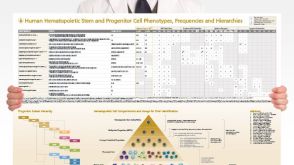 挂图Human Hematopoietic Stem and Progenitor Cell Phenotyping Overview of subset surface markers, frequencies and assays for analysis

 沪公网安备31010102008431号