Shao Y et al. (APR 2017)
Nature materials 16 4 419--425
Self-organized amniogenesis by human pluripotent stem cells in a biomimetic implantation-like niche.
Amniogenesis-the development of amnion-is a critical developmental milestone for early human embryogenesis and successful pregnancy. However,human amniogenesis is poorly understood due to limited accessibility to peri-implantation embryos and a lack of in vitro models. Here we report an efficient biomaterial system to generate human amnion-like tissue in vitro through self-organized development of human pluripotent stem cells (hPSCs) in a bioengineered niche mimicking the in vivo implantation environment. We show that biophysical niche factors act as a switch to toggle hPSC self-renewal versus amniogenesis under self-renewal-permissive biochemical conditions. We identify a unique molecular signature of hPSC-derived amnion-like cells and show that endogenously activated BMP-SMAD signalling is required for the amnion-like tissue development by hPSCs. This study unveils the self-organizing and mechanosensitive nature of human amniogenesis and establishes the first hPSC-based model for investigating peri-implantation human amnion development,thereby helping advance human embryology and reproductive medicine.
View Publication
产品类型:
产品号#:
05850
05857
05870
05875
85850
85857
85870
85875
产品名:
mTeSR™1
mTeSR™1
Sriram G et al. (DEC 2015)
Stem cell research & therapy 6 1 261
Efficient differentiation of human embryonic stem cells to arterial and venous endothelial cells under feeder- and serum-free conditions.
BACKGROUND Heterogeneity of endothelial cells (ECs) is a hallmark of the vascular system which may impact the development and management of vascular disorders. Despite the tremendous progress in differentiation of human embryonic stem cells (hESCs) towards endothelial lineage,differentiation into arterial and venous endothelial phenotypes remains elusive. Additionally,current differentiation strategies are hampered by inefficiency,lack of reproducibility,and use of animal-derived products. METHODS To direct the differentiation of hESCs to endothelial subtypes,H1- and H9-hESCs were seeded on human plasma fibronectin and differentiated under chemically defined conditions by sequential modulation of glycogen synthase kinase-3 (GSK-3),basic fibroblast growth factor (bFGF),bone morphogenetic protein 4 (BMP4) and vascular endothelial growth factor (VEGF) signaling pathways for 5 days. Following the initial differentiation,the endothelial progenitor cells (CD34(+)CD31(+) cells) were sorted and terminally differentiated under serum-free conditions to arterial and venous ECs. The transcriptome and secretome profiles of the two distinct populations of hESC-derived arterial and venous ECs were characterized. Furthermore,the safety and functionality of these cells upon in vivo transplantation were characterized. RESULTS Sequential modulation of hESCs with GSK-3 inhibitor,bFGF,BMP4 and VEGF resulted in stages reminiscent of primitive streak,early mesoderm/lateral plate mesoderm,and endothelial progenitors under feeder- and serum-free conditions. Furthermore,these endothelial progenitors demonstrated differentiation potential to almost pure populations of arterial and venous endothelial phenotypes under serum-free conditions. Specifically,the endothelial progenitors differentiated to venous ECs in the absence of VEGF,and to arterial phenotype under low concentrations of VEGF. Additionally,these hESC-derived arterial and venous ECs showed distinct molecular and functional profiles in vitro. Furthermore,these hESC-derived arterial and venous ECs were nontumorigenic and were functional in terms of forming perfused microvascular channels upon subcutaneous implantation in the mouse. CONCLUSIONS We report a simple,rapid,and efficient protocol for directed differentiation of hESCs into endothelial progenitor cells capable of differentiation to arterial and venous ECs under feeder-free and serum-free conditions. This could offer a human platform to study arterial-venous specification for various applications related to drug discovery,disease modeling and regenerative medicine in the future.
View Publication
Li X et al. (MAR 2009)
Human reproduction (Oxford,England) 24 3 580--9
ROCK inhibitor improves survival of cryopreserved serum/feeder-free single human embryonic stem cells.
BACKGROUND Efficient slow freezing protocols within serum-free and feeder-free culture systems are crucial for the clinical application of human embryonic stem (hES) cells. Frequently,however,hES cells must be cryopreserved as clumps when using conventional slow freezing protocols,leading to lower survival rates during freeze-thaw and limiting their recovery and growth efficiency after thawing,as well as limiting downstream applications that require single cell suspensions. We describe a novel method to increase freeze-thaw survival and proliferation rate of single hES cells in serum-free and feeder-free culture conditions. METHODS hES cells maintained on Matrigel-coated dishes were dissociated into single cells with Accutase and slow freezing. After thawing at 37 degrees C,cells were cultured in mTeSR medium supplemented with 10 microM of Rho-associated kinase inhibitor Y-27632 for 1 day. RESULTS The use of Y-27632 and Accutase significantly increases the survival of single hES cells after thawing compared with a control group (P textless 0.01). Furthermore,by treatment of hES cell aggregates with EGTA to disrupt cell-cell interaction,we show that Y-27632 treatment does not directly affect hES cell apoptosis. Even in the presence of Y-27632,hES cells deficient in cell-cell interaction undergo apoptosis. Y-27632-treated freeze-thawed hES cells retain typical morphology,stable karyotype,expression of pluripotency markers and the potential to differentiate into derivatives of all three germ layers after long-term culture. CONCLUSIONS The method described here allows for cryopreservation of single hES cells in serum-free and feeder-free conditions and therefore we believe this method will be ideal for current and future hES cell applications that are targeted towards a therapeutic end-point.
View Publication
产品类型:
产品号#:
05850
05857
05870
05875
72302
72304
72307
72308
85850
85857
85870
85875
100-1044
产品名:
Y-27632(二盐酸盐)
Y-27632(二盐酸盐)
Y-27632(二盐酸盐)
Y-27632(二盐酸盐)
mTeSR™1
mTeSR™1
Y-27632(二盐酸盐)
Kearns Na et al. (JAN 2014)
Development (Cambridge,England) 141 1 219--223
Cas9 effector-mediated regulation of transcription and differentiation in human pluripotent stem cells.
The identification of the trans-acting factors and cis-regulatory modules that are involved in human pluripotent stem cell (hPSC) maintenance and differentiation is necessary to dissect the operating regulatory networks in these processes and thereby identify nodes where signal input will direct desired cell fate decisions in vitro or in vivo. To deconvolute these networks,we established a method to influence the differentiation state of hPSCs with a CRISPR-associated catalytically inactive dCas9 fused to an effector domain. In human embryonic stem cells,we find that the dCas9 effectors can exert positive or negative regulation on the expression of developmentally relevant genes,which can influence cell differentiation status when impinging on a key node in the regulatory network that governs the cell state. This system provides a platform for the interrogation of the underlying regulators governing specific differentiation decisions,which can then be employed to direct cellular differentiation down desired pathways.
View Publication
产品类型:
产品号#:
05850
05857
05870
05875
85850
85857
85870
85875
产品名:
mTeSR™1
mTeSR™1
Wang X et al. (APR 2014)
PLoS ONE 9 4 e93575
Precise gene modification mediated by TALEN and single-stranded oligodeoxynucleotides in human cells.
The development of human embryonic stem cells (ESCs) and induced pluripotent stem cells (iPSCs) facilitates in vitro studies of human disease mechanisms,speeds up the process of drug screening,and raises the feasibility of using cell replacement therapy in clinics. However,the study of genotype-phenotype relationships in ESCs or iPSCs is hampered by the low efficiency of site-specific gene editing. Transcription activator-like effector nucleases (TALENs) spurred interest due to the ease of assembly,high efficiency and faithful gene targeting. In this study,we optimized the TALEN design to maximize its genomic cutting efficiency. We showed that using optimized TALENs in conjunction with single-strand oligodeoxynucleotide (ssODN) allowed efficient gene editing in human cells. Gene mutations and gene deletions for up to 7.8 kb can be accomplished at high efficiencies. We established human tumor cell lines and H9 ESC lines with homozygous deletion of the microRNA-21 (miR-21) gene and miR-9-2 gene. These cell lines provide a robust platform to dissect the roles these genes play during cell differentiation and tumorigenesis. We also observed that the endogenous homologous chromosome can serve as a donor template for gene editing. Overall,our studies demonstrate the versatility of using ssODN and TALEN to establish genetically modified cells for research and therapeutic application.
View Publication
Formation of embryoid bodies from human pluripotent stem cells using AggreWell™ plates.
Many human embryonic stem (hES) and induced pluripotent stem (hiPS) cell differentiation protocols begin with the formation of three-dimensional aggregates of cells called embryoid bodies (EBs). Traditional EB formation methods result in a heterogeneous population of EB sizes and shapes,which then undergo heterogeneous differentiation efficiencies. AggreWell(TM)400 and AggreWell(TM)800 use the spin-EB method to force the aggregation of a defined number of cells,thereby controlling EB size and generating a population of uniform EBs. Moreover,the dense array of microwells on the bottom surface of AggreWell(TM)400 provide for the rapid and simple production of thousands of EBs at a time.
View Publication
Taniguchi K et al. (DEC 2015)
Stem cell reports 5 6 954--962
Lumen Formation Is an Intrinsic Property of Isolated Human Pluripotent Stem Cells.
We demonstrate that dissociated human pluripotent stem cells (PSCs) are intrinsically programmed to form lumens. PSCs form two-cell cysts with a shared apical domain within 20 hr of plating; these cysts collapse to form monolayers after 5 days. Expression of pluripotency markers is maintained throughout this time. In two-cell cysts,an apical domain,marked by EZRIN and atypical PKC$\$,is surrounded by apically targeted organelles (early endosomes and Golgi). Molecularly,actin polymerization,regulated by ARP2/3 and mammalian diaphanous-related formin 1 (MDIA),promotes lumen formation,whereas actin contraction,mediated by MYOSIN-II,inhibits this process. Finally,we show that lumenal shape can be manipulated in bioengineered micro-wells. Since lumen formation is an indispensable step in early mammalian development,this system can provide a powerful model for investigation of this process in a controlled environment. Overall,our data establish that lumenogenesis is a fundamental cell biological property of human PSCs.
View Publication
产品类型:
产品号#:
05850
05857
05870
05875
85850
85857
85870
85875
产品名:
mTeSR™1
mTeSR™1
Yu J et al. (JAN 2009)
PLoS ONE 4 9 e7040
nAChRs mediate human embryonic stem cell-derived endothelial cells: proliferation, apoptosis, and angiogenesis.
BACKGROUND: Many patients with ischemic heart disease have cardiovascular risk factors such as cigarette smoking. We tested the effect of nicotine (a key component of cigarette smoking) on the therapeutic effects of human embryonic stem cell-derived endothelial cells (hESC-ECs).backslashnbackslashnMETHODS AND RESULTS: To induce endothelial cell differentiation,undifferentiated hESCs (H9 line) underwent 4-day floating EB formation and 8-day outgrowth differentiation in EGM-2 media. After 12 days,CD31(+) cells (13.7+/-2.5%) were sorted by FACScan and maintained in EGM-2 media for further differentiation. After isolation,these hESC-ECs expressed endothelial specific markers such as vWF (96.3+/-1.4%),CD31 (97.2+/-2.5%),and VE-cadherin (93.7+/-2.8%),form vascular-like channels,and incorporated DiI-labeled acetylated low-density lipoprotein (DiI-Ac-LDL). Afterward,5x10(6) hESC-ECs treated for 24 hours with nicotine (10(-8) M) or PBS (as control) were injected into the hearts of mice undergoing LAD ligation followed by administration for two weeks of vehicle or nicotine (100 microg/ml) in the drinking water. Surprisingly,bioluminescence imaging (BLI) showed significant improvement in the survival of transplanted hESC-ECs in the nicotine treated group at 6 weeks. Postmortem analysis confirmed increased presence of small capillaries in the infarcted zones. Finally,in vitro mechanistic analysis suggests activation of the MAPK and Akt pathways following activation of nicotinic acetylcholine receptors (nAChRs).backslashnbackslashnCONCLUSIONS: This study shows for the first time that short-term systemic administrations of low dose nicotine can improve the survival of transplanted hESC-ECs,and enhance their angiogenic effects in vivo. Furthermore,activation of nAChRs has anti-apoptotic,angiogenic,and proliferative effects through MAPK and Akt signaling pathways.
View Publication
产品类型:
产品号#:
05850
05857
05870
05875
85850
85857
85870
85875
产品名:
mTeSR™1
mTeSR™1
Lee AS et al. (AUG 2009)
Cell Cycle 8 16 2608--2612
Effects of cell number on teratoma formation by human embryonic stem cells
Teratoma formation is a critical obstacle to safe clinical translation of human embryonic stem (ES) cell-based therapies in the future. As current methods of isolation are unable to yield 100% pure population of differentiated cells from a pluripotent donor source,potential development of these tumors is a significant concern. Here we used non-invasive reporter gene imaging to investigate the relationship between human ES cell number and teratoma formation in a xenogenic model of ES cell transplantation. Human ES cells (H9 line) were stably transduced with a double fusion (DF) reporter construct containing firefly luciferase and enhanced green fluorescent protein (Fluc- eGFP) driven by a human ubiquitin promoter. Immunodeficient mice received intramyocardial (n = 35) or skeletal muscle (n = 35) injection of 1 × 102,1 × 103,1 × 104,1 × 105 or 1 × 10⁶ DF positive ES cells suspended in saline for myocardium and Matrigel for skeletal muscle. Cell survival and proliferation were monitored via bioluminescence imaging (BLI) for an 8 week period following transplantation. Mice negative for Fluc signal after 8 weeks were followed out to day 365 to confirm tumor absence. Significantly,in this study,a minimum of 1 × 10⁵ ES cells in the myocardium and 1 × 10⁴ cells in the skeletal muscle was observed to be requisite for teratoma development,suggesting that human ES cell number may be a critical factor in teratoma formation. Engraftment and tumor occurrence were also observed to be highly dependent on ES cell number. We anticipate these results should yield useful insights to the safe and reliable application of human ES cell derivatives in the clinic. Keywords
View Publication


 EasySep™小鼠TIL(CD45)正选试剂盒





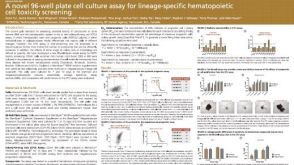 科学海报A Novel 96-well Plate Cell Culture Assay for Lineage-Specific Hematopoietic Cell Toxicity Screening

 沪公网安备31010102008431号