Pluripotent male germline stem cells from goat fetal testis and their survival in mouse testis.
Male germline stem cells (mGSCs) are stem cells present in male testis responsible for spermatogenesis during their whole life. Studies have shown that mGSCs can be derived in vitro and resemble embryonic stem cells (ESCs) properties both in the mouse and humans. However,little is know about these cells in domestic animals. Here we report the first successful establishment of goat GSCs derived from 2-5-month fetal testis,and developmental potential assay of these cells both in vitro and in vivo. These cells express pluripotent markers such as Oct4,Sox2,C-myc,and Tert when cultured as human ESCs conditions. Embryoid bodies (EBs) formed by goat mGSCs were induced with 2 × 10(-6) M retinoic acid (RA). Immunofluorescence analysis showed that some cells inside of the EBs were positive for meiosis marker-SCP3,STRA8,and germ cell marker-VASA,and haploid marker-FE-J1,PRM1,indicating their germ cell lineage differentiation. Some cells become elongated sperm-like cells after induction. Approximately 34.88% (30/86) embryos showed cleavage and four embryos were cultured on murine fibroblast feeder and formed small embryonic stem like colonies. However,most stalled at four-cell stage after intracytoplasmic sperm injection (ICSI) of these cells. Transplantation of DAPI labeled mGSCs into the seminiferous tubules of busulfan-treated mice,and showed that mGSCs can colonize,self-renew,and differentiate into germ cells. Thus,we have established a goat GSC cell line and these cells could be differentiated into sperm-like cells in vivo and sperms in vitro,providing a promising platform for generation of transgenic goat for production of specific humanized proteins.
View Publication
产品类型:
产品号#:
05850
05857
05870
05875
85850
85857
85870
85875
产品名:
mTeSR™1
mTeSR™1
Cox JL et al. (AUG 2011)
Journal of Cell Science 124 Pt 15 2654--65
Banf1 is required to maintain the self-renewal of both mouse and human embryonic stem cells.
Self-renewal is a complex biological process necessary for maintaining the pluripotency of embryonic stem cells (ESCs). Recent studies have used global proteomic techniques to identify proteins that associate with the master regulators Oct4,Nanog and Sox2 in ESCs or in ESCs during the early stages of differentiation. Through an unbiased proteomic screen,Banf1 was identified as a Sox2-associated protein. Banf1 has been shown to be essential for worm and fly development but,until now,its role in mammalian development and ESCs has not been explored. In this study,we examined the effect of knocking down Banf1 on ESCs. We demonstrate that the knockdown of Banf1 promotes the differentiation of mouse ESCs and decreases the survival of both mouse and human ESCs. For mouse ESCs,we demonstrate that knocking down Banf1 promotes their differentiation into cells that exhibit markers primarily associated with mesoderm and trophectoderm. Interestingly,knockdown of Banf1 disrupts the survival of human ESCs without significantly reducing the expression levels of the master regulators Sox2,Oct4 and Nanog or inducing the expression of markers of differentiation. Furthermore,we determined that the knockdown of Banf1 alters the cell cycle distribution of both human and mouse ESCs by causing an uncharacteristic increase in the proportion of cells in the G2-M phase of the cell cycle.
View Publication
Chen X et al. (SEP 2015)
Stem Cell Research 15 2 395--402
OP9-Lhx2 stromal cells facilitate derivation of hematopoietic progenitors both in vitro and in vivo
Generating engraftable hematopoietic stem cells (HSCs) from pluripotent stem cells (PSCs) is an ideal approach for obtaining induced HSCs for cell therapy. However,the path from PSCs to robustly induced HSCs (iHSCs) in vitro remains elusive. We hypothesize that the modification of hematopoietic niche cells by transcription factors facilitates the derivation of induced HSCs from PSCs. The Lhx2 transcription factor is expressed in fetal liver stromal cells but not in fetal blood cells. Knocking out Lhx2 leads to a fetal hematopoietic defect in a cell non-autonomous role. In this study,we demonstrate that the ectopic expression of Lhx2 in OP9 cells (OP9-Lhx2) accelerates the hematopoietic differentiation of PSCs. OP9-Lhx2 significantly increased the yields of hematopoietic progenitor cells via co-culture with PSCs in vitro. Interestingly,the co-injection of OP9-Lhx2 and PSCs into immune deficient mice also increased the proportion of hematopoietic progenitors via the formation of teratomas. The transplantation of phenotypic HSCs from OP9-Lhx2 teratomas but not from the OP9 control supported a transient repopulating capability. The upregulation of Apln gene by Lhx2 is correlated to the hematopoietic commitment property of OP9-Lhx2. Furthermore,the enforced expression of Apln in OP9 cells significantly increased the hematopoietic differentiation of PSCs. These results indicate that OP9-Lhx2 is a good cell line for regeneration of hematopoietic progenitors both in vitro and in vivo.
View Publication
产品类型:
产品号#:
05850
05857
05870
05875
85850
85857
85870
85875
产品名:
mTeSR™1
mTeSR™1
M. A. DeWitt et al. (OCT 2016)
Science translational medicine 8 360 360ra134
Selection-free genome editing of the sickle mutation in human adult hematopoietic stem/progenitor cells.
Genetic diseases of blood cells are prime candidates for treatment through ex vivo gene editing of CD34+ hematopoietic stem/progenitor cells (HSPCs),and a variety of technologies have been proposed to treat these disorders. Sickle cell disease (SCD) is a recessive genetic disorder caused by a single-nucleotide polymorphism in the $\beta$-globin gene (HBB). Sickle hemoglobin damages erythrocytes,causing vasoocclusion,severe pain,progressive organ damage,and premature death. We optimize design and delivery parameters of a ribonucleoprotein (RNP) complex comprising Cas9 protein and unmodified single guide RNA,together with a single-stranded DNA oligonucleotide donor (ssODN),to enable efficient replacement of the SCD mutation in human HSPCs. Corrected HSPCs from SCD patients produced less sickle hemoglobin RNA and protein and correspondingly increased wild-type hemoglobin when differentiated into erythroblasts. When engrafted into immunocompromised mice,ex vivo treated human HSPCs maintain SCD gene edits throughout 16 weeks at a level likely to have clinical benefit. These results demonstrate that an accessible approach combining Cas9 RNP with an ssODN can mediate efficient HSPC genome editing,enables investigator-led exploration of gene editing reagents in primary hematopoietic stem cells,and suggests a path toward the development of new gene editing treatments for SCD and other hematopoietic diseases.
View Publication
产品类型:
产品号#:
02697
02692
09600
09650
09605
09655
产品名:
StemSpan™ CC110
StemSpan™红系扩增添加物 (100X)
StemSpan™ SFEM
StemSpan™ SFEM
StemSpan™ SFEM II
StemSpan™ SFEM II
Johansson BM and Wiles MV (JAN 1995)
Molecular and cellular biology 15 1 141--51
Evidence for involvement of activin A and bone morphogenetic protein 4 in mammalian mesoderm and hematopoietic development.
Xenopus in vitro studies have implicated both transforming growth factor beta (TGF-beta) and fibroblast growth factor (FGF) families in mesoderm induction. Although members of both families are present during mouse mesoderm formation,there is little evidence for their functional role in mesoderm induction. We show that mouse embryonic stem cells,which resemble primitive ectoderm,can differentiate to mesoderm in vitro in a chemically defined medium (CDM) in the absence of fetal bovine serum. In CDM,this differentiation is responsive to TGF-beta family members in a concentration-dependent manner,with activin A mediating the formation of dorsoanterior-like mesoderm and bone morphogenetic protein 4 mediating the formation of ventral mesoderm,including hematopoietic precursors. These effects are not observed in CDM alone or when TGF-beta 1,-beta 2,or -beta 3,acid FGF,or basic FGF is added individually to CDM. In vivo,at day 6.5 of mouse development,activin beta A RNA is detectable in the decidua and bone morphogenetic protein 4 RNA is detectable in the egg cylinder. Together,our data strongly implicate the TGF-beta family in mammalian mesoderm development and hematopoietic cell formation.
View Publication
产品类型:
产品号#:
06902
06952
00321
00322
00323
00324
00325
产品名:
Dobo I et al. (AUG 1995)
Journal of hematotherapy 4 4 281--7
Collagen matrix: an attractive alternative to agar and methylcellulose for the culture of hematopoietic progenitors in autologous transplantation products.
Autografts using untreated or in vitro manipulated bone marrow and peripheral blood stem cells represent promising approaches to the treatment of malignant diseases. In this work,the collagen gel culture technique was compared with agar and methylcellulose for its capacity to permit the growth of human granulomonocytic (day 14 CFU-GM; collagen vs agar or MTC) or erythroblastic (day 7 CFU-E and day 14 BFU-E; collagen versus methylcellulose) colonies in autologous transplantation products. Our results show that the collagen culture system always gave as many or more colonies than the other techniques. It also allowed harvesting of gels onto glass slides and subsequent May-Grünwald-Giemsa,cytochemical or immunocytochemical staining. We suggest that the collagen assay represents an interesting alternative to the widely used agar or methylcellulose systems for the culture of hematopoietic progenitors because of the equal or higher number of colonies detected,the easy phenotypical identification of colonies in stained gels,and the ability to store high-quality documentation. This technique is particularly attractive for use in the quality control of autologous bone marrow transplantation procedures.
View Publication
产品类型:
产品号#:
04961
04965
04962
04915
04807
04809
04906
04913
04803
04804
04905
04850
04974
04902
04960
04900
04901
04963
04970
04971
产品名:
MegaCult™-C胶原和含细胞因子培养基
MegaCult™-C CFU-Mk染色试剂盒
MegaCult-C 10% BSA, 6mL
MegaCult-C Human Serum, 6mL
Alkaline Phosphatase Substrate Tabs, pk
Biotin/Conjugate Goat Anti-Mu lgG, 125uL
MegaCult-C Evans Blue Stain, 5mL
Primary Ab, Anti-HuAnti-GPIIb/IIIa 360uL
MegaCult-C Control Antibody, 100 µL
Avidin-Alk Phosphatase Conjugate, 200 uL
MegaCult™-C含脂质培养基
MegaCult™-C胶原和含脂质培养基
胶原蛋白溶液
MegaCult™-C胶原和无细胞因子培养基
MegaCult™-C无细胞因子培养基
MegaCult™-C含细胞因子培养基
双室载玻片套件
MegaCult™-C无细胞因子全套试剂盒
MegaCult™-C含细胞因子全套试剂盒
Hanna J et al. (MAY 2010)
Proceedings of the National Academy of Sciences of the United States of America 107 20 9222--7
Human embryonic stem cells with biological and epigenetic characteristics similar to those of mouse ESCs.
Human and mouse embryonic stem cells (ESCs) are derived from blastocyst-stage embryos but have very different biological properties,and molecular analyses suggest that the pluripotent state of human ESCs isolated so far corresponds to that of mouse-derived epiblast stem cells (EpiSCs). Here we rewire the identity of conventional human ESCs into a more immature state that extensively shares defining features with pluripotent mouse ESCs. This was achieved by ectopic induction of Oct4,Klf4,and Klf2 factors combined with LIF and inhibitors of glycogen synthase kinase 3beta (GSK3beta) and mitogen-activated protein kinase (ERK1/2) pathway. Forskolin,a protein kinase A pathway agonist which can induce Klf4 and Klf2 expression,transiently substitutes for the requirement for ectopic transgene expression. In contrast to conventional human ESCs,these epigenetically converted cells have growth properties,an X-chromosome activation state (XaXa),a gene expression profile,and a signaling pathway dependence that are highly similar to those of mouse ESCs. Finally,the same growth conditions allow the derivation of human induced pluripotent stem (iPS) cells with similar properties as mouse iPS cells. The generation of validated naïve" human ESCs will allow the molecular dissection of a previously undefined pluripotent state in humans and may open up new opportunities for patient-specific�
View Publication
产品类型:
产品号#:
05850
05857
05870
05875
72112
72114
72162
72164
85850
85857
85870
85875
100-0249
产品名:
Forskolin
Forskolin
PD173074
mTeSR™1
mTeSR™1
Forskolin
Orlandi A et al. (APR 2008)
American journal of physiology. Heart and circulatory physiology 294 4 H1541--9
Functional properties of cells obtained from human cord blood CD34+ stem cells and mouse cardiac myocytes in coculture.
Prior in vitro studies suggested that different types of hematopoietic stem cells may differentiate into cardiomyocytes. The present work examined whether human CD34(+) cells from the human umbilical cord blood (hUCB),cocultured with neonatal mouse cardiomyocytes,acquire the functional properties of myocardial cells and express human cardiac genes. hUCB CD34(+) cells were cocultured onto cardiomyocytes following an infection with a lentivirus-encoding enhanced green fluorescent protein (EGFP). After 7 days,mononucleated EGFP(+) cells were tested for their electrophysiological features by patch clamp and for cytosolic [Ca(2+)] ([Ca(2+)](i)) homeostasis by [Ca(2+)](i) imaging of X-rhod1-loaded cells. Human Nkx2.5 and GATA-4 expression was examined in cocultured cell populations by real-time RT-PCR. EGFP(+) cells were connected to surrounding cells by gap junctions,acquired electrophysiological properties similar to those of cardiomyocytes,and showed action potential-associated [Ca(2+)](i) transients. These cells also exhibited spontaneous sarcoplasmic reticulum [Ca(2+)](i) oscillations and the associated membrane potential depolarization. However,RT-PCR of both cell populations showed no upregulation of human-specific cardiac genes. In conclusion,under our experimental conditions,hUCB CD34(+) cells cocultured with murine cardiomyocytes formed cells that exhibited excitation-contraction coupling features similar to those of cardiomyocytes. However,the expression of human-specific cardiac genes was undetectable by RT-PCR.
View Publication
产品类型:
产品号#:
09600
09650
产品名:
StemSpan™ SFEM
StemSpan™ SFEM
Poulin LF et al. (JUN 2010)
The Journal of experimental medicine 207 6 1261--71
Characterization of human DNGR-1+ BDCA3+ leukocytes as putative equivalents of mouse CD8alpha+ dendritic cells.
In mouse,a subset of dendritic cells (DCs) known as CD8alpha+ DCs has emerged as an important player in the regulation of T cell responses and a promising target in vaccination strategies. However,translation into clinical protocols has been hampered by the failure to identify CD8alpha+ DCs in humans. Here,we characterize a population of human DCs that expresses DNGR-1 (CLEC9A) and high levels of BDCA3 and resembles mouse CD8alpha+ DCs in phenotype and function. We describe the presence of such cells in the spleens of humans and humanized mice and report on a protocol to generate them in vitro. Like mouse CD8alpha+ DCs,human DNGR-1+ BDCA3hi DCs express Necl2,CD207,BATF3,IRF8,and TLR3,but not CD11b,IRF4,TLR7,or (unlike CD8alpha+ DCs) TLR9. DNGR-1+ BDCA3hi DCs respond to poly I:C and agonists of TLR8,but not of TLR7,and produce interleukin (IL)-12 when given innate and T cell-derived signals. Notably,DNGR-1+ BDCA3+ DCs from in vitro cultures efficiently internalize material from dead cells and can cross-present exogenous antigens to CD8+ T cells upon treatment with poly I:C. The characterization of human DNGR-1+ BDCA3hi DCs and the ability to grow them in vitro opens the door for exploiting this subset in immunotherapy.
View Publication
Huijskens MJAJ et al. (DEC 2014)
Journal of leukocyte biology 96 6 1165--75
Technical advance: ascorbic acid induces development of double-positive T cells from human hematopoietic stem cells in the absence of stromal cells.
The efficacy of donor HSCT is partly reduced as a result of slow post-transplantation immune recovery. In particular,T cell regeneration is generally delayed,resulting in high infection-related mortality in the first years post-transplantation. Adoptive transfer of in vitro-generated human T cell progenitors seems a promising approach to accelerate T cell recovery in immunocompromised patients. AA may enhance T cell proliferation and differentiation in a controlled,feeder-free environment containing Notch ligands and defined growth factors. Our experiments show a pivotal role for AA during human in vitro T cell development. The blocking of NOS diminished this effect,indicating a role for the citrulline/NO cycle. AA promotes the transition of proT1 to proT2 cells and of preT to DP T cells. Furthermore,the addition of AA to feeder cocultures resulted in development of DP and SP T cells,whereas without AA,a preT cell-stage arrest occurred. We conclude that neither DLL4-expressing feeder cells nor feeder cell conditioned media are required for generating DP T cells from CB and G-CSF-mobilized HSCs and that generation and proliferation of proT and DP T cells are greatly improved by AA. This technology could potentially be used to generate T cell progenitors for adoptive therapy.
View Publication


 EasySep™小鼠TIL(CD45)正选试剂盒





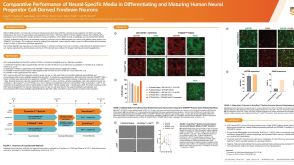 科学海报Comparative Performance of Neural-Specific Media in Differentiating and Maturing Human Neural Progenitor Cell-Derived Forebrain Neurons

 沪公网安备31010102008431号