Tondelli B et al. (MAR 2009)
The American journal of pathology 174 3 727--35
Fetal liver cells transplanted in utero rescue the osteopetrotic phenotype in the oc/oc mouse.
Autosomal recessive osteopetrosis (ARO) is a group of genetic disorders that involve defects that preclude the normal function of osteoclasts,which differentiate from hematopoietic precursors. In half of human cases,ARO is the result of mutations in the TCIRG1 gene,which codes for a subunit of the vacuolar proton pump that plays a fundamental role in the acidification of the cell-bone interface. Functional mutations of this pump severely impair the resorption of bone mineral. Although postnatal hematopoietic stem cell transplantation can partially rescue the hematological phenotype of ARO,other stigmata of the disease,such as secondary neurological and growth defects,are not reversed. For this reason,ARO is a paradigm for genetic diseases that would benefit from effective prenatal treatment. Using the oc/oc mutant mouse,a murine model whose osteopetrotic phenotype closely recapitulates human TCIRG1-dependent ARO,we report that in utero transplantation of adult bone marrow hematopoietic stem cells can correct the ARO phenotype in a limited number of mice. Here we report that in utero injection of allogeneic fetal liver cells,which include hematopoietic stem cells,into oc/oc mouse fetuses at 13.5 days post coitum produces a high level of engraftment,and the oc/oc phenotype is completely rescued in a high percentage of these mice. Therefore,oc/oc pathology appears to be particularly sensitive to this form of early treatment of the ARO genetic disorder.
View Publication
产品类型:
产品号#:
03434
03444
产品名:
MethoCult™ GF M3434
MethoCult™ GF M3434
Sengupta A et al. (JUN 2011)
Proceedings of the National Academy of Sciences of the United States of America 108 24 9957--62
Atypical protein kinase C (aPKCzeta and aPKClambda) is dispensable for mammalian hematopoietic stem cell activity and blood formation.
The stem-cell pool is considered to be maintained by a balance between symmetric and asymmetric division of stem cells. The cell polarity model proposes that the facultative use of symmetric and asymmetric cell division is orchestrated by a polarity complex consisting of partitioning-defective proteins Par3 and Par6,and atypical protein kinase C (aPKCζ and aPKCλ),which regulates planar symmetry of dividing stem cells with respect to the signaling microenvironment. However,the role of the polarity complex is unexplored in mammalian adult stem-cell functions. Here we report that,in contrast to accepted paradigms,polarization and activity of adult hematopoietic stem cell (HSC) do not depend on either aPKCζ or aPKCλ or both in vivo. Mice,having constitutive and hematopoietic-specific (Vav1-Cre) deletion of aPKCζ and aPKCλ,respectively,have normal hematopoiesis,including normal HSC self-renewal,engraftment,differentiation,and interaction with the bone marrow microenvironment. Furthermore,inducible complete deletion of aPKCλ (Mx1-Cre) in aPKCζ(-/-) HSC does not affect HSC polarization,self-renewal,engraftment,or lineage repopulation. In addition,aPKCζ- and aPKCλ-deficient HSCs elicited a normal pattern of hematopoietic recovery secondary to myeloablative stress. Taken together,the expression of aPKCζ,aPKCλ,or both are dispensable for primitive and adult HSC fate determination in steady-state and stress hematopoiesis,contrary to the hypothesis of a unique,evolutionary conserved aPKCζ/λ-directed cell polarity signaling mechanism in mammalian HSC fate determination.
View Publication
产品类型:
产品号#:
03434
03444
产品名:
MethoCult™ GF M3434
MethoCult™ GF M3434
Lu M et al. (AUG 2009)
Experimental hematology 37 8 924--36
Enhanced generation of hematopoietic cells from human hepatocarcinoma cell-stimulated human embryonic and induced pluripotent stem cells
Objective: Human embryonic stem cells (hESCs) and human induced pluripotent stem cells (hiPSCs) constitute unique sources of pluripotent cells,although the molecular mechanisms involved in their differentiation into specific lineages are just beginning to be defined. Here we evaluated the ability of MEDII (medium conditioned by HepG2 cells,a human hepatocarcinoma cell line) to selectively enhance generation of mesodermal derivatives,including hematopoietic cells,from hESCs and hiPSCs. Materials and Methods: Test cells were exposed to MEDII prior to being placed in conditions that promote embryoid body (EB) formation. Hematopoietic activity was measured by clonogenic assays,flow cytometry,quantitative real-time polymerase chain reaction of specific transcript complementary DNAs and the ability of cells to repopulate sublethally irradiated nonobese diabetic/severe combined immunodeficient interleukin-2 receptor ??-chain-null mice for almost 1 year. Results: Exposure of both hESCs and hiPSCs to MEDII induced a rapid and preferential differentiation of hESCs into mesodermal elements. Subsequently produced EBs showed a further enhanced expression of transcripts characteristic of multiple mesodermal lineages,and a concurrent decrease in endodermal and ectodermal cell transcripts. Frequency of all types of clonogenic hematopoietic progenitors in subsequently derived EBs was also increased. In vivo assays of MEDII-treated hESC-derived EBs also showed they contained cells able to undertake low-level but longterm multilineage repopulation of primary and secondary nonobese diabetic/severe combined immunodeficient interleukin-2 receptor ??-chain-null mice. Conclusions: MEDII treatment of hESCs and hiPSCs alike selectively enhances their differentiation into mesodermal cells and allows subsequent generation of detectable levels of hematopoietic progenitors with in vitro and in vivo differentiating activity. ?? 2009 ISEH - Society for Hematology and Stem Cells.
View Publication
产品类型:
产品号#:
04230
05850
05857
05870
05875
36254
85850
85857
85870
85875
产品名:
MethoCult™ H4230
DMEM/F-12 with 15 mM HEPES
mTeSR™1
mTeSR™1
Kang S et al. (APR 2009)
Molecular and cellular biology 29 8 2105--17
Fibroblast growth factor receptor 3 associates with and tyrosine phosphorylates p90 RSK2, leading to RSK2 activation that mediates hematopoietic transformation.
Dysregulation of the receptor tyrosine kinase fibroblast growth factor receptor 3 (FGFR3) plays a pathogenic role in a number of human hematopoietic malignancies and solid tumors. These include t(4;14) multiple myeloma associated with ectopic expression of FGFR3 and t(4;12)(p16;p13) acute myeloid leukemia associated with expression of a constitutively activated fusion tyrosine kinase,TEL-FGFR3. We recently reported that FGFR3 directly tyrosine phosphorylates RSK2 at Y529,which consequently regulates RSK2 activation. Here we identified Y707 as an additional tyrosine in RSK2 that is phosphorylated by FGFR3. Phosphorylation at Y707 contributes to RSK2 activation,through a putative disruption of the autoinhibitory alphaL-helix on the C terminus of RSK2,unlike Y529 phosphorylation,which facilitates ERK binding. Moreover,we found that FGFR3 interacts with RSK2 through residue W332 in the linker region of RSK2 and that this association is required for FGFR3-dependent phosphorylation of RSK2 at Y529 and Y707,as well as the subsequent RSK2 activation. Furthermore,in a murine bone marrow transplant assay,genetic deficiency in RSK2 resulted in a significantly delayed and attenuated myeloproliferative syndrome induced by TEL-FGFR3 as compared with wild-type cells,suggesting a critical role of RSK2 in FGFR3-induced hematopoietic transformation. Our current and previous findings represent a paradigm for tyrosine phosphorylation-dependent regulation of serine-threonine kinases.
View Publication
Improved hematopoietic differentiation of human pluripotent stem cells via estrogen receptor signaling pathway.
BACKGROUND Aside from its importance in reproduction,estrogen (E2) is known to regulate the proliferation and differentiation of hematopoietic stem cells in rodents. However,the regulatory role of E2 in human hematopoietic system has not been investigated. The purpose of this study is to investigate the effect of E2 on hematopoietic differentiation using human pluripotent stem cells (hPSCs). RESULTS E2 improved hematopoietic differentiation of hPSCs via estrogen receptor alpha (ER-$$)-dependent pathway. During hematopoietic differentiation of hPSCs,ER-$$ is persistently maintained and hematopoietic phenotypes (CD34 and CD45) were exclusively detected in ER-$$ positive cells. Interestingly,continuous E2 signaling is required to promote hematopoietic output from hPSCs. Supplementation of E2 or an ER-$$ selective agonist significantly increased the number of hemangioblasts and hematopoietic progenitors,and subsequent erythropoiesis,whereas ER-$$ selective agonist did not. Furthermore,ICI 182,780 (ER antagonist) completely abrogated the E2-induced hematopoietic augmentation. Not only from hPSCs but also from human umbilical cord bloods,does E2 signaling potentiate hematopoietic development,suggesting universal function of E2 on hematopoiesis. CONCLUSIONS Our study identifies E2 as positive regulator of human hematopoiesis and suggests that endocrine factors such as E2 influence the behavior of hematopoietic stem cells in various physiological conditions.
View Publication
产品类型:
产品号#:
05850
05857
05870
05875
85850
85857
85870
85875
产品名:
mTeSR™1
mTeSR™1
Christ O et al. (SEP 2007)
Haematologica 92 9 1165--72
Improved purification of hematopoietic stem cells based on their elevated aldehyde dehydrogenase activity.
BACKGROUND AND OBJECTIVES: Primitive human hematopoietic cells contain higher levels of aldehyde dehydrogenase (ALDH) activity than their terminally differentiating progeny but the particular stages when ALDH levels change have not been well defined. The objective of this study was to compare ALDH levels among the earliest stages of hematopoietic cell differentiation and to determine whether these could be exploited to obtain improved purity of human cord blood cells with long-term lympho-myeloid repopulating activity in vivo. DESIGN AND METHODS: ALDEFLUOR-stained human cord blood cells displaying different levels of ALDH activity were first analyzed for co-expression of various surface markers. Subsets of these cells were then isolated by multi-parameter flow cytometry and assessed for short-and long-term repopulating activity in sublethally irradiated immunodeficient mice. RESULTS: Most short-term myeloid repopulating cells (STRC-M) and all long-term lympho-myeloid repopulating cells (LTRC-ML) stained selectively as ALDH+. Limiting dilution analysis of the frequencies of both STRC-M and LTRC-ML showed that they were similarly and most highly enriched in the 10% top ALDH+ cells. Removal of cells expressing CD2,CD3,CD7,CD14,CD16,CD24,CD36,CD38,CD56,CD66b,or glycophorin A from the ALDH+ low-density fraction of human cord blood cells with low light side-scattering properties yielded a population containing LTRC-ML at a frequency of 1/360. INTERPRETATION AND CONCLUSION: Elevated ALDH activity is a broadly inclusive property of primitive human cord blood cells that,in combination with other markers,allows easy isolation of the stem cell fraction at unprecedented purities.
View Publication
产品类型:
产品号#:
01700
01705
01702
产品名:
ALDEFLUOR™ 试剂盒
ALDEFLUOR™ DEAB试剂, 1.5 mM, 1 mL
ALDEFLUOR™检测缓冲液
Hartung O et al. (AUG 2010)
Current protocols in stem cell biology Chapter 1 Unit 1C.10
Clump passaging and expansion of human embryonic and induced pluripotent stem cells on mouse embryonic fibroblast feeder cells.
The ability of human embryonic stem cells (hESCs) to differentiate into essentially all somatic cell types has made them a valuable tool for studying human development and has positioned them for broad applications in toxicology,regenerative medicine,and drug discovery. This unit describes a protocol for the large-scale expansion and maintenance of hESCs in vitro. hESC cultures must maintain a balance between the cellular states of pluripotency and differentiation; thus,researchers must use care when growing these technically demanding cells. The culture system is based largely on the use of a proprietary serum-replacement product and basic fibroblast growth factor (bFGF),with mouse embryonic fibroblasts as a feeder layer. These conditions provide the basis for relatively inexpensive maintenance and expansion of hESCs,as well as their engineered counterparts,human induced pluripotent stem cells (hiPSCs).
View Publication
产品类型:
产品号#:
05850
05857
05870
05875
85850
85857
85870
85875
产品名:
mTeSR™1
mTeSR™1
Li Y et al. (MAR 2009)
Blood 113 10 2342--51
Mesenchymal stem/progenitor cells promote the reconstitution of exogenous hematopoietic stem cells in Fancg-/- mice in vivo.
Fanconi anemia (FA) is a heterogeneous genetic disorder characterized by bone marrow failure and complex congenital anomalies. Although mutations in FA genes result in a characteristic phenotype in the hematopoietic stem/progenitor cells (HSPCs),little is known about the consequences of a nonfunctional FA pathway in other stem/progenitor cell compartments. Given the intense functional interactions between HSPCs and the mesenchymal microenvironment,we investigated the FA pathway on the cellular functions of murine mesenchymal stem/progenitor cells (MSPCs) and their interactions with HSPCs in vitro and in vivo. Here,we show that loss of the murine homologue of FANCG (Fancg) results in a defect in MSPC proliferation and in their ability to support the adhesion and engraftment of murine syngeneic HSPCs in vitro or in vivo. Transplantation of wild-type (WT) but not Fancg(-/-) MSPCs into the tibiae of Fancg(-/-) recipient mice enhances the HSPC engraftment kinetics,the BM cellularity,and the number of progenitors per tibia of WT HSPCs injected into lethally irradiated Fancg(-/-) recipients. Collectively,these data show that FA proteins are required in the BM microenvironment to maintain normal hematopoiesis and provide genetic and quantitative evidence that adoptive transfer of WT MSPCs enhances hematopoietic stem cell engraftment.
View Publication
产品类型:
产品号#:
05501
05502
产品名:
Meng A et al. (SEP 2003)
Cancer research 63 17 5414--9
Ionizing radiation and busulfan induce premature senescence in murine bone marrow hematopoietic cells.
Exposure of murine bone marrow (BM) cells to ionizing radiation (IR; 4 Gy) resulted in textgreater95% inhibition of the frequency of various day types of cobblestone area-forming cells in association with the induction of apoptosis in hematopoietic stem cell alike cells (Lin(-) ScaI(+) c-kit(+) cells; IR: 64.8 +/- 0.4% versus control: 20.4 +/- 0.5%; P textless 0.001) and progenitors (Lin(-) ScaI(-) c-kit(+) cells; IR: 46.2 +/- 1.4% versus control: 7.8 +/- 0.5%; P textless 0.001). Incubation of murine BM cells with busulfan (BU; 30 micro M) for 6 h also inhibited the cobblestone area-forming cell frequency but failed to cause a significant increase in apoptosis in these two types of hematopoietic cells. After 5 weeks of long-term BM cell culture,33% and 72% of hematopoietic cells survived IR- and BU-induced damage,respectively,as compared with control cells,but they could not form colony forming units-granulocyte macrophages. Moreover,these surviving cells expressed an increased level of senescence-associated beta-galactosidase,p16(Ink4a),and p19(Arf). These findings suggest that IR inhibits the function of hematopoietic stem cell alike cells and progenitors primarily by inducing apoptosis,whereas BU does so mainly by inducing premature senescence. In addition,induction of premature senescence in BM hematopoietic cells also contributes to IR-induced inhibition of their hematopoietic function. Interestingly,the induction of hematopoietic cell senescence by IR,but not by BU,was associated with an elevation in p53 and p21(Cip1/Waf1) expression. This suggests that IR induces hematopoietic cell senescence in a p53-p21(Cip1/Waf1)-dependent manner,whereas the induction of senescence by BU bypasses the p53-p21(Cip1/Waf1) pathway.
View Publication
产品类型:
产品号#:
03534
产品名:
MethoCult™ GF M3534
Arai S et al. (JUN 2011)
Blood 117 23 6304--14
Evi-1 is a transcriptional target of mixed-lineage leukemia oncoproteins in hematopoietic stem cells.
Ecotropic viral integration site-1 (Evi-1) is a nuclear transcription factor that plays an essential role in the regulation of hematopoietic stem cells. Aberrant expression of Evi-1 has been reported in up to 10% of patients with acute myeloid leukemia and is a diagnostic marker that predicts a poor outcome. Although chromosomal rearrangement involving the Evi-1 gene is one of the major causes of Evi-1 activation,overexpression of Evi-1 is detected in a subgroup of acute myeloid leukemia patients without any chromosomal abnormalities,which indicates the presence of other mechanisms for Evi-1 activation. In this study,we found that Evi-1 is frequently up-regulated in bone marrow cells transformed by the mixed-lineage leukemia (MLL) chimeric genes MLL-ENL or MLL-AF9. Analysis of the Evi-1 gene promoter region revealed that MLL-ENL activates transcription of Evi-1. MLL-ENL-mediated up-regulation of Evi-1 occurs exclusively in the undifferentiated hematopoietic population,in which Evi-1 particularly contributes to the propagation of MLL-ENL-immortalized cells. Furthermore,gene-expression analysis of human acute myeloid leukemia cases demonstrated the stem cell-like gene-expression signature of MLL-rearranged leukemia with high levels of Evi-1. Our findings indicate that Evi-1 is one of the targets of MLL oncoproteins and is selectively activated in hematopoietic stem cell-derived MLL leukemic cells.
View Publication
产品类型:
产品号#:
03434
03444
产品名:
MethoCult™ GF M3434
MethoCult™ GF M3434
Steffen B et al. (APR 2011)
Blood 117 16 4328--37
AML1/ETO induces self-renewal in hematopoietic progenitor cells via the Groucho-related amino-terminal AES protein.
The most frequent translocation t(8;21) in acute myeloid leukemia (AML) generates the chimeric AML1/ETO protein,which blocks differentiation and induces self-renewal in hematopoietic progenitor cells. The underlying mechanisms mediating AML1/ETO-induced self-renewal are largely unknown. Using expression microarray analysis,we identified the Groucho-related amino-terminal enhancer of split (AES) as a consistently up-regulated AML1/ETO target. Elevated levels of AES mRNA and protein were confirmed in AML1/ETO-expressing leukemia cells,as well as in other AML specimens. High expression of AES mRNA or protein was associated with improved survival of AML patients,even in the absence of t(8;21). On a functional level,knockdown of AES by RNAi in AML1/ETO-expressing cell lines inhibited colony formation. Similarly,self-renewal induced by AML1/ETO in primary murine progenitors was inhibited when AES was decreased or absent. High levels of AES expression enhanced formation of immature colonies,serial replating capacity of primary cells,and colony formation in colony-forming unit-spleen assays. These findings establish AES as a novel AML1/ETO-induced target gene that plays an important role in the self-renewal phenotype of t(8;21)-positive AML.
View Publication


 EasySep™小鼠TIL(CD45)正选试剂盒





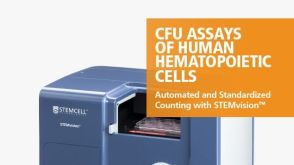 产品手册STEMvision™ Automated and Standardized Counting of CFU Assays of Human Hematopoietic Cells
 沪公网安备31010102008431号