I branching formation in erythroid differentiation is regulated by transcription factor C/EBPalpha.
The histo-blood group i and I antigens have been characterized as straight and branched repeats of N-acetyllactosamine,respectively,and the conversion of the straight-chain i to the branched-chain I structure on red cells is regulated to occur after birth. It has been demonstrated that the human I locus expresses 3 IGnT transcripts,IGnTA,IGnTB,and IGnTC,and that the last of these is responsible for the I branching formation on red cells. In the present investigation,the K-562 cell line was used as a model to show that the i-to-I transition in erythroid differentiation is determined by the transcription factor CCAAT/enhancer binding protein alpha (C/EBPalpha),which enhances transcription of the IGnTC gene,consequently leading to formation of the I antigen. Further investigation suggested that C/EBPalpha IGnTC-activation activity is modulated at a posttranslational level,and that the phosphorylation status of C/EBPalpha may have a crucial effect. Results from studies using adult and cord erythropoietic cells agreed with those derived using the K-562 cell model,with lentiviral expression of C/EBPalpha in CD34(+) hemopoietic cells demonstrating the determining role of C/EBPalpha in the induction of the IGnTC gene as well as in I antigen expression.
View Publication
产品类型:
产品号#:
09600
09650
产品名:
StemSpan™ SFEM
StemSpan™ SFEM
Khorashad JS et al. (JUN 2009)
Haematologica 94 6 861--4
The level of BCR-ABL1 kinase activity before treatment does not identify chronic myeloid leukemia patients who fail to achieve a complete cytogenetic response on imatinib.
Imatinib is currently the first line therapy for newly diagnosed patients with chronic myeloid leukemia. However,20-25% of patients do not achieve durable complete cytogenetic responses. The mechanism underlying this primary resistance is unknown,but variations in BCR-ABL1 kinase activity may play a role and can be investigated by measuring the autophosphorylation levels of BCR-ABL1 or of a surrogate target such as Crkl. In this study we used flow cytometry to investigate the in vitro inhibition of Crkl phosphorylation by imatinib in CD34(+) cells in diagnostic samples from two groups of patients distinguished by their cytogenetic response. No difference in inhibition of Crkl phosphorylation was observed in the two groups. The observation that increasing the dose of imatinib in vivo did not increase the level of cytogenetic response in some non-responders suggests that in at least a proportion of patients imatinib resistance may be due to activation of BCR-ABL1-independent pathway.
View Publication
产品类型:
产品号#:
18056
18056RF
产品名:
Kerns HM et al. (MAR 2010)
Blood 115 11 2146--55
B cell-specific lentiviral gene therapy leads to sustained B-cell functional recovery in a murine model of X-linked agammaglobulinemia.
The immunodeficiency disorder,X-linked agammaglobulinemia (XLA),results from mutations in the gene encoding Bruton tyrosine kinase (Btk). Btk is required for pre-B cell clonal expansion and B-cell antigen receptor signaling. XLA patients lack mature B cells and immunoglobulin and experience recurrent bacterial infections only partially mitigated by life-long antibody replacement therapy. In pursuit of definitive therapy for XLA,we tested ex vivo gene therapy using a lentiviral vector (LV) containing the immunoglobulin enhancer (Emu) and Igbeta (B29) minimal promoter to drive B lineage-specific human Btk expression in Btk/Tec(-/-) mice,a strain that reproduces the features of human XLA. After transplantation of EmuB29-Btk-LV-transduced stem cells,treated mice showed significant,albeit incomplete,rescue of mature B cells in the bone marrow,peripheral blood,spleen,and peritoneal cavity,and improved responses to T-independent and T-dependent antigens. LV-treated B cells exhibited enhanced B-cell antigen receptor signaling and an in vivo selective advantage in the peripheral versus central B-cell compartment. Secondary transplantation showed sustained Btk expression,viral integration,and partial functional responses,consistent with long-term stem cell marking; and serial transplantation revealed no evidence for cellular or systemic toxicity. These findings strongly support pursuit of B lineage-targeted LV gene therapy in human XLA.
View Publication
产品类型:
产品号#:
09600
09650
产品名:
StemSpan™ SFEM
StemSpan™ SFEM
Baran-Marszak F et al. (DEC 2010)
Blood 116 26 5961--71
Expression level and differential JAK2-V617F-binding of the adaptor protein Lnk regulates JAK2-mediated signals in myeloproliferative neoplasms.
Activating mutations in signaling molecules,such as JAK2-V617F,have been associated with myeloproliferative neoplasms (MPNs). Mice lacking the inhibitory adaptor protein Lnk display deregulation of thrombopoietin/thrombopoietin receptor signaling pathways and exhibit similar myeloproliferative characteristics to those found in MPN patients,suggesting a role for Lnk in the molecular pathogenesis of these diseases. Here,we showed that LNK levels are up-regulated and correlate with an increase in the JAK2-V617F mutant allele burden in MPN patients. Using megakaryocytic cells,we demonstrated that Lnk expression is regulated by the TPO-signaling pathway,thus indicating an important negative control loop in these cells. Analysis of platelets derived from MPN patients and megakaryocytic cell lines showed that Lnk can interact with JAK2-WT and V617F through its SH2 domain,but also through an unrevealed JAK2-binding site within its N-terminal region. In addition,the presence of the V617F mutation causes a tighter association with Lnk. Finally,we found that the expression level of the Lnk protein can modulate JAK2-V617F-dependent cell proliferation and that its different domains contribute to the inhibition of multilineage and megakaryocytic progenitor cell growth in vitro. Together,our results indicate that changes in Lnk expression and JAK2-V617F-binding regulate JAK2-mediated signals in MPNs.
View Publication
产品类型:
产品号#:
03434
03444
04960
04902
04900
产品名:
MethoCult™ GF M3434
MethoCult™ GF M3434
MegaCult™-C胶原和无细胞因子培养基
胶原蛋白溶液
MegaCult™-C无细胞因子培养基
Lee M-YM-O et al. (AUG 2013)
Proceedings of the National Academy of Sciences of the United States of America 110 35 E3281--90
Inhibition of pluripotent stem cell-derived teratoma formation by small molecules.
The future of safe cell-based therapy rests on overcoming teratoma/tumor formation,in particular when using human pluripotent stem cells (hPSCs),such as human embryonic stem cells (hESCs) and human induced pluripotent stem cells (hiPSCs). Because the presence of a few remaining undifferentiated hPSCs can cause undesirable teratomas after transplantation,complete removal of these cells with no/minimal damage to differentiated cells is a prerequisite for clinical application of hPSC-based therapy. Having identified a unique hESC signature of pro- and antiapoptotic gene expression profile,we hypothesized that targeting hPSC-specific antiapoptotic factor(s) (i.e.,survivin or Bcl10) represents an efficient strategy to selectively eliminate pluripotent cells with teratoma potential. Here we report the successful identification of small molecules that can effectively inhibit these antiapoptotic factors,leading to selective and efficient removal of pluripotent stem cells through apoptotic cell death. In particular,a single treatment of hESC-derived mixed population with chemical inhibitors of survivin (e.g.,quercetin or YM155) induced selective and complete cell death of undifferentiated hPSCs. In contrast,differentiated cell types (e.g.,dopamine neurons and smooth-muscle cells) derived from hPSCs survived well and maintained their functionality. We found that quercetin-induced selective cell death is caused by mitochondrial accumulation of p53 and is sufficient to prevent teratoma formation after transplantation of hESC- or hiPSC-derived cells. Taken together,these results provide the proof of concept" that small-molecule targeting of hPSC-specific antiapoptotic pathway(s) is a viable strategy to prevent tumor formation by selectively eliminating remaining undifferentiated pluripotent cells for safe hPSC-based therapy."
View Publication
产品类型:
产品号#:
05850
05857
05870
05875
85850
85857
85870
85875
产品名:
mTeSR™1
mTeSR™1
Serra RW et al. (MAR 2014)
eLife 3 3 e02313
A KRAS-directed transcriptional silencing pathway that mediates the CpG island methylator phenotype.
Approximately 70% of KRAS-positive colorectal cancers (CRCs) have a CpG island methylator phenotype (CIMP) characterized by aberrant DNA hypermethylation and transcriptional silencing of many genes. The factors involved in,and the mechanistic basis of,CIMP is not understood. Among the CIMP genes are the tumor suppressors p14(ARF),p15(INK4B),and p16(INK4A),encoded by the INK4-ARF locus. In this study,we perform an RNA interference screen and identify ZNF304,a zinc-finger DNA-binding protein,as the pivotal factor required for INK4-ARF silencing and CIMP in CRCs containing activated KRAS. In KRAS-positive human CRC cell lines and tumors,ZNF304 is bound at the promoters of INK4-ARF and other CIMP genes. Promoter-bound ZNF304 recruits a corepressor complex that includes the DNA methyltransferase DNMT1,resulting in DNA hypermethylation and transcriptional silencing. KRAS promotes silencing through upregulation of ZNF304,which drives DNA binding. Finally,we show that ZNF304 also directs transcriptional silencing of INK4-ARF in human embryonic stem cells. DOI: http://dx.doi.org/10.7554/eLife.02313.001.
View Publication
产品类型:
产品号#:
05850
05857
05870
05875
85850
85857
85870
85875
产品名:
mTeSR™1
mTeSR™1
Kapinas K et al. (JAN 2015)
Journal of Cellular Physiology 230 1 63--70
microRNA-mediated survivin control of pluripotency
Understanding the mechanisms that sustain pluripotency in human embryonic stem cells (hESCs) is an active area of research that may prove useful in regenerative medicine and will provide fundamental information relevant to development and cancer. hESCs and cancer cells share the unique ability to proliferate indefinitely and rapidly. Because the protein survivin is uniquely overexpressed in virtually all human cancers and in hESCs,we sought to investigate its role in supporting the distinctive capabilities of these cell types. Results presented here suggest that survivin contributes to the maintenance of pluripotency and that post-transcriptional control of survivin isoform expression is selectively regulated by microRNAs. miR-203 has been extensively studied in human tumors,but has not been characterized in hESCs. We show that miR-203 expression and activity is consistent with the expression and subcellular localization of survivin isoforms that in turn modulate expression of the Oct4 and Nanog transcription factors to sustain pluripotency. This study contributes to understanding of the complex regulatory mechanisms that govern whether hESCs proliferate or commit to lineages. textcopyright 2014 Wiley Periodicals,Inc.
View Publication
Efficient recombinase-mediated cassette exchange in hPSCs to study the hepatocyte lineage reveals AAVS1 locus-mediated transgene inhibition
Tools for rapid and efficient transgenesis in safe harbor" loci in an isogenic context remain important to exploit the possibilities of human pluripotent stem cells (hPSCs). We created hPSC master cell lines suitable for FLPe recombinase-mediated cassette exchange (RMCE) in the AAVS1 locus that allow generation of transgenic lines within 15 days with 100% efficiency and without random integrations. Using RMCE�
View Publication
产品类型:
产品号#:
05850
05857
05870
05875
85850
85857
85870
85875
产品名:
mTeSR™1
mTeSR™1
R. G. Walton et al. (dec 2019)
Aging cell 18 6 e13039
Metformin blunts muscle hypertrophy in response to progressive resistance exercise training in older adults: A randomized, double-blind, placebo-controlled, multicenter trial: The MASTERS trial.
Progressive resistance exercise training (PRT) is the most effective known intervention for combating aging skeletal muscle atrophy. However,the hypertrophic response to PRT is variable,and this may be due to muscle inflammation susceptibility. Metformin reduces inflammation,so we hypothesized that metformin would augment the muscle response to PRT in healthy women and men aged 65 and older. In a randomized,double-blind trial,participants received 1,700 mg/day metformin (N = 46) or placebo (N = 48) throughout the study,and all subjects performed 14 weeks of supervised PRT. Although responses to PRT varied,placebo gained more lean body mass (p = .003) and thigh muscle mass (p {\textless} .001) than metformin. CT scan showed that increases in thigh muscle area (p = .005) and density (p = .020) were greater in placebo versus metformin. There was a trend for blunted strength gains in metformin that did not reach statistical significance. Analyses of vastus lateralis muscle biopsies showed that metformin did not affect fiber hypertrophy,or increases in satellite cell or macrophage abundance with PRT. However,placebo had decreased type I fiber percentage while metformin did not (p = .007). Metformin led to an increase in AMPK signaling,and a trend for blunted increases in mTORC1 signaling in response to PRT. These results underscore the benefits of PRT in older adults,but metformin negatively impacts the hypertrophic response to resistance training in healthy older individuals. ClinicalTrials.gov Identifier: NCT02308228.
View Publication
产品类型:
产品号#:
28600
05980
05982
05983
产品名:
L-Calc™有限稀释软件
MyoCult™-SF 扩增添加物试剂盒 (人)
MyoCult™-SF 扩增10X添加物(人)
MyoCult™-SF 贴附基质
E. Perenthaler et al. ( 2020)
Acta neuropathologica 139 3 415--442
Loss of UGP2 in brain leads to a severe epileptic encephalopathy, emphasizing that bi-allelic isoform-specific start-loss mutations of essential genes can cause genetic diseases.
Developmental and/or epileptic encephalopathies (DEEs) are a group of devastating genetic disorders,resulting in early-onset,therapy-resistant seizures and developmental delay. Here we report on 22 individuals from 15 families presenting with a severe form of intractable epilepsy,severe developmental delay,progressive microcephaly,visual disturbance and similar minor dysmorphisms. Whole exome sequencing identified a recurrent,homozygous variant (chr2:64083454A {\textgreater} G) in the essential UDP-glucose pyrophosphorylase (UGP2) gene in all probands. This rare variant results in a tolerable Met12Val missense change of the longer UGP2 protein isoform but causes a disruption of the start codon of the shorter isoform,which is predominant in brain. We show that the absence of the shorter isoform leads to a reduction of functional UGP2 enzyme in neural stem cells,leading to altered glycogen metabolism,upregulated unfolded protein response and premature neuronal differentiation,as modeled during pluripotent stem cell differentiation in vitro. In contrast,the complete lack of all UGP2 isoforms leads to differentiation defects in multiple lineages in human cells. Reduced expression of Ugp2a/Ugp2b in vivo in zebrafish mimics visual disturbance and mutant animals show a behavioral phenotype. Our study identifies a recurrent start codon mutation in UGP2 as a cause of a novel autosomal recessive DEE syndrome. Importantly,it also shows that isoform-specific start-loss mutations causing expression loss of a tissue-relevant isoform of an essential protein can cause a genetic disease,even when an organism-wide protein absence is incompatible with life. We provide additional examples where a similar disease mechanism applies.
View Publication
Maes C et al. (MAY 2006)
The Journal of clinical investigation 116 5 1230--42
Placental growth factor mediates mesenchymal cell development, cartilage turnover, and bone remodeling during fracture repair.
Current therapies for delayed- or nonunion bone fractures are still largely ineffective. Previous studies indicated that the VEGF homolog placental growth factor (PlGF) has a more significant role in disease than in health. Therefore we investigated the role of PlGF in a model of semi-stabilized bone fracture healing. Fracture repair in mice lacking PlGF was impaired and characterized by a massive accumulation of cartilage in the callus,reminiscent of delayed- or nonunion fractures. PlGF was required for the early recruitment of inflammatory cells and the vascularization of the fracture wound. Interestingly,however,PlGF also played a role in the subsequent stages of the repair process. Indeed in vivo and in vitro findings indicated that PlGF induced the proliferation and osteogenic differentiation of mesenchymal progenitors and stimulated cartilage turnover by particular MMPs. Later in the process,PlGF was required for the remodeling of the newly formed bone by stimulating osteoclast differentiation. As PlGF expression was increased throughout the process of bone repair and all the important cell types involved expressed its receptor VEGFR-1,the present data suggest that PlGF is required for mediating and coordinating the key aspects of fracture repair. Therefore PlGF may potentially offer therapeutic advantages for fracture repair.
View Publication


 EasySep™小鼠TIL(CD45)正选试剂盒





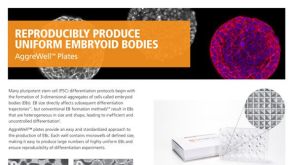 产品手册AggreWell™: Reproducible, Uniform Embryoid Bodies
 沪公网安备31010102008431号