Sugii S et al. (MAR 2011)
Nature protocols 6 3 346--358
Feeder-dependent and feeder-independent iPS cell derivation from human and mouse adipose stem cells.
Adipose tissue is an abundantly available source of proliferative and multipotent mesenchymal stem cells with promising potential for regenerative therapeutics. We previously demonstrated that both human and mouse adipose-derived stem cells (ASCs) can be reprogrammed into induced pluripotent stem cells (iPSCs) with efficiencies higher than those that have been reported for other cell types. The ASC-derived iPSCs can be generated in a feeder-independent manner,representing a unique model to study reprogramming and an important step toward establishing a safe,clinical grade of cells for therapeutic use. In this study,we provide a detailed protocol for isolation,preparation and transformation of ASCs from fat tissue into mouse iPSCs in feeder-free conditions and human iPSCs using feeder-dependent or feeder/xenobiotic-free processes. This protocol also describes how ASCs can be used as feeder cells for maintenance of other pluripotent stem cells. ASC derivation is rapid and can be completed in textless1 week,with mouse and human iPS reprogramming times averaging 1.5 and 2.5 weeks,respectively.
View Publication
产品类型:
产品号#:
05850
05857
05870
05875
85850
85857
85870
85875
产品名:
mTeSR™1
mTeSR™1
Giebel B et al. (MAR 2006)
Blood 107 5 2146--52
Primitive human hematopoietic cells give rise to differentially specified daughter cells upon their initial cell division.
It is often predicted that stem cells divide asymmetrically,creating a daughter cell that maintains the stem-cell capacity,and 1 daughter cell committed to differentiation. While asymmetric stem-cell divisions have been proven to occur in model organisms (eg,in Drosophila),it remains illusive whether primitive hematopoietic cells in mammals actually can divide asymmetrically. In our experiments we have challenged this question and analyzed the developmental capacity of separated offspring of primitive human hematopoietic cells at a single-cell level. We show for the first time that the vast majority of the most primitive,in vitro-detectable human hematopoietic cells give rise to daughter cells adopting different cell fates; 1 inheriting the developmental capacity of the mother cell,and 1 becoming more specified. In contrast,approximately half of the committed progenitor cells studied gave rise to daughter cells,both of which adopted the cell fate of their mother. Although our data are compatible with the model of asymmetric cell division,other mechanisms of cell fate specification are discussed. In addition,we describe a novel human hematopoietic progenitor cell that has the capacity to form natural killer (NK) cells as well as macrophages,but not cells of other myeloid lineages.
View Publication
Trowbridge JJ et al. (SEP 2006)
Proceedings of the National Academy of Sciences of the United States of America 103 38 14134--9
Hedgehog modulates cell cycle regulators in stem cells to control hematopoietic regeneration.
The signals that control the regenerative ability of hematopoietic stem cells (HSCs) in response to damage are unknown. Here,we demonstrate that downstream activation of the Hedgehog (Hh) signaling pathway induces cycling and expansion of primitive bone marrow hematopoietic cells under homeostatic conditions and during acute regeneration. However,this effect is at the expense of HSC function,because continued Hh activation during regeneration represses expression of specific cell cycle regulators,leading to HSC exhaustion. In vivo treatment with an inhibitor of the Hh pathway rescues these transcriptional and functional defects in HSCs. Our study establishes Hh signaling as a regulator of the HSC cell cycle machinery that balances hematopoietic homeostasis and regeneration in vivo.
View Publication
产品类型:
产品号#:
03434
03444
产品名:
MethoCult™ GF M3434
MethoCult™ GF M3434
Van Meter MEM et al. (MAY 2007)
Blood 109 9 3945--52
K-RasG12D expression induces hyperproliferation and aberrant signaling in primary hematopoietic stem/progenitor cells.
Defining how cancer-associated mutations perturb signaling networks in stem/progenitor populations that are integral to tumor formation and maintenance is a fundamental problem with biologic and clinical implications. Point mutations in RAS genes contribute to many cancers,including myeloid malignancies. We investigated the effects of an oncogenic Kras(G12D) allele on phosphorylated signaling molecules in primary c-kit(+) lin(-/low) hematopoietic stem/progenitor cells. Comparison of wild-type and Kras(G12D) c-kit(+) lin(-/low) cells shows that K-Ras(G12D) expression causes hyperproliferation in vivo and results in abnormal levels of phosphorylated STAT5,ERK,and S6 under basal and stimulated conditions. Whereas Kras(G12D) cells demonstrate hyperactive signaling after exposure to granulocyte-macrophage colony-stimulating factor,we unexpectedly observe a paradoxical attenuation of ERK and S6 phosphorylation in response to stem cell factor. These studies provide direct biochemical evidence that cancer stem/progenitor cells remodel signaling networks in response to oncogenic stress and demonstrate that multi-parameter flow cytometry can be used to monitor the effects of targeted therapeutics in vivo. This strategy has broad implications for defining the architecture of signaling networks in primary cancer cells and for implementing stem cell-targeted interventions.
View Publication
产品类型:
产品号#:
03231
03434
03444
产品名:
MethoCult™ M3231
MethoCult™ GF M3434
MethoCult™ GF M3434
Miyake N et al. (MAR 2006)
Stem cells (Dayton,Ohio) 24 3 653--61
HOXB4-induced self-renewal of hematopoietic stem cells is significantly enhanced by p21 deficiency.
Enforced expression of the HOXB4 transcription factor and downregulation of p21(Cip1/Waf) (p21) can each independently increase proliferation of murine hematopoietic stem cells (HSCs). We asked whether the increase in HSC self-renewal generated by overexpression of HOXB4 is enhanced in p21-deficient HSCs. HOXB4 was overexpressed in hematopoietic cells from wild-type (wt) and p21-/- mice. Bone marrow (BM) cells were transduced with a retroviral vector expressing HOXB4 together with GFP (MIGB4),or a control vector containing GFP alone (MIG) and maintained in liquid culture for up to 11 days. At day 11 of the expansion culture,the number of primary CFU-GM (colony-forming unit granulocyte-macrophage) colonies and the repopulating ability were significantly increased in MIGB4 p21-/- BM (p21B4) cells compared with MIGB4-transduced wt BM (wtB4) cells. To test proliferation of HSCs in vivo,we performed competitive repopulation experiments and obtained significantly higher long-term engraftment of expanded p21B4 cells compared with wtB4 cells. The 5-day expansion of p21B4 HSCs generated 100-fold higher numbers of competitive repopulating units compared with wtMIG and threefold higher numbers compared with wtB4. The findings demonstrate that increased expression of HOXB4,in combination with suppression of p21 expression,could be a useful strategy for effective and robust expansion of HSCs.
View Publication
产品类型:
产品号#:
03534
产品名:
MethoCult™ GF M3534
Tchernychev B et al. (DEC 2010)
Proceedings of the National Academy of Sciences of the United States of America 107 51 22255--9
Discovery of a CXCR4 agonist pepducin that mobilizes bone marrow hematopoietic cells.
The G protein-coupled receptor (GPCR),chemokine CXC-type receptor 4 (CXCR4),and its ligand,CXCL12,mediate the retention of polymorphonuclear neutrophils (PMNs) and hematopoietic stem and progenitor cells (HSPCs) in the bone marrow. Agents that disrupt CXCL12-mediated chemoattraction of CXCR4-expressing cells mobilize PMNs and HSPCs into the peripheral circulation and are therapeutically useful for HSPC collection before autologous bone marrow transplantation (ABMT). Our aim was to develop unique CXCR4-targeted therapeutics using lipopeptide GPCR modulators called pepducins. A pepducin is a synthetic molecule composed of a peptide derived from the amino acid sequence of one of the intracellular (IC) loops of a target GPCR coupled to a lipid tether. We prepared and screened a small CXCR4-targeted pepducin library and identified several pepducins with in vitro agonist activity,including ATI-2341,whose peptide sequence derives from the first IC loop. ATI-2341 induced CXCR4- and G protein-dependent signaling,receptor internalization,and chemotaxis in CXCR4-expressing cells. It also induced dose-dependent peritoneal recruitment of PMNs when administered i.p. to mice. However,when administered systemically by i.v. bolus,ATI-2341 acted as a functional antagonist and dose-dependently mediated release of PMNs from the bone marrow of both mice and cynomolgus monkeys. ATI-2341-mediated release of granulocyte/macrophage progenitor cells from the bone marrow was confirmed by colony-forming assays. We conclude that ATI-2341 is a potent and efficacious mobilizer of bone marrow PMNs and HSPCs and could represent a previously undescribed therapeutic approach for the recruitment of HSPCs before ABMT.
View Publication
产品类型:
产品号#:
03534
产品名:
MethoCult™ GF M3534
Zhang CC and Lodish HF (JUN 2005)
Blood 105 11 4314--20
Murine hematopoietic stem cells change their surface phenotype during ex vivo expansion.
Ex vivo expansion of hematopoietic stem cells (HSCs) is important for many clinical applications,and knowledge of the surface phenotype of ex vivo-expanded HSCs will be critical to their purification and analysis. Here,we developed a simple culture system for bone marrow (BM) HSCs using low levels of stem cell factor (SCF),thrombopoietin (TPO),insulin-like growth factor 2 (IGF-2),and fibroblast growth factor-1 (FGF-1) in serum-free medium. As measured by competitive repopulation analyses,there was a more than 20-fold increase in numbers of long-term (LT)-HSCs after a 10-day culture of total BM cells. Culture of BM side population" (SP) cells�
View Publication
Silencing p21(Waf1/Cip1/Sdi1) expression increases gene transduction efficiency in primitive human hematopoietic cells.
Adult hematopoietic and other tissue stem cells have highly constrained cell cycling that limits their susceptibility to standard gene therapy vectors,which depend upon chromosomal integration. Using cytokine cocktails to increase transduction efficiency often compromises subsequent stem cell function in vivo. We previously showed that p21(Waf1/Cip1/Sdi1) (p21) mediates stem cell quiescence in vivo and decreasing its expression ex vivo leads to an expansion of stem cell pool in vivo. Here,we report that application of p21 specific siRNA increased the gene transduction efficiency in hematopoietic stem cells while preserving cell multipotentiality. Both types of siRNA,synthesized siRNA and transcribed shRNA,reduced p21 expression in target cells by 85-98%. The effect of RNAi in these cells was transient and the level of p21 mRNA returned to base line 14-28 days after siRNA treatment. This brief interval of reduction,however,was sufficient to increase transduction efficiency to two- to four-fold in cell cultures,and followed by a seven- to eight-fold increase in mice. The RNAi treated,lentivector-transduced CD34+ cells retained multipotentiality as assessed in vitro by colony formation assay and in vivo by NOD/SCID mouse transplantation assay. Reduction of p21 resulted in an increased chromosomal integration of lentivector into target cellular DNA. Taken together,both synthesized and transcribed siRNA knocked down p21 expression in human CD34+ hematopoietic stem/progenitor cells. Silencing p21 expression increased gene transduction efficiency and vector integration while retaining stem cell multipotentiality. Thus,RNAi targeting of p21 is a useful strategy to increase stem cell gene transfer efficiency. Decreasing p21 expression transiently while increasing gene-transfer vector integration may ultimately facilitate clinical applications of gene therapy.
View Publication
产品类型:
产品号#:
09850
产品名:
Ling K-W et al. (OCT 2004)
The Journal of experimental medicine 200 7 871--82
GATA-2 plays two functionally distinct roles during the ontogeny of hematopoietic stem cells.
GATA-2 is an essential transcription factor in the hematopoietic system that is expressed in hematopoietic stem cells (HSCs) and progenitors. Complete deficiency of GATA-2 in the mouse leads to severe anemia and embryonic lethality. The role of GATA-2 and dosage effects of this transcription factor in HSC development within the embryo and adult are largely unexplored. Here we examined the effects of GATA-2 gene dosage on the generation and expansion of HSCs in several hematopoietic sites throughout mouse development. We show that a haploid dose of GATA-2 severely reduces production and expansion of HSCs specifically in the aorta-gonad-mesonephros region (which autonomously generates the first HSCs),whereas quantitative reduction of HSCs is minimal or unchanged in yolk sac,fetal liver,and adult bone marrow. However,HSCs in all these ontogenically distinct anatomical sites are qualitatively defective in serial or competitive transplantation assays. Also,cytotoxic drug-induced regeneration studies show a clear GATA-2 dose-related proliferation defect in adult bone marrow. Thus,GATA-2 plays at least two functionally distinct roles during ontogeny of HSCs: the production and expansion of HSCs in the aorta-gonad-mesonephros and the proliferation of HSCs in the adult bone marrow.
View Publication
产品类型:
产品号#:
03434
03444
产品名:
MethoCult™ GF M3434
MethoCult™ GF M3434
Gottschling S et al. (MAR 2007)
Stem cells (Dayton,Ohio) 25 3 798--806
Human mesenchymal stromal cells regulate initial self-renewing divisions of hematopoietic progenitor cells by a beta1-integrin-dependent mechanism.
In previous reports,we have demonstrated that only direct cell-cell contact with stromal cells,such as the murine stromal cell line AFT024,was able to alter the cell division kinetics and self-renewing capacity of hematopoietic progenitor cells (HPC). Because beta(1)-integrins were shown to be crucial for the interaction of HPC with the bone marrow microenvironment,we have studied the role of beta(1)-integrins in the regulation of self-renewing cell divisions. For this purpose,we used primary human mesenchymal stromal (MS) cells as in vitro surrogate niche and monitored the division history and subsequent functional fate of individually plated CD34(+)133(+) cells in the absence or presence of an anti-beta(1)-integrin blocking antibody by time-lapse microscopy and subsequent long-term culture-initiating cell (LTC-IC) assays. beta(1)-Integrin-mediated contact with MS cells significantly increased the proportion of asymmetrically dividing cells and led to a substantial increase of LTC-IC. Provided that beta(1)-integrin-mediated contact was available within the first 72 hours,human MS cells were able to recruit HPC into cell cycle and accelerate their division kinetics without loss of stem cell function. Activation of beta(1)-integrins by ligands alone (e.g.,fibronectin and vascular cell adhesion molecule-1) was not sufficient to alter the cell division symmetry and promote self-renewal of HPC,thus indicating an indirect effect. These results have provided evidence that primary human MS cells are able to induce self-renewing divisions of HPC by a beta(1)-integrin-dependent mechanism.
View Publication
产品类型:
产品号#:
04434
04444
产品名:
MethoCult™ H4434 Classic
MethoCult™ H4434 Classic
Pepper J-P et al. (MAY 2017)
JAMA facial plastic surgery 19 3 197--205
Human Induced Pluripotent Stem Cell-Derived Motor Neuron Transplant for Neuromuscular Atrophy in a Mouse Model of Sciatic Nerve Injury.
Importance Human motor neurons may be reliably derived from induced pluripotent stem cells (iPSCs). In vivo transplant studies of human iPSCs and their cellular derivatives are essential to gauging their clinical utility. Objective To determine whether human iPSC-derived motor neurons can engraft in an immunodeficient mouse model of sciatic nerve injury. Design,Setting,and Subjects This nonblinded interventional study with negative controls was performed at a biomedical research institute using an immunodeficient,transgenic mouse model. Induced pluripotent stem cell-derived motor neurons were cultured and differentiated. Cells were transplanted into 32 immunodeficient mice with sciatic nerve injury aged 6 to 15 weeks. Tissue analysis was performed at predetermined points after the mice were killed humanely. Animal experiments were performed from February 24,2015,to May 2,2016,and data were analyzed from April 7,2015,to May 27,2016. Interventions Human iPSCs were used to derive motor neurons in vitro before transplant. Main Outcomes and Measures Evidence of engraftment based on immunohistochemical analysis (primary outcome measure); evidence of neurite outgrowth and neuromuscular junction formation (secondary outcome measure); therapeutic effect based on wet muscle mass preservation and/or electrophysiological evidence of nerve and muscle function (exploratory end point). Results In 13 of the 32 mice undergoing the experiment,human iPSC-derived motor neurons successfully engrafted and extended neurites to target denervated muscle. Human iPSC-derived motor neurons reduced denervation-induced muscular atrophy (mean [SD] muscle mass preservation,54.2% [4.0%]) compared with negative controls (mean [SD] muscle mass preservation,33.4% [2.3%]) (P = .04). No electrophysiological evidence of muscle recovery was found. Conclusions and Relevance Human iPSC-derived motor neurons may have future use in the treatment of peripheral motor nerve injury,including facial paralysis. Level of Evidence NA.
View Publication


 EasySep™小鼠TIL(CD45)正选试剂盒





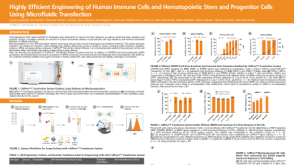 科学海报Highly Efficient Engineering of Human Immune Cells and Hematopoietic Stem and Progenitor Cells Using Microfluidic Transfection
 沪公网安备31010102008431号