Hu K et al. (APR 2017)
Stem cell research 20 115--117
Generation of an induced pluripotent stem cell line from a Loeys-Dietz syndrome patient with transforming growth factor-beta receptor-2 gene mutation.
Loeys-Dietz syndrome (LDS) is an autosomal-dominant connective tissue disorder,commonly caused by genetic mutation of transforming growth factor-beta receptor (TGFBR)-1 or TGFBR2. This study describes the generation of human induced pluripotent stem cells (hiPSCs) from peripheral blood mononuclear cells obtained from an LDS patient with TGFBR2 mutation (R193W). Analysis confirmed the cells had a normal karyotype,expressed typical pluripotency markers,had the ability to differentiate into all three germ layers in vivo,and retained the TGFBR2 mutation from the derived hiPSCs. This iPSC line represents a potentially useful tool for investigating LDS disease mechanisms.
View Publication
产品类型:
产品号#:
05850
05857
05870
05875
85850
85857
85870
85875
产品名:
mTeSR™1
mTeSR™1
Smith BW et al. ( 2016)
Stem Cells International 2016 2574152
Genome Editing of the CYP1A1 Locus in iPSCs as a Platform to Map AHR Expression throughout Human Development
The aryl hydrocarbon receptor (AHR) is a ligand activated transcription factor that increases the expression of detoxifying enzymes upon ligand stimulation. Recent studies now suggest that novel endogenous roles of the AHR exist throughout development. In an effort to create an optimized model system for the study of AHR signaling in several cellular lineages,we have employed a CRISPR/CAS9 genome editing strategy in induced pluripotent stem cells (iPSCs) to incorporate a reporter cassette at the transcription start site of one of its canonical targets,cytochrome P450 1A1 (CYP1A1). This cell line faithfully reports on CYP1A1 expression,with luciferase levels as its functional readout,when treated with an endogenous AHR ligand (FICZ) at escalating doses. iPSC-derived fibroblast-like cells respond to acute exposure to environmental and endogenous AHR ligands,and iPSC-derived hepatocytes increase CYP1A1 in a similar manner to primary hepatocytes. This cell line is an important innovation that can be used to map AHR activity in discrete cellular subsets throughout developmental ontogeny. As further endogenous ligands are proposed,this line can be used to screen for safety and efficacy and can report on the ability of small molecules to regulate critical cellular processes by modulating the activity of the AHR.
View Publication
产品类型:
产品号#:
05110
05850
05857
05870
05875
85850
85857
85870
85875
产品名:
STEMdiff™定型内胚层检测试剂盒
mTeSR™1
mTeSR™1
Sano M et al. ( 2016)
PloS one 11 10 e0164720
Novel Strategy to Control Transgene Expression Mediated by a Sendai Virus-Based Vector Using a Nonstructural C Protein and Endogenous MicroRNAs.
Tissue-specific control of gene expression is an invaluable tool for studying various biological processes and medical applications. Efficient regulatory systems have been utilized to control transgene expression in various types of DNA viral or integrating viral vectors. However,existing regulatory systems are difficult to transfer into negative-strand RNA virus vector platforms because of significant differences in their transcriptional machineries. In this study,we developed a novel strategy for regulating transgene expression mediated by a cytoplasmic RNA vector based on a replication-defective and persistent Sendai virus (SeVdp). Because of the capacity of Sendai virus (SeV) nonstructural C proteins to specifically inhibit viral RNA synthesis,overexpression of C protein significantly reduced transgene expression mediated by SeVdp vectors. We found that SeV C overexpression concomitantly reduced SeVdp mRNA levels and genomic RNA synthesis. To control C expression,target sequences for an endogenous microRNA were incorporated into the 3' untranslated region of the C genes. Incorporation of target sequences for miR-21 into the SeVdp vector restored transgene expression in HeLa cells by decreasing C expression. Furthermore,the SeVdp vector containing target sequences for let-7a enabled cell-specific control of transgene expression in human fibroblasts and induced pluripotent stem cells. Our findings demonstrate that SeV C can be used as an effective regulator for controlling transgene expression. This strategy will contribute to efficient and less toxic SeVdp-mediated gene transfer in various biological applications.
View Publication
产品类型:
产品号#:
05850
05857
05870
05875
85850
85857
85870
85875
产品名:
mTeSR™1
mTeSR™1
Xie N et al. ( 2016)
PloS one 11 10 e0165499
Reactivation of FMR1 by CRISPR/Cas9-Mediated Deletion of the Expanded CGG-Repeat of the Fragile X Chromosome.
Fragile X syndrome (FXS) is a common cause of intellectual disability that is most often due to a CGG-repeat expansion mutation in the FMR1 gene that triggers epigenetic gene silencing. Epigenetic modifying drugs can only transiently and modestly induce FMR1 reactivation in the presence of the elongated CGG repeat. As a proof-of-principle,we excised the expanded CGG-repeat in both somatic cell hybrids containing the human fragile X chromosome and human FXS iPS cells using the CRISPR/Cas9 genome editing. We observed transcriptional reactivation in approximately 67% of the CRISPR cut hybrid colonies and in 20% of isolated human FXS iPSC colonies. The reactivated cells produced FMRP and exhibited a decline in DNA methylation at the FMR1 locus. These data demonstrate the excision of the expanded CGG-repeat from the fragile X chromosome can result in FMR1 reactivation.
View Publication
产品类型:
产品号#:
05850
05857
05870
05875
85850
85857
85870
85875
产品名:
mTeSR™1
mTeSR™1
Renner M et al. (MAY 2017)
The EMBO journal 36 10 1316--1329
Self-organized developmental patterning and differentiation in cerebral organoids.
Cerebral organoids recapitulate human brain development at a considerable level of detail,even in the absence of externally added signaling factors. The patterning events driving this self-organization are currently unknown. Here,we examine the developmental and differentiative capacity of cerebral organoids. Focusing on forebrain regions,we demonstrate the presence of a variety of discrete ventral and dorsal regions. Clearing and subsequent 3D reconstruction of entire organoids reveal that many of these regions are interconnected,suggesting that the entire range of dorso-ventral identities can be generated within continuous neuroepithelia. Consistent with this,we demonstrate the presence of forebrain organizing centers that express secreted growth factors,which may be involved in dorso-ventral patterning within organoids. Furthermore,we demonstrate the timed generation of neurons with mature morphologies,as well as the subsequent generation of astrocytes and oligodendrocytes. Our work provides the methodology and quality criteria for phenotypic analysis of brain organoids and shows that the spatial and temporal patterning events governing human brain development can be recapitulated in vitro.
View Publication
产品类型:
产品号#:
05850
05857
05870
05875
85850
85857
85870
85875
产品名:
mTeSR™1
mTeSR™1
Hirano I et al. (AUG 2009)
The Journal of biological chemistry 284 33 22155--65
Depletion of Pleckstrin homology domain leucine-rich repeat protein phosphatases 1 and 2 by Bcr-Abl promotes chronic myelogenous leukemia cell proliferation through continuous phosphorylation of Akt isoforms.
The constitutive activation of the phosphatidylinositol 3-kinase (PI3K)/Akt pathway commonly occurs in cancers and is a crucial event in tumorigenesis. Chronic myelogenous leukemia (CML) is characterized by a reciprocal chromosomal translocation (9;22) that generates the Bcr-Abl fusion gene. The PI3K/Akt pathway is activated by Bcr-Abl chimera protein and mediates the leukemogenesis in CML. However,the mechanism by which Bcr-Abl activates the PI3K/Akt pathway is not completely understood. In the present study,we found that pleckstrin homology domain leucine-rich repeat protein phosphatases 1 and 2 (PHLPP1 and PHLPP2) were depleted in CML cells. We investigated the interaction between PHLPPs and Bcr-Abl in CML cell lines and Bcr-Abl+ progenitor cells from CML patients. The Abl kinase inhibitors and depletion of Bcr-Abl induced the expression of PHLPP1 and PHLPP2,which dephosphorylated Ser-473 on Akt1,-2,and -3,resulting in inhibited proliferation of CML cells. The reduction of PHLPP1 and PHLPP2 expression by short interfering RNA in CML cells weakened the Abl kinase inhibitor-mediated inhibition of proliferation. In colony-forming unit-granulocyte,erythroid,macrophage,megakaryocyte; colony-forming unit-granulocyte,macrophage; and burst-forming unit-erythroid,treatment with the Abl kinase inhibitors and depletion of Bcr-Abl induced PHLPP1 and PHLPP2 expression and inhibited colony formation of Bcr-Abl+ progenitor cells,whereas depletion of PHLPP1 and PHLPP2 weakened the inhibition of colony formation activity by the Abl kinase inhibitors in Bcr-Abl+ progenitor cells. Thus,Bcr-Abl represses the expression of PHLPP1 and PHLPP2 and continuously activates Akt1,-2,and -3 via phosphorylation on Ser-473,resulting in the proliferation of CML cells.
View Publication
产品类型:
产品号#:
01700
01705
04435
04445
01702
产品名:
ALDEFLUOR™ 试剂盒
ALDEFLUOR™ DEAB试剂, 1.5 mM, 1 mL
MethoCult™ H4435 Enriched
MethoCult™ H4435 Enriched
ALDEFLUOR™检测缓冲液
Picanç et al. (JAN 2011)
Stem cells and development 20 1 169--80
Pluripotent reprogramming of fibroblasts by lentiviral mediated insertion of SOX2, C-MYC, and TCL-1A.
Reprogramming of somatic cells to pluripotency promises to boost cellular therapy. Most instances of direct reprogramming have been achieved by forced expression of defined exogenous factors using multiple viral vectors. The most used 4 transcription factors,octamer-binding transcription factor 4 (OCT4),(sex determining region Y)-box 2 (SOX2),Kruppel-like factor 4 (KLF4),and v-myc myelocytomatosis viral oncogene homolog (C-MYC),can induce pluripotency in mouse and human fibroblasts. Here,we report that forced expression of a new combination of transcription factors (T-cell leukemia/lymphoma protein 1A [TCL-1A],C-MYC,and SOX2) is sufficient to promote the reprogramming of human fibroblasts into pluripotent cells. These 3-factor pluripotent cells are similar to human embryonic stem cells in morphology,in the ability to differentiate into cells of the 3 embryonic layers,and at the level of global gene expression. Induced pluripotent human cells generated by a combination of other factors will be of great help for the understanding of reprogramming pathways. This,in turn,will allow us to better control cell-fate and apply this knowledge to cell therapy.
View Publication
Lam AT-L et al. (JUL 2014)
Stem cells and development 23 14 1688--1703
Cationic Surface Charge Combined with Either Vitronectin or Laminin Dictates the Evolution of Human Embryonic Stem Cells/Microcarrier Aggregates and Cell Growth in Agitated Cultures
The expansion of human pluripotent stem cells (hPSC) for biomedical applications generally compels a defined,reliable,and scalable platform. Bioreactors offer a three-dimensional culture environment that relies on the implementation of microcarriers (MC),as supports for cell anchorage and their subsequent growth. Polystyrene microspheres/MC coated with adhesion-promoting extracellular matrix (ECM) protein,vitronectin (VN),or laminin (LN) have been shown to support hPSC expansion in a static environment. However,they are insufficient to promote human embryonic stem cells (hESC) seeding and their expansion in an agitated environment. The present study describes an innovative technology,consisting of a cationic charge that underlies the ECM coatings. By combining poly-L-lysine (PLL) with a coating of ECM protein,cell attachment efficiency and cell spreading are improved,thus enabling seeding under agitation in a serum-free medium. This coating combination also critically enables the subsequent formation and evolution of hPSC/MC aggregates,which ensure cell viability and generate high yields. Aggregate dimensions of at least 300 $\$ during early cell growth give rise to ≈15-fold expansion at 7 days' culture. Increasing aggregate numbers at a quasi-constant size of ≈300 $\$ indicates hESC growth within a self-regulating microenvironment. PLL+LN enables cell seeding and aggregate evolution under constant agitation,whereas PLL+VN requires an intermediate 2-day static pause to attain comparable aggregate sizes and correspondingly high expansion yields. The cells' highly reproducible bioresponse to these defined and characterized MC surface properties is universal across multiple cell lines,thus confirming the robustness of this scalable expansion process in a defined environment.
View Publication
产品类型:
产品号#:
05850
05857
05870
05875
85850
85857
85870
85875
产品名:
mTeSR™1
mTeSR™1
Avior Y et al. (JUL 2015)
Hepatology 62 1 265--278
Microbial-Derived Lithocholic Acid and Vitamin Ktextlessinftextgreater2textless/inftextgreater Drive the Metabolic Maturation of Pluripotent Stem Cells-Derived and Fetal Hepatocytes
The liver is the main organ responsible for the modification,clearance,and transformational toxicity of most xenobiotics owing to its abundance in cytochrome P450 (CYP450) enzymes. However,the scarcity and variability of primary hepatocytes currently limits their utility. Human pluripotent stem cells (hPSCs) represent an excellent source of differentiated hepatocytes; however,current protocols still produce fetal-like hepatocytes with limited mature function. Interestingly,fetal hepatocytes acquire mature CYP450 expression only postpartum,suggesting that nutritional cues may drive hepatic maturation. We show that vitamin K2 and lithocholic acid,a by-product of intestinal flora,activate pregnane X receptor (PXR) and subsequent CYP3A4 and CYP2C9 expression in hPSC-derived and isolated fetal hepatocytes. Differentiated cells produce albumin and apolipoprotein B100 at levels equivalent to primary human hepatocytes,while demonstrating an 8-fold induction of CYP450 activity in response to aryl hydrocarbon receptor (AhR) agonist omeprazole and a 10-fold induction in response to PXR agonist rifampicin. Flow cytometry showed that over 83% of cells were albumin and hepatocyte nuclear factor 4 alpha (HNF4α) positive,permitting high-content screening in a 96-well plate format. Analysis of 12 compounds showed an R(2) correlation of 0.94 between TC50 values obtained in stem cell-derived hepatocytes and primary cells,compared to 0.62 for HepG2 cells. Finally,stem cell-derived hepatocytes demonstrate all toxicological endpoints examined,including steatosis,apoptosis,and cholestasis,when exposed to nine known hepatotoxins. CONCLUSION: Our work provides fresh insights into liver development,suggesting that microbial-derived cues may drive the maturation of CYP450 enzymes postpartum. Addition of these cues results in the first functional,inducible,hPSC-derived hepatocyte for predictive toxicology. (Hepatology 2015).
View Publication
产品类型:
产品号#:
05850
05857
05870
05875
85850
85857
85870
85875
产品名:
mTeSR™1
mTeSR™1
Marcato P et al. (MAY 2011)
Cell cycle (Georgetown,Tex.) 10 9 1378--84
Aldehyde dehydrogenase: its role as a cancer stem cell marker comes down to the specific isoform.
Recent evidence suggests that enhanced aldehyde dehydrogenase (ALDH) activity is a hallmark of cancer stem cells (CSC) measurable by the aldefluor assay. ALDH1A1,one of 19 ALDH isoforms expressed in humans,was generally believed to be responsible for the ALDH activity of CSCs. More recently,experiments with murine hematopoietic stem cells,murine progenitor pancreatic cells,and human breast CSCs indicate that other ALDH isoforms,particularly ALDH1A3,significantly contribute to aldefluor positivity,which may be tissue and cancer specific. Therefore,potential prognostic application involving the use of CSC prevalence in tumor tissue to predict patient outcome requires the identification and quantification of specific ALDH isoforms. Herein we review the suggested roles of ALDH in CSC biology and the immunohistological studies testing the potential application of ALDH isoforms as novel cancer prognostic indicators.
View Publication
产品类型:
产品号#:
01700
01705
01702
产品名:
ALDEFLUOR™ 试剂盒
ALDEFLUOR™ DEAB试剂, 1.5 mM, 1 mL
ALDEFLUOR™检测缓冲液
Aksoy I et al. (DEC 2013)
Stem Cells 31 12 2632--2646
Sox Transcription Factors Require Selective Interactions with Oct4 and Specific Transactivation Functions to Mediate Reprogramming
The unique ability of Sox2 to cooperate with Oct4 at selective binding sites in the genome is critical for reprogramming somatic cells into induced pluripotent stem cells (iPSCs). We have recently demonstrated that Sox17 can be converted into a reprogramming factor by alteration of a single amino acid (Sox17EK) within its DNA binding HMG domain. Here we expanded this study by introducing analogous mutations to 10 other Sox proteins and interrogated the role of N-and C-termini on the reprogramming efficiency. We found that point-mutated Sox7 and Sox17 can convert human and mouse fibroblasts into iPSCs,but Sox4,Sox5,Sox6,Sox8,Sox9,Sox11,Sox12,Sox13,and Sox18 cannot. Next we studied regions outside the HMG domain and found that the C-terminal transactivation domain of Sox17 and Sox7 enhances the potency of Sox2 in iPSC assays and confers weak reprogramming potential to the otherwise inactive Sox4EK and Sox18EK proteins. These results suggest that the glutamate (E) to lysine (K) mutation in the HMG domain is necessary but insufficient to swap the function of Sox factors. Moreover,the HMG domain alone fused to the VP16 transactivation domain is able to induce reprogramming,albeit at low efficiency. By molecular dissection of the C-terminus of Sox17,we found that the β-catenin interaction region contributes to the enhanced reprogramming efficiency of Sox17EK. To mechanistically understand the enhanced reprogramming potential of Sox17EK,we analyzed ChIP-sequencing and expression data and identified a subset of candidate genes specifically regulated by Sox17EK and not by Sox2.
View Publication


 EasySep™小鼠TIL(CD45)正选试剂盒





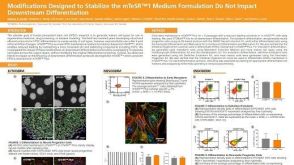 科学海报Modifications Designed to Stabilize the mTeSR1™ Formulation Do Not Impact Downstream Differentiation
 沪公网安备31010102008431号