Maes C et al. (MAY 2006)
The Journal of clinical investigation 116 5 1230--42
Placental growth factor mediates mesenchymal cell development, cartilage turnover, and bone remodeling during fracture repair.
Current therapies for delayed- or nonunion bone fractures are still largely ineffective. Previous studies indicated that the VEGF homolog placental growth factor (PlGF) has a more significant role in disease than in health. Therefore we investigated the role of PlGF in a model of semi-stabilized bone fracture healing. Fracture repair in mice lacking PlGF was impaired and characterized by a massive accumulation of cartilage in the callus,reminiscent of delayed- or nonunion fractures. PlGF was required for the early recruitment of inflammatory cells and the vascularization of the fracture wound. Interestingly,however,PlGF also played a role in the subsequent stages of the repair process. Indeed in vivo and in vitro findings indicated that PlGF induced the proliferation and osteogenic differentiation of mesenchymal progenitors and stimulated cartilage turnover by particular MMPs. Later in the process,PlGF was required for the remodeling of the newly formed bone by stimulating osteoclast differentiation. As PlGF expression was increased throughout the process of bone repair and all the important cell types involved expressed its receptor VEGFR-1,the present data suggest that PlGF is required for mediating and coordinating the key aspects of fracture repair. Therefore PlGF may potentially offer therapeutic advantages for fracture repair.
View Publication
产品类型:
产品号#:
03534
03334
03434
03444
18753
18753RF
产品名:
MethoCult™ GF M3534
MethoCult™ M3334
MethoCult™ GF M3434
MethoCult™ GF M3434
von Vietinghoff S et al. (MAY 2007)
Blood 109 10 4487--93
NB1 mediates surface expression of the ANCA antigen proteinase 3 on human neutrophils.
Antineutrophil cytoplasmic antibodies (ANCAs) with specificity for proteinase 3 (PR3) are central to a form of ANCA-associated vasculitis. Membrane PR3 (mPR3) is expressed only on a subset of neutrophils. The aim of this study was to determine the mechanism of PR3 surface expression on human neutrophils. Neutrophils were isolated from patients and healthy controls,and hematopoietic stem cells from cord blood served as a model of neutrophil differentiation. Surface expression was analyzed by flow cytometry and confocal microscopy,and proteins were analyzed by Western blot experiments. Neutrophil subsets were separated by magnetic cell sorting. Transfection experiments were carried out in HEK293 and HL60 cell lines. Using neutrophils from healthy donors,patients with vasculitis,and neutrophilic differentiated stem cells we found that mPR3 display was restricted to cells expressing neutrophil glycoprotein NB1,a glycosylphosphatidylinositol (GPI)-linked surface receptor. mPR3 expression was decreased by enzymatic removal of GPI anchors from cell membranes and was absent in a patient with paroxysmal nocturnal hemoglobinuria. PR3 and NB1 coimmunoprecipitated from and colocalized on the neutrophil plasma membrane. Transfection with NB1 resulted in specific PR3 surface binding in different cell types. We conclude that PR3 membrane expression on neutrophils is mediated by the NB1 receptor.
View Publication
产品类型:
产品号#:
09600
09650
产品名:
StemSpan™ SFEM
StemSpan™ SFEM
Chapman AG et al. (DEC 2014)
BMC genetics 15 1 89
Differentially methylated CpG island within human XIST mediates alternative P2 transcription and YY1 binding.
BackgroundX-chromosome inactivation silences one X chromosome in females to achieve dosage compensation with the single X chromosome in males. While most genes are silenced on the inactive X chromosome,the gene for the long non-coding RNA XIST is silenced on the active X chromosome and expressed from the inactive X chromosome with which the XIST RNA associates,triggering silencing of the chromosome. In mouse,an alternative Xist promoter,P2 is also the site of YY1 binding,which has been shown to serve as a tether between the Xist RNA and the DNA of the chromosome. In humans there are many differences from the initial events of mouse Xist activation,including absence of a functional antisense regulator Tsix,and absence of strictly paternal inactivation in extraembryonic tissues,prompting us to examine regulatory regions for the human XIST gene.ResultsWe demonstrate that the female-specific DNase hypersensitivity site within XIST is specific to the inactive X chromosome and correlates with transcription from an internal P2 promoter. P2 is located within a CpG island that is differentially methylated between males and females and overlaps conserved YY1 binding sites that are only bound on the inactive X chromosome where the sites are unmethylated. However,YY1 binding is insufficient to drive P2 expression or establish the DHS,which may require a development-specific factor. Furthermore,reduction of YY1 reduces XIST transcription in addition to causing delocalization of XIST.ConclusionsThe differentially methylated DNase hypersensitive site within XIST marks the location of an alternative promoter,P2,that generates a transcript of unknown function as it lacks the A repeats that are critical for silencing. In addition,this region binds YY1 on the unmethylated inactive X chromosome,and depletion of YY1 untethers the XIST RNA as well as decreasing transcription of XIST.
View Publication
产品类型:
产品号#:
05850
05857
05870
05875
07920
85850
85857
85870
85875
07922
产品名:
ACCUTASE™
mTeSR™1
mTeSR™1
ACCUTASE™
Chin JY et al. (SEP 2008)
Proceedings of the National Academy of Sciences of the United States of America 105 36 13514--9
Correction of a splice-site mutation in the beta-globin gene stimulated by triplex-forming peptide nucleic acids.
Splice-site mutations in the beta-globin gene can lead to aberrant transcripts and decreased functional beta-globin,causing beta-thalassemia. Triplex-forming DNA oligonucleotides (TFOs) and peptide nucleic acids (PNAs) have been shown to stimulate recombination in reporter gene loci in mammalian cells via site-specific binding and creation of altered helical structures that provoke DNA repair. We have designed a series of triplex-forming PNAs that can specifically bind to sequences in the human beta-globin gene. We demonstrate here that these PNAs,when cotransfected with recombinatory donor DNA fragments,can promote single base-pair modification at the start of the second intron of the beta-globin gene,the site of a common thalassemia-associated mutation. This single base pair change was detected by the restoration of proper splicing of transcripts produced from a green fluorescent protein-beta-globin fusion gene. The ability of these PNAs to induce recombination was dependent on dose,sequence,cell-cycle stage,and the presence of a homologous donor DNA molecule. Enhanced recombination,with frequencies up to 0.4%,was observed with use of the lysomotropic agent chloroquine. Finally,we demonstrate that these PNAs were effective in stimulating the modification of the endogenous beta-globin locus in human cells,including primary hematopoietic progenitor cells. This work suggests that PNAs can be effective tools to induce heritable,site-specific modification of disease-related genes in human cells.
View Publication
产品类型:
产品号#:
02690
09600
09650
产品名:
StemSpan™ CC100
StemSpan™ SFEM
StemSpan™ SFEM
Eremeev AV et al. ( )
Doklady biological sciences : proceedings of the Academy of Sciences of the USSR,Biological sciences sections / translated from Russian 426 293--5
Derivation of a novel human embryonic stem cell line under serum-free and feeder-free conditions.
Rausch V et al. (JUN 2010)
Cancer research 70 12 5004--13
Synergistic activity of sorafenib and sulforaphane abolishes pancreatic cancer stem cell characteristics.
Recent evidence suggests that pancreatic cancer and other solid tumors contain a subset of tumorigenic cells capable of extensive self-renewal that contribute to metastasis and treatment resistance. Sorafenib (SO) is a promising new multikinase inhibitor for treatment of advanced kidney and liver cancers. We report here targeting of pancreatic cancer stem cells (CSC) by SO and the development of a strategy to enhance this effect. Although SO administration diminished clonogenicity,spheroid formation,aldehyde dehydrogenase 1 (ALDH1) activity,growth on immunodeficient mice,proliferation,and angiogenesis and induced apoptosis,we observed SO-induced activation of NF-kappaB associated with survival and regrowth of spheroids. For enhanced elimination of CSC characteristics by SO,we cotreated cells with sulforaphane (SF). This broccoli isothiocyanate was recently described to eliminate pancreatic CSCs by downregulation of NF-kappaB activity without inducing toxic side effects. On combination treatment,SF completely eradicated SO-induced NF-kappaB binding,which was associated with abrogated clonogenicity,spheroid formation,ALDH1 activity,migratory capacity,and induction of apoptosis. In vivo,combination therapy reduced the tumor size in a synergistic manner. This was due to induction of apoptosis,inhibition of proliferation and angiogenesis,and downregulation of SO-induced expression of proteins involved in epithelial-mesenchymal transition. Our data suggest that SF may be suited to increase targeting of CSCs by SO.
View Publication
产品类型:
产品号#:
01700
01705
01702
产品名:
ALDEFLUOR™ 试剂盒
ALDEFLUOR™ DEAB试剂, 1.5 mM, 1 mL
ALDEFLUOR™检测缓冲液
Konorov SO et al. (SEP 2011)
Applied Spectroscopy 65 9 1009--1016
Raman microscopy-based cytochemical investigations of potential niche-forming inhomogeneities present in human embryonic stem cell colonies
Measuring spatial and temporal patterns of cytochemical variation in human embryonic stem cell (hESC) colonies is necessary for understanding the role of cellular communication in spontaneous differentiation,the mechanisms of biological niche creation,and structure-generating developmental processes. Such insights will ultimately facilitate directed differentiation and therewith promote advances in tissue engineering and regenerative medicine. However,the patterns of cytochemical inhomogeneities of hESC colonies are not well studied and their causes are not fully understood. We used Raman spectroscopic mapping to contrast supracellular variations in cytochemical composition across pluripotent and partly differentiated hESC colonies to gain a better understanding of the early-stage (i.e.,5 days) effects of the differentiation process on the nature and evolution of these patterns. Higher protein-to-nucleic acid ratios,a differentiation status indicator observed previously using Raman spectroscopy,confirmed reported results that spontaneous differentiation is more pronounced on the edges of a colony than elsewhere. In addition,pluripotent and partly differentiated colonies also showed higher lipid concentrations relative to nucleic acids at colony edges in contrast to relative glycogen concentrations,which were up to 400% more pronounced in the colony centers compared to their edges. Pluripotent and partly differentiated colonies differed,with the latter having higher average protein-to-nucleic acid and lipid-to-nucleic acid ratios but a lower glycogen-to-nucleic acid ratio. In both cases,cell density,pluripotency,and high glycogen appeared to vary in tandem. Spatial variations in glycogen- and protein-to-nucleic acid ratios have features on the order of 100 μm and larger. These dimensions are consistent with those reported for stem cell niches and suggest that cytochemical inhomogeneities may provide colony-level information about niches and niche formation. These results demonstrate Raman mapping to be a potentially useful technique for revealing the complexities in the spatial organization of hESC cultures and thus for monitoring the evolution of engineered hESC niches.
View Publication
产品类型:
产品号#:
05850
05857
05870
05875
85850
85857
85870
85875
产品名:
mTeSR™1
mTeSR™1
Hirai H et al. (JAN 2012)
PLoS ONE 7 3 e34149
Efficient iPS cell production with the MyoD transactivation domain in serum-free culture.
A major difficulty of producing induced pluripotent stem cells (iPSCs) has been the low efficiency of reprogramming differentiated cells into pluripotent cells. We previously showed that 5% of mouse embryonic fibroblasts (MEFs) were reprogrammed into iPSCs when they were transduced with a fusion gene composed of Oct4 and the transactivation domain of MyoD (called M(3)O),along with Sox2,Klf4 and c-Myc (SKM). In addition,M(3)O facilitated chromatin remodeling of pluripotency genes in the majority of transduced MEFs,including cells that did not become iPSCs. These observations suggested the possibility that more than 5% of cells had acquired the ability to become iPSCs given more favorable culture conditions. Here,we raised the efficiency of making mouse iPSCs with M(3)O-SKM to 26% by culturing transduced cells at low density in serum-free culture medium. In contrast,the efficiency increased from 0.1% to only 2% with the combination of wild-type Oct4 and SKM (OSKM) under the same culture condition. For human iPSCs,M(3)O-SKM achieved 7% efficiency under a similar serum-free culture condition,in comparison to 1% efficiency with OSKM. This study highlights the power of combining the transactivation domain of MyoD with a favorable culture environment.
View Publication
产品类型:
产品号#:
05850
05857
05870
05875
85850
85857
85870
85875
产品名:
mTeSR™1
mTeSR™1
Bharadwaj R et al. (JUL 2013)
The Journal of neuroscience : the official journal of the Society for Neuroscience 33 29 11839--11851
Conserved Chromosome 2q31 Conformations Are Associated with Transcriptional Regulation of GAD1 GABA Synthesis Enzyme and Altered in Prefrontal Cortex of Subjects with Schizophrenia.
Little is known about chromosomal loopings involving proximal promoter and distal enhancer elements regulating GABAergic gene expression,including changes in schizophrenia and other psychiatric conditions linked to altered inhibition. Here,we map in human chromosome 2q31 the 3D configuration of 200 kb of linear sequence encompassing the GAD1 GABA synthesis enzyme gene locus,and we describe a loop formation involving the GAD1 transcription start site and intergenic noncoding DNA elements facilitating reporter gene expression. The GAD1-TSS(-50kbLoop) was enriched with nucleosomes epigenetically decorated with the transcriptional mark,histone H3 trimethylated at lysine 4,and was weak or absent in skin fibroblasts and pluripotent stem cells compared with neuronal cultures differentiated from them. In the prefrontal cortex of subjects with schizophrenia,GAD1-TSS(-50kbLoop) was decreased compared with controls,in conjunction with downregulated GAD1 expression. We generated transgenic mice expressing Gad2 promoter-driven green fluorescent protein-conjugated histone H2B and confirmed that Gad1-TSS(-55kbLoop),the murine homolog to GAD1-TSS(-50kbLoop),is a chromosomal conformation specific for GABAergic neurons. In primary neuronal culture,Gad1-TSS(-55kbLoop) and Gad1 expression became upregulated when neuronal activity was increased. We conclude that 3D genome architectures,including chromosomal loopings for promoter-enhancer interactions involved in the regulation of GABAergic gene expression,are conserved between the rodent and primate brain,and subject to developmental and activity-dependent regulation,and disordered in some cases with schizophrenia. More broadly,the findings presented here draw a connection between noncoding DNA,spatial genome architecture,and neuronal plasticity in development and disease.
View Publication
产品类型:
产品号#:
05850
05857
05870
05875
85850
85857
85870
85875
产品名:
mTeSR™1
mTeSR™1
Li M et al. (MAY 2016)
Nature medicine advance on 6 649--656
A human-specific AS3MT isoform and BORCS7 are molecular risk factors in the 10q24.32 schizophrenia-associated locus.
Genome-wide association studies (GWASs) have reported many single nucleotide polymorphisms (SNPs) associated with psychiatric disorders,but knowledge is lacking regarding molecular mechanisms. Here we show that risk alleles spanning multiple genes across the 10q24.32 schizophrenia-related locus are associated in the human brain selectively with an increase in the expression of both BLOC-1 related complex subunit 7 (BORCS7) and a previously uncharacterized,human-specific arsenite methyltransferase (AS3MT) isoform (AS3MT(d2d3)),which lacks arsenite methyltransferase activity and is more abundant in individuals with schizophrenia than in controls. Conditional-expression analysis suggests that BORCS7 and AS3MT(d2d3) signals are largely independent. GWAS risk SNPs across this region are linked with a variable number tandem repeat (VNTR) polymorphism in the first exon of AS3MT that is associated with the expression of AS3MT(d2d3) in samples from both Caucasians and African Americans. The VNTR genotype predicts promoter activity in luciferase assays,as well as DNA methylation within the AS3MT gene. Both AS3MT(d2d3) and BORCS7 are expressed in adult human neurons and astrocytes,and they are upregulated during human stem cell differentiation toward neuronal fates. Our results provide a molecular explanation for the prominent 10q24.32 locus association,including a novel and evolutionarily recent protein that is involved in early brain development and confers risk for psychiatric illness.
View Publication
产品类型:
产品号#:
05850
05857
05870
05875
85850
85857
85870
85875
产品名:
mTeSR™1
mTeSR™1
Cantone I et al. (AUG 2016)
Nature communications 7 August 12354
Ordered chromatin changes and human X chromosome reactivation by cell fusion-mediated pluripotent reprogramming.
Erasure of epigenetic memory is required to convert somatic cells towards pluripotency. Reactivation of the inactive X chromosome (Xi) has been used to model epigenetic reprogramming in mouse,but human studies are hampered by Xi epigenetic instability and difficulties in tracking partially reprogrammed iPSCs. Here we use cell fusion to examine the earliest events in the reprogramming-induced Xi reactivation of human female fibroblasts. We show that a rapid and widespread loss of Xi-associated H3K27me3 and XIST occurs in fused cells and precedes the bi-allelic expression of selected Xi-genes by many heterokaryons (30-50%). After cell division,RNA-FISH and RNA-seq analyses confirm that Xi reactivation remains partial and that induction of human pluripotency-specific XACT transcripts is rare (1%). These data effectively separate pre- and post-mitotic events in reprogramming-induced Xi reactivation and reveal a complex hierarchy of epigenetic changes that are required to reactivate the genes on the human Xi chromosome.
View Publication


 EasySep™小鼠TIL(CD45)正选试剂盒




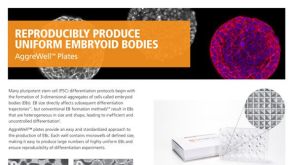 产品手册AggreWell™: Reproducible, Uniform Embryoid Bodies

 沪公网安备31010102008431号