Doran MR et al. (DEC 2009)
Biomaterials 30 34 6614--6620
Controlled presentation of recombinant proteins via a zinc-binding peptide-linker in two and three dimensional formats
The presentation of proteins on surfaces is fundamental to numerous cell culture and tissue engineering applications. While a number of physisorption and cross-linking methods exist to facilitate this process,few avoid denaturation of proteins or allow control over protein orientation,both of which are critical to the functionality of many signal proteins and ligands. Often recombinant protein sequences include a poly-histidine tag to facilitate purification. We utilize this sequence to anchor proteins to biosurfaces via a peptide bonded to the surface which conjugates with the poly-histidine tag in the presence of zinc rather than nickel,which is more traditionally used to conjugate poly-histidine tags to surfaces. We demonstrate that this strategy enables the display of proteins on 2D and 3D surfaces without compromising protein function through direct cross-linking or physisorption.
View Publication
产品类型:
产品号#:
05850
05857
05870
05875
85850
85857
85870
85875
产品名:
mTeSR™1
mTeSR™1
Petrova A et al. (SEP 2016)
Stem cells and development 25 18 1366--1375
Induced Pluripotent Stem Cell Differentiation and Three-Dimensional Tissue Formation Attenuate Clonal Epigenetic Differences in Trichohyalin.
The epigenetic background of pluripotent stem cells can influence transcriptional and functional behavior. Most of these data have been obtained in standard monolayer cell culture systems. In this study,we used exome sequencing,array comparative genomic hybridization (CGH),miRNA array,DNA methylation array,three-dimensional (3D) tissue engineering,and immunostaining to conduct a comparative analysis of two induced pluripotent stem cell (iPSC) lines used in engineering of 3D human epidermal equivalent (HEE),which more closely approximates epidermis. Exome sequencing and array CGH suggested that their genome was stable following 3 months of feeder-free culture. While the miRNAome was also not affected,≈7% of CpG sites were differently methylated between the two lines. Analysis of the epidermal differentiation complex,a region on chromosome 1 that contains multiple genes involved in skin barrier maturation (including trichohyalin,TCHH),found that in one of the iPSC clones (iKCL004),TCHH retained a DNA methylation signature characteristic of the original somatic cells,whereas in other iPSC line (iKCL011),the TCHH methylation signature matched that of the human embryonic stem cell line KCL034. The difference between the two iPSC clones in TCHH methylation did not have an obvious effect on its expression in 3D HEE,suggesting that differentiation and tissue formation may mitigate variations in the iPSC methylome.
View Publication
产品类型:
产品号#:
05850
05857
05870
05875
85850
85857
85870
85875
产品名:
mTeSR™1
mTeSR™1
Numaga-Tomita T et al. (DEC 2016)
Scientific reports 6 39383
Structural cardiac remodeling,accompanying cytoskeletal reorganization of cardiac cells,is a major clinical outcome of diastolic heart failure. A highly local Ca(2+) influx across the plasma membrane has been suggested to code signals to induce Rho GTPase-mediated fibrosis,but it is obscure how the heart specifically decodes the local Ca(2+) influx as a cytoskeletal reorganizing signal under the conditions of the rhythmic Ca(2+) handling required for pump function. We found that an inhibition of transient receptor potential canonical 3 (TRPC3) channel activity exhibited resistance to Rho-mediated maladaptive fibrosis in pressure-overloaded mouse hearts. Proteomic analysis revealed that microtubule-associated Rho guanine nucleotide exchange factor,GEF-H1,participates in TRPC3-mediated RhoA activation induced by mechanical stress in cardiomyocytes and transforming growth factor (TGF) β stimulation in cardiac fibroblasts. We previously revealed that TRPC3 functionally interacts with microtubule-associated NADPH oxidase (Nox) 2,and inhibition of Nox2 attenuated mechanical stretch-induced GEF-H1 activation in cardiomyocytes. Finally,pharmacological TRPC3 inhibition significantly suppressed fibrotic responses in human cardiomyocytes and cardiac fibroblasts. These results strongly suggest that microtubule-localized TRPC3-GEF-H1 axis mediates fibrotic responses commonly in cardiac myocytes and fibroblasts induced by physico-chemical stimulation.
View Publication
产品类型:
产品号#:
05850
05857
05870
05875
85850
85857
85870
85875
产品名:
mTeSR™1
mTeSR™1
Csaszar E et al. (JAN 2014)
Blood 123 5 650--8
Blood stem cell fate regulation by Delta-1-mediated rewiring of IL-6 paracrine signaling.
Increasing evidence supports the importance of cell extrinsic regulation in stem cell fate control. Hematopoietic stem cells (HSC) are responsive to local signals from their niche and to systemic feedback from progenitors and mature cells. The Notch ligand Delta-1 (DL1),a key component of the stem cell niche,regulates human hematopoietic lineage development in a dose-dependent manner and has been used clinically for primitive progenitor expansion. How DL1 acts to regulate HSC fate and whether these actions are related to its lineage skewing effects are poorly understood. Here we demonstrate that,although DL1 activates signal transducer and activator of transcription 3 signaling similarly to the gp130-activating cytokine interleukin-6 (IL-6),it has opposite effects on myeloid cell production. Mechanistically,these different outcomes are attributable to a DL1-mediated reduction in membrane (m)-bound IL-6 receptor (R) expression,converting progenitor cells from being directly IL-6 responsive to requiring both IL-6 and soluble (s) IL-6R for activation. Concomitant reduction of both mIL-6R (by DL1 supplementation) and sIL-6R (using dynamically fed cultures) reduced myeloid cell production and led to enhanced outputs of human HSCs. This work describes a new mode of cytokine action in which DL1 changes cytokine receptor distributions on hematopoietic cells,altering feedback networks and their impact on stem cell fate.
View Publication
产品类型:
产品号#:
19056
19056RF
产品名:
Floyd ZE et al. (APR 2015)
Cellular reprogramming 17 2 95--105
Prolonged proteasome inhibition cyclically upregulates Oct3/4 and Nanog gene expression, but reduces induced pluripotent stem cell colony formation.
There is ample evidence that the ubiquitin-proteasome system is an important regulator of transcription and its activity is necessary for maintaining pluripotency and promoting cellular reprogramming. Moreover,proteasome activity contributes to maintaining the open chromatin structure found in pluripotent stem cells,acting as a transcriptional inhibitor at specific gene loci generally associated with differentiation. The current study was designed to understand further the role of proteasome inhibition in reprogramming and its ability to modulate endogenous expression of pluripotency-related genes and induced pluripotent stem cells (iPSCs) colony formation. Herein,we demonstrate that acute combinatorial treatment with the proteasome inhibitors MG101 or MG132 and the histone deacetylase (HDAC) inhibitor valproic acid (VPA) increases gene expression of the pluripotency marker Oct3/4,and that MG101 alone is as effective as VPA in the induction of Oct3/4 mRNA expression in fibroblasts. Prolonged proteasome inhibition cyclically upregulates gene expression of Oct3/4 and Nanog,but reduces colony formation in the presence of the iPSC induction cocktail. In conclusion,our results demonstrate that the 26S proteasome is an essential modulator in the reprogramming process. Its inhibition enhances expression of pluripotency-related genes; however,efficient colony formation requires proteasome activity. Therefore,discovery of small molecules that increase proteasome activity might lead to more efficient cell reprogramming and generation of pluripotent cells.
View Publication
产品类型:
产品号#:
05850
05857
05870
05875
85850
85857
85870
85875
产品名:
mTeSR™1
mTeSR™1
Baek ST et al. (DEC 2015)
Nature medicine 21 12 1445--1454
An AKT3-FOXG1-reelin network underlies defective migration in human focal malformations of cortical development.
Focal malformations of cortical development (FMCDs) account for the majority of drug-resistant pediatric epilepsy. Postzygotic somatic mutations activating the phosphatidylinositol-4,5-bisphosphate-3-kinase (PI3K)-protein kinase B (AKT)-mammalian target of rapamycin (mTOR) pathway are found in a wide range of brain diseases,including FMCDs. It remains unclear how a mutation in a small fraction of cells disrupts the architecture of the entire hemisphere. Within human FMCD-affected brain,we found that cells showing activation of the PI3K-AKT-mTOR pathway were enriched for the AKT3(E17K) mutation. Introducing the FMCD-causing mutation into mouse brain resulted in electrographic seizures and impaired hemispheric architecture. Mutation-expressing neural progenitors showed misexpression of reelin,which led to a non-cell autonomous migration defect in neighboring cells,due at least in part to derepression of reelin transcription in a manner dependent on the forkhead box (FOX) transcription factor FOXG1. Treatments aimed at either blocking downstream AKT signaling or inactivating reelin restored migration. These findings suggest a central AKT-FOXG1-reelin signaling pathway in FMCD and support pathway inhibitors as potential treatments or therapies for some forms of focal epilepsy.
View Publication
产品类型:
产品号#:
05850
05857
05870
05875
85850
85857
85870
85875
产品名:
mTeSR™1
mTeSR™1
Kim J-E et al. (FEB 2011)
Proceedings of the National Academy of Sciences of the United States of America 108 7 3005--10
Investigating synapse formation and function using human pluripotent stem cell-derived neurons.
A major goal of stem-cell research is to identify conditions that reliably regulate their differentiation into specific cell types. This goal is particularly important for human stem cells if they are to be used for in vivo transplantation or as a platform for drug development. Here we describe the establishment of procedures to direct the differentiation of human embryonic stem cells and human induced pluripotent stem cells into forebrain neurons that are capable of forming synaptic connections. In addition,HEK293T cells expressing Neuroligin (NLGN) 3 and NLGN4,but not those containing autism-associated mutations,are able to induce presynaptic differentiation in human induced pluripotent stem cell-derived neurons. We show that a mutant NLGN4 containing an in-frame deletion is unable to localize correctly to the cell surface when overexpressed and fails to enhance synapse formation in human induced pluripotent stem cell-derived neurons. These findings establish human pluripotent stem cell-derived neurons as a viable model for the study of synaptic differentiation and function under normal and disorder-associated conditions.
View Publication
产品类型:
产品号#:
27845
27945
27840
27865
27940
27965
产品名:
Szabat M et al. (NOV 2011)
Cell death & disease 2 11 e232
Musashi expression in $\$-cells coordinates insulin expression, apoptosis and proliferation in response to endoplasmic reticulum stress in diabetes.
Diabetes is associated with the death and dysfunction of insulin-producing pancreatic $\$-cells. In other systems,Musashi genes regulate cell fate via Notch signaling,which we recently showed regulates $\$-cell survival. Here we show for the first time that human and mouse adult islet cells express mRNA and protein of both Musashi isoforms,as well Numb/Notch/Hes/neurogenin-3 pathway components. Musashi expression was observed in insulin/glucagon double-positive cells during human fetal development and increased during directed differentiation of human embryonic stem cells (hESCs) to the pancreatic lineage. De-differentiation of $\$-cells with activin A increased Msi1 expression. Endoplasmic reticulum (ER) stress increased Msi2 and Hes1,while it decreased Ins1 and Ins2 expression,revealing a molecular link between ER stress and $\$-cell dedifferentiation in type 2 diabetes. These effects were independent of changes in Numb protein levels and Notch activation. Overexpression of MSI1 was sufficient to increase Hes1,stimulate proliferation,inhibit apoptosis and reduce insulin expression,whereas Msi1 knockdown had the converse effects on proliferation and insulin expression. Overexpression of MSI2 resulted in a decrease in MSI1 expression. Taken together,these results demonstrate overlapping,but distinct roles for Musashi-1 and Musashi-2 in the control of insulin expression and $\$-cell proliferation. Our data also suggest that Musashi is a novel link between ER stress and the compensatory $\$-cell proliferation and the loss of $\$-cell gene expression seen in specific phases of the progression to type 2 diabetes.
View Publication
产品类型:
产品号#:
05850
05857
05870
05875
85850
85857
85870
85875
产品名:
mTeSR™1
mTeSR™1
Liu J et al. (MAY 2012)
PLoS ONE 7 5 e37559
Atomic force mechanobiology of pluripotent stem cell-derived cardiomyocytes
We describe a method using atomic force microscopy (AFM) to quantify the mechanobiological properties of pluripotent,stem cell-derived cardiomyocytes,including contraction force,rate,duration,and cellular elasticity. We measured beats from cardiomyocytes derived from induced pluripotent stem cells of healthy subjects and those with dilated cardiomyopathy,and from embryonic stem cell lines. We found that our AFM method could quantitate beat forces of single cells and clusters of cardiomyocytes. We demonstrate the dose-responsive,inotropic effect of norepinephrine and beta-adrenergic blockade of metoprolol. Cardiomyocytes derived from subjects with dilated cardiomyopathy showed decreased force and decreased cellular elasticity compared to controls. This AFM-based method can serve as a screening tool for the development of cardiac-active pharmacological agents,or as a platform for studying cardiomyocyte biology.
View Publication
产品类型:
产品号#:
05850
05857
05870
05875
85850
85857
85870
85875
产品名:
mTeSR™1
mTeSR™1
Ayombil F et al. (AUG 2013)
Journal of thrombosis and haemostasis : JTH 11 8 1532--9
Proteolysis of plasma-derived factor V following its endocytosis by megakaryocytes forms the platelet-derived factor V/Va pool.
BACKGROUND Central to appropriate thrombin formation at sites of vascular injury is the concerted assembly of plasma- and/or platelet-derived factor (F) Va and FXa on the activated platelet surface. While the plasma-derived procofactor,FV,must be proteolytically activated by α-thrombin to FVa to function in prothrombinase,the platelet molecule is released from α-granules in a partially activated state,obviating the need for proteolytic activation. OBJECTIVES The current study was performed to test the hypothesis that subsequent to its endocytosis by megakaryocytes,plasma-derived FV is proteolytically processed to form the platelet-derived pool. METHODS & RESULTS Subsequent to FV endocytosis,a time-dependent increase in FV proteolytic products was observed in megakaryocyte lysates by SDS-PAGE followed by phosphorimaging or western blotting. This cleavage was specific and resulted in the formation of products similar in size to FV/Va present in a platelet lysate as well as to the α-thrombin-activated FVa heavy chain and light chain,and their respective precursors. Other proteolytic products were unique to endocytosed FV. The product/precursor relationships of these fragments were defined using anti-FV heavy and light chain antibodies with defined epitopes. Activity measurements indicated that megakaryocyte-derived FV fragments exhibited substantial FVa cofactor activity that was comparable to platelet-derived FV/Va. CONCLUSIONS Taken together,these observations suggest that prior to its packaging in α-granules endocytosed FV undergoes proteolysis by one or more specific megakaryocyte protease(s) to form the partially activated platelet-derived pool.
View Publication
Palmer DJ et al. (JUN 2016)
Molecular Therapy — Methods & Clinical Development 3 April 16039
Helper virus-mediated downregulation of transgene expression permits production of recalcitrant helper-dependent adenoviral vector
Helper-dependent adenoviral vectors (HDAd) that express certain transgene products are impossible to produce because the transgene product is toxic to the producer cells,especially when made in large amounts during vector production. Downregulating transgene expression from the HDAd during vector production is a way to solve this problem. In this report,we show that this can be accomplished by inserting the target sequence for the adenoviral VA RNAI into the 3' untranslated region of the expression cassette in the HDAd. Thus during vector production,when the producer cells are coinfected with both the helper virus (HV) and the HDAd,the VA RNAI produced by the HV will target the transgene mRNA from the HDAd via the endogenous cellular RNAi pathway. Once the HDAd is produced and purified,transduction of the target cells results in unimpeded transgene expression because of the absence of HV. This simple and universal strategy permits for the robust production of otherwise recalcitrant HDAds.
View Publication


 EasySep™小鼠TIL(CD45)正选试剂盒





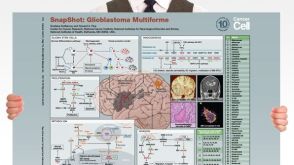 挂图SnapShot: Glioblastoma Multiforme Overview of the key concepts and mechanisms in glioblastoma multiforme biology
 沪公网安备31010102008431号