Mansouri M et al. ( 2016)
Nature Communications 7 May 11529
Highly efficient baculovirus-mediated multigene delivery in primary cells
Multigene delivery and subsequent cellular expression is emerging as a key technology required in diverse research fields including,synthetic and structural biology,cellular reprogramming and functional pharmaceutical screening. Current viral delivery systems such as retro- and adenoviruses suffer from limited DNA cargo capacity,thus impeding unrestricted multigene expression. We developed MultiPrime,a modular,non-cytotoxic,non-integrating,baculovirus-based vector system expediting highly efficient transient multigene expression from a variety of promoters. MultiPrime viruses efficiently transduce a wide range of cell types,including non-dividing primary neurons and induced-pluripotent stem cells (iPS). We show that MultiPrime can be used for reprogramming,and for genome editing and engineering by CRISPR/Cas9. Moreover,we implemented dual-host-specific cassettes enabling multiprotein expression in insect and mammalian cells using a single reagent. Our experiments establish MultiPrime as a powerful and highly efficient tool,to deliver multiple genes for a wide range of applications in primary and established mammalian cells.
View Publication
产品类型:
产品号#:
05850
05857
05870
05875
85850
85857
85870
85875
产品名:
mTeSR™1
mTeSR™1
Shinkuma S et al. (MAY 2016)
Proceedings of the National Academy of Sciences of the United States of America 113 20 5676--5681
Site-specific genome editing for correction of induced pluripotent stem cells derived from dominant dystrophic epidermolysis bullosa.
Genome editing with engineered site-specific endonucleases involves nonhomologous end-joining,leading to reading frame disruption. The approach is applicable to dominant negative disorders,which can be treated simply by knocking out the mutant allele,while leaving the normal allele intact. We applied this strategy to dominant dystrophic epidermolysis bullosa (DDEB),which is caused by a dominant negative mutation in the COL7A1 gene encoding type VII collagen (COL7). We performed genome editing with TALENs and CRISPR/Cas9 targeting the mutation,c.80688084delinsGA. We then cotransfected Cas9 and guide RNA expression vectors expressed with GFP and DsRed,respectively,into induced pluripotent stem cells (iPSCs) generated from DDEB fibroblasts. After sorting,90% of the iPSCs were edited,and we selected four gene-edited iPSC lines for further study. These iPSCs were differentiated into keratinocytes and fibroblasts secreting COL7. RT-PCR and Western blot analyses revealed gene-edited COL7 with frameshift mutations degraded at the protein level. In addition,we confirmed that the gene-edited truncated COL7 could neither associate with normal COL7 nor undergo triple helix formation. Our data establish the feasibility of mutation site-specific genome editing in dominant negative disorders.
View Publication
产品类型:
产品号#:
05850
05857
05870
05875
85850
85857
85870
85875
产品名:
mTeSR™1
mTeSR™1
Massa MG et al. ( 2016)
PLoS ONE 11 5 e0155274
Multiple sclerosis patient-specific primary neurons differentiated from urinary renal epithelial cells via induced pluripotent stem cells
As multiple sclerosis research progresses,it is pertinent to continue to develop suitable paradigms to allow for ever more sophisticated investigations. Animal models of multiple sclerosis,despite their continuing contributions to the field,may not be the most prudent for every experiment. Indeed,such may be either insufficient to reflect the functional impact of human genetic variations or unsuitable for drug screenings. Thus,we have established a cell- and patient-specific paradigm to provide an in vitro model within which to perform future genetic investigations. Renal proximal tubule epithelial cells were isolated from multiple sclerosis patients' urine and transfected with pluripotency-inducing episomal factors. Subsequent induced pluripotent stem cells were formed into embryoid bodies selective for ectodermal lineage,resulting in neural tube-like rosettes and eventually neural progenitor cells. Differentiation of these precursors into primary neurons was achieved through a regimen of neurotrophic and other factors. These patient-specific primary neurons displayed typical morphology and functionality,also staining positive for mature neuronal markers. The development of such a non-invasive procedure devoid of permanent genetic manipulation during the course of differentiation,in the context of multiple sclerosis,provides an avenue for studies with a greater cell- and human-specific focus,specifically in the context of genetic contributions to neurodegeneration and drug discovery.
View Publication
产品类型:
产品号#:
05850
05857
05870
05875
05910
85850
85857
85870
85875
产品名:
mTeSR™1
mTeSR™1
Son MY et al. (MAY 2016)
Exp Mol Med 48 5 e232
Generation and characterization of integration-free induced pluripotent stem cells from patients with autoimmune disease
Autoimmune diseases (AIDs),a heterogeneous group of immune-mediated disorders,are a major and growing health problem. Although AIDs are currently treated primarily with anti-inflammatory and immunosuppressive drugs,the use of stem cell transplantation in patients with AIDs is becoming increasingly common. However,stem cell transplantation therapy has limitations,including a shortage of available stem cells and immune rejection of cells from nonautologous sources. Induced pluripotent stem cell (iPSC) technology,which allows the generation of patient-specific pluripotent stem cells,could offer an alternative source for clinical applications of stem cell therapies in AID patients. We used nonintegrating oriP/EBNA-1-based episomal vectors to reprogram dermal fibroblasts from patients with AIDs such as ankylosing spondylitis (AS),Sjogren's syndrome (SS) and systemic lupus erythematosus (SLE). The pluripotency and multilineage differentiation capacity of each patient-specific iPSC line was validated. The safety of these iPSCs for use in stem cell transplantation is indicated by the fact that all AID-specific iPSCs are integrated transgene free. Finally,all AID-specific iPSCs derived in this study could be differentiated into cells of hematopoietic and mesenchymal lineages in vitro as shown by flow cytometric analysis and induction of terminal differentiation potential. Our results demonstrate the successful generation of integration-free iPSCs from patients with AS,SS and SLE. These findings support the possibility of using iPSC technology in autologous and allogeneic cell replacement therapy for various AIDs,including AS,SS and SLE.
View Publication
产品类型:
产品号#:
05850
05857
05870
05875
04034
04044
85850
85857
85870
85875
产品名:
MethoCult™ H4034 Optimum
MethoCult™ H4034 Optimum
mTeSR™1
mTeSR™1
Kouroupis D et al. (SEP 2016)
Stem cell research 17 2 448--457
Generation of stem cell-based bioartificial anterior cruciate ligament (ACL) grafts for effective ACL rupture repair.
In the present study,we combined stem cell technology with a non-absorbable biomaterial for the reconstruction of the ruptured ACL. Towards this purpose,multipotential stromal cells derived either from subcutaneous human adipose tissue (hAT-MSCs) or from induced pluripotent stem cells (iPSCs) generated from human foreskin fibroblasts (hiPSC-MSCs) were cultured on the biomaterial for 21days in vitro to generate a 3D bioartifical ACL graft. Stem cell differentiation towards bone and ligament at the ends and central part of the biomaterial was selectively induced using either BMP-2/FGF-2 or TGF-β/FGF-2 combinations,respectively. The bioartificial ACL graft was subsequently implanted in a swine ACL rupture model in place of the surgically removed normal ACL. Four months post-implantation,the tissue engineered ACL graft generated an ACL-like tissue exhibiting morphological and biochemical characteristics resembling those of normal ACL.
View Publication
产品类型:
产品号#:
05850
05857
05870
05875
85850
85857
85870
85875
产品名:
mTeSR™1
mTeSR™1
Pfaender S et al. ( 2016)
Neural plasticity 2016 ID 3760702 1--15
Cellular Zinc Homeostasis Contributes to Neuronal Differentiation in Human Induced Pluripotent Stem Cells.
Disturbances in neuronal differentiation and function are an underlying factor of many brain disorders. Zinc homeostasis and signaling are important mediators for a normal brain development and function,given that zinc deficiency was shown to result in cognitive and emotional deficits in animal models that might be associated with neurodevelopmental disorders. One underlying mechanism of the observed detrimental effects of zinc deficiency on the brain might be impaired proliferation and differentiation of stem cells participating in neurogenesis. Thus,to examine the molecular mechanisms regulating zinc metabolism and signaling in differentiating neurons,using a protocol for motor neuron differentiation,we characterized the expression of zinc homeostasis genes during neurogenesis using human induced pluripotent stem cells (hiPSCs) and evaluated the influence of altered zinc levels on the expression of zinc homeostasis genes,cell survival,cell fate,and neuronal function. Our results show that zinc transporters are highly regulated genes during neuronal differentiation and that low zinc levels are associated with decreased cell survival,altered neuronal differentiation,and,in particular,synaptic function. We conclude that zinc deficiency in a critical time window during brain development might influence brain function by modulating neuronal differentiation.
View Publication
产品类型:
产品号#:
05850
05857
05870
05875
85850
85857
85870
85875
产品名:
mTeSR™1
mTeSR™1
Bahl V et al. (JUN 2016)
Toxicological sciences : an official journal of the Society of Toxicology 153 1 kfw102
From the Cover: Thirdhand Cigarette Smoke Causes Stress-Induced Mitochondrial Hyperfusion and Alters the Transcriptional Profile of Stem Cells.
Thirdhand cigarette smoke (THS) was recently recognized as an environmental health hazard; however,little is known about it effects on cells. Mitochondria are sensitive monitors of cell health and report on environmentally-induced stress. We tested the effects of low levels of THS extracted from terry cloth on mitochondrial morphology and function using stem cells with well-defined mitochondria. Concentrations of THS that did not kill cells caused stress-induced mitochondrial hyperfusion (SIMH),which was characterized by changes in mitochondrial morphology indicative of fusion,increased mitochondrial membrane potential (MMP),increased ATP levels,increased superoxide production,and increased oxidation of mitochondrial proteins. SIMH was accompanied by a decrease in Fis1 expression,a gene responsible for mitochondrial fission,and a decrease in apoptosis-related genes,including Aifm2,Bbc3 and Bid There was also down regulation of Ucp2,Ucp4 and Ucp5,genes that decrease MMP thereby reducing oxidative phosphorylation,while promoting glycolysis. These effects,which collectively accompany SIMH,are a pro-survival mechanism to rescue damaged mitochondria and protect cells from apoptosis. Prolonged exposure to THS caused a reduction in MMP and decreased cell proliferation,which likely leads to apoptosis.
View Publication
产品类型:
产品号#:
05850
05857
05870
05875
85850
85857
85870
85875
产品名:
mTeSR™1
mTeSR™1
Gui L et al. (SEP 2016)
Biomaterials 102 120--129
Implantable tissue-engineered blood vessels from human induced pluripotent stem cells
Derivation of functional vascular smooth muscle cells (VSMCs) from human induced pluripotent stem cells (hiPSCs) to generate tissue-engineered blood vessels (TEBVs) holds great potential in treating patients with vascular diseases. Herein,hiPSCs were differentiated into alpha-smooth muscle actin ($$-SMA) and calponin-positive VSMCs,which were seeded onto polymer scaffolds in bioreactors for vascular tissue growth. A functional TEBV with abundant collagenous matrix and sound mechanics resulted,which contained cells largely positive for $$-SMA and smooth muscle myosin heavy chain (SM-MHC). Moreover,when hiPSC-derived TEBV segments were implanted into nude rats as abdominal aorta interposition grafts,they remained unruptured and patent with active vascular remodeling,and showed no evidence of teratoma formation during a 2-week proof-of-principle study. Our studies represent the development of the first implantable TEBVs based on hiPSCs,and pave the way for developing autologous or allogeneic grafts for clinical use in patients with vascular disease.
View Publication


 EasySep™小鼠TIL(CD45)正选试剂盒




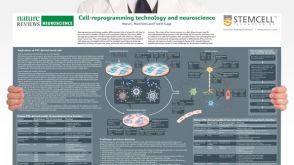 挂图Cell-Reprogramming Technology and Neuroscience Details on human iPSC-derived models of neuropsychiatric and neurodegenerative disorders


 沪公网安备31010102008431号