Cao N et al. (SEP 2013)
Cell Research 23 9 1119--1132
Highly efficient induction and long-term maintenance of multipotent cardiovascular progenitors from human pluripotent stem cells under defined conditions
Cardiovascular progenitor cells (CVPCs) derived from human pluripotent stem cells (hPSCs),including human embryonic stem cells (hESCs) and human induced pluripotent stem cells (hiPSCs),hold great promise for the study of cardiovascular development and cell-based therapy of heart diseases,but their applications are challenged by the difficulties in their efficient generation and stable maintenance. This study aims to develop chemically defined systems for robust generation and stable propagation of hPSC-derived CVPCs by modulating the key early developmental pathways involved in human cardiovascular specification and CVPC self-renewal. Herein we report that a combination of bone morphogenetic protein 4 (BMP4),glycogen synthase kinase 3 (GSK3) inhibitor CHIR99021 and ascorbic acid is sufficient to rapidly convert monolayer-cultured hPSCs,including hESCs and hiPSCs,into homogeneous CVPCs in a chemically defined medium under feeder- and serum-free culture conditions. These CVPCs stably self-renewed under feeder- and serum-free conditions and expanded over 10(7)-fold when the differentiation-inducing signals from BMP,GSK3 and Activin/Nodal pathways were simultaneously eliminated. Furthermore,these CVPCs exhibited expected genome-wide molecular features of CVPCs,retained potentials to generate major cardiovascular lineages including cardiomyocytes,smooth muscle cells and endothelial cells in vitro,and were non-tumorigenic in vivo. Altogether,the established systems reported here permit efficient generation and stable maintenance of hPSC-derived CVPCs,which represent a powerful tool to study early embryonic cardiovascular development and provide a potentially safe source of cells for myocardial regenerative medicine.
View Publication
产品类型:
产品号#:
05850
05857
05870
05875
07920
85850
85857
85870
85875
07922
产品名:
ACCUTASE™
mTeSR™1
mTeSR™1
ACCUTASE™
Nong K et al. (AUG 2016)
Cytotherapy
Hepatoprotective effect of exosomes from human-induced pluripotent stem cell-derived mesenchymal stromal cells against hepatic ischemia-reperfusion injury in rats.
BACKGROUND This study aimed to evaluate the effect of exosomes produced by human-induced pluripotent stem cell-derived mesenchymal stromal cells (hiPSC-MSCs-Exo) on hepatic ischemia-reperfusion (I/R) injury. METHODS Exosomes were isolated and concentrated from conditioned medium using ultracentrifugation and ultrafiltration. hiPSC-MSCs-Exo were injected systemically via the inferior vena cava in a rat model of 70% warm hepatic I/R injury,and the therapeutic effect was evaluated. The serum levels of transaminases (aspartate aminotransferase [AST] and alanine aminotransferase [ALT]) were measured using an automatic analyzer. The expression of inflammatory factors was measured using enzyme-linked immunosorbent assay (ELISA). Histological changes indicated changes in pathology and inflammatory infiltration in liver tissue. Apoptosis of hepatic cells in liver tissue was measured using terminal-deoxynucleoitidyl transferase mediated nick end labeling (TUNEL) staining along with apoptotic markers. RESULTS hiPSCs were efficiently induced into hiPSC-MSCs with typical MSC characteristics. hiPSC-MSCs-Exo had diameters ranging from 50 to 60 nm and expressed exosomal markers (CD9,CD63 and CD81). Hepatocyte necrosis and sinusoidal congestion were markedly suppressed with a lower Suzuki score after hiPSC-MSCs-Exo administration. The levels of the hepatocyte injury markers AST and ALT were significantly lower in the treated group than in the control group. Inflammatory markers,such as tumor necrosis factor (TNF)-α,interleukin (IL)-6 and high mobility group box 1 (HMGB1),were significantly reduced after administration of hiPSC-MSCs-Exo,which suggests that the exosomes have a role in suppressing the inflammatory response. Additionally,in liver tissues from the experimental group,the levels of apoptotic markers,such as caspase-3 and bax,were significantly lower and the levels of oxidative markers,such as glutathione (GSH),glutathione peroxidase (GSH-Px) and superoxide dismutase (SOD),were significantly higher than in the control group. These data point to an anti-apoptotic,anti-oxidative stress response role for hiPSC-MSCs-Exo. CONCLUSIONS Our results demonstrated that hiPSC-MSCs-Exo alleviate hepatic I/R injury,possibly via suppression of inflammatory responses,attenuation of the oxidative stress response and inhibition of apoptosis.
View Publication
产品类型:
产品号#:
05850
05857
05870
05875
85850
85857
85870
85875
产品名:
mTeSR™1
mTeSR™1
Hisatomi T et al. (MAR 2011)
Blood 117 13 3575--84
NK314 potentiates antitumor activity with adult T-cell leukemia-lymphoma cells by inhibition of dual targets on topoisomerase IIalpha and DNA-dependent protein kinase.
Adult T-cell leukemia-lymphoma (ATL) is an aggressive disease,incurable by standard chemotherapy. NK314,a new anticancer agent possessing inhibitory activity specific for topoisomerase IIα (Top2α),inhibited the growth of various ATL cell lines (50% inhibitory concentration: 23-70nM) with more potent activity than that of etoposide. In addition to the induction of DNA double-strand breaks by inhibition of Top2α,NK314 induced degradation of the catalytic subunit of DNA-dependent protein kinase (DNA-PKcs),resulting in impaired DNA double-strand break repair. The contribution of DNA-PK to inhibition of cell growth was affirmed by the following results: NK314 inhibited cell growth of M059J (a DNA-PKcs-deficient cell line) and M059K (a cell line with DNA-PKcs present) with the same potency,whereas etoposide exhibited weak inhibition of cell growth with M059K cells. A DNA-PK specific inhibitor,NU7026,enhanced inhibitory activity of etoposide on M059K as well as on ATL cells. These results suggest that NK314 is a dual inhibitor of Top2α and DNA-PK. Because ATL cells express a high amount of DNA-PKcs,NK314 as a dual molecular targeting anticancer agent is a potential therapeutic tool for treatment of ATL.
View Publication
产品类型:
产品号#:
04437
04447
产品名:
MethoCult™ Express
MethoCult™ Express
Donahue RE et al. (JAN 2000)
Blood 95 2 445--52
High levels of lymphoid expression of enhanced green fluorescent protein in nonhuman primates transplanted with cytokine-mobilized peripheral blood CD34(+) cells.
We have used a murine retrovirus vector containing an enhanced green fluorescent protein complimentary DNA (EGFP cDNA) to dynamically follow vector-expressing cells in the peripheral blood (PB) of transplanted rhesus macaques. Cytokine mobilized CD34(+) cells were transduced with an amphotropic vector that expressed EGFP and a dihydrofolate reductase cDNA under control of the murine stem cell virus promoter. The transduction protocol used the CH-296 recombinant human fibronectin fragment and relatively high concentrations of the flt-3 ligand and stem cell factor. Following transplantation of the transduced cells,up to 55% EGFP-expressing granulocytes were obtained in the peripheral circulation during the early posttransplant period. This level of myeloid marking,however,decreased to 0.1% or lower within 2 weeks. In contrast,EGFP expression in PB lymphocytes rose from 2%-5% shortly following transplantation to 10% or greater by week 5. After 10 weeks,the level of expression in PB lymphocytes continued to remain at 3%-5% as measured by both flow cytometry and Southern blot analysis,and EGFP expression was observed in CD4(+),CD8(+),CD20(+),and CD16/56(+) lymphocyte subsets. EGFP expression was only transiently detected in red blood cells and platelets soon after transplantation. Such sustained levels of lymphocyte marking may be therapeutic in a number of human gene therapy applications that require targeting of the lymphoid compartment. The transient appearance of EGFP(+) myeloid cells suggests that transduction of a lineage-restricted myeloid progenitor capable of short-term engraftment was obtained with this protocol. (Blood. 2000;95:445-452)
View Publication
Galat V et al. (MAY 2016)
Stem cells and development 25 14 1060--1072
Transgene Reactivation in Induced Pluripotent Stem Cell Derivatives and Reversion to Pluripotency of Induced Pluripotent Stem Cell-Derived Mesenchymal Cells.
Induced pluripotent stem cells (iPSCs) have enormous potential in regenerative medicine and disease modeling. It is now felt that clinical trials should be performed with iPSCs derived with non-integrative constructs. Numerous studies,however,including those describing disease models,are still being published using cells derived from iPSCs generated with integrative constructs. Our experimental work presents the first evidence of spontaneous transgene reactivation in vitro in several cellular types. Our results show that the transgenes were predominantly silent in parent iPSCs,but in mesenchymal and endothelial iPSC derivatives,the transgenes experienced random up-regulation of Nanog and c-Myc. Additionally,we provide evidence of spontaneous secondary reprogramming and reversion to pluripotency in mesenchymal stem cells derived from iPSCs. These findings strongly suggest that the studies,which utilize cellular products derived from iPSCs generated with retro- or lentiviruses,should be evaluated with consideration of the possibility of transgene reactivation. The in vitro model described here provides insight into the earliest events of culture transformation and suggests the hypothesis that reversion to pluripotency may be responsible for the development of tumors in cell replacement experiments. The main goal of this work,however,is to communicate the possibility of transgene reactivation in retro- or lenti- iPSC derivatives and the associated loss of cellular fidelity in vitro,which may impact the outcomes of disease modeling and related experimentation.
View Publication
产品类型:
产品号#:
05850
05857
05870
05875
85850
85857
85870
85875
产品名:
mTeSR™1
mTeSR™1
Kim Y et al. (OCT 2016)
Scientific reports 6 35145
Islet-like organoids derived from human pluripotent stem cells efficiently function in the glucose responsiveness in vitro and in vivo.
Insulin secretion is elaborately modulated in pancreatic ß cells within islets of three-dimensional (3D) structures. Using human pluripotent stem cells (hPSCs) to develop islet-like structures with insulin-producing ß cells for the treatment of diabetes is challenging. Here,we report that pancreatic islet-like clusters derived from hESCs are functionally capable of glucose-responsive insulin secretion as well as therapeutic effects. Pancreatic hormone-expressing endocrine cells (ECs) were differentiated from hESCs using a step-wise protocol. The hESC-derived ECs expressed pancreatic endocrine hormones,such as insulin,somatostatin,and pancreatic polypeptide. Notably,dissociated ECs autonomously aggregated to form islet-like,3D structures of consistent sizes (100-150 μm in diameter). These EC clusters (ECCs) enhanced insulin secretion in response to glucose stimulus and potassium channel inhibition in vitro. Furthermore,ß cell-deficient mice transplanted with ECCs survived for more than 40 d while retaining a normal blood glucose level to some extent. The expression of pancreatic endocrine hormones was observed in tissues transplanted with ECCs. In addition,ECCs could be generated from human induced pluripotent stem cells. These results suggest that hPSC-derived,islet-like clusters may be alternative therapeutic cell sources for treating diabetes.
View Publication
产品类型:
产品号#:
05850
05857
05870
05875
85850
85857
85870
85875
产品名:
mTeSR™1
mTeSR™1
Wang H et al. (APR 2016)
The Journal of biological chemistry 291 16 8644--8652
Germ Cell Nuclear Factor (GCNF) Represses Oct4 Expression and Globally Modulates Gene Expression in Human Embryonic Stem (hES) Cells.
Oct4 is considered a key transcription factor for pluripotent stem cell self-renewal. It binds to specific regions within target genes to regulate their expression and is downregulated upon induction of differentiation of pluripotent stem cells; however,the mechanisms that regulate the levels of human Oct4 expression remain poorly understood. Here we show that expression of human Oct4 is directly repressed by germ cell nuclear factor (GCNF),an orphan nuclear receptor,in hES cells. Knockdown of GCNF by siRNA resulted in maintenance of Oct4 expression during RA-induced hES cell differentiation. While overexpression of GCNF promoted repression of Oct4 expression in both undifferentiated and differentiated hES cells. The level of Oct4 repression was dependent on the level of GCNF expression in a dose-dependent manner. mRNA microarray analysis demonstrated that overexpression of GCNF globally regulates gene expression in undifferentiated and differentiated hES cells. Within the group of altered genes,GCNF down-regulated 36% of the genes,and up-regulated 64% in undifferentiated hES cells. In addition,GCNF also showed a regulatory gene pattern that is different from RA treatment during hES cell differentiation. These findings increase our understanding of the mechanisms that maintain hES cell pluripotency and regulate gene expression during the differentiation process.
View Publication
产品类型:
产品号#:
05850
05857
05870
05875
85850
85857
85870
85875
产品名:
mTeSR™1
mTeSR™1
Lim MN et al. (MAY 2012)
Molecular vision 18 1289--300
Ex vivo expanded SSEA-4+ human limbal stromal cells are multipotent and do not express other embryonic stem cell markers.
PURPOSE: The presence of multipotent human limbal stromal cells resembling mesenchymal stromal cells (MSC) provides new insights to the characteristic of these cells and its therapeutic potential. However,little is known about the expression of stage-specific embryonic antigen 4 (SSEA-4) and the embryonic stem cell (ESC)-like properties of these cells. We studied the expression of SSEA-4 surface protein and the various ESC and MSC markers in the ex vivo cultured limbal stromal cells. The phenotypes and multipotent differentiation potential of these cells were also evaluated.backslashnbackslashnMETHODS: Limbal stromal cells were derived from corneoscleral rims. The SSEA-4(+) and SSEA-4(-) limbal stromal cells were sorted by fluorescence-activated cells sorting (FACS). Isolated cells were expanded and reanalyzed for their expression of SSEA-4. Expression of MSC and ESC markers on these cells were also analyzed by FACS. In addition,expression of limbal epithelial and corneal stromal proteins such as ATP-binding cassette sub-family G member 2 (ABCG2),tumour protein p63 (p63),paired box 6 (Pax6),cytokeratin 3 (AE5),cytokeratin 10,and keratocan sulfate were evaluated either by immunofluorecence staining or reverse transcription polymerase chain reaction. Appropriate induction medium was used to differentiate these cells into adipocytes,osteocytes,and chondrocytes.backslashnbackslashnRESULTS: Expanded limbal stromal cells expressed the majority of mesenchymal markers. These cells were negative for ABCG2,p63,Pax6,AE-5,and keratocan sulfate. After passaged,a subpopulation of these cells showed low expression of SSEA-4 but were negative for other important ESC surface markers such as Tra-1-60,Tra-1-81,and transcription factors like octamer-binding transcription factor 4 (Oct4),SRY(sex determining region Y)-box 2 (Sox2),and Nanog. Early passaged cells when induced were able to differentiate into adipocytes,osteocytes and chondrocytes.backslashnbackslashnCONCLUSIONS: The expanded limbal stromal cells showed features of multipotent MSC. Our study confirmed the expression of SSEA-4 by a subpopulation of cultured limbal stromal cells. However,despite the expression of SSEA-4,these cells did not express any other markers of ESC. Therefore,we conclude that the cells did not show properties of ESC.
View Publication
产品类型:
产品号#:
05850
05857
05870
05875
85850
85857
85870
85875
产品名:
mTeSR™1
mTeSR™1
Mohamad O et al. (MAY 2013)
PLoS ONE 8 5 e64160
Vector-Free and Transgene-Free Human iPS Cells Differentiate into Functional Neurons and Enhance Functional Recovery after Ischemic Stroke in Mice
Stroke is a leading cause of human death and disability in the adult population in the United States and around the world. While stroke treatment is limited,stem cell transplantation has emerged as a promising regenerative therapy to replace or repair damaged tissues and enhance functional recovery after stroke. Recently,the creation of induced pluripotent stem (iPS) cells through reprogramming of somatic cells has revolutionized cell therapy by providing an unlimited source of autologous cells for transplantation. In addition,the creation of vector-free and transgene-free human iPS (hiPS) cells provides a new generation of stem cells with a reduced risk of tumor formation that was associated with the random integration of viral vectors seen with previous techniques. However,the potential use of these cells in the treatment of ischemic stroke has not been explored. In the present investigation,we examined the neuronal differentiation of vector-free and transgene-free hiPS cells and the transplantation of hiPS cell-derived neural progenitor cells (hiPS-NPCs) in an ischemic stroke model in mice. Vector-free hiPS cells were maintained in feeder-free and serum-free conditions and differentiated into functional neurons in vitro using a newly developed differentiation protocol. Twenty eight days after transplantation in stroke mice,hiPS-NPCs showed mature neuronal markers in vivo. No tumor formation was seen up to 12 months after transplantation. Transplantation of hiPS-NPCs restored neurovascular coupling,increased trophic support and promoted behavioral recovery after stroke. These data suggest that using vector-free and transgene-free hiPS cells in stem cell therapy are safe and efficacious in enhancing recovery after focal ischemic stroke in mice.
View Publication
产品类型:
产品号#:
05850
05857
05870
05875
85850
85857
85870
85875
产品名:
mTeSR™1
mTeSR™1
Pozzi S et al. (JUL 2006)
Experimental hematology 34 7 934--42
Donor multipotent mesenchymal stromal cells may engraft in pediatric patients given either cord blood or bone marrow transplantation.
OBJECTIVE: Multipotent mesenchymal stromal cells (MSCs) are endowed with multilineage differentiative potential and immunomodulatory properties. It is still a matter of debate whether donor MSCs have sustained engraftment potential in host bone marrow (BM) after allogeneic hematopoietic stem cell transplantation (allo-HSCT). The aim of this study was to analyze the donor/recipient origin of MSCs in children receiving allogeneic either BM or cord blood (CB) transplantation. METHODS: Thirty-seven pediatric patients undergoing allo-HSCT for either a malignant or a nonmalignant disorder were enrolled in the study; 19 received CB and 18 BM transplantation. Results were compared with those obtained in 14 adults given BM transplantation for either malignant or nonmalignant disorders. MSCs were grown from BM aspirates obtained 1-17 and 2-192 months after allo-HSCT in pediatric and adult patients,respectively. MSC samples at the third-fourth passage were phenotypically characterized. Donor/recipient origin of MSCs was assessed by amelogenin assay and microsatellite analysis. RESULTS: MSCs could be grown from 30 of 37 children; at the third-fourth passage MSCs resulted positive (textgreater or = 98%) for CD73,CD105,CD106,CD29,CD13,CD44 and negative (textless or = 1%) for CD34,CD45,CD14. Mixed chimerism with donor cells was observed in 4 BM and 5 CB transplantation recipients,respectively; full recipient chimerism was detected in the remaining children. Full recipient MSC chimerism was observed also in all assessable (12/14) adult patients. CONCLUSIONS: BM of pediatric patients might be a more favorable milieu than that of adults for sustained engraftment of transplanted MSCs. MSCs able to engraft in the host can be transferred with cryopreserved CB units.
View Publication
产品类型:
产品号#:
05401
05402
05411
产品名:
MesenCult™ MSC 基础培养基(人)
MesenCult™ MSC刺激添加物(人)
MesenCult™ 增殖试剂盒(人)
Saitta B et al. (JUL 2014)
Stem cells and development 23 13 1464--1478
Patient-derived skeletal dysplasia induced pluripotent stem cells display abnormal chondrogenic marker expression and regulation by BMP2 and TGFβ1.
Skeletal dysplasias (SDs) are caused by abnormal chondrogenesis during cartilage growth plate differentiation. To study early stages of aberrant cartilage formation in vitro,we generated the first induced pluripotent stem cells (iPSCs) from fibroblasts of an SD patient with a lethal form of metatropic dysplasia,caused by a dominant mutation (I604M) in the calcium channel gene TRPV4. When micromasses were grown in chondrogenic differentiation conditions and compared with control iPSCs,mutant TRPV4-iPSCs showed significantly (Ptextless0.05) decreased expression by quantitative real-time polymerase chain reaction of COL2A1 (IIA and IIB forms),SOX9,Aggrecan,COL10A1,and RUNX2,all of which are cartilage growth plate markers. We found that stimulation with BMP2,but not TGF$\$1,up-regulated COL2A1 (IIA and IIB) and SOX9 gene expression,only in control iPSCs. COL2A1 (Collagen II) expression data were confirmed at the protein level by western blot and immunofluorescence microscopy. TRPV4-iPSCs showed only focal areas of Alcian blue stain for proteoglycans,while in control iPSCs the stain was seen throughout the micromass sample. Similar staining patterns were found in neonatal cartilage from control and patient samples. We also found that COL1A1 (Collagen I),a marker of osteogenic differentiation,was significantly (Ptextless0.05) up-regulated at the mRNA level in TRPV4-iPSCs when compared with the control,and confirmed at the protein level. Collagen I expression in the TRPV4 model also may correlate with abnormal staining patterns seen in patient tissues. This study demonstrates that an iPSC model can recapitulate normal chondrogenesis and that mutant TRPV4-iPSCs reflect molecular evidence of aberrant chondrogenic developmental processes,which could be used to design therapeutic approaches for disorders of cartilage.
View Publication


 EasySep™小鼠TIL(CD45)正选试剂盒





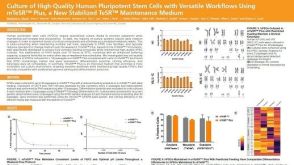 科学海报Culture of High-Quality Human Pluripotent Stem Cells with Versatile Workflows Using mTeSR™ Plus, a New Stabilized TeSR™ Maintenance Medium
 沪公网安备31010102008431号