Transcriptional repression of c-Myb and GATA-2 is involved in the biologic effects of C/EBPalpha in p210BCR/ABL-expressing cells.
Ectopic C/EBPalpha expression in p210(BCR/ABL)-expressing hematopoietic cells induces granulocytic differentiation,inhibits proliferation,and suppresses leukemogenesis. To assess the underlying mechanisms,C/EBPalpha targets were identified by microarray analyses. Upon C/EBPalpha activation,expression of c-Myb and GATA-2 was repressed in 32D-BCR/ABL,K562,and chronic myelogenous leukemia (CML) blast crisis (BC) primary cells but only c-Myb levels decreased slightly in CD34(+) normal progenitors. The role of these 2 genes for the effects of C/EBPalpha was assessed by perturbing their expression in K562 cells. Ectopic c-Myb expression blocked the proliferation inhibition- and differentiation-inducing effects of C/EBPalpha,whereas c-Myb siRNA treatment enhanced C/EBPalpha-mediated proliferation inhibition and induced changes in gene expression indicative of monocytic differentiation. Ectopic GATA-2 expression suppressed the proliferation inhibitory effect of C/EBPalpha but blocked in part the effect on differentiation; GATA-2 siRNA treatment had no effects on C/EBPalpha induction of differentiation but inhibited proliferation of K562 cells,alone or upon C/EBPalpha activation. In summary,the effects of C/EBPalpha in p210(BCR/ABL)-expressing cells depend,in part,on transcriptional repression of c-Myb and GATA-2. Since perturbation of c-Myb and GATA-2 expression has nonidentical consequences for proliferation and differentiation of K562 cells,the effects of C/EBPalpha appear to involve dif-ferent transcription-regulated targets.
View Publication
产品类型:
产品号#:
02690
09600
09650
产品名:
StemSpan™ CC100
StemSpan™ SFEM
StemSpan™ SFEM
Lian X et al. (MAR 2013)
PLoS ONE 8 3 e60016
A Small Molecule Inhibitor of Src Family Kinases Promotes Simple Epithelial Differentiation of Human Pluripotent Stem Cells
Human pluripotent stem cells (hPSCs) provide unprecedented opportunities to study the earliest stages of human development in vitro and have the potential to provide unlimited new sources of cells for regenerative medicine. Although previous studies have reported cytokeratin 14+/p63+ keratinocyte generation from hPSCs,the multipotent progenitors of epithelial lineages have not been described and the developmental pathways regulating epithelial commitment remain largely unknown. Here we report membrane localization of β-catenin during retinoic acid (RA)--induced epithelial differentiation. In addition hPSC treatment with the Src family kinase inhibitor SU6656 modulated β-catenin localization and produced an enriched population of simple epithelial cells under defined culture conditions. SU6656 strongly upregulated expression of cytokeratins 18 and 8 (K18/K8),which are expressed in simple epithelial cells,while repressing expression of the pluripotency gene Oct4. This homogeneous population of K18+K8+Oct4- simple epithelial precursor cells can further differentiate into cells expressing keratinocyte or corneal-specific markers. These enriched hPSC-derived simple epithelial cells may provide a ready source for development and toxicology cell models and may serve as a progenitor for epithelial cell transplantation applications.
View Publication
Pasquier J et al. (JUN 2017)
The Journal of heart and lung transplantation : the official publication of the International Society for Heart Transplantation 36 6 684--693
Coculturing with endothelial cells promotes in vitro maturation and electrical coupling of human embryonic stem cell-derived cardiomyocytes.
BACKGROUND Pluripotent human embryonic stem cells (hESC) are a promising source of repopulating cardiomyocytes. We hypothesized that we could improve maturation of cardiomyocytes and facilitate electrical interconnections by creating a model that more closely resembles heart tissue; that is,containing both endothelial cells (ECs) and cardiomyocytes. METHODS We induced cardiomyocyte differentiation in the coculture of an hESC line expressing the cardiac reporter NKX2.5-green fluorescent protein (GFP),and an Akt-activated EC line (E4(+)ECs). We quantified spontaneous beating rates,synchrony,and coordination between different cardiomyocyte clusters using confocal imaging of Fura Red-detected calcium transients and computer-assisted image analysis. RESULTS After 8 days in culture,94% ± 6% of the NKX2-5GFP(+) cells were beating when hESCs embryonic bodies were plated on E4(+)ECs compared with 34% ± 12.9% for controls consisting of hESCs cultured on BD Matrigel (BD Biosciences) without ECs at Day 11 in culture. The spatial organization of beating areas in cocultures was different. The GFP(+) cardiomyocytes were close to the E4(+)ECs. The average beats/min of the cardiomyocytes in coculture was faster and closer to physiologic heart rates compared with controls (50 ± 14 [n = 13] vs 25 ± 9 [n = 8]; p < 0.05). The coculture with ECs led to synchronized beating relying on the endothelial network,as illustrated by the loss of synchronization upon the disruption of endothelial bridges. CONCLUSIONS The coculturing of differentiating cardiomyocytes with Akt-activated ECs but not EC-conditioned media results in (1) improved efficiency of the cardiomyocyte differentiation protocol and (2) increased maturity leading to better intercellular coupling with improved chronotropy and synchrony.
View Publication
Vazin T et al. (JAN 2014)
Biomaterials 35 3 941--948
The effect of multivalent Sonic hedgehog on differentiation of human embryonic stem cells into dopaminergic and GABAergic neurons
Stem cell differentiation is regulated by complex repertoires of signaling ligands which often use multivalent interactions,where multiple ligands tethered to one entity interact with multiple cellular receptors to yield oligomeric complexes. One such ligand is Sonic hedgehog (Shh),whose posttranslational lipid modifications and assembly into multimers enhance its biological potency,potentially through receptor clustering. Investigations of Shh typically utilize recombinant,monomeric protein,and thus the impact of multivalency on ligand potency is unexplored. Among its many activities,Shh is required for ventralization of the midbrain and forebrain and is therefore critical for the development of midbrain dopaminergic (mDA) and forebrain gamma-aminobutyric acid (GABA) inhibitory neurons. We have designed multivalent biomaterials presenting Shh in defined spatial arrangements and investigated the role of Shh valency in ventral specification of human embryonic stem cells (hESCs) into these therapeutically relevant cell types. Multivalent Shh conjugates with optimal valencies,compared to the monomeric Shh,increased the percentages of neurons belonging to mDA or forebrain GABAergic fates from 33% to 60% or 52% to 86%,respectively. Thus,multivalent Shh bioconjugates can enhance neuronal lineage commitment of pluripotent stem cells and thereby facilitate efficient derivation of neurons that could be used to treat Parkinson's and epilepsy patients.
View Publication
产品类型:
产品号#:
05850
05857
05870
05875
85850
85857
85870
85875
产品名:
mTeSR™1
mTeSR™1
Greene WA et al. (JUN 2014)
Journal of visualized experiments : JoVE 88 e51589
MicroRNA expression profiles of human iPS cells, retinal pigment epithelium derived from iPS, and fetal retinal pigment epithelium.
The objective of this report is to describe the protocols for comparing the microRNA (miRNA) profiles of human induced-pluripotent stem (iPS) cells,retinal pigment epithelium (RPE) derived from human iPS cells (iPS-RPE),and fetal RPE. The protocols include collection of RNA for analysis by microarray,and the analysis of microarray data to identify miRNAs that are differentially expressed among three cell types. The methods for culture of iPS cells and fetal RPE are explained. The protocol used for differentiation of RPE from human iPS is also described. The RNA extraction technique we describe was selected to allow maximal recovery of very small RNA for use in a miRNA microarray. Finally,cellular pathway and network analysis of microarray data is explained. These techniques will facilitate the comparison of the miRNA profiles of three different cell types.
View Publication
产品类型:
产品号#:
05850
05857
05870
05875
85850
85857
85870
85875
产品名:
mTeSR™1
mTeSR™1
Lian R-L et al. (FEB 2016)
Molecular and cellular biochemistry 413 1-2 69--85
Effects of induced pluripotent stem cells-derived conditioned medium on the proliferation and anti-apoptosis of human adipose-derived stem cells.
Human adipose-derived stem cells (hASCs) become an appealing source for regenerative medicine. However,with the multi-passage or cryopreservation for large-scale growth procedures in terms of preclinical and clinical purposes,hASCs often reveal defective cell viability,which is a major obstacle for cell therapy. In our study,the effects of induced pluripotent stem cells-derived conditioned medium (iPS-CM) on the proliferation and anti-apoptosis in hASCs were investigated. hASCs at passage 1 were identified by the analysis of typical surface antigens with flow cytometry assay and adipogenic and osteogenic differentiation. The effect of iPS-CM on the proliferation in hASCs was analyzed by cell cycle assay and Ki67/P27 quantitative polymerase chain reaction analysis. The effect of iPS-CM on the anti-apoptosis of hASCs irradiated by 468 J/m(2) of ultraviolet C was investigated by annexin v/propidium iodide analysis,mitochondrial membrane potential assay,intracellular reactive oxygen species assay,Western blotting and caspase activity assays. The effect of iPS-CM on the surface antigen expressions of hASCs was analyzed using flow cytometry assay. The levels of Activin A and bFGF in culture supernatant of hASCs with different treatments were also detected by enzyme-linked immunosorbent assay. iPS-CM promoted proliferation and inhibited apoptosis of hASCs. This discovery demonstrates that iPS-CM might be used as one of the available means to overcome the propagation obstacle for hASCs and make for large-scale growth procedures in terms of preclinical and clinical purposes.
View Publication
产品类型:
产品号#:
05850
05857
05870
05875
85850
85857
85870
85875
产品名:
mTeSR™1
mTeSR™1
Kunishima S et al. (MAR 2008)
Blood 111 6 3015--23
Differential expression of wild-type and mutant NMMHC-IIA polypeptides in blood cells suggests cell-specific regulation mechanisms in MYH9 disorders.
MYH9 disorders such as May-Hegglin anomaly are characterized by macrothrombocytopenia and cytoplasmic granulocyte inclusion bodies that result from mutations in MYH9,the gene for nonmuscle myosin heavy chain-IIA (NMMHC-IIA). We examined the expression of mutant NMMHC-IIA polypeptide in peripheral blood cells from patients with MYH9 5770delG and 5818delG mutations. A specific antibody to mutant NMMHC-IIA (NT629) was raised against the abnormal carboxyl-terminal residues generated by 5818delG. NT629 reacted to recombinant 5818delG NMMHC-IIA but not to wild-type NMMHC-IIA,and did not recognize any cellular components of normal peripheral blood cells. Immunofluorescence and immunoblotting revealed that mutant NMMHC-IIA was present and sequestrated only in inclusion bodies within neutrophils,diffusely distributed throughout lymphocyte cytoplasm,sparsely localized on a diffuse cytoplasmic background in monocytes,and uniformly distributed at diminished levels only in large platelets. Mutant NMMHC-IIA did not translocate to lamellipodia in surface activated platelets. Wild-type NMMHC-IIA was homogeneously distributed among megakaryocytes derived from the peripheral blood CD34(+) cells of patients,but coarse mutant NMMHC-IIA was heterogeneously scattered without abnormal aggregates in the cytoplasm. We show the differential expression of mutant NMMHC-IIA and postulate that cell-specific regulation mechanisms function in MYH9 disorders.
View Publication
产品类型:
产品号#:
09600
09650
产品名:
StemSpan™ SFEM
StemSpan™ SFEM
Porayette P et al. (AUG 2009)
The Journal of Biological Chemistry 284 35 23806--17
Differential Processing of Amyloid-β Precursor Protein Directs Human Embryonic Stem Cell Proliferation and Differentiation into Neuronal Precursor Cells
The amyloid-beta precursor protein (AbetaPP) is a ubiquitously expressed transmembrane protein whose cleavage product,the amyloid-beta (Abeta) protein,is deposited in amyloid plaques in neurodegenerative conditions such as Alzheimer disease,Down syndrome,and head injury. We recently reported that this protein,normally associated with neurodegenerative conditions,is expressed by human embryonic stem cells (hESCs). We now report that the differential processing of AbetaPP via secretase enzymes regulates the proliferation and differentiation of hESCs. hESCs endogenously produce amyloid-beta,which when added exogenously in soluble and fibrillar forms but not oligomeric forms markedly increased hESC proliferation. The inhibition of AbetaPP cleavage by beta-secretase inhibitors significantly suppressed hESC proliferation and promoted nestin expression,an early marker of neural precursor cell (NPC) formation. The induction of NPC differentiation via the non-amyloidogenic pathway was confirmed by the addition of secreted AbetaPPalpha,which suppressed hESC proliferation and promoted the formation of NPCs. Together these data suggest that differential processing of AbetaPP is normally required for embryonic neurogenesis.
View Publication
产品类型:
产品号#:
05850
05857
05870
05875
85850
85857
85870
85875
产品名:
mTeSR™1
mTeSR™1
Zhang L-Z et al. (JUN 2010)
Zhonghua xue ye xue za zhi = Zhonghua xueyexue zazhi 31 6 398--402
[In vitro effects of anti-CD44 monoclonal antibody on the adhesion and migration of chronic myeloid leukemia stem cells.]
OBJECTIVE: To explore the effects of anti-CD44 monoclonal antibody-IM7 on the in vitro adhesion and migration of chronic myeloid leukemia stem cell (CML-LSC) and its mechanism. METHODS: CD34(+)CD38(-)CD123(+) leukemic stem cells (LSC) from 20 newly-diagnosed chronic myeloid leukemia (CML) patients BM cells and CD34(+)CD38(-) hematopoietic stem cells (HSC) from 20 full-term newborn cord blood cells were isolated with EasySep(TM) magnet beads. The CD44 expression of the LSC and HSC was detected by flow cytometry (FCM),and the adhesion and migration ability of the LSC and HSC pre- and post-incubated with IM7 in vitro by MTT assay and transendothelial migration assay,respectively. RESULTS: (1) After incubated with IM7,the LSC and HSC CD44 expression rates were (86.60 ± 2.10)% vs. (25.40 ± 1.70)% (P textless 0.05),respectively. (2) The adhesive ability of the LSC to endothelial cells was decreased markedly after incubated with IM7,the OD value (A(570)) changing from pre-incubation of (0.62 ± 0.11) to post-incubation of (0.34 ± 0.07),while there was little change of A(570) in the HSC group. (3) The migration ability of the LSC group was inhibited evidently after incubated with IM7,the inhibition rate being 46% ∼ 63%,while little change of that in HSC group was detected. (4) The adhesive ability of the LSC group to marrow stromal cells was decreased markedly after incubated with IM7,while little change was found in that of HSC group. CONCLUSION: The anti-CD44 monoclonal antibody-IM7 can effectively inhibit the adhesion and migration abilities of the LSC in vitro,which might provide a theoretical evidence for targeting therapy.
View Publication
产品类型:
产品号#:
产品名:
Smagghe BJ et al. (MAR 2013)
PLoS ONE 8 3 e58601
MUC1* Ligand, NM23-H1, Is a Novel Growth Factor That Maintains Human Stem Cells in a More Naïve State
We report that a single growth factor,NM23-H1,enables serial passaging of both human ES and iPS cells in the absence of feeder cells,their conditioned media or bFGF in a fully defined xeno-free media on a novel defined,xeno-free surface. Stem cells cultured in this system show a gene expression pattern indicative of a more naïve" state than stem cells grown in bFGF-based media. NM23-H1 and MUC1* growth factor receptor cooperate to control stem cell self-replication. By manipulating the multimerization state of NM23-H1�
View Publication


 EasySep™小鼠TIL(CD45)正选试剂盒





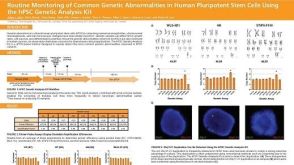 科学海报Routine Monitoring of Common Genetic Abnormalities in Human Pluripotent Stem Cells Using the hPSC Genetic Analysis Kit
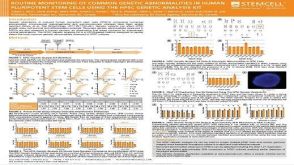 科学海报Routine Monitoring of Common Genetic Abnormalities in Human Pluripotent Stem Cells Using the hPSC Genetic Analysis Kit
 沪公网安备31010102008431号