Gottschling S et al. (MAR 2007)
Stem cells (Dayton,Ohio) 25 3 798--806
Human mesenchymal stromal cells regulate initial self-renewing divisions of hematopoietic progenitor cells by a beta1-integrin-dependent mechanism.
In previous reports,we have demonstrated that only direct cell-cell contact with stromal cells,such as the murine stromal cell line AFT024,was able to alter the cell division kinetics and self-renewing capacity of hematopoietic progenitor cells (HPC). Because beta(1)-integrins were shown to be crucial for the interaction of HPC with the bone marrow microenvironment,we have studied the role of beta(1)-integrins in the regulation of self-renewing cell divisions. For this purpose,we used primary human mesenchymal stromal (MS) cells as in vitro surrogate niche and monitored the division history and subsequent functional fate of individually plated CD34(+)133(+) cells in the absence or presence of an anti-beta(1)-integrin blocking antibody by time-lapse microscopy and subsequent long-term culture-initiating cell (LTC-IC) assays. beta(1)-Integrin-mediated contact with MS cells significantly increased the proportion of asymmetrically dividing cells and led to a substantial increase of LTC-IC. Provided that beta(1)-integrin-mediated contact was available within the first 72 hours,human MS cells were able to recruit HPC into cell cycle and accelerate their division kinetics without loss of stem cell function. Activation of beta(1)-integrins by ligands alone (e.g.,fibronectin and vascular cell adhesion molecule-1) was not sufficient to alter the cell division symmetry and promote self-renewal of HPC,thus indicating an indirect effect. These results have provided evidence that primary human MS cells are able to induce self-renewing divisions of HPC by a beta(1)-integrin-dependent mechanism.
View Publication
产品类型:
产品号#:
04434
04444
产品名:
MethoCult™ H4434 Classic
MethoCult™ H4434 Classic
M. A. DeWitt et al. (OCT 2016)
Science translational medicine 8 360 360ra134
Selection-free genome editing of the sickle mutation in human adult hematopoietic stem/progenitor cells.
Genetic diseases of blood cells are prime candidates for treatment through ex vivo gene editing of CD34+ hematopoietic stem/progenitor cells (HSPCs),and a variety of technologies have been proposed to treat these disorders. Sickle cell disease (SCD) is a recessive genetic disorder caused by a single-nucleotide polymorphism in the $\beta$-globin gene (HBB). Sickle hemoglobin damages erythrocytes,causing vasoocclusion,severe pain,progressive organ damage,and premature death. We optimize design and delivery parameters of a ribonucleoprotein (RNP) complex comprising Cas9 protein and unmodified single guide RNA,together with a single-stranded DNA oligonucleotide donor (ssODN),to enable efficient replacement of the SCD mutation in human HSPCs. Corrected HSPCs from SCD patients produced less sickle hemoglobin RNA and protein and correspondingly increased wild-type hemoglobin when differentiated into erythroblasts. When engrafted into immunocompromised mice,ex vivo treated human HSPCs maintain SCD gene edits throughout 16 weeks at a level likely to have clinical benefit. These results demonstrate that an accessible approach combining Cas9 RNP with an ssODN can mediate efficient HSPC genome editing,enables investigator-led exploration of gene editing reagents in primary hematopoietic stem cells,and suggests a path toward the development of new gene editing treatments for SCD and other hematopoietic diseases.
View Publication
产品类型:
产品号#:
02697
02692
09600
09650
09605
09655
产品名:
StemSpan™ CC110
StemSpan™红系扩增添加物 (100X)
StemSpan™ SFEM
StemSpan™ SFEM
StemSpan™ SFEM II
StemSpan™ SFEM II
Bruserud O et al. (JUN 2005)
Journal of cancer research and clinical oncology 131 6 377--84
In vitro culture of human osteosarcoma cell lines: a comparison of functional characteristics for cell lines cultured in medium without and with fetal calf serum.
PURPOSE: Experimental in vitro models including well-characterised cell lines can be used to identify possible new therapeutic targets for the treatment of osteosarcoma. Culture media including inactivated serum is often recommended for in vitro culture of osteosarcoma cells,but the serum component then represents a nonstandardised parameter including a wide range of unidentified mediators. To improve the standardisation we have investigated whether serum-free culture media can be used in experimental in vitro studies of osteosarcoma cell lines. METHODS: The seven osteosarcoma cell lines Cal72,SJSA-1,Saos-2,SK-ES-1,U2OS,143.98.2,and KHOS-32IH were cultured in vitro in various serum-free media and media supplemented with 10% heat-inactivated fetal calf serum (FCS). RESULTS: Although proliferation often was relatively low in serum-free media (X-vivo 10,X-vivo 15,X-vivo 20,Stem Span SFEM),some cell lines (Cal72,KHOS-32IH,Saos-2) showed proliferation comparable with the recommended FCS-containing media even when using serum-free conditions. The optimal serum-free medium then varied between cell lines. We also compared 6 different FCS-containing media (including Stem Span with 10% FCS) and the optimal FCS-containing medium varied between cell lines. However,all cell lines proliferated well in Stem Span with FCS,and this medium was regarded as optimal for four of the lines. FCS could not be replaced by fatty acids or low density lipoprotein when testing the Stem Span medium. The release of a wide range of soluble mediators showed only minor differences when using serum-free and FCS-containing media (including Stem Span with and without FCS),and serum-free Stem Span could also be used for in vitro studies of mitogen-stimulated T cell activation in the presence of accessory osteosarcoma cells. The use of Stem Span with 10% FCS allowed the release of a wide range of chemokines by osteosarcoma cell lines (Cal72,SJSA-1),and the chemokine release profile was very similar to the fibroblast lines Hs27 and HFL1. CONCLUSIONS: Serum-free culture media can be used for in vitro studies of several osteosarcoma cell lines,but the optimal medium varies between cell lines and thus depends on: (i) the cell lines to be investigated/compared; (ii) the functional characteristic that is evaluated (proliferation,cytokine release); and (iii) whether coculture experiments are included.
View Publication
Senatus PB et al. (JAN 2006)
Molecular cancer therapeutics 5 1 20--8
Restoration of p53 function for selective Fas-mediated apoptosis in human and rat glioma cells in vitro and in vivo by a p53 COOH-terminal peptide.
We have shown that a COOH-terminal peptide of p53 (amino acids 361-382,p53p),linked to the truncated homeobox domain of Antennapedia (Ant) as a carrier for transduction,induced rapid apoptosis in human premalignant and malignant cell lines. Here,we report that human and rat glioma lines containing endogenous mutant p53 or wild-type (WT) p53 were induced into apoptosis by exposure to this peptide called p53p-Ant. The peptide was comparatively nontoxic to proliferating nonmalignant human and rat glial cell lines containing WT p53 and proliferating normal human peripheral marrow blood stem cells. Degree of sensitivity to the peptide correlated directly with the level of endogenous p53 expression and mutant p53 conformation. Apoptosis induction by p53p-Ant was quantitated by terminal deoxynucleotidyl transferase-mediated dUTP nick end labeling assay and Annexin V staining in human glioma cells in vitro and in a syngeneic orthotopic 9L glioma rat model using convection-enhanced delivery in vivo. The mechanism of cell death by this peptide was solely through the Fas extrinsic apoptotic pathway. p53p-Ant induced a 3-fold increase in extracellular membrane Fas expression in glioma cells but no significant increase in nonmalignant glial cells. These data suggest that p53 function for inducing Fas-mediated apoptosis in gliomas,which express sufficient quantities of endogenous mutant or WT p53,may be restored or activated,respectively,by a cell-permeable peptide derived from the p53 COOH-terminal regulatory domain (p53p-Ant). p53p-Ant may serve as a prototypic model for the development of new anticancer agents with unique selectivity for glioma cancer cells and it can be successfully delivered in vivo into a brain tumor by a convection-enhanced delivery system,which circumvents the blood-brain barrier.
View Publication
产品类型:
产品号#:
04434
04444
产品名:
MethoCult™ H4434 Classic
MethoCult™ H4434 Classic
Miyazaki T et al. (JAN 2014)
Genesis (New York,N.Y. : 2000) 52 1 49--55
Optimization of slow cooling cryopreservation for human pluripotent stem cells
Human pluripotent stem cells (hPSCs) have the potential for unlimited expansion and differentiation into cell types of all three germ layers. Cryopreservation is a key process for successful application of hPSCs. However,the current conventional method leads to poor recovery of hPSCs after thawing. Here,we demonstrate a highly efficient recovery method for hPSC cryopreservation by slow freezing and single-cell dissociation. After confirming hPSC survivability after freeze-thawing,we found that hPSCs that were freeze-thawed as colonies showed markedly decreased survival,whereas freeze-thawed single hPSCs retained the majority of their viability. These observations indicated that hPSCs should be cryopreserved as single cells. Freeze-thawed single hPSCs efficiently adhered and survived in the absence of a ROCK inhibitor by optimization of the seeding density. The high recovery rate enabled conventional colony passaging for subculture within 3 days post-thawing. The improved method was also adapted to a xeno-free culture system. Moreover,the cell recovery postcryopreservation was highly supported by coating culture surfaces with human laminin-521 that promotes adhesion of dissociated single hPSCs. This simplified but highly efficient cryopreservation method allows easy handling of cells and bulk storage of high-quality hPSCs.
View Publication
Liu H et al. ( 2016)
Stem Cells International 2016 2524092
Resveratrol enhances cardiomyocyte differentiation of human induced pluripotent stem cells through inhibiting canonical wnt signal pathway and enhancing serum response factor-mir-1 axis
Resveratrol (trans-3,5,4'-trihydroxystilbene) (RSV) is a natural polyphenol with protective effects over cardiac tissues and can affect cell survival and differentiation in cardiac stem cells transplantation. However,whether this agent can affect cardiomyocytes (CMs) differentiation of induced pluripotent stem cells (iPSCs) is not yet clear. This study explored whether RSV can affect CMs differentiation of human iPSCs. Under embryoid bodies (EBs) condition,the effect of RSV on the change of pluripotent markers,endoderm markers,mesoderm markers,and ectoderm markers was measured using qRT-PCR. Under CM differentiation culture,the effect of RSV on CM specific markers was also measured. The regulative role of RSV over canonical Wnt signal pathway and serum response factor- (SRF-) miR-1 axis and the functions of these two axes were further studied. Results showed that RSV had no effect on the self-renewal of human iPSCs but could promote mesoderm differentiation. Under CM differentiation culture,RSV could promote CM differentiation of human iPSCs through suppressing canonical Wnt signal pathway and enhancing SRF-miR-1 axis.
View Publication
Suzuki T et al. (NOV 2006)
Stem cells (Dayton,Ohio) 24 11 2456--65
Highly efficient ex vivo expansion of human hematopoietic stem cells using Delta1-Fc chimeric protein.
Ex vivo expansion of hematopoietic stem cells (HSCs) has been explored in the fields of stem cell biology,gene therapy,and clinical transplantation. Here,we demonstrate efficient ex vivo expansion of HSCs measured by long-term severe combined immunodeficient (SCID) repopulating cells (SRCs) from human cord blood CD133-sorted cells using a soluble form of Delta1. After a 3-week culture on immobilized Delta1 supplemented with stem cell factor,thrombopoietin,Flt-3 ligand,interleukin (IL)-3,and IL-6/soluble IL-6 receptor chimeric protein (FP6) in a serum- and stromal cell-free condition,we achieved approximately sixfold expansion of SRCs when evaluated by limiting dilution/transplantation assays. The maintenance of full multipotency and self-renewal capacity during culture was confirmed by transplantation to nonobese diabetic/SCID/gammac(null) mice,which showed myeloid,B,T,and natural killer cells as well as CD133(+)CD34(+) cells,and hematopoietic reconstitution in the secondary recipients. Interestingly,the CD133-sorted cells contained approximately 4.5 times more SRCs than the CD34-sorted cells. The present study provides a promising method to expand HSCs and encourages future trials on clinical transplantation.
View Publication
产品类型:
产品号#:
04434
04444
产品名:
MethoCult™ H4434 Classic
MethoCult™ H4434 Classic
Kameoka S et al. (JAN 2014)
Toxicological Sciences 137 1 76--90
A High-Throughput Screen for Teratogens Using Human Pluripotent Stem Cells
There is need in the pharmaceutical and chemical industries for high-throughput human cell-based assays for identifying hazardous chemicals,thereby reducing the overall reliance on animal studies for predicting the risk of toxic responses in humans. Despite instances of human-specific teratogens such as thalidomide,the use of human cell-teratogenicity assays has just started to be explored. Herein,a human pluripotent stem cell test (hPST) for identifying teratogens is described,benchmarking the in vitro findings to traditional preclinical toxicology teratogenicity studies and when available to teratogenic outcomes in humans. The hPST method employs a 3-day monolayer directed differentiation of human embryonic stem cells. The teratogenic risk of a compound is gauged by measuring the reduction in nuclear translocation of the transcription factor SOX17 in mesendodermal cells. Decreased nuclear SOX17 in the hPST model was strongly correlated with in vivo teratogenicity. Specifically,71 drug-like compounds with known in vivo effects,including thalidomide,were examined in the hPST. A threshold of 5μM demonstrated 94% accuracy (97% sensitivity and 92% specificity). Furthermore,15 environmental toxicants with physicochemical properties distinct from small molecule pharmaceutical agents were examined and a similarly strong concordance with teratogenicity outcomes from in vivo studies was observed. Finally,to assess the suitability of the hPST for high-throughput screens,a small library of 300 kinase inhibitors was tested,demonstrating the hPST platform's utility for interrogating teratogenic mechanisms and drug safety prediction. Thus,the hPST assay is a robust predictor of teratogenicity and appears to be an improvement over existing in vitro models.
View Publication
beta-Catenin expression in the bone marrow microenvironment is required for long-term maintenance of primitive hematopoietic cells.
Hematopoiesis is dependent upon the bone marrow microenvironment,which is comprised of multiple mesenchymal cell types,including fibroblasts,endothelial cells,osteoblasts,and stroma progenitors. The canonical Wnt signaling pathway,which relies on the beta-catenin protein to mediate its signal,is necessary for the normal development of mesenchymal tissue. We hypothesized that canonical Wnt signaling regulates the cellular composition and function of the bone marrow microenvironment. We observed that a beta-catenin-deficient bone marrow microenvironment maintained hematopoietic stem cells but exhibited a decreased capacity to support primitive hematopoietic cells. These results correlated with decreased numbers of osteoblasts and with decreased production of basic fibroblast growth factor,stem cell factor,and vascular cell adhesion molecule-1. From these data,we propose a model in which beta-catenin in the microenvironment is required noncell autonomously for long-term maintenance of hematopoietic progenitors.
View Publication


 EasySep™小鼠TIL(CD45)正选试剂盒





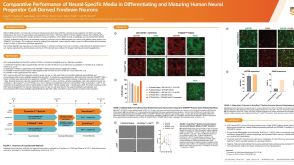 科学海报Comparative Performance of Neural-Specific Media in Differentiating and Maturing Human Neural Progenitor Cell-Derived Forebrain Neurons


 沪公网安备31010102008431号