Szkolnicka D et al. ( 2014)
Current protocols in stem cell biology 30 1G.5.1--------12
Deriving functional hepatocytes from pluripotent stem cells.
Despite major progress in the management of human liver disease,the only cure for a critically failing organ is liver transplantation. While a highly successful approach,the use of cadaveric organs as a routine treatment option is severely limited by organ availability. Therefore,the use of cell-based therapies has been explored to provide support for the failing liver. In addition to developing new treatments,there is also an imperative to develop better human models 'in a dish'. Such approaches will undoubtedly lead to a better understanding of the disease process,offering new treatment or preventative strategies. With both approaches in mind,we have developed robust hepatocyte differentiation methodologies for use with pluripotent stem cells. Importantly,our procedure is highly efficient (∼ 90%) and delivers active,drug-inducible,and predictive human hepatocyte populations.
View Publication
产品类型:
产品号#:
05850
05857
05870
05875
07174
85850
85857
85870
85875
100-0485
100-1077
产品名:
mTeSR™1
mTeSR™1
温和细胞解离试剂
ReLeSR™
Lufino MMP et al. (JAN 2011)
Methods in molecular biology (Clifton,N.J.) 767 369--87
Episomal transgene expression in pluripotent stem cells.
Herpes simplex type 1 (HSV-1) amplicon vectors possess a number of features that make them excellent vectors for the delivery of transgenes into stem cells. HSV-1 amplicon vectors are capable of efficiently transducing both dividing and nondividing cells and since the virus is quite large,152 kb,it is of sufficient size to allow for incorporation of entire genomic DNA loci with native promoters. HSV-1 amplicon vectors can also be used to incorporate and deliver to cells a variety of sequences that allow extrachromosomal retention. These elements offer advantages over integrating vectors as they avoid transgene silencing and insertional mutagenesis. The construction of amplicon vectors carrying extrachromosomal retention elements,their packaging into HSV-1 viral particles,and the use of HSV-1 amplicons for stem cell transduction will be described.
View Publication
产品类型:
产品号#:
05850
05857
05870
05875
85850
85857
85870
85875
产品名:
mTeSR™1
mTeSR™1
Steward CG et al. (FEB 2005)
Biology of blood and marrow transplantation : journal of the American Society for Blood and Marrow Transplantation 11 2 115--21
High peripheral blood progenitor cell counts enable autologous backup before stem cell transplantation for malignant infantile osteopetrosis.
Autosomal recessive osteopetrosis (OP) is a rare,lethal disorder in which osteoclasts are absent or nonfunctional,resulting in a bone marrow cavity insufficient to support hematopoiesis. Because osteoclasts are derived from hematopoietic precursors,allogeneic hematopoietic cell transplantation can cure the bony manifestations of the disorder. However,high rates of graft failure have been observed in this population. It is not possible to harvest bone marrow from these patients for reinfusion should graft failure be observed. We report that 8 of 10 patients with OP had high numbers of circulating CD34(+) cells (3% +/- 0.9%). This increased proportion of peripheral CD34(+) cells made it possible to harvest 2 x 10(6) CD34(+) cells per kilogram with a total volume of blood ranging from 8.3 to 83.7 mL (1.3-11.6 mL/kg). In addition,colony-forming assays documented significantly more colony-forming unit-granulocyte-macrophage and burst-forming unit-erythroid in the blood of osteopetrotic patients compared with controls; the numbers of colony-forming units approximated those found in control marrow. We conclude that OP patients with high levels of circulating CD34(+) are candidates for peripheral blood autologous harvest by limited exchange transfusion. These cells are then available for reinfusion should graft failure be observed in patients for whom retransplantation is impractical.
View Publication
产品类型:
产品号#:
05401
05402
05411
产品名:
MesenCult™ MSC 基础培养基(人)
MesenCult™ MSC刺激添加物(人)
MesenCult™ 增殖试剂盒(人)
K. E. Hammerick et al. (feb 2011)
Tissue engineering. Part A 17 4-Mar 495--502
Elastic properties of induced pluripotent stem cells.
The recent technique of transducing key transcription factors into unipotent cells (fibroblasts) to generate pluripotent stem cells (induced pluripotent stem cells [iPSCs]) has significantly changed the stem cell field. These cells have great promise for many clinical applications,including that of regenerative medicine. Our findings show that iPSCs can be derived from human adipose-derived stromal cells (hASCs),a notable advancement in the clinical applicability of these cells. To investigate differences between two iPS cell lines (fibroblast-iPSC and hASC-iPSC),and also the gold standard human embryonic stem cell,we looked at cell stiffness as a possible indicator of cell differentiation-potential differences. We used atomic force microscopy as a tool to determine stem cell stiffness,and hence differences in material properties between cells. Human fibroblast and hASC stiffness was also ascertained for comparison. Interestingly,cells exhibited a noticeable difference in stiffness. From least to most stiff,the order of cell stiffness was as follows: hASC-iPSC,human embryonic stem cell,fibroblast-iPSC,fibroblasts,and,lastly,as the stiffest cell,hASC. In comparing hASC-iPSCs to their origin cell,the hASC,the reprogrammed cell is significantly less stiff,indicating that greater differentiation potentials may correlate with a lower cellular modulus. The stiffness differences are not dependent on cell culture density; hence,material differences between cells cannot be attributed solely to cell-cell constraints. The change in mechanical properties of the cells in response to reprogramming offers insight into how the cell interacts with its environment and might lend clues to how to efficiently reprogram cell populations as well as how to maintain their pluripotent state.
View Publication
产品类型:
产品号#:
05850
05857
05870
05875
85850
85857
85870
85875
07181
产品名:
mTeSR™1
mTeSR™1
Amenduni M et al. (DEC 2011)
European Journal of Human Genetics 19131 10 1246--1255
ARTICLE iPS cells to model CDKL5-related disorders
Rett syndrome (RTT) is a progressive neurologic disorder representing one of the most common causes of mental retardation in females. To date mutations in three genes have been associated with this condition. Classic RTT is caused by mutations in the MECP2 gene,whereas variants can be due to mutations in either MECP2 or FOXG1 or CDKL5. Mutations in CDKL5 have been identified both in females with the early onset seizure variant of RTT and in males with X-linked epileptic encephalopathy. CDKL5 is a kinase protein highly expressed in neurons,but its exact function inside the cell is unknown. To address this issue we established a human cellular model for CDKL5-related disease using the recently developed technology of induced pluripotent stem cells (iPSCs). iPSCs can be expanded indefinitely and differentiated in vitro into many different cell types,including neurons. These features make them the ideal tool to study disease mechanisms directly on the primarily affected neuronal cells. We derived iPSCs from fibroblasts of one female with p.Q347X and one male with p.T288I mutation,affected by early onset seizure variant and X-linked epileptic encephalopathy,respectively. We demonstrated that female CDKL5-mutated iPSCs maintain X-chromosome inactivation and clones express either the mutant CDKL5 allele or the wild-type allele that serve as an ideal experimental control. Array CGH indicates normal isogenic molecular karyotypes without detection of de novo CNVs in the CDKL5-mutated iPSCs. Furthermore,the iPS cells can be differentiated into neurons and are thus suitable to model disease pathogenesis in vitro.
View Publication
产品类型:
产品号#:
05850
05857
05870
05875
85850
85857
85870
85875
产品名:
mTeSR™1
mTeSR™1
Joseph R et al. (JUL 2016)
Investigative ophthalmology & visual science 57 8 3685--3697
Modeling Keratoconus Using Induced Pluripotent Stem Cells.
PURPOSE To model keratoconus (KC) using induced pluripotent stem cells (iPSC) generated from fibroblasts of both KC and normal human corneal stroma by a viral method. METHODS Both normal and KC corneal fibroblasts from four human donors were reprogramed directly by delivering reprogramming factors in a single virus using 2A self-cleaving" peptides�
View Publication
产品类型:
产品号#:
05850
05857
05870
05875
85850
85857
85870
85875
产品名:
mTeSR™1
mTeSR™1
Jones RJ et al. (MAY 1995)
Blood 85 10 2742--6
Assessment of aldehyde dehydrogenase in viable cells.
Cytosolic aldehyde dehydrogenase (ALDH),an enzyme responsible for oxidizing intracellular aldehydes,has an important role in ethanol,vitamin A,and cyclophosphamide metabolism. High expression of this enzyme in primitive stem cells from multiple tissues,including bone marrow and intestine,appears to be an important mechanism by which these cells are resistant to cyclophosphamide. However,although hematopoietic stem cells (HSC) express high levels of cytosolic ALDH,isolating viable HSC by their ALDH expression has not been possible because ALDH is an intracellular protein. We found that a fluorescent aldehyde,dansyl aminoacetaldehyde (DAAA),could be used in flow cytometry experiments to isolate viable mouse and human cells based on their ALDH content. The level of dansyl fluorescence exhibited by cells after incubation with DAAA paralleled cytosolic ALDH levels determined by Western blotting and the sensitivity of the cells to cyclophosphamide. Moreover,DAAA appeared to be a more sensitive means of assessing cytosolic ALDH levels than Western blotting. Bone marrow progenitors treated with DAAA proliferated normally. Furthermore,marrow cells expressing high levels of dansyl fluorescence after incubation with DAAA were enriched for hematopoietic progenitors. The ability to isolate viable cells that express high levels of cytosolic ALDH could be an important component of methodology for identifying and purifying HSC and for studying cyclophosphamide-resistant tumor cell populations.
View Publication
产品类型:
产品号#:
01700
01705
01701
01702
产品名:
ALDEFLUOR™ 试剂盒
ALDEFLUOR™ DEAB试剂, 1.5 mM, 1 mL
ALDEFLUOR™检测缓冲液
Keller GM (DEC 1995)
Current opinion in cell biology 7 6 862--9
In vitro differentiation of embryonic stem cells.
Under appropriate conditions in culture,embryonic stem cells will differentiate and form embryoid bodies that have been shown to contain cells of the hematopoietic,endothelial,muscle and neuronal lineages. Many aspects of the lineage-specific differentiation programs observed within the embryoid bodies reflect those found in the embryo,indicating that this model system provides access to early cell populations that develop in a normal fashion. Recent studies involving the differentiation of genetically altered embryonic stem cells highlight the potential of this in vitro differentiation system for defining the function of genes in early development.
View Publication
Nishimura AL et al. (MAR 2014)
PLoS ONE 9 3 e91269
Allele-specific knockdown of ALS-associated mutant TDP-43 in neural stem cells derived from induced pluripotent stem cells.
TDP-43 is found in cytoplasmic inclusions in 95% of amyotrophic lateral sclerosis (ALS) and 60% of frontotemporal lobar degeneration (FTLD). Approximately 4% of familial ALS is caused by mutations in TDP-43. The majority of these mutations are found in the glycine-rich domain,including the variant M337V,which is one of the most common mutations in TDP-43. In order to investigate the use of allele-specific RNA interference (RNAi) as a potential therapeutic tool,we designed and screened a set of siRNAs that specifically target TDP-43(M337V) mutation. Two siRNA specifically silenced the M337V mutation in HEK293T cells transfected with GFP-TDP-43(wt) or GFP-TDP-43(M337V) or TDP-43 C-terminal fragments counterparts. C-terminal TDP-43 transfected cells show an increase of cytosolic inclusions,which are decreased after allele-specific siRNA in M337V cells. We then investigated the effects of one of these allele-specific siRNAs in induced pluripotent stem cells (iPSCs) derived from an ALS patient carrying the M337V mutation. These lines showed a two-fold increase in cytosolic TDP-43 compared to the control. Following transfection with the allele-specific siRNA,cytosolic TDP-43 was reduced by 30% compared to cells transfected with a scrambled siRNA. We conclude that RNA interference can be used to selectively target the TDP-43(M337V) allele in mammalian and patient cells,thus demonstrating the potential for using RNA interference as a therapeutic tool for ALS.
View Publication
Mitochondrial replacement in human oocytes carrying pathogenic mitochondrial DNA mutations.
Maternally inherited mitochondrial (mt)DNA mutations can cause fatal or severely debilitating syndromes in children,with disease severity dependent on the specific gene mutation and the ratio of mutant to wild-type mtDNA (heteroplasmy) in each cell and tissue. Pathogenic mtDNA mutations are relatively common,with an estimated 778 affected children born each year in the United States. Mitochondrial replacement therapies or techniques (MRT) circumventing mother-to-child mtDNA disease transmission involve replacement of oocyte maternal mtDNA. Here we report MRT outcomes in several families with common mtDNA syndromes. The mother's oocytes were of normal quality and mutation levels correlated with those in existing children. Efficient replacement of oocyte mutant mtDNA was performed by spindle transfer,resulting in embryos containing<99% donor mtDNA. Donor mtDNA was stably maintained in embryonic stem cells (ES cells) derived from most embryos. However,some ES cell lines demonstrated gradual loss of donor mtDNA and reversal to the maternal haplotype. In evaluating donor-to-maternal mtDNA interactions,it seems that compatibility relates to mtDNA replication efficiency rather than to mismatch or oxidative phosphorylation dysfunction. We identify a polymorphism within the conserved sequence box II region of the D-loop as a plausible cause of preferential replication of specific mtDNA haplotypes. In addition,some haplotypes confer proliferative and growth advantages to cells. Hence,we propose a matching paradigm for selecting compatible donor mtDNA for MRT.
View Publication


 EasySep™小鼠TIL(CD45)正选试剂盒





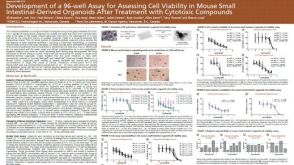 科学海报Development of a 96-well Assay for Assessing Cell Viability in Mouse Small Intestinal-Derived Organoids after Treatment with Cytotoxic Compounds

 沪公网安备31010102008431号