Genetic interaction of PGE2 and Wnt signaling regulates developmental specification of stem cells and regeneration.
Interactions between developmental signaling pathways govern the formation and function of stem cells. Prostaglandin (PG) E2 regulates vertebrate hematopoietic stem cells (HSC). Similarly,the Wnt signaling pathway controls HSC self-renewal and bone marrow repopulation. Here,we show that wnt reporter activity in zebrafish HSCs is responsive to PGE2 modulation,demonstrating a direct interaction in vivo. Inhibition of PGE2 synthesis blocked wnt-induced alterations in HSC formation. PGE2 modified the wnt signaling cascade at the level of beta-catenin degradation through cAMP/PKA-mediated stabilizing phosphorylation events. The PGE2/Wnt interaction regulated murine stem and progenitor populations in vitro in hematopoietic ES cell assays and in vivo following transplantation. The relationship between PGE2 and Wnt was also conserved during regeneration of other organ systems. Our work provides in vivo evidence that Wnt activation in stem cells requires PGE2,and suggests the PGE2/Wnt interaction is a master regulator of vertebrate regeneration and recovery.
View Publication
产品类型:
产品号#:
72372
产品名:
16,16-二甲基前列腺素E2
Nagai K-i et al. (APR 2010)
Biochemical and biophysical research communications 395 2 258--263
Long-term culture following ES-like gene-induced reprogramming elicits an aggressive phenotype in mutated cholangiocellular carcinoma cells.
BACKGROUND: We recently reported that gastrointestinal (GI) cancer cells can be reprogrammed to a pluripotent state by the ectopic expression of defined embryonic stem (ES)-like transcriptional factors. The induced pluripotent cancer (iPC) cells from GI cancer were sensitized to chemotherapeutic agents and differentiation-inducing treatment during a short-term culture,although a phenotype induced by long-term culture needs to be studied. METHODS: A long-term cultured (Lc)-iPC cells were produced in GI cancer cell lines by virus-mediated introduction of four ES-like genes-c-MYC,SOX2,OCT3/4,and KLF4-followed by a culture more than three months after iPC cells induction. An acquired state was studied by expression of immature-related surface antigens,Tra-1-60,Tra-1-81,Tra-2-49,and Ssea-4; and epigenetic trimethyl modification at lysine 4 of histone H3. Sensitivity to chemotherapeutic agents and tumorigenicity were studied in Lc-iPC cells. RESULTS: Whereas the introduction of defined factors of iPC cells once induced an immature state and sensitized cells to therapeutic reagents,the endogenous expression of the ES-like genes except for activated endogenous c-MYC was down-regulated in a long-term culture,suggesting a high magnitude of the reprogramming induction by defined factors and the requirement of therapeutic maintenance in Lc-iPC cells from cholangiocellular carcinoma HuCC-T1 cells,which harbor TP53(R175H) and KRAS(G12D). The Lc-iPC cells showed resistance to 5-fluorouracil in culture,and high tumorigenic ability with activated endogenous c-MYC in immunodeficient mice. CONCLUSION: The Lc-iPC cells from HuCC-T1 might be prone to an undesirable therapeutic response because of an association with the activated endogenous c-MYC. To consider the possible therapeutic approach in GI cancer,it would be necessary to develop a predictive method for evaluating the improper reprogramming-associated aggressive phenotype of iPC cells.
View Publication
产品类型:
产品号#:
05850
05857
05870
05875
85850
85857
85870
85875
产品名:
mTeSR™1
mTeSR™1
Zhou L et al. (AUG 2010)
Breast cancer research and treatment 122 3 795--801
The prognostic role of cancer stem cells in breast cancer: a meta-analysis of published literatures.
CD44+/CD24-/low tumor cells or aldehyde dehydrogenase 1 (ALDH1) positive tumor cells are considered cancer stem cells (CSCs) that possess the properties of self-renewal and tumorigenicity. However,their clinical value and significance in breast cancer remain controversial. A meta-analysis based on published studies was performed with the aim of obtaining an accurate evaluation of the association between the presence of CSCs in clinical samples and clinical outcome. A total of 12 eligible studies with 898 cases and 1,853 controls were included. CSC positive breast cancers,in particular those positive for ALDH1,were significantly associated with high histological grade,estrogen receptor (ER) negativity,progesterone receptor (PR) negativity,and human epidermal growth factor receptor type 2 (HER2) positivity. However,the presence of cancer stem cells was not associated with tumor size or nodal status. ALDH1 positive (RR = 2.83,95% CI: 2.16-3.67,P textless 0.001) and CD44+/CD24-/low tumor cells (RR = 2.32,95% CI: 1.51-3.60,P textless 0.001) were significantly associated with poor overall survival (OS). The stem cell markers are prognostic factors in breast cancer. Larger clinical studies are required to further evaluate the role of these markers in clinical practice.
View Publication
产品类型:
产品号#:
01700
01705
01701
01702
产品名:
ALDEFLUOR™ 试剂盒
ALDEFLUOR™ DEAB试剂, 1.5 mM, 1 mL
ALDEFLUOR™检测缓冲液
Yang J et al. (DEC 2010)
Journal of Biological Chemistry 285 51 40303--11
Induced pluripotent stem cells can be used to model the genomic imprinting disorder Prader-Willi syndrome.
The recent discovery of induced pluripotent stem cell (iPSC) technology provides an invaluable tool for creating in vitro representations of human genetic conditions. This is particularly relevant for those diseases that lack adequate animal models or where the species comparison is difficult,e.g. imprinting diseases such as the neurogenetic disorder Prader-Willi syndrome (PWS). However,recent reports have unveiled transcriptional and functional differences between iPSCs and embryonic stem cells that in cases are attributable to imprinting errors. This has suggested that human iPSCs may not be useful to model genetic imprinting diseases. Here,we describe the generation of iPSCs from a patient with PWS bearing a partial translocation of the paternally expressed chromosome 15q11-q13 region to chromosome 4. The resulting iPSCs match all standard criteria of bona fide reprogramming and could be readily differentiated into tissues derived from the three germ layers,including neurons. Moreover,these iPSCs retain a high level of DNA methylation in the imprinting center of the maternal allele and show concomitant reduced expression of the disease-associated small nucleolar RNA HBII-85/SNORD116. These results indicate that iPSCs may be a useful tool to study PWS and perhaps other genetic imprinting diseases as well.
View Publication
产品类型:
产品号#:
05850
05857
05870
05875
85850
85857
85870
85875
产品名:
mTeSR™1
mTeSR™1
Tateno H et al. (FEB 2014)
Scientific reports 4 4069
A medium hyperglycosylated podocalyxin enables noninvasive and quantitative detection of tumorigenic human pluripotent stem cells.
While human pluripotent stem cells are attractive sources for cell-replacement therapies,a major concern remains regarding their tumorigenic potential. Thus,safety assessment of human pluripotent stem cell-based products in terms of tumorigenicity is critical. Previously we have identified a pluripotent stem cell-specific lectin probe rBC2LCN recognizing hyperglycosylated podocalyxin as a cell surface ligand. Here we demonstrate that hyperglycosylated podocalyxin is secreted from human pluripotent stem cells into cell culture supernatants. We establish a sandwich assay system,named the GlycoStem test,targeting the soluble hyperglycosylated podocalyxin using rBC2LCN. The GlycoStem test is sufficiently sensitive and quantitative to detect residual human pluripotent stem cells. This work provides a proof of concept for the noninvasive and quantitative detection of tumorigenic human pluripotent stem cells using cell culture supernatants. The developed method should increase the safety of human pluripotent stem cell-based cell therapies.
View Publication
产品类型:
产品号#:
05850
05857
05870
05875
85850
85857
85870
85875
产品名:
mTeSR™1
mTeSR™1
Richter A et al. (MAR 2014)
Stem Cells 32 3 636--648
BMP4 promotes EMT and mesodermal commitment in human embryonic stem cells via SLUG and MSX2
Bone morphogenetic proteins (BMPs) initiate differentiation in human embryonic stem cells (hESCs) but the exact mechanisms have not been fully elucidated. We demonstrate here that SLUG and MSX2,transcription factors involved in epithelial-mesenchymal transitions,essential features of gastrulation in development and tumor progression,are important mediators of BMP4-induced differentiation in hESCs. Phosphorylated Smad1/5/8 colocalized with the SLUG protein at the edges of hESC colonies where differentiation takes place. The upregulation of the BMP target SLUG was direct as shown by the binding of phosphorylated Smad1/5/8 to its promoter,which interrupted the formation of adhesion proteins,resulting in migration. Knockdown of SLUG by short hairpin RNA blocked these changes,confirming an important role for SLUG in BMP-mediated mesodermal differentiation. Furthermore,BMP4-induced MSX2 expression leads to mesoderm formation and then preferential differentiation toward the cardiovascular lineage.
View Publication
产品类型:
产品号#:
05850
05857
05870
05875
85850
85857
85870
85875
产品名:
mTeSR™1
mTeSR™1
Takahashi K et al. (APR 2014)
Nature communications 5 3678
Induction of pluripotency in human somatic cells via a transient state resembling primitive streak-like mesendoderm.
During mammalian embryonic development,the primitive streak initiates the differentiation of pluripotent epiblast cells into germ layers. Pluripotency can be reacquired in committed somatic cells using a combination of a handful of transcription factors,such as OCT3/4,SOX2,KLF4 and c-MYC (hereafter referred to as OSKM),albeit with low efficiency. Here we show that during OSKM-induced reprogramming towards pluripotency in human cells,intermediate cells transiently show gene expression profiles resembling mesendoderm,which is a major component of the primitive streak. Based on these findings,we discover that forkhead box H1 (FOXH1),a transcription factor required for anterior primitive streak specification during early development,significantly enhances the reprogramming efficiency of human fibroblasts by promoting their maturation,including mesenchymal to epithelial transition and the activation of late pluripotency markers. These results demonstrate that during the reprogramming process,human somatic cells go through a transient state that resembles mesendoderm.
View Publication
产品类型:
产品号#:
05850
05857
05870
05875
85850
85857
85870
85875
产品名:
mTeSR™1
mTeSR™1
Brafman DA ( 2015)
Methods in molecular biology (Clifton,N.J.) 1212 87--102
Generation, Expansion, and Differentiation of Human Pluripotent Stem Cell (hPSC) Derived Neural Progenitor Cells (NPCs).
Human pluripotent stem cell (hPSC)-derived neural progenitor cells (NPCs),a multipotent cell population that is capable of near indefinite expansion and subsequent differentiation into the various cell types that comprise the central nervous system (CNS),could provide an unlimited source of cells for neural-related cell-based therapies and disease modeling. However,the use of NPCs for the study and treatment of a variety of debilitating neurological diseases requires the development of scalable and reproducible protocols for their generation,expansion,characterization,and neuronal differentiation. Here,we describe a serum-free method for the stepwise generation of NPCs from hPSCs through the sequential formation of embryoid bodies (EBs) and neuro-epithelial-like rosettes. NPCs isolated from neural rosette cultures can be homogenously expanded while maintaining high expression of pan-neural markers such as SOX1,SOX2,and Nestin. Finally,this protocol allows for the robust differentiation of NPCs into microtubule-associated protein 2 (MAP2) and β-Tubulin-III (β3T) positive neurons.
View Publication
产品类型:
产品号#:
05860
05880
05850
05857
05870
05875
85850
85857
85870
85875
产品名:
mTeSR™1
mTeSR™1
Liu J et al. (NOV 2014)
FASEB journal : official publication of the Federation of American Societies for Experimental Biology 28 11 4642--4656
A reciprocal antagonism between miR-376c and TGF-$\$ regulates neural differentiation of human pluripotent stem cells.
Differentiation of neural lineages from human pluripotent stem cells (hPSCs) raises the hope of generating functional cells for the treatment of neural diseases. However,current protocols for differentiating hPSCs into neural lineages remain inefficient and largely variable between different hPSC lines. We report that microRNA 376c (miR-376c) significantly enhanced neural differentiation of hPSCs in a defined condition by suppressing SMAD4,the co-SMAD for TGF-β signaling. Downstream,SMAD4 directly bound and suppressed PAX6,the critical neural lineage specification factor. Interestingly,we also found that SMAD4 binds and suppresses miR-376c clusters in undifferentiated hESCs. In summary,our findings revealed a reciprocal antagonism between miR-376c and SMAD signaling that regulates cell fate during human neural differentiation.-Liu,J.,Wang,L.,Su,Z.,Wu,W.,Cai,X.,Li,D.,Hou,J.,Pei,D.,Pan,G. A reciprocal antagonism between miR-376c and TGF-β signaling regulates neural differentiation of hPSCs.
View Publication
产品类型:
产品号#:
05850
05857
05870
05875
85850
85857
85870
85875
产品名:
mTeSR™1
mTeSR™1
D'Aiuto L et al. (OCT 2014)
Organogenesis 10 4 365--377
Large-scale generation of human iPSC-derived neural stem cells/early neural progenitor cells and their neuronal differentiation.
Induced pluripotent stem cell (iPSC)-based technologies offer an unprecedented opportunity to perform high-throughput screening of novel drugs for neurological and neurodegenerative diseases. Such screenings require a robust and scalable method for generating large numbers of mature,differentiated neuronal cells. Currently available methods based on differentiation of embryoid bodies (EBs) or directed differentiation of adherent culture systems are either expensive or are not scalable. We developed a protocol for large-scale generation of neuronal stem cells (NSCs)/early neural progenitor cells (eNPCs) and their differentiation into neurons. Our scalable protocol allows robust and cost-effective generation of NSCs/eNPCs from iPSCs. Following culture in neurobasal medium supplemented with B27 and BDNF,NSCs/eNPCs differentiate predominantly into vesicular glutamate transporter 1 (VGLUT1) positive neurons. Targeted mass spectrometry analysis demonstrates that iPSC-derived neurons express ligand-gated channels and other synaptic proteins and whole-cell patch-clamp experiments indicate that these channels are functional. The robust and cost-effective differentiation protocol described here for large-scale generation of NSCs/eNPCs and their differentiation into neurons paves the way for automated high-throughput screening of drugs for neurological and neurodegenerative diseases.
View Publication
产品类型:
产品号#:
05850
05857
05870
05875
85850
85857
85870
85875
产品名:
mTeSR™1
mTeSR™1
Luo C et al. (APR 2016)
ACS Applied Materials and Interfaces 8 13 8367--8375
Improving the Gene Transfection in Human Embryonic Stem Cells: Balancing with Cytotoxicity and Pluripotent Maintenance
Manipulation of genes in human embryonic stem cells (hESCs) is imperative for their highly potential applications; however,the transduction efficiency remains very low. Although existing evidence revealed the type,size,and zeta potential of vector affect gene transfection efficiency in cells,the systematic study in hESCs is scarce. In this study,using poly(amidoamine) (PAMAM) dendrimers ended with amine,hydroxyl,or carboxyl as model,we tested the influences of size and surface group as well as cytotoxicity and endocytosis on hESC gene transfection. We found that in culture medium of mTeSR the particle sizes of G5,G7,G4.5COOH,and G5OH were around 5 nm and G1 had a smaller size of 3.14 nm. G5 and G7 had a slight and significant positive zeta potential,respectively,whereas G1 was slightly negative,and G4.5COOH and G5OH were significantly negative. We demonstrated that only amine-terminated dendrimers accomplished gene transfection in hESCs,which is greater than that from Lipofectamine 2000 transfection. Ten micromolar G5 had the greatest efficiency and was better than 1000 μM G1. Only a low concentration (0.5 and 1 μM) of G7 realized gene delivery. Amine-ended dendrimers,especially with higher generations,were detrimental to the growth and pluripotent maintenance of hESCs. In contrast,similarly sized hydroxyl- and carboxyl-terminated dendrimers exerted much lower cytotoxicity,in which carboxyl-terminated dendrimer maintained pluripotency of hESCs. We also confirmed the endocytosis into and significant exocytosis from hESCs using FITC-labeled G5 dendrimer. These results suggested that careful considerations of size,concentration,and zeta potential,particularly the identity and position of groups,as well as minimized exocytosis in the design of a vector for hESC gene delivery are necessary,which helps to better design an effective vector in hESC gene transduction.
View Publication


 EasySep™小鼠TIL(CD45)正选试剂盒




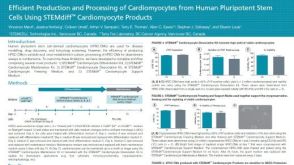 科学海报Efficient Production and Processing of Cardiomyocytes from Human Pluripotent Stem Cells Using STEMdiff™ Cardiomyocyte Products

 沪公网安备31010102008431号