Chen H et al. (DEC 2015)
Biological research 48 1 59
Functional disruption of human leukocyte antigen II in human embryonic stem cell.
BACKGROUND Theoretically human embryonic stem cells (hESCs) have the capacity to self-renew and differentiate into all human cell types. Therefore,the greatest promise of hESCs-based therapy is to replace the damaged tissues of patients suffering from traumatic or degenerative diseases by the exact same type of cells derived from hESCs. Allograft immune rejection is one of the obstacles for hESCs-based clinical applications. Human leukocyte antigen (HLA) II leads to CD4(+) T cells-mediated allograft rejection. Hence,we focus on optimizing hESCs for clinic application through gene modification. RESULTS Transcription activator-like effector nucleases (TALENs) were used to target MHC class II transactivator (CIITA) in hESCs efficiently. CIITA (-/-) hESCs did not show any difference in the differentiation potential and self-renewal capacity. Dendritic cells (DCs) derived from CIITA (-/-) hESCs expressed CD83 and CD86 but without the constitutive HLA II. Fibroblasts derived from CIITA (-/-) hESCs were powerless in IFN-$\$ expression of HLA II. CONCLUSION We generated HLA II defected hESCs via deleting CIITA,a master regulator of constitutive and IFN-$\$ expression of HLA II genes. CIITA (-/-) hESCs can differentiate into tissue cells with non-HLA II expression. It's promising that CIITA (-/-) hESCs-derived cells could be used in cell therapy (e.g.,T cells and DCs) and escape the attack of receptors' CD4(+) T cells,which are the main effector cells of cellular immunity in allograft.
View Publication
产品类型:
产品号#:
05850
05857
05870
05875
85850
85857
85870
85875
产品名:
mTeSR™1
mTeSR™1
Chen Y et al. (OCT 2007)
Blood 110 8 2889--98
Cited2 is required for normal hematopoiesis in the murine fetal liver.
Cited2 (cAMP-responsive elementbinding protein [CBP]/p300-interacting transactivators with glutamic acid [E] and aspartic acid [D]-rich tail 2) is a newly identified transcriptional modulator. Knockout of the Cited2 gene results in embryonic lethality with embryos manifesting heart and neural tube defects. Cited2-/- fetal liver displayed significant reduction in the numbers of Lin(-)c-Kit+Sca-1+ cells,Lin(-)c-Kit+ cells,and progenitor cells of different lineages. Fetal liver cells from Cited2-/- embryos gave rise to markedly reduced number of colonies in the colony-forming unit assay. Primary and secondary transplantation studies showed significantly compromised reconstitution of T-lymphoid,B-lymphoid,and myeloid lineages in mice that received a transplant of Cited2-/- fetal liver cells. Competitive reconstitution experiments further showed that fetal liver hematopoietic stem cell (HSC) function is severely impaired due to Cited2 deficiency. Microarray analysis showed decreased expression of Wnt5a and a panel of myeloid molecular markers such as PRTN3,MPO,Neutrophil elastase,Cathepsin G,and Eosinophil peroxidase in Cited2-/- fetal livers. Decreased expression of Bmi-1,Notch1,LEF-1,Mcl-1,and GATA2 was also observed in Cited2-/- Lin(-)c-Kit+ cells. The present study uncovers for the first time a novel role of Cited2 in the maintenance of hematopoietic homeostasis during embryogenesis and thus provides new insights into the molecular regulation of hematopoietic development.
View Publication
产品类型:
产品号#:
03434
03444
产品名:
MethoCult™ GF M3434
MethoCult™ GF M3434
Valamehr B et al. (SEP 2008)
Proceedings of the National Academy of Sciences of the United States of America 105 38 14459--64
Hydrophobic surfaces for enhanced differentiation of embryonic stem cell-derived embryoid bodies.
With their unique ability to differentiate into all cell types,embryonic stem (ES) cells hold great therapeutic promise. To improve the efficiency of embryoid body (EB)-mediated ES cell differentiation,we studied murine EBs on the basis of their size and found that EBs with an intermediate size (diameter 100-300 microm) are the most proliferative,hold the greatest differentiation potential,and have the lowest rate of cell death. In an attempt to promote the formation of this subpopulation,we surveyed several biocompatible substrates with different surface chemical parameters and identified a strong correlation between hydrophobicity and EB development. Using self-assembled monolayers of various lengths of alkanethiolates on gold substrates,we directly tested this correlation and found that surfaces that exhibit increasing hydrophobicity enrich for the intermediate-size EBs. When this approach was applied to the human ES cell system,similar phenomena were observed. Our data demonstrate that hydrophobic surfaces serve as a platform to deliver uniform EB populations and may significantly improve the efficiency of ES cell differentiation.
View Publication
Shrink-induced biomimetic wrinkled substrates for functional cardiac cell alignment and culture.
The anisotropic alignment of cardiomyocytes in native myocardium tissue is a functional feature that is absent in traditional in vitro cardiac cell culture. Microenvironmental factors cue structural organization of the myocardium,which promotes the mechanical contractile properties and electrophysiological patterns seen in mature cardiomyocytes. Current nano- and microfabrication techniques,such as photolithography,generate simplified cell culture topographies that are not truly representative of the multifaceted and multi-scale fibrils of the cardiac extracellular matrix. In addition,such technologies are costly and require a clean room for fabrication. This chapter offers an easy,fast,robust,and inexpensive fabrication of biomimetic multi-scale wrinkled surfaces through the process of plasma treating and shrinking prestressed thermoplastic. Additionally,this chapter includes techniques for culturing stem cells and their cardiac derivatives on these substrates. Importantly,this wrinkled cell culture platform is compatible with both fluorescence and bright-field imaging; real-time physiological monitoring of CM action potential propagation and contraction properties can elucidate cardiotoxicity drug effects.
View Publication
产品类型:
产品号#:
05850
05857
05870
05875
85850
85857
85870
85875
产品名:
mTeSR™1
mTeSR™1
Ran FA et al. (SEP 2013)
Cell 154 6 1380--1389
Double Nicking by RNA-Guided CRISPR Cas9 for Enhanced Genome Editing Specificity
Targeted genome editing technologies have enabled a broad range of research and medical applications. The Cas9 nuclease from the microbial CRISPR-Cas system is targeted to specific genomic loci by a 20 nt guide sequence,which can tolerate certain mismatches to the DNA target and thereby promote undesired off-target mutagenesis. Here,we describe an approach that combines a Cas9 nickase mutant with paired guide RNAs to introduce targeted double-strand breaks. Because individual nicks in the genome are repaired with high fidelity,simultaneous nicking via appropriately offset guide RNAs is required for double-stranded breaks and extends the number of specifically recognized bases for target cleavage. We demonstrate that using paired nicking can reduce off-target activity by 50- to 1,500-fold in cell lines and to facilitate gene knockout in mouse zygotes without sacrificing on-target cleavage efficiency. This versatile strategy enables a wide variety of genome editing applications that require high specificity. textcopyright 2013 Elsevier Inc.
View Publication
产品类型:
产品号#:
05850
05857
05870
05875
85850
85857
85870
85875
产品名:
mTeSR™1
mTeSR™1
An MC et al. ( 2014)
PLoS currents 6 1--19
Polyglutamine Disease Modeling: Epitope Based Screen for Homologous Recombination using CRISPR/Cas9 System.
We have previously reported the genetic correction of Huntington's disease (HD) patient-derived induced pluripotent stem cells using traditional homologous recombination (HR) approaches. To extend this work,we have adopted a CRISPR-based genome editing approach to improve the efficiency of recombination in order to generate allelic isogenic HD models in human cells. Incorporation of a rapid antibody-based screening approach to measure recombination provides a powerful method to determine relative efficiency of genome editing for modeling polyglutamine diseases or understanding factors that modulate CRISPR/Cas9 HR.
View Publication
产品类型:
产品号#:
05850
05857
05870
05875
85850
85857
85870
85875
产品名:
mTeSR™1
mTeSR™1
Gorman BR et al. (DEC 2014)
PLoS ONE 9 12 e116037
Multi-scale imaging and informatics pipeline for in situ pluripotent stem cell analysis
Human pluripotent stem (hPS) cells are a potential source of cells for medical therapy and an ideal system to study fate decisions in early development. However,hPS cells cultured in vitro exhibit a high degree of heterogeneity,presenting an obstacle to clinical translation. hPS cells grow in spatially patterned colony structures,necessitating quantitative single-cell image analysis. We offer a tool for analyzing the spatial population context of hPS cells that integrates automated fluorescent microscopy with an analysis pipeline. It enables high-throughput detection of colonies at low resolution,with single-cellular and sub-cellular analysis at high resolutions,generating seamless in situ maps of single-cellular data organized by colony. We demonstrate the tool's utility by analyzing inter- and intra-colony heterogeneity of hPS cell cycle regulation and pluripotency marker expression. We measured the heterogeneity within individual colonies by analyzing cell cycle as a function of distance. Cells loosely associated with the outside of the colony are more likely to be in G1,reflecting a less pluripotent state,while cells within the first pluripotent layer are more likely to be in G2,possibly reflecting a G2/M block. Our multi-scale analysis tool groups colony regions into density classes,and cells belonging to those classes have distinct distributions of pluripotency markers and respond differently to DNA damage induction. Lastly,we demonstrate that our pipeline can robustly handle high-content,high-resolution single molecular mRNA FISH data by using novel image processing techniques. Overall,the imaging informatics pipeline presented offers a novel approach to the analysis of hPS cells that includes not only single cell features but also colony wide,and more generally,multi-scale spatial configuration.
View Publication


 EasySep™小鼠TIL(CD45)正选试剂盒





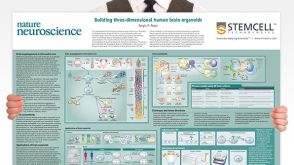 挂图Building Three-Dimensional Human Brain Organoids Overview of brain organogenesis and the applications of brain organoids in studying the development and maturation of the nervous system发布日期: 05/11/2018
 实验方案How to Coat Cultureware with Vitronectin XF™ for Pluripotent Stem Cell Culture
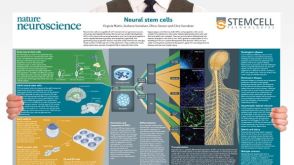 挂图Neural Stem Cells Overview of the types of NSCs and their potential use as therapeutic agents for disease

 沪公网安备31010102008431号