Kokkinaki M et al. (MAY 2011)
Stem Cells 29 5 825--35
Human induced pluripotent stem-derived retinal pigment epithelium (RPE) cells exhibit ion transport, membrane potential, polarized vascular endothelial growth factor secretion, and gene expression pattern similar to native RPE.
Age-related macular degeneration (AMD) is one of the major causes of blindness in aging population that progresses with death of retinal pigment epithelium (RPE) and photoreceptor degeneration inducing impairment of central vision. Discovery of human induced pluripotent stem (hiPS) cells has opened new avenues for the treatment of degenerative diseases using patient-specific stem cells to generate tissues and cells for autologous cell-based therapy. Recently,RPE cells were generated from hiPS cells. However,there is no evidence that those hiPS-derived RPE possess specific RPE functions that fully distinguish them from other types of cells. Here,we show for the first time that RPE generated from hiPS cells under defined conditions exhibit ion transport,membrane potential,polarized vascular endothelial growth factor secretion,and gene expression profile similar to those of native RPE. The hiPS-RPE could therefore be a very good candidate for RPE replacement therapy in AMD. However,these cells show rapid telomere shortening,DNA chromosomal damage,and increased p21 expression that cause cell growth arrest. This rapid senescence might affect the survival of the transplanted cells in vivo and therefore,only the very early passages should be used for regeneration therapies. Future research needs to focus on the generation of safe" as well as viable hiPS-derived somatic cells."
View Publication
Characterization of hematopoietic progenitor mobilization in protease-deficient mice.
Recent evidence suggests that protease release by neutrophils in the bone marrow may contribute to hematopoietic progenitor cell (HPC) mobilization. Matrix metalloproteinase-9 (MMP-9),neutrophil elastase (NE),and cathepsin G (CG) accumulate in the bone marrow during granulocyte colony-stimulating factor (G-CSF) treatment,where they are thought to degrade key substrates including vascular cell adhesion molecule-1 (VCAM-1) and CXCL12. To test this hypothesis,HPC mobilization was characterized in transgenic mice deficient in one or more hematopoietic proteases. Surprisingly,HPC mobilization by G-CSF was normal in MMP-9-deficient mice,NE x CG-deficient mice,or mice lacking dipeptidyl peptidase I,an enzyme required for the functional activation of many hematopoietic serine proteases. Moreover,combined inhibition of neutrophil serine proteases and metalloproteinases had no significant effect on HPC mobilization. VCAM-1 expression on bone marrow stromal cells decreased during G-CSF treatment of wild-type mice but not NE x CG-deficient mice,indicating that VCAM-1 cleavage is not required for efficient HPC mobilization. G-CSF induced a significant decrease in CXCL12 alpha protein expression in the bone marrow of Ne x CG-deficient mice,indicating that these proteases are not required to down-regulate CXCL12 expression. Collectively,these data suggest a complex model in which both protease-dependent and -independent pathways may contribute to HPC mobilization.
View Publication
Lentiviral vectors pseudotyped with a modified RD114 envelope glycoprotein show increased stability in sera and augmented transduction of primary lymphocytes and CD34+ cells derived from human and nonhuman primates.
Generating lentiviral vectors pseudotyped with different viral glycoproteins (GPs) may modulate the physicochemical properties of the vectors,their interaction with the host immune system,and their host range. We have investigated the capacity of a panel of GPs of both retroviral (amphotropic murine leukemia virus [MLV-A]; gibbon ape leukemia virus [GALV]; RD114,feline endogenous virus) and nonretroviral (fowl plague virus [FPV]; Ebola virus [EboV]; vesicular stomatitis virus [VSV]; lymphocytic choriomeningitis virus [LCMV]) origins to pseudotype lentiviral vectors derived from simian immunodeficiency virus (SIVmac251). SIV vectors were efficiently pseudotyped with the FPV hemagglutinin,VSV-G,LCMV,and MLV-A GPs. In contrast,the GALV and RD114 GPs conferred much lower infectivity to the vectors. Capitalizing on the conservation of some structural features in the transmembrane domains and cytoplasmic tails of the incorporation-competent MLV-A GP and in RD114 and GALV GPs,we generated chimeric GPs encoding the extracellular and transmembrane domains of GALV or RD114 GPs fused to the cytoplasmic tail (designated TR) of MLV-A GP. Importantly,SIV-derived vectors pseudotyped with these GALV/TR and RD114/TR GP chimeras had significantly higher titers than vectors coated with the parental GPs. Additionally,RD114/TR-pseudotyped vectors were efficiently concentrated and were resistant to inactivation induced by the complement of both human and macaque sera,indicating that modified RD114 GP-pseudotyped lentiviral vectors may be of particular interest for in vivo gene transfer applications. Furthermore,as compared to vectors pseudotyped with other retroviral GPs or with VSV-G,RD114/TR-pseudotyped vectors showed augmented transduction of human and macaque primary blood lymphocytes and CD34+ cells.
View Publication
Lin S et al. (JAN 2010)
Journal of visualized experiments : JoVE 39 11330
Video bioinformatics analysis of human embryonic stem cell colony growth.
Because video data are complex and are comprised of many images,mining information from video material is difficult to do without the aid of computer software. Video bioinformatics is a powerful quantitative approach for extracting spatio-temporal data from video images using computer software to perform dating mining and analysis. In this article,we introduce a video bioinformatics method for quantifying the growth of human embryonic stem cells (hESC) by analyzing time-lapse videos collected in a Nikon BioStation CT incubator equipped with a camera for video imaging. In our experiments,hESC colonies that were attached to Matrigel were filmed for 48 hours in the BioStation CT. To determine the rate of growth of these colonies,recipes were developed using CL-Quant software which enables users to extract various types of data from video images. To accurately evaluate colony growth,three recipes were created. The first segmented the image into the colony and background,the second enhanced the image to define colonies throughout the video sequence accurately,and the third measured the number of pixels in the colony over time. The three recipes were run in sequence on video data collected in a BioStation CT to analyze the rate of growth of individual hESC colonies over 48 hours. To verify the truthfulness of the CL-Quant recipes,the same data were analyzed manually using Adobe Photoshop software. When the data obtained using the CL-Quant recipes and Photoshop were compared,results were virtually identical,indicating the CL-Quant recipes were truthful. The method described here could be applied to any video data to measure growth rates of hESC or other cells that grow in colonies. In addition,other video bioinformatics recipes can be developed in the future for other cell processes such as migration,apoptosis,and cell adhesion.
View Publication
产品类型:
产品号#:
05850
05857
05870
05875
85850
85857
85870
85875
产品名:
mTeSR™1
mTeSR™1
S. E. Wamaitha et al. ( 2020)
Nature communications 11 1 764
IGF1-mediated human embryonic stem cell self-renewal recapitulates the embryonic niche.
Our understanding of the signalling pathways regulating early human development is limited,despite their fundamental biological importance. Here,we mine transcriptomics datasets to investigate signalling in the human embryo and identify expression for the insulin and insulin growth factor 1 (IGF1) receptors,along with IGF1 ligand. Consequently,we generate a minimal chemically-defined culture medium in which IGF1 together with Activin maintain self-renewal in the absence of fibroblast growth factor (FGF) signalling. Under these conditions,we derive several pluripotent stem cell lines that express pluripotency-associated genes,retain high viability and a normal karyotype,and can be genetically modified or differentiated into multiple cell lineages. We also identify active phosphoinositide 3-kinase (PI3K)/AKT/mTOR signalling in early human embryos,and in both primed and na{\{i}}ve pluripotent culture conditions. This demonstrates that signalling insights from human blastocysts can be used to define culture conditions that more closely recapitulate the embryonic niche."
View Publication
产品类型:
产品号#:
05010
85850
85857
产品名:
STEMdiff™ 心室肌细胞分化试剂盒
mTeSR™1
mTeSR™1
Yoshida T et al. (APR 2006)
Nature immunology 7 4 382--91
Early hematopoietic lineage restrictions directed by Ikaros.
Ikaros is expressed in early hematopoietic progenitors and is required for lymphoid differentiation. In the absence of Ikaros,there is a lack of markers defining fate restriction along lympho-myeloid pathways,but it is unclear whether formation of specific progenitors or expression of their markers is affected. Here we use a reporter based on Ikaros regulatory elements to separate early progenitors in wild-type and Ikaros-null mice. We found previously undetected Ikaros-null lympho-myeloid progenitors lacking the receptor tyrosine kinase Flt3 that were capable of myeloid but not lymphoid differentiation. In contrast,lack of Ikaros in the common myeloid progenitor resulted in increased formation of erythro-megakaryocytes at the expense of myeloid progenitors. Using this approach,we identify previously unknown pivotal functions for Ikaros in distinct fate 'decisions' in the early hematopoietic hierarchy.
View Publication
产品类型:
产品号#:
03334
产品名:
MethoCult™ M3334
Wilson KD et al. (JUN 2009)
Stem cells and development 18 5 749--58
MicroRNA profiling of human-induced pluripotent stem cells.
MicroRNAs (miRNAs) are a newly discovered endogenous class of small noncoding RNAs that play important posttranscriptional regulatory roles by targeting mRNAs for cleavage or translational repression. Accumulating evidence now supports the importance of miRNAs for human embryonic stem cell (hESC) self-renewal,pluripotency,and differentiation. However,with respect to induced pluripotent stem cells (iPSC),in which embryonic-like cells are reprogrammed from adult cells using defined factors,the role of miRNAs during reprogramming has not been well-characterized. Determining the miRNAs that are associated with reprogramming should yield significant insight into the specific miRNA expression patterns that are required for pluripotency. To address this lack of knowledge,we use miRNA microarrays to compare the microRNA-omes" of human iPSCs�
View Publication
产品类型:
产品号#:
05850
05857
05870
05875
85850
85857
85870
85875
产品名:
mTeSR™1
mTeSR™1
Agosti V et al. (MAR 2004)
The Journal of experimental medicine 199 6 867--78
Critical role for Kit-mediated Src kinase but not PI 3-kinase signaling in pro T and pro B cell development.
The Kit receptor functions in hematopoiesis,lymphocyte development,gastrointestinal tract motility,melanogenesis,and gametogenesis. To investigate the roles of different Kit signaling pathways in vivo,we have generated knock-in mice in which docking sites for PI 3-kinase (KitY719) or Src kinase (KitY567) have been mutated. Whereas steady-state hematopoiesis is normal in KitY719F/Y719F and KitY567F/Y567F mice,lymphopoiesis is affected differentially. The KitY567F mutation,but not the KitY719F mutation,blocks pro T cell and pro B cell development in an age-dependent manner. Thus,the Src family kinase,but not the PI 3-kinase docking site in Kit,mediates a critical signal for lymphocyte development. In agreement with these results,treatment of normal mice with the Kit tyrosine kinase inhibitor imatinib (Gleevec) leads to deficits in pro T and pro B cell development,similar to those seen in KitY567F/Y567F and KitW/W mice. The two mutations do not affect embryonic gametogenesis but the KitY719F mutation blocks spermatogenesis at the spermatogonial stages and in contrast the KitY567F mutation does not affect this process. Therefore,Kit-mediated PI 3-kinase signaling and Src kinase family signaling is highly specific for different cellular contexts in vivo.
View Publication


 EasySep™小鼠TIL(CD45)正选试剂盒





 挂图Identification of Colonies Derived from Mouse Hematopoietic Progenitors Representative colony images and tips for identifying progenitor subtypes in CFU assays
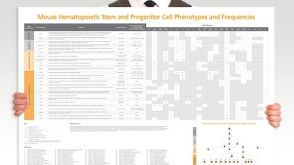 挂图Mouse Hematopoietic Stem and Progenitor Cell Phenotyping Overview of mouse HSPC subset surface markers and frequencies发布日期: 08/10/2018
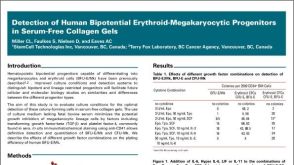 科学海报Detection of Human Bipotential Erythroid-Megakaryocytic Progenitors in Serum-Free Collagen Gels

 沪公网安备31010102008431号