Zhang Z et al. (SEP 2003)
The EMBO journal 22 18 4759--69
Enforced expression of EBF in hematopoietic stem cells restricts lymphopoiesis to the B cell lineage.
Mice deficient in early B cell factor (EBF) are blocked at the progenitor B cell stage prior to immunoglobulin gene rearrangement. The EBF-dependent block in B cell development occurs near the onset of B-lineage commitment,which raises the possibility that EBF may act instructively to specify the B cell fate from uncommitted,multipotential progenitor cells. To test this hypothesis,we transduced enriched hematopoietic progenitor cells with a retroviral vector that coexpressed EBF and the green fluorescent protein (GFP). Mice reconstituted with EBF-expressing cells showed a near complete absence of T lymphocytes. Spleen and peripheral blood samples were textgreater95 and 90% GFP+EBF+ mature B cells,respectively. Both NK and lymphoid-derived dendritic cells were also significantly reduced compared with control-transplanted mice. These data suggest that EBF can restrict lymphopoiesis to the B cell lineage by blocking development of other lymphoid-derived cell pathways.
View Publication
产品类型:
产品号#:
03434
03444
产品名:
MethoCult™ GF M3434
MethoCult™ GF M3434
Dang SM et al. (MAY 2002)
Biotechnology and bioengineering 78 4 442--53
Efficiency of embryoid body formation and hematopoietic development from embryonic stem cells in different culture systems.
Embryonic stem (ES) cells have tremendous potential as a cell source for cell-based therapies. Realization of that potential will depend on our ability to understand and manipulate the factors that influence cell fate decisions and to develop scalable methods of cell production. We compared four standard ES cell differentiation culture systems by measuring aspects of embryoid body (EB) formation efficiency and cell proliferation,and by tracking development of a specific differentiated tissue type-blood-using functional (colony-forming cell) and phenotypic (Flk-1 and CD34 expression) assays. We report that individual murine ES cells form EBs with an efficiency of 42 +/- 9%,but this value is rarely obtained because of EB aggregation-a process whereby two or more individual ES cells or EBs fuse to form a single,larger cell aggregate. Regardless of whether EBs were generated from a single ES cell in methylcellulose or liquid suspension culture,or aggregates of ES cells in hanging drop culture,they grew to a similar maximum cell number of 28,000 +/- 9,000 cells per EB. Among the three methods for EB generation in suspension culture there were no differences in the kinetics or frequency of hematopoietic development. Thus,initiating EBs with a single ES cell and preventing EB aggregation should allow for maximum yield of differentiated cells in the EB system. EB differentiation cultures were also compared to attached differentiation culture using the same outputs. Attached colonies were not similarly limited in cell number; however,hematopoietic development in attached culture was impaired. The percentage of early Flk-1 and CD34 expressing cells was dramatically lower than in EBs cultured in suspension,whereas hematopoietic colony formation was almost completely inhibited. These results provide a foundation for development of efficient,scalable bioprocesses for ES cell differentiation,and inform novel methods for the production of hematopoietic tissues.
View Publication
Fibroblast growth factor-1 and -2 preserve long-term repopulating ability of hematopoietic stem cells in serum-free cultures.
In this study,we demonstrate that extended culture of unfractionated mouse bone marrow (BM) cells,in serum-free medium,supplemented only with fibroblast growth factor (FGF)-1,FGF-2,or FGF-1 +2 preserves long-term repopulating hematopoietic stem cells (HSCs). Using competitive repopulation assays,high levels of stem cell activity were detectable at 1,3,and 5 weeks after initiation of culture. FGFs as single growth factors failed to support cultures of highly purified Lin(-)Sca-1(+)c-Kit(+)(LSK) cells. However,cocultures of purified CD45.1 LSK cells with whole BM CD45.2 cells provided high levels of CD45.1 chimerism after transplant,showing that HSC activity originated from LSK cells. Subsequently,we tested the reconstituting potential of cells cultured in FGF-1 + 2 with the addition of early acting stimulatory molecules,stem cell factor +interleukin-11 + Flt3 ligand. The addition of these growth factors resulted in a strong mitogenic response,inducing rapid differentiation and thereby completely overriding FGF-dependent stem cell conservation. Importantly,although HSC activity is typically rapidly lost after short-term culture in vitro,our current protocol allows us to sustain stem cell repopulation potential for periods up to 5 weeks.
View Publication
产品类型:
产品号#:
09600
09650
产品名:
StemSpan™ SFEM
StemSpan™ SFEM
Vallier L (JAN 2011)
Methods in molecular biology (Clifton,N.J.) 690 57--66
Serum-free and feeder-free culture conditions for human embryonic stem cells.
Human embryonic stem cells (hESCs) are pluripotent cells derived from the embryo at the blastocyst stage. Their embryonic origin confers upon them the capacity to proliferate indefinitely in vitro while maintaining the capacity to differentiate into a large variety of cell types. Based on these properties of self-renewal and pluripotency,hESCs represent a unique source to generate a large quantity of certain specialized cell types with clinical interest for transplantation-based therapy. However,hESCs are usually grown in culture conditions using fetal bovine serum and mouse embryonic fibroblasts,two components that are not compatible with clinical applications. Consequently,the possibility to expand hESCs in serum-free and in feeder-free culture conditions is becoming a major challenge to deliver the clinical promises of hESCs. Here,we describe the basic principles of growing hESCs in a chemically defined medium (CDM) devoid of serum and feeders.
View Publication
Hu Y-L et al. (SEP 2010)
Nucleic acids research 38 16 5472--8
HOXA9 regulates miR-155 in hematopoietic cells.
HOXA9-mediated up-regulation of miR-155 was noted during an array-based analysis of microRNA expression in Hoxa9(-/-)bone marrow (BM) cells. HOXA9 induction of miR-155 was confirmed in these samples,as well as in wild-type versus Hoxa9-deficient marrow,using northern analysis and qRT-PCR. Infection of wild-type BM with HOXA9 expressing or GFP(+) control virus further confirmed HOXA9-mediated regulation of miR-155. miR-155 expression paralleled Hoxa9 mRNA expression in fractionated BM progenitors,being highest in the stem cell enriched pools. HOXA9 capacity to induce myeloid colony formation was blunted in miR-155-deficient BM cells,indicating that miR-155 is a downstream mediator of HOXA9 function in blood cells. Pu.1,an important regulator of myelopoiesis,was identified as a putative down stream target for miR-155. Although miR-155 was shown to down-regulate the Pu.1 protein,HOXA9 did not appear to modulate Pu.1 expression in murine BM cells.
View Publication
产品类型:
产品号#:
03434
03444
产品名:
MethoCult™ GF M3434
MethoCult™ GF M3434
Chase LG and Firpo MT (AUG 2007)
Current opinion in chemical biology 11 4 367--72
Development of serum-free culture systems for human embryonic stem cells.
Human embryonic stem cells,because of their unique combination of long-term self-renewal properties and pluripotency,are providing new avenues of investigation of stem cell biology and human development and show promise in providing a new source of human cells for transplantation therapies and pharmaceutical testing. Current methods of propagating these cells using combinations of mouse fibroblast feeder cultures and bovine serum components are inexpensive and,in general,useful. However,the systematic investigation of the regulation of self-renewal and the production of safer sources of cells for transplantation depends on the elimination of animal products and the use of defined culture conditions. Both goals are served by the development of serum-free culture methods for human embryonic stem cells.
View Publication
产品类型:
产品号#:
05850
05857
05870
05875
85850
85857
85870
85875
产品名:
mTeSR™1
mTeSR™1
Sun Y et al. (MAR 2010)
Blood 115 9 1709--17
Slug deficiency enhances self-renewal of hematopoietic stem cells during hematopoietic regeneration.
Both extrinsic and intrinsic mechanisms tightly govern hematopoietic stem cell (HSC) decisions of self-renewal and differentiation. However,transcription factors that can selectively regulate HSC self-renewal division after stress remain to be identified. Slug is an evolutionarily conserved zinc-finger transcription factor that is highly expressed in primitive hematopoietic cells and is critical for the radioprotection of these key cells. We studied the effect of Slug in the regulation of HSCs in Slug-deficient mice under normal and stress conditions using serial functional assays. Here,we show that Slug deficiency does not disturb hematopoiesis or alter HSC homeostasis and differentiation in bone marrow but increases the numbers of primitive hematopoietic cells in the extramedullary spleen site. Deletion of Slug enhances HSC repopulating potential but not its homing and differentiation ability. Furthermore,Slug deficiency increases HSC proliferation and repopulating potential in vivo after myelosuppression and accelerates HSC expansion during in vitro culture. Therefore,we propose that Slug is essential for controlling the transition of HSCs from relative quiescence under steady-state condition to rapid proliferation under stress conditions. Our data suggest that inhibition of Slug in HSCs may present a novel strategy for accelerating hematopoietic recovery,thus providing therapeutic benefits for patients after clinical myelosuppressive treatment.
View Publication
产品类型:
产品号#:
09600
09650
28600
产品名:
StemSpan™ SFEM
StemSpan™ SFEM
L-Calc™有限稀释软件
Domashenko AD et al. (OCT 2010)
Blood 116 15 2676--83
TAT-mediated transduction of NF-Ya peptide induces the ex vivo proliferation and engraftment potential of human hematopoietic progenitor cells.
Retroviral overexpression of NF-Ya,the regulatory subunit of the transcription factor NF-Y,activates the transcription of multiple genes implicated in hematopoietic stem cell (HSC) self-renewal and differentiation and directs HSCs toward self-renewal. We asked whether TAT-NF-Ya fusion protein could be used to transduce human CD34(+) cells as a safer,more regulated alternative approach to gene therapy. Here we show that externally added recombinant protein was able to enter the cell nucleus and activate HOXB4,a target gene of NF-Ya,using real-time polymerase chain reaction RNA and luciferase-based protein assays. After TAT-NF-Ya transduction,the proliferation of human CD34(+) cells in the presence of myeloid cytokines was increased 4-fold. Moreover,TAT-NF-Ya-treated human primary bone marrow cells showed a 4-fold increase in the percentage of huCD45(+) cells recovered from the bone marrow of sublethally irradiated,transplanted NOD-Scid IL2Rγ(null) mice. These data demonstrate that TAT-peptide therapies are an alternative approach to retroviral stem cell therapies and suggest that NF-Ya peptide delivery should be further evaluated as a tool for HSC/progenitors ex vivo expansion and therapy.
View Publication
产品类型:
产品号#:
04436
09850
产品名:
MethoCult™ SF H4436
Gerrits A et al. (APR 2010)
Blood 115 13 2610--8
Cellular barcoding tool for clonal analysis in the hematopoietic system.
Clonal analysis is important for many areas of hematopoietic stem cell research,including in vitro cell expansion,gene therapy,and cancer progression and treatment. A common approach to measure clonality of retrovirally transduced cells is to perform integration site analysis using Southern blotting or polymerase chain reaction-based methods. Although these methods are useful in principle,they generally provide a low-resolution,biased,and incomplete assessment of clonality. To overcome those limitations,we labeled retroviral vectors with random sequence tags or barcodes." On integration�
View Publication


 EasySep™小鼠TIL(CD45)正选试剂盒





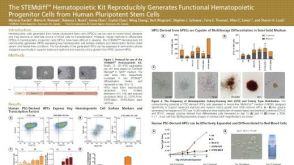 科学海报The STEMdiff™ Hematopoietic Kit Reproducibly Generates Functional Hematopoietic Progenitor Cells from Human Pluripotent Stem Cells
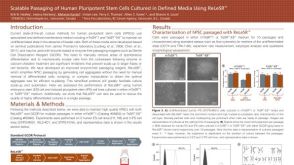 科学海报Scalable Passaging of Human Pluripotent Stem Cells Cultured in Defined Media Using ReLeSR™
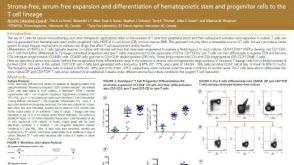 科学海报Stroma-Free, Serum-Free Expansion and Differentiation of Hematopoietic Stem and Progenitor Cells to the T Cell Lineage
 沪公网安备31010102008431号