Anti-CD45-mediated cytoreduction to facilitate allogeneic stem cell transplantation.
The CD45 antigen is present on all cells of the hematopoietic lineage. Using a murine model,we have determined whether a lytic CD45 monoclonal antibody can produce persistent aplasia and whether it could facilitate syngeneic or allogeneic stem cell engraftment. After its systemic administration,we found saturating quantities of the antibody on all cells expressing the CD45 antigen,both in marrow and in lymphoid organs. All leukocyte subsets in peripheral blood were markedly diminished during or soon after anti-CD45 treatment,but only the effect on the lymphoid compartment was sustained. In contrast to the prolonged depletion of T and B lymphocytes from the thymus and spleen,peripheral blood neutrophils began to recover within 24 hours after the first anti-CD45 injection and marrow progenitor cells were spared from destruction,despite being coated with saturating quantities of anti-CD45. Given the transient effects of the monoclonal antibody on myelopoiesis and the more persistent effects on lymphopoiesis,we asked whether this agent could contribute to donor hematopoietic engraftment following nonmyeloablative transplantation. Treatment with anti-CD45 alone did not enhance syngeneic engraftment,consistent with its inability to destroy progenitor cells and permit competitive repopulation with syngeneic donor stem cells. By contrast,the combination of anti-CD45 and an otherwise inactive dose of total-body irradiation allowed engraftment of H2 fully allogeneic donor stem cells. We attribute this result to the recipient immunosuppression produced by depletion of CD45(+) lymphocytes. Monoclonal antibodies of this type may therefore have an adjunctive role in nonmyeloablative conditioning regimens for allogeneic stem cell transplantation.
View Publication
The ROCK inhibitor Y-27632 improves recovery of human embryonic stem cells after fluorescence-activated cell sorting with multiple cell surface markers
BACKGROUND: Due to the inherent sensitivity of human embryonic stem cells (hESCs) to manipulations,the recovery and survival of hESCs after fluorescence-activated cell sorting (FACS) can be low. Additionally,a well characterized and robust methodology for performing FACS on hESCs using multiple-cell surface markers has not been described. The p160-Rho-associated coiled kinase (ROCK) inhibitor,Y-27632,previously has been identified as enhancing survival of hESCs upon single-cell dissociation,as well as enhancing recovery from cryopreservation. Here we examined the application of Y-27632 to hESCs after FACS to improve survival in both feeder-dependent and feeder-independent growth conditions. METHODOLOGY/PRINCIPAL FINDINGS: HESCs were sorted using markers for SSEA-3,TRA-1-81,and SSEA-1. Cells were plated after sorting for 24 hours in either the presence or the absence of Y-27632. In both feeder-dependent and feeder-independent conditions,cell survival was greater when Y-27632 was applied to the hESCs after sort. Specifically,treatment of cells with Y-27632 improved post-sort recovery up to four fold. To determine the long-term effects of sorting with and without the application of Y-27632,hESCs were further analyzed. Specifically,hESCs sorted with and without the addition of Y-27632 retained normal morphology,expressed hESC-specific markers as measured by immunocytochemistry and flow cytometry,and maintained a stable karyotype. In addition,the hESCs could differentiate into three germ layers in vitro and in vivo in both feeder-dependent and feeder-independent growth conditions. CONCLUSIONS/SIGNIFICANCE: The application of Y-27632 to hESCs after cell sorting improves cell recovery with no observed effect on pluripotency,and enables the consistent recovery of hESCs by FACS using multiple surface markers. This improved methodology for cell sorting of hESCs will aid many applications such as removal of hESCs from secondary cell types,identification and isolation of stem cell subpopulations,and generation of single cell clones. Finally,these results demonstrate an additional application of ROCK inhibition to hESC research.
View Publication
Lagarkova MA et al. (APR 2010)
In vitro cellular & developmental biology. Animal 46 3-4 284--93
Human embryonic stem cell lines isolation, cultivation, and characterization
A large number of human embryonic stem cell (hESC) lines have been derived worldwide since the first hESC line establishment in 1998. Despite many common characteristics,most important of which is the pluripotency,hESC lines vary significantly in their transcriptional profiles,genetic,and epigenetic state. These differences may arise both from individual genetics of the cell lines and from variations in their handling such as isolation and cultivation. In order to minimize the latter differences,the standardized protocols of cultivation and inter-laboratory comprehensive studies should be performed. In this report,we summarized our experience of derivation and characterization of hESC lines as well as of adaptation of hESCs to novel cultivation protocols. We have successfully derived five hESC lines and characterized them by previously established criteria,including expression of specific markers and the capacity to differentiate both in vitro and in vivo. Four of these lines,namely hESM01-04,were initially derived using mouse fibroblasts as a feeder and currently are maintained under feeder-free,serum-free conditions using mTeSR1 and Matrigel. The fifth line,hESMK05 was derived in feeder-free,serum-free conditions using mTeSR1 and Matrigel. Cell lines retain their pluripotent status and normal karyotype for more than 70 passages and are available to the scientific community.
View Publication
产品类型:
产品号#:
05854
05855
05850
05857
05870
05875
85850
85857
85870
85875
产品名:
mFreSR™
mFreSR™
mTeSR™1
mTeSR™1
Ito CY et al. (JAN 2003)
Blood 101 2 517--23
Hematopoietic stem cell and progenitor defects in Sca-1/Ly-6A-null mice.
Despite its wide use as a marker for hematopoietic stem cells (HSCs),the function of stem cell antigen-1 (Sca-1) (also known as lymphocyte activation protein-6A [Ly-6A]) in hematopoiesis remains poorly defined. We have previously established that Sca-1(-/-) T cells develop normally,although they are hyperresponsive to antigen. Here,we report detailed analysis of hematopoiesis in Sca-1-deficient animals. The differentiation potential of Sca-1-null bone marrow was determined from examination of the most mature precursors (culture colony-forming units [CFU-Cs]) to less committed progenitors (spleen CFUs [CFU-Ss]) to long-term repopulating HSCs. Sca-1-null mice are mildly thrombocytopenic with a concomitant decrease in megakaryocytes and their precursors. Bone marrow cells derived from Sca-1(-/-) mice also have decreased multipotential granulocyte,erythroid,macrophage,and megakaryocyte CFU (GEMM-CFU) and CFU-S progenitor activity. Competitive repopulation assays demonstrated that Sca-1(-/-) HSCs are at a competitive disadvantage compared with wild-type HSCs. To further analyze the potential of Sca-1(-/-) HSCs,serial transplantations were performed. While secondary repopulations using wild-type bone marrow completely repopulated Sca-1(-/-) mice,Sca-1(-/-) bone marrow failed to rescue one third of lethally irradiated wild-type mice receiving secondary bone marrow transplants from irradiation-induced anemia and contributed poorly to the surviving transplant recipients. These data strongly suggest that Sca-1 is required for regulating HSC self-renewal and the development of committed progenitor cells,megakaryocytes,and platelets. Thus,our studies conclusively demonstrate that Sca-1,in addition to being a marker of HSCs,regulates the developmental program of HSCs and specific progenitor populations.
View Publication
产品类型:
产品号#:
03434
03444
04960
04902
04900
04961
04901
04963
04962
04970
04971
产品名:
MethoCult™ GF M3434
MethoCult™ GF M3434
MegaCult™-C胶原和无细胞因子培养基
胶原蛋白溶液
MegaCult™-C无细胞因子培养基
MegaCult™-C胶原和含细胞因子培养基
MegaCult™-C含细胞因子培养基
双室载玻片套件
MegaCult™-C CFU-Mk染色试剂盒
MegaCult™-C无细胞因子全套试剂盒
MegaCult™-C含细胞因子全套试剂盒
Kitsos CM et al. (SEP 2005)
The Journal of biological chemistry 280 39 33101--8
Calmodulin-dependent protein kinase IV regulates hematopoietic stem cell maintenance.
The hematopoietic stem cell (HSC) gives rise to all mature,terminally differentiated cells of the blood. Here we show that calmodulin-dependent protein kinase IV (CaMKIV) is present in c-Kit+ ScaI+ Lin(-/low) hematopoietic progenitor cells (KLS cells) and that its absence results in hematopoietic failure,characterized by a diminished KLS cell population and by an inability of these cells to reconstitute blood cells upon serial transplantation. KLS cell failure in the absence of CaMKIV is correlated with increased apoptosis and proliferation of these cells in vivo and in vitro. In turn,these cell biological defects are correlated with decreases in CREB-serine 133 phosphorylation as well as in CREB-binding protein (CBP) and Bcl-2 levels. Re-expression of CaMKIV in Camk4-/- KLS cells results in the rescue of the proliferation defects in vitro as well as in the restoration of CBP and Bcl-2 to wild type levels. These studies show that CaMKIV is a regulator of HSC homeostasis and suggest that its effects may be in part mediated via regulation of CBP and Bcl-2.
View Publication
产品类型:
产品号#:
03434
03444
产品名:
MethoCult™ GF M3434
MethoCult™ GF M3434
Ramirez J-M et al. (APR 2010)
World journal of stem cells 2 2 24--33
Human pluripotent stem cells: from biology to cell therapy.
Human pluripotent stem cells (PSCs),encompassing embryonic stem cells and induced pluripotent stem cells,proliferate extensively and differentiate into virtually any desired cell type. PSCs endow regenerative medicine with an unlimited source of replacement cells suitable for human therapy. Several hurdles must be carefully addressed in PSC research before these theoretical possibilities are translated into clinical applications. These obstacles are: (1) cell proliferation; (2) cell differentiation; (3) genetic integrity; (4) allogenicity; and (5) ethical issues. We discuss these issues and underline the fact that the answers to these questions lie in a better understanding of the biology of PSCs. To contribute to this aim,we have developed a free online expression atlas,Amazonia!,that displays for each human gene a virtual northern blot for PSC samples and adult tissues (http://www.amazonia.transcriptome.eu).
View Publication


 EasySep™小鼠TIL(CD45)正选试剂盒





 抗小鼠CD43抗体,clone R2/60 抗小鼠CD43的大鼠Monoclonal IgM抗体
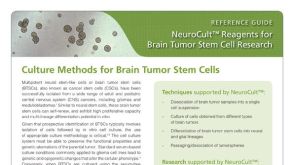 产品手册NeuroCult™: Reagents for Brain Tumor Stem Cell Research

 沪公网安备31010102008431号