Chen X et al. (NOV 2010)
Stem cells and development 19 11 1781--1792
Investigations into the metabolism of two-dimensional colony and suspended microcarrier cultures of human embryonic stem cells in serum-free media.
Metabolic studies of human embryonic stem cells (hESCs) can provide important information for stem cell bioprocessing. To this end,we have examined growth and metabolism of hESCs in both traditional 2-dimensional (2D) colony cultures and 3-dimensional microcarrier cultures using a conditioned medium and 3 serum-free media. The 2D colony cultures plateaued at cell densities of 1.1-1.5 × 10�?� cells/mL at day 6 due to surface limitation. Microcarrier cultures achieved 1.5-2 × 10�?� cells/mL on days 8-10 before reaching a plateau; this growth arrest was not due to surface limitation,but probably due to metabolic limitations. Metabolic analysis of the cultures showed that amino acids (including glutamine) and glucose are in excess and are not limiting cell growth; on the other hand,the high levels of waste products (25 mM lactate and 0.8 mM ammonium) and low pH (6.6) obtained at the last stages of cell propagation could be the causes for growth arrest. hESCs cultured in media supplemented with lactate (up to 28 mM) showed reduced cell growth,whereas ammonium (up to 5 mM) had no effect. Lactate and,to a lesser extent,ammonia affected pluripotency as reflected by the decreasing population of cells expressing pluripotent marker TRA-1-60. Feeding hESC cultures with low concentrations of glucose resulted in lower lactate levels (∼10%) and a higher pH level of 6.7,which leads to a 40% increase in cell density. We conclude that the high lactate levels and the low pH during the last stages of high-density hESC culture may limit cell growth and affect pluripotency. To overcome this limitation,a controlled feed of low levels of glucose and online control of pH can be used.
View Publication
Yasui K et al. (JAN 2003)
Stem cells (Dayton,Ohio) 21 2 143--51
Differences between peripheral blood and cord blood in the kinetics of lineage-restricted hematopoietic cells: implications for delayed platelet recovery following cord blood transplantation.
Cord blood (CB) cells are a useful source of hematopoietic cells for transplantation. The hematopoietic activities of CB cells are different from those of bone marrow and peripheral blood (PB) cells. Platelet recovery is significantly slower after transplantation with CB cells than with cells from other sources. However,the cellular mechanisms underlying these differences have not been elucidated. We compared the surface marker expression profiles of PB and CB hematopoietic cells. We focused on two surface markers of hematopoietic cell immaturity,i.e.,CD34 and AC133. In addition to differences in surface marker expression,the PB and CB cells showed nonidentical differentiation pathways from AC133(+)CD34(+) (immature) hematopoietic cells to terminally differentiated cells. The majority of the AC133(+)CD34(+) PB cells initially lost AC133 expression and eventually became AC133(-)CD34(-) cells. In contrast,the AC133(+)CD34(+) CB cells did not go through the intermediate AC133(-)CD34(+) stage and lost both markers simultaneously. Meanwhile,the vast majority of megakaryocyte progenitors were of the AC133(-)CD34(+) phenotype. We conclude that the delayed recovery of platelets after CB transplantation is due to both subpopulation distribution and the process of differentiation from AC133(+)CD34(+) cells.
View Publication
Mirabelli P et al. (JAN 2008)
BMC physiology 8 1 13
Extended flow cytometry characterization of normal bone marrow progenitor cells by simultaneous detection of aldehyde dehydrogenase and early hematopoietic antigens: implication for erythroid differentiation studies.
BACKGROUND: Aldehyde dehydrogenase (ALDH) is a cytosolic enzyme highly expressed in hematopoietic precursors from cord blood and granulocyte-colony stimulating factor mobilized peripheral blood,as well as in bone marrow from patients with acute myeloblastic leukemia. As regards human normal bone marrow,detailed characterization of ALDH+ cells has been addressed by one single study (Gentry et al,2007). The goal of our work was to provide new information about the dissection of normal bone marrow progenitor cells based upon the simultaneous detection by flow cytometry of ALDH and early hematopoietic antigens,with particular attention to the expression of ALDH on erythroid precursors. To this aim,we used three kinds of approach: i) multidimensional analytical flow cytometry,detecting ALDH and early hematopoietic antigens in normal bone marrow; ii) fluorescence activated cell sorting of distinct subpopulations of progenitor cells,followed by in vitro induction of erythroid differentiation; iii) detection of ALDH+ cellular subsets in bone marrow from pure red cell aplasia patients. RESULTS: In normal bone marrow,we identified three populations of cells,namely ALDH+CD34+,ALDH-CD34+ and ALDH+CD34- (median percentages were 0.52,0.53 and 0.57,respectively). As compared to ALDH-CD34+ cells,ALDH+CD34+ cells expressed the phenotypic profile of primitive hematopoietic progenitor cells,with brighter expression of CD117 and CD133,accompanied by lower display of CD38 and CD45RA. Of interest,ALDH+CD34- population disclosed a straightforward erythroid commitment,on the basis of three orders of evidences. First of all,ALDH+CD34- cells showed a CD71bright,CD105+,CD45- phenotype. Secondly,induction of differentiation experiments evidenced a clear-cut expression of glycophorin A (CD235a). Finally,ALDH+CD34- precursors were not detectable in patients with pure red cell aplasia (PRCA). CONCLUSION: Our study,comparing surface antigen expression of ALDH+/CD34+,ALDH-/CD34+ and ALDH+/CD34- progenitor cell subsets in human bone marrow,clearly indicated that ALDH+CD34- cells are mainly committed towards erythropoiesis. To the best of our knowledge this finding is new and could be useful for basic studies about normal erythropoietic differentiation as well as for enabling the employment of ALDH as a red cell marker in polychromatic flow cytometry characterization of bone marrow from patients with aplastic anemia and myelodysplasia.
View Publication
Differentiation of human pluripotent stem cells into nephron progenitor cells in a serum and feeder free system.
OBJECTIVES Kidney disease is emerging as a critical medical problem worldwide. Because of limited treatment options for the damaged kidney,stem cell treatment is becoming an alternative therapeutic approach. Of many possible human stem cell sources,pluripotent stem cells are most attractive due to their self-renewal and pluripotent capacity. However,little is known about the derivation of renal lineage cells from human pluripotent stem cells (hPSCs). In this study,we developed a novel protocol for differentiation of nephron progenitor cells (NPCs) from hPSCs in a serum- and feeder-free system. MATERIALS AND METHODS We designed step-wise protocols for differentiation of human pluripotent stem cells toward primitive streak,intermediate mesoderm and NPCs by recapitulating normal nephrogenesis. Expression of key marker genes was examined by RT-PCR,real time RT-PCR and immunocytochemistry. Each experiment was independently performed three times to confirm its reproducibility. RESULTS After modification of culture period and concentration of exogenous factors,hPSCs can differentiate into NPCs that markedly express specific marker genes such as SIX2,GDNF,HOXD11,WT1 and CITED1 in addition to OSR1,PAX2,SALL1 and EYA1. Moreover,NPCs possess the potential of bidirectional differentiation into both renal tubular epithelial cells and glomerular podocytes in defined culture conditions. In particular,approximately 70% of SYN-positive cells were obtained from hPSC-derived NPCs after podocytes induction. NPCs can also form in vitro tubule-like structures in three dimensional culture systems. CONCLUSIONS Our novel protocol for hPSCs differentiation into NPCs can be useful for producing alternative sources of cell replacement therapy and disease modeling for human kidney diseases.
View Publication
产品类型:
产品号#:
05850
05857
05870
05875
85850
85857
85870
85875
产品名:
mTeSR™1
mTeSR™1
Chang M-YY et al. (NOV 2015)
Stem cell research 15 3 608--613
Doxycycline supplementation allows for the culture of human ESCs/iPSCs with media changes at 3-day intervals.
Culturing human embryonic stem and induced pluripotent stem cells (hESCs/iPSCs) is one of the most costly and labor-intensive tissue cultures,as media containing expensive factors/cytokines should be changed every day to maintain and propagate undifferentiated hESCs/iPSCs in vitro. We recently reported that doxycycline,an anti-bacterial agent,had dramatic effects on hESC/iPSC survival and promoted self-renewal. In this study,we extended the effects of doxycycline to a more practical issue to save cost and labor in hESC/iPSC cultures. Regardless of cultured cell conditions,hESCs/iPSCs in doxycycline-supplemented media were viable and proliferating for at least 3 days without media change,while none or few viable cells were detected in the absence of doxycycline in the same conditions. Thus,hESCs/iPSCs supplemented with doxycycline can be cultured for a long period of time with media changes at 3-day intervals without altering their self-renewal and pluripotent properties,indicating that doxycycline supplementation can reduce the frequency of media changes and the amount of media required by 1/3. These findings strongly encourage the use of doxycycline to save cost and labor in culturing hESCs/iPSCs.
View Publication
Hannoun Z et al. (APR 2010)
Cellular reprogramming 12 2 133--140
The comparison between conditioned media and serum-free media in human embryonic stem cell culture and differentiation.
Human embryonic stem cells (hESCs) offer an inexhaustible supply of human somatic cell types through their ability to self-renew while retaining pluripotency. As such,hESC-derived cell types are important for applications ranging from in vitro modeling to therapeutic use. However,for their full potential to be realized,both the growth of the undifferentiated cells and their derivatives must be performed in defined culture conditions. Many research groups maintain hESCs using mouse embryonic fibroblasts (MEF) and MEF conditioned medium (CM). The use of murine systems to support hESCs has been imperative in developing hESC technology; however,they suffer from some major limitations including lack of definition,xenobiotic nature,batch-to-batch variation,and labor-intensive production. Therefore,hESC culture definition is essential if hESC lines,and their derivatives are to be quality assured and manufactured to GMP. We have initiated the process of standardizing hESC tissue culture and have employed two serum-free media: mTeSR (MT) and Stem Pro (SP). hESCs were maintained in a pluripotent state,for over 30 passages using MT and SP. Additionally,we present evidence that hESCs maintained in MT and SP generate equivalent levels of human hepatic endoderm as observed with CM. This data suggests that MT and SP are effective replacements for MEF-CM in hESC culture,contributing to the standardization of hESC in vitro models and ultimately their application.
View Publication


 EasySep™小鼠TIL(CD45)正选试剂盒





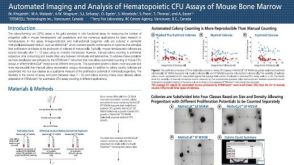 科学海报Automated Imaging and Analysis of Hematopoietic CFU Assays of Mouse Bone Marrow
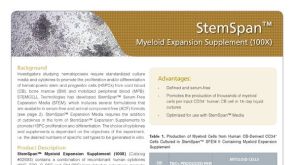 产品手册StemSpan™ Media and Supplements for the Expansion and Differentiation of Granulocytes and Monocytes
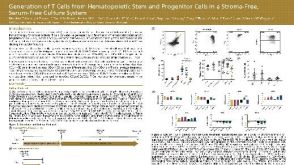 科学海报Generation of T Cells from Hematopoietic Stem and Progenitor Cells in a Stroma-Free, Serum-Free Culture System
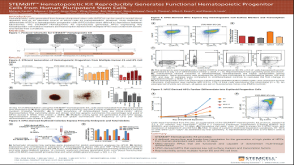 科学海报STEMdiff™ Hematopoietic Kit Reproducibly Generates Functional Hematopoietic Progenitor Cells from Human Pluripotent Stem Cells
 技术公告Generation of Erythroblasts from Pluripotent Stem Cells Using STEMdiff™ Media and Supplements

 沪公网安备31010102008431号