Ma X et al. ( 2012)
Journal of biomedicine & biotechnology 2012 741416
Development of new technologies for stem cell research.
Since the 1960s,the stem cells have been extensively studied including embryonic stem cells,neural stem cells,bone marrow hematopoietic stem cells,and mesenchymal stem cells. In the recent years,several stem cells have been initially used in the treatment of diseases,such as in bone marrow transplant. At the same time,isolation and culture experimental technologies for stem cell research have been widely developed in recent years. In addition,molecular imaging technologies including optical molecular imaging,positron emission tomography,single-photon emission computed tomography,and computed tomography have been developed rapidly in recent the 10 years and have also been used in the research on disease mechanism and evaluation of treatment of disease related with stem cells. This paper will focus on recent typical isolation,culture,and observation techniques of stem cells followed by a concise introduction. Finally,the current challenges and the future applications of the new technologies in stem cells are given according to the understanding of the authors,and the paper is then concluded.
View Publication
Steward CG et al. (FEB 2005)
Biology of blood and marrow transplantation : journal of the American Society for Blood and Marrow Transplantation 11 2 115--21
High peripheral blood progenitor cell counts enable autologous backup before stem cell transplantation for malignant infantile osteopetrosis.
Autosomal recessive osteopetrosis (OP) is a rare,lethal disorder in which osteoclasts are absent or nonfunctional,resulting in a bone marrow cavity insufficient to support hematopoiesis. Because osteoclasts are derived from hematopoietic precursors,allogeneic hematopoietic cell transplantation can cure the bony manifestations of the disorder. However,high rates of graft failure have been observed in this population. It is not possible to harvest bone marrow from these patients for reinfusion should graft failure be observed. We report that 8 of 10 patients with OP had high numbers of circulating CD34(+) cells (3% +/- 0.9%). This increased proportion of peripheral CD34(+) cells made it possible to harvest 2 x 10(6) CD34(+) cells per kilogram with a total volume of blood ranging from 8.3 to 83.7 mL (1.3-11.6 mL/kg). In addition,colony-forming assays documented significantly more colony-forming unit-granulocyte-macrophage and burst-forming unit-erythroid in the blood of osteopetrotic patients compared with controls; the numbers of colony-forming units approximated those found in control marrow. We conclude that OP patients with high levels of circulating CD34(+) are candidates for peripheral blood autologous harvest by limited exchange transfusion. These cells are then available for reinfusion should graft failure be observed in patients for whom retransplantation is impractical.
View Publication
Aliahmad P et al. (OCT 2010)
Nature immunology 11 10 945--52
Shared dependence on the DNA-binding factor TOX for the development of lymphoid tissue-inducer cell and NK cell lineages.
TOX is a DNA-binding factor required for development of CD4(+) T cells,natural killer T cells and regulatory T cells. Here we document that both natural killer (NK) cell development and lymphoid tissue organogenesis were also inhibited in the absence of TOX. We found that the development of lymphoid tissue-inducer cells,a rare subset of specialized cells that has an integral role in lymphoid tissue organogenesis,required TOX. Tox was upregulated considerably in immature NK cells in the bone marrow,consistent with the loss of mature NK cells in the absence of this nuclear protein. Thus,many cell lineages of the immune system share a TOX-dependent step for development.
View Publication
产品类型:
产品号#:
19756
19756RF
产品名:
Kolhar P et al. (APR 2010)
Journal of biotechnology 146 3 143--6
Synthetic surfaces for human embryonic stem cell culture.
Human embryonic stem cells (hESCs) have numerous potential biomedical applications owing to their unique abilities for self-renewal and pluripotency. Successful clinical application of hESCs and derivatives necessitates the culture of these cells in a fully defined environment. We have developed a novel peptide-based surface that uses a high-affinity cyclic RGD peptide for culture of hESCs under chemically defined conditions.
View Publication
产品类型:
产品号#:
05850
05857
05870
05875
85850
85857
85870
85875
产品名:
mTeSR™1
mTeSR™1
Thomson JA et al. (NOV 1998)
Science (New York,N.Y.) 282 5391 1145--7
Embryonic stem cell lines derived from human blastocysts.
Human blastocyst-derived,pluripotent cell lines are described that have normal karyotypes,express high levels of telomerase activity,and express cell surface markers that characterize primate embryonic stem cells but do not characterize other early lineages. After undifferentiated proliferation in vitro for 4 to 5 months,these cells still maintained the developmental potential to form trophoblast and derivatives of all three embryonic germ layers,including gut epithelium (endoderm); cartilage,bone,smooth muscle,and striated muscle (mesoderm); and neural epithelium,embryonic ganglia,and stratified squamous epithelium (ectoderm). These cell lines should be useful in human developmental biology,drug discovery,and transplantation medicine.
View Publication
Schenk FW et al. (SEP 2016)
Scientific reports 6 34038
High-speed microscopy of continuously moving cell culture vessels.
We report a method of high-speed phase contrast and bright field microscopy which permits large cell culture vessels to be scanned at much higher speed (up to 30 times faster) than when conventional methods are used without compromising image quality. The object under investigation moves continuously and is captured using a flash illumination which creates an exposure time short enough to prevent motion blur. During the scan the object always stays in focus due to a novel hardware-autofocus system.
View Publication


 EasySep™小鼠TIL(CD45)正选试剂盒





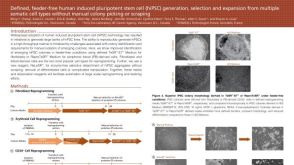 科学海报Defined, Feeder-Free Human Induced Pluripotent Stem Cell (hiPSC) Generation, Selection and Expansion from Multiple Somatic Cell Types




 沪公网安备31010102008431号