Pandey A et al. (JUN 2015)
Journal of neurochemistry 133 5 640--52
Critical role of the miR-200 family in regulating differentiation and proliferation of neurons.
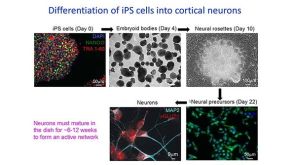
The generation of differentiated and functional neurons is a complex process,which requires coordinated expression of several proteins and microRNAs (miRNAs). The present study using nerve growth factor (NGF)-differentiated PC12 cells led to the identification of miR-200,miR-221/222 and miR-34 families as major up-regulated miRNAs in fully differentiated neurons. Similar to PC12 cells,induction of miR-200 family was observed in differentiating neural stem cells,demonstrating a direct role of miR-200 family in neuronal differentiation. Over-expression of miR-200 induced neurite formation in PC12 cells and regulated neuronal markers in favour of differentiation. However,inhibition of miR-200 induced proliferation of PC12 cells. In differentiating PC12 cells and neural stem cells,an inverse relationship was observed between expression of reprogramming transcription factors (SOX2,KLF4,NANOG,OCT4 and PAX6) and miR-200. Over-expression of miR-200 in PC12 cells significantly down-regulated mRNA and protein levels of SOX2 and KLF4. Moreover,we observed two phases of dramatic down-regulation of miR-200 expression in developing rat brains correlating with periods of neuronal proliferation. In conclusion,our results indicate that increased expression of the miR-200 family promotes neuronal differentiation,while decreased expression of the miR-200 family promotes neuronal proliferation by targeting SOX2 and KLF4.
View Publication
Huat TJ et al. (SEP 2015)
Genomics Data 5 201--205
MicroRNA expression profile of bone marrow mesenchymal stem cell-derived neural progenitor by microarray under the influence of EGF, bFGF and IGF-1
Recently there has been growing interest in the differentiation of mesenchymal stem cells (MSCs) into neural lineages. Research suggests that MSCs can be differentiated into neural progenitor-like cells (NPCs) under the specific influence of paracrine factors particularly epidermal growth factor (EGF) and basic fibroblast growth factor (bFGF). Our recent research has found that the addition of insulin-like growth factor 1 (IGF-1) with the combination of the EGF and bFGF could significantly improve the growth and survivability of MSC-derived NPCs. To unravel the molecular mechanism of the improved differentiation we compared the microRNA expression profiles of the differentiation under various combinations of growth factors. MSCs were differentiated into neural lineage in 3 groups; Group A (EGF + bFGF),Group B (EGF + bFGF + IGF-1),and Group C (without growth factor). Regulated microRNAs during the early differentiation were identified by detailed microRNA profiling using Affymetrix GeneChip version 2.0 at three time intervals (day 1,day 3 and day 5). The data were deposited in the Gene Expression Omnibus,series GSE60060.
View Publication
Huat T et al. (JUL 2014)
BMC Neuroscience 15 1 91
IGF-1 enhances cell proliferation and survival during early differentiation of mesenchymal stem cells to neural progenitor-like cells
BACKGROUND There has been increasing interest recently in the plasticity of mesenchymal stem cells (MSCs) and their potential to differentiate into neural lineages. To unravel the roles and effects of different growth factors in the differentiation of MSCs into neural lineages,we have differentiated MSCs into neural lineages using different combinations of growth factors. Based on previous studies of the roles of insulin-like growth factor 1 (IGF-1) in neural stem cell isolation in the laboratory,we hypothesized that IGF-1 can enhance proliferation and reduce apoptosis in neural progenitor-like cells (NPCs) during differentiation of MSCs into NCPs.We induced MSCs differentiation under four different combinations of growth factors: (A) EGF%+%bFGF,(B) EGF%+%bFGF%+%IGF-1,(C) EGF%+%bFGF%+%LIF,(D) EGF%+%bFGF%+%BDNF,and (E) without growth factors,as a negative control. The neurospheres formed were characterized by immunofluorescence staining against nestin,and the expression was measured by flow cytometry. Cell proliferation and apoptosis were also studied by MTS and Annexin V assay,respectively,at three different time intervals (24 hr,3 days,and 5 days). The neurospheres formed in the four groups were then terminally differentiated into neuron and glial cells. RESULTS The four derived NPCs showed a significantly higher expression of nestin than was shown by the negative control. Among the groups treated with growth factors,NPCs treated with IGF-1 showed the highest expression of nestin. Furthermore,NPCs derived using IGF-1 exhibited the highest cell proliferation and cell survival among the treated groups. The NPCs derived from IGF-1 treatment also resulted in a better yield after the terminal differentiation into neurons and glial cells than that of the other treated groups. CONCLUSIONS Our results suggested that IGF-1 has a crucial role in the differentiation of MSCs into neuronal lineage by enhancing the proliferation and reducing the apoptosis in the NPCs. This information will be beneficial in the long run for improving both cell-based and cell-free therapy for neurodegenerative diseases.
View Publication
Aghaeepour N et al. (AUG 2017)
Journal of immunology (Baltimore,Md. : 1950)
Deep Immune Profiling of an Arginine-Enriched Nutritional Intervention in Patients Undergoing Surgery.
Application of high-content immune profiling technologies has enormous potential to advance medicine. Whether these technologies reveal pertinent biology when implemented in interventional clinical trials is an important question. The beneficial effects of preoperative arginine-enriched dietary supplements (AES) are highly context specific,as they reduce infection rates in elective surgery,but possibly increase morbidity in critically ill patients. This study combined single-cell mass cytometry with the multiplex analysis of relevant plasma cytokines to comprehensively profile the immune-modifying effects of this much-debated intervention in patients undergoing surgery. An elastic net algorithm applied to the high-dimensional mass cytometry dataset identified a cross-validated model consisting of 20 interrelated immune features that separated patients assigned to AES from controls. The model revealed wide-ranging effects of AES on innate and adaptive immune compartments. Notably,AES increased STAT1 and STAT3 signaling responses in lymphoid cell subsets after surgery,consistent with enhanced adaptive mechanisms that may protect against postsurgical infection. Unexpectedly,AES also increased ERK and P38 MAPK signaling responses in monocytic myeloid-derived suppressor cells,which was paired with their pronounced expansion. These results provide novel mechanistic arguments as to why AES may exert context-specific beneficial or adverse effects in patients with critical illness. This study lays out an analytical framework to distill high-dimensional datasets gathered in an interventional clinical trial into a fairly simple model that converges with known biology and provides insight into novel and clinically relevant cellular mechanisms.
View Publication