Gadkari R et al. (JUL 2014)
Regenerative medicine 9 4 453--465
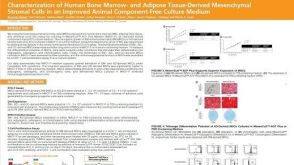
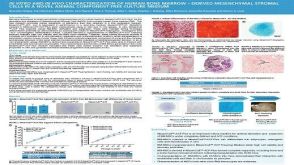
Human embryonic stem cell derived-mesenchymal stem cells: an alternative mesenchymal stem cell source for regenerative medicine therapy.
AIM To enumerate and characterize mesenchymal stem cells (MSC) derived from human embryonic stem cells (hESC) for clinical application. MATERIALS & METHODS hESC were differentiated into hESC-MSC and characterized by the expression of surface markers using flow cytometry. hESC-MSC were evaluated with respect to growth kinetics,colony-forming potential,as well as osteogenic and adipogenic differentiation capacity. Immunosuppressive effects were assessed using peripheral blood mononuclear cell (PBMC) proliferation and cytotoxicity assays. RESULTS hESC-MSC showed similar morphology,and cell surface markers as adipose (AMSC) and bone marrow-derived MSC (BMSC). hESC-MSC exhibited a higher growth rate during early in vitro expansion and equivalent adipogenic and osteogenic differentiation and colony-forming potential as AMSC and BMSC. hESC-MSC demonstrated similar immunosuppressive effects as AMSC and BMSC. CONCLUSION hESC-MSC were comparable to BMSC and AMSC and hence can be used as an alternative source of MSC for clinical applications.
View Publication
产品号#:
产品名:
Valencic E et al. (APR 2010)
Cytotherapy 12 2 154--60
The immunosuppressive effect of Wharton's jelly stromal cells depends on the timing of their licensing and on lymphocyte activation.
BACKGROUND: Mesenchymal stromal cells (MSC) have been proven to have potent immunosuppressive action and hence have been proposed for the treatment of severe Graft Versus Host Disease. However,in most models,MSC were added at the same time of lymphocyte stimulation,which is quite different from what occurs in vivo. AIMS: To investigate how the timing of lymphocyte activation and the exposure to activation-related cytokines (licensing) can influence the immunosuppressive action of Wharton's jelly stromal cells (WJSC). METHODS: WJSC,licensed or not with activation-related cytokines,were added lymphocytes the same time or 24 hours after their stimulation with phytohaemoagglutinin. Proliferation of lymphocytes and cytokines production was measured after three days co-culture. RESULTS: Lymphocytes stimulated in the presence of WJSC displayed a dramatic decrease in proliferation and production of cytokines,in spite of normal expression of activation markers. The suppression was weakened when targeted lymphocytes were seperated by a membrane and partially rescued by the addition of exogenous l-tryptophan,suggesting a major role for indoleamine 2,3-dioxigenase with a probable paracrine effect. Licensing of WJSC increased the immunosuppressive effect,in both contact and non-contact settings. The timing of WJSC licensing was crucial for the immunosuppressive action. Lymphocytes pre-stimulated alone for 24 h,and added afterwards to non-licensed WJSC,showed normal or even increased proliferation. On the other hand,their proliferation was strongly inhibited by licensed WJSC. CONCLUSIONS: WJSC have a potent immunosuppressive function best realized with direct contact,and increased by licensing signals before and during lymphocyte stimulation. Our results could contribute to the set up of new WJSC-based therapies for severe autoimmuno disorders.
View Publication
产品号#:
产品名:
Romanov YA et al. (JAN 2003)
Stem cells (Dayton,Ohio) 21 1 105--10
Searching for alternative sources of postnatal human mesenchymal stem cells: candidate MSC-like cells from umbilical cord.
Mesenchymal stem cells (MSCs) have the capability for renewal and differentiation into various lineages of mesenchymal tissues. These features of MSCs attract a lot of attention from investigators in the context of cell-based therapies of several human diseases. Despite the fact that bone marrow represents the main available source of MSCs,the use of bone marrow-derived cells is not always acceptable due to the high degree of viral infection and the significant drop in cell number and proliferative/differentiation capacity with age. Thus,the search for possible alternative MSC sources remains to be validated. Umbilical cord blood is a rich source of hematopoietic stem/progenitor cells and does not contain mesenchymal progenitors. However,MSCs circulate in the blood of preterm fetuses and may be successfully isolated and expanded. Where these cells home at the end of gestation is not clear. In this investigation,we have made an attempt to isolate MSCs from the subendothelial layer of umbilical cord vein using two standard methodological approaches: the routine isolation of human umbilical vein endothelial cell protocol and culture of isolated cells under conditions appropriate for bone-marrow-derived MSCs. Our results suggest that cord vasculature contains a high number of MSC-like elements forming colonies of fibroblastoid cells that may be successfully expanded in culture. These MSC-like cells contain no endothelium- or leukocyte-specific antigens but express alpha-smooth muscle actin and several mesenchymal cell markers. Therefore,umbilical cord/placenta stroma could be regarded as an alternative source of MSCs for experimental and clinical needs.
View Publication


 EasySep™小鼠TIL(CD45)正选试剂盒










 沪公网安备31010102008431号