Miyoshi H et al. (JAN 1999)
Science (New York,N.Y.) 283 5402 682--6
Transduction of human CD34+ cells that mediate long-term engraftment of NOD/SCID mice by HIV vectors.
Efficient gene transfer into human hematopoietic stem cells (HSCs) is an important goal in the study of the hematopoietic system as well as for gene therapy of hematopoietic disorders. A lentiviral vector based on the human immunodeficiency virus (HIV) was able to transduce human CD34+ cells capable of stable,long-term reconstitution of nonobese diabetic/severe combined immunodeficient (NOD/SCID) mice. High-efficiency transduction occurred in the absence of cytokine stimulation and resulted in transgene expression in multiple lineages of human hematopoietic cells for up to 22 weeks after transplantation.
View Publication
产品号#:
09500
产品名:
BIT 9500血清替代物
Bhatia M et al. (SEP 1998)
Nature medicine 4 9 1038--45
A newly discovered class of human hematopoietic cells with SCID-repopulating activity.
The detection of primitive hematopoietic cells based on repopulation of immune-deficient mice is a powerful tool to characterize the human stem-cell compartment. Here,we identify a newly discovered human repopulating cell,distinct from previously identified repopulating cells,that initiates multilineage hematopoiesis in NOD/SCID mice. We call such cells CD34neg-SCID repopulating cells,or CD34neg-SRC. CD34neg-SRC are restricted to a Lin-CD34-CD38- population without detectable surface markers for multiple lineages and CD38 or those previously associated with stem cells (HLA-DR,Thy-1 and CD34). In contrast to CD34+ subfractions,Lin-CD34-CD38- cells have low clonogenicity in short-and long-term in vitro assays. The number of CD34neg-SRC increased in short-term suspension cultures in conditions that did not maintain SRC derived from CD34+ populations,providing independent biological evidence of their distinctiveness. The identification of this newly discovered cell demonstrates complexity of the organization of the human stem-cell compartment and has important implications for clinical applications involving stem-cell transplantation.
View Publication
产品号#:
05150
产品名:
MyeloCult™H5100
Limó et al. (NOV 1997)
Blood 90 9 3316--21
High-titer retroviral vectors containing the enhanced green fluorescent protein gene for efficient expression in hematopoietic cells.
Retroviral vectors constitute the most efficient system to deliver and integrate foreign genes into mammalian cells. We have developed a producer cell line that yields high titers of amphotropic retroviral vectors carrying the enhanced green fluorescent protein (EGFP) gene,a codon humanized,red-shifted variant of the green fluorescent protein (GFP) gene,which can be used as a selectable marker. We have used a hybrid vector that has been shown to efficiently drive gene expression in hematopoietic cells. Virtually all murine and human cell lines and primary human hematopoietic cells tested were transduced with varying efficiency after incubation with vector-containing supernatants. Human CD34(+) cells obtained from cord blood or aphereses products were transduced using a protocol that involves daily addition of vector-containing supernatants for 6 consecutive days. At day 6,up to 16% of the cells expressed EGFP,as assessed by flow cytometry. Sorted EGFP-expressing cells were able to produce fluorescent hematopoietic colonies. EGFP's main advantages are its fast flow cytometry determination and the possibility of cell sorting and simultaneous evaluation of the transduction efficiency along with other phenotypic markers.
View Publication
产品号#:
04034
04044
产品名:
MethoCult™H4034 Optimum
MethoCult™H4034 Optimum
Jones RJ et al. (JUL 1996)
Blood 88 2 487--91
Characterization of mouse lymphohematopoietic stem cells lacking spleen colony-forming activity.
The classical definition of lymphohematopoietic stem cells (LHSC),the most primitive progenitors of all blood cells,requires that they have the capacity for self-renewal and for the long-term production of all blood cell lineages. However,other characteristics of LHSC have been debated. Our previous data suggested that mouse LHSC are very slowly proliferating cells that generate delayed multilineage engraftment,while radioprotection" (rapid engraftment that will prevent early death from radiation-induced marrow aplasia) results from more committed progenitors. Alternatively�
View Publication
产品号#:
01700
01702
01705
产品名:
ALDEFLUOR™ 试剂盒
ALDEFLUOR™测定缓冲液
ALDEFLUOR™ DEAB试剂
Jones RJ et al. (MAY 1995)
Blood 85 10 2742--6
Assessment of aldehyde dehydrogenase in viable cells.
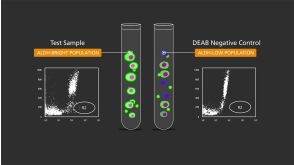
Cytosolic aldehyde dehydrogenase (ALDH),an enzyme responsible for oxidizing intracellular aldehydes,has an important role in ethanol,vitamin A,and cyclophosphamide metabolism. High expression of this enzyme in primitive stem cells from multiple tissues,including bone marrow and intestine,appears to be an important mechanism by which these cells are resistant to cyclophosphamide. However,although hematopoietic stem cells (HSC) express high levels of cytosolic ALDH,isolating viable HSC by their ALDH expression has not been possible because ALDH is an intracellular protein. We found that a fluorescent aldehyde,dansyl aminoacetaldehyde (DAAA),could be used in flow cytometry experiments to isolate viable mouse and human cells based on their ALDH content. The level of dansyl fluorescence exhibited by cells after incubation with DAAA paralleled cytosolic ALDH levels determined by Western blotting and the sensitivity of the cells to cyclophosphamide. Moreover,DAAA appeared to be a more sensitive means of assessing cytosolic ALDH levels than Western blotting. Bone marrow progenitors treated with DAAA proliferated normally. Furthermore,marrow cells expressing high levels of dansyl fluorescence after incubation with DAAA were enriched for hematopoietic progenitors. The ability to isolate viable cells that express high levels of cytosolic ALDH could be an important component of methodology for identifying and purifying HSC and for studying cyclophosphamide-resistant tumor cell populations.
View Publication
产品号#:
01700
01702
01705
产品名:
ALDEFLUOR™ 试剂盒
ALDEFLUOR™测定缓冲液
ALDEFLUOR™ DEAB试剂
Berthier R et al. (MAR 1993)
Stem cells (Dayton,Ohio) 11 2 120--9
Serum-free medium allows the optimal growth of human megakaryocyte progenitors compared with human plasma supplemented cultures: role of TGF beta.
The growth of human megakaryocyte progenitors from human bone marrow (BM) cells was compared using a methylcellulose semisolid assay supplemented either by normal human plasma or by a serum-free medium. Far better growth of megakaryocyte colonies from CD34+ BM cells stimulated by interleukin 3 (IL-3) and interleukin 6 (IL-6) was observed in serum-free medium compared with human plasma supplemented cultures. These results were confirmed in liquid cultures using the same serum-free medium composition. The megakaryocytes were identified by using an immunocytochemical procedure after labeling with an anti-GPIIb-IIIa monoclonal antibody. High percentages (15 to 20%) of megakaryocytes were present in serum-free cultures stimulated by IL-3 alone or combined with IL-6. The absolute number of megakaryocytes in serum-free medium exceeds by 3.3 (IL-3 plus IL-6) to 4.4 (IL-3 alone) times the corresponding number of megakaryocytes observed in human plasma supplemented cultures. The optimal concentration of IL-3 alone was 5 ng/ml,and an optimal synergistic effect of IL-6 (5 ng/ml) was obtained when combined with a suboptimal dose of IL-3 (1 ng/ml). The poor growth of megakaryocyte colonies from CD34+ BM cells in human plasma suggested the presence of an inhibitory factor. When a neutralizing monoclonal antibody against transforming growth factor beta (TGF beta) is present in human plasma supplemented cultures of CD34+ BM cells,the number of megakaryocyte colonies is increased to the level observed in corresponding serum-free cultures. The high efficiency of this serum-free medium to promote the growth of human megakaryocytes will be useful to study the effects of regulators and platelet agonists acting on human megakaryocytes,without interference from factors in the serum.
View Publication
产品号#:
04850
04900
04901
04902
04960
04961
04962
04963
04970
04971
04974
产品名:
MegaCult™-C含脂培养基
MegaCult™-C培养基无细胞因子
MegaCult™-C细胞因子培养基
胶原蛋白溶液
MegaCult™-C胶原蛋白和不含细胞因子的培养基
MegaCult™-C胶原蛋白和细胞因子培养基
MegaCult™-C cfu染色试剂盒
双室载玻片试剂盒
MegaCult™-C不含细胞因子完整试剂盒
MegaCult™-C细胞因子完整试剂盒
MegaCult™-C胶原蛋白和脂质培养基
Dobo I et al. (AUG 1995)
Journal of hematotherapy 4 4 281--7
Collagen matrix: an attractive alternative to agar and methylcellulose for the culture of hematopoietic progenitors in autologous transplantation products.
Autografts using untreated or in vitro manipulated bone marrow and peripheral blood stem cells represent promising approaches to the treatment of malignant diseases. In this work,the collagen gel culture technique was compared with agar and methylcellulose for its capacity to permit the growth of human granulomonocytic (day 14 CFU-GM; collagen vs agar or MTC) or erythroblastic (day 7 CFU-E and day 14 BFU-E; collagen versus methylcellulose) colonies in autologous transplantation products. Our results show that the collagen culture system always gave as many or more colonies than the other techniques. It also allowed harvesting of gels onto glass slides and subsequent May-Grünwald-Giemsa,cytochemical or immunocytochemical staining. We suggest that the collagen assay represents an interesting alternative to the widely used agar or methylcellulose systems for the culture of hematopoietic progenitors because of the equal or higher number of colonies detected,the easy phenotypical identification of colonies in stained gels,and the ability to store high-quality documentation. This technique is particularly attractive for use in the quality control of autologous bone marrow transplantation procedures.
View Publication
产品号#:
04850
04900
04901
04902
04960
04961
04962
04963
04970
04971
04974
产品名:
MegaCult™-C含脂培养基
MegaCult™-C培养基无细胞因子
MegaCult™-C细胞因子培养基
胶原蛋白溶液
MegaCult™-C胶原蛋白和不含细胞因子的培养基
MegaCult™-C胶原蛋白和细胞因子培养基
MegaCult™-C cfu染色试剂盒
双室载玻片试剂盒
MegaCult™-C不含细胞因子完整试剂盒
MegaCult™-C细胞因子完整试剂盒
MegaCult™-C胶原蛋白和脂质培养基
Sugimura R et al. (MAY 2017)
Nature 545 7655 432--438
Haematopoietic stem and progenitor cells from human pluripotent stem cells.
A variety of tissue lineages can be differentiated from pluripotent stem cells by mimicking embryonic development through stepwise exposure to morphogens,or by conversion of one differentiated cell type into another by enforced expression of master transcription factors. Here,to yield functional human haematopoietic stem cells,we perform morphogen-directed differentiation of human pluripotent stem cells into haemogenic endothelium followed by screening of 26 candidate haematopoietic stem-cell-specifying transcription factors for their capacity to promote multi-lineage haematopoietic engraftment in mouse hosts. We recover seven transcription factors (ERG,HOXA5,HOXA9,HOXA10,LCOR,RUNX1 and SPI1) that are sufficient to convert haemogenic endothelium into haematopoietic stem and progenitor cells that engraft myeloid,B and T cells in primary and secondary mouse recipients. Our combined approach of morphogen-driven differentiation and transcription-factor-mediated cell fate conversion produces haematopoietic stem and progenitor cells from pluripotent stem cells and holds promise for modelling haematopoietic disease in humanized mice and for therapeutic strategies in genetic blood disorders.
View Publication


 EasySep™小鼠TIL(CD45)正选试剂盒




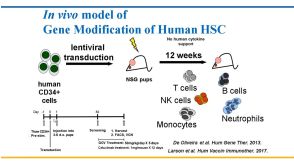 50:50
线上讲座Humanized Mouse Models for Hematopoietic Stem Cell Research: Principles and Pitfalls发布日期: 03/09/2018
50:50
线上讲座Humanized Mouse Models for Hematopoietic Stem Cell Research: Principles and Pitfalls发布日期: 03/09/2018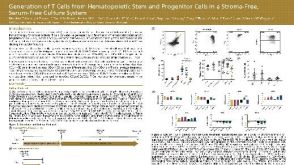

 沪公网安备31010102008431号