Staton PJ et al. (APR 2006)
Journal of immunology (Baltimore,Md. : 1950) 176 7 3978--86
IL-7 is a critical factor in modulating lesion development in Skn-directed autoimmunity.
In a murine model of autoimmunity targeted against the epidermal cell Ags,Skn,adoptive transfer of Skn-immune T cells to immunosuppressed recipients elicits skin lesions in areas of mild epidermal trauma. In this study,we examined peripheral regulation of Skn-induced autoreactivity disrupted by rendering the mice immunoincompetent. We found that regulation of Skn-directed autoimmunity was restored by cotransfer of normal syngeneic spleen cells at twice the concentration of Skn-immune cells and was evidenced by significantly reduced lesion severity by days 5-7 post-cotransfer compared with animals given injections of Skn-immune cells alone. Enrichment and depletion of normal CD4(+) or CD8(+) spleen cells and RT-PCR analysis of selected cytokines identified CD4(+) cells as the regulatory cells in the cotransfer inoculum; however,significant reduction in lesion severity was observed only when there was a concomitant increase in levels of IL-7. The role of IL-7 was further supported in that mice cotransferred with Skn-immune cells plus normal spleen cells,but also treated with anti-IL-7 Ab,no longer exhibited reduced lesion severity. To determine whether IL-7 expression without normal spleen cell cotransfer could modulate lesion development,an IL-7-encoding plasmid (pCMV-Tag1-IL-7) was topically delivered to sites flanking the stressed skin site in Skn-induced autoimmune mice. Daily application of 15 mug of pCMV-Tag1-IL-7 significantly suppressed lesion severity. Our results support a mechanism for CD4(+) T cells and IL-7 in contributing to the control of autoreactivity.
View Publication
产品号#:
产品名:
Le Y et al. (MAR 2005)
Journal of immunology (Baltimore,Md. : 1950) 174 5 2582--90
CXC chemokine ligand 12-induced focal adhesion kinase activation and segregation into membrane domains is modulated by regulator of G protein signaling 1 in pro-B cells.
CXCL12-induced chemotaxis and adhesion to VCAM-1 decrease as B cells differentiate in the bone marrow. However,the mechanisms that regulate CXCL12/CXCR4-mediated signaling are poorly understood. We report that after CXCL12 stimulation of progenitor B cells,focal adhesion kinase (FAK) and PI3K are inducibly recruited to raft-associated membrane domains. After CXCL12 stimulation,phosphorylated FAK is also localized in membrane domains. The CXCL12/CXCR4-FAK pathway is membrane cholesterol dependent and impaired by metabolic inhibitors of G(i),Src family,and the GTPase-activating protein,regulator of G protein signaling 1 (RGS1). In the bone marrow,RGS1 mRNA expression is low in progenitor B cells and high in mature B cells,implying developmental regulation of CXCL12/CXCR4 signaling by RGS1. CXCL12-induced chemotaxis and adhesion are impaired when FAK recruitment and phosphorylation are inhibited by either membrane cholesterol depletion or overexpression of RGS1 in progenitor B cells. We conclude that the recruitment of signaling molecules to specific membrane domains plays an important role in CXCL12/CXCR4-induced cellular responses.
View Publication
产品号#:
产品名:
Bruserud &O et al. (MAY 2003)
Leukemia research 27 5 455--64
In vitro culture of human acute lymphoblastic leukemia (ALL) cells in serum-free media; a comparison of native ALL blasts, ALL cell lines and virus-transformed B cell lines.
The aim of this study was to standardize in vitro culture conditions for human acute lymphoblastic leukemia (ALL) cells. The cells were cultured in medium containing 10% fetal calf serum (FCS) and in the four serum-free media X-vivo 10,X-vivo 15,X-vivo 20 and Stem Span. Native ALL blasts could proliferate in all four serum-free media,but the strongest responses were usually observed with Stem Span. Native leukemia blasts were also cultured in the presence of various single cytokines or cytokine combinations. The highest proliferation was usually observed in the presence of Flt3-Ligand (Flt3-L) when single cytokines were examined,and these responses could be further increased especially by combining Flt3-L with interleukin 3 (IL3),IL7 or stem cell factor (SCF). Proliferation could also be increased when ALL blasts were cultured in the presence of two commercially available fibroblast cell lines (Hs27 and HFL1). Based on these results we suggest that in vitro culture conditions for native human ALL blasts can be standardized by using serum-free culture media supplemented with exogenous Flt3-L+IL3+SCF,and the use of accessory cells can also be standardized by using well-characterized fibroblast cell lines. Detectable ALL blast proliferation can then be observed for most patients. Our experimental model can thereby be used for in vitro evaluation of possible antileukemic treatment strategies,and it will then allow comparison of experimental results between different studies.
View Publication
产品号#:
产品名:
Glodek AM et al. (FEB 2003)
The Journal of experimental medicine 197 4 461--73
Sustained activation of cell adhesion is a differentially regulated process in B lymphopoiesis.
It is largely unknown how hematopoietic progenitors are positioned within specialized niches of the bone marrow microenvironment during development. Chemokines such as CXCL12,previously called stromal cell-derived factor 1,are known to activate cell integrins of circulating leukocytes resulting in transient adhesion before extravasation into tissues. However,this short-term effect does not explain the mechanism by which progenitor cells are retained for prolonged periods in the bone marrow. Here we show that in human bone marrow CXCL12 triggers a sustained adhesion response specifically in progenitor (pro- and pre-) B cells. This sustained adhesion diminishes during B cell maturation in the bone marrow and,strikingly,is absent in circulating mature B cells,which exhibit only transient CXCL12-induced adhesion. The duration of adhesion is tightly correlated with CXCL12-induced activation of focal adhesion kinase (FAK),a known molecule involved in integrin-mediated signaling. Sustained adhesion of progenitor B cells is associated with prolonged FAK activation,whereas transient adhesion in circulating B cells is associated with short-lived FAK activation. Moreover,sustained and transient adhesion responses are differentially affected by pharmacological inhibitors of protein kinase C and phosphatidylinositol 3-kinase. These results provide a developmental cell stage-specific mechanism by which chemokines orchestrate hematopoiesis through sustained rather than transient activation of adhesion and cell survival pathways.
View Publication


 EasySep™小鼠TIL(CD45)正选试剂盒




 实验方案Optimizing Delivery Efficiency with Fluorescent Dextran Using the CellPore™ Transfection System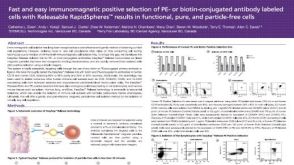



 沪公网安备31010102008431号