Liu S et al. (JAN 2011)
Cancer research 71 2 614--24
Breast cancer stem cells are regulated by mesenchymal stem cells through cytokine networks.
We have used in vitro and mouse xenograft models to examine the interaction between breast cancer stem cells (CSC) and bone marrow-derived mesenchymal stem cells (MSC). We show that both of these cell populations are organized in a cellular hierarchy in which primitive aldehyde dehydrogenase expressing mesenchymal cells regulate breast CSCs through cytokine loops involving IL6 and CXCL7. In NOD/SCID mice,labeled MSCs introduced into the tibia traffic to sites of growing breast tumor xenografts where they accelerated tumor growth by increasing the breast CSC population. With immunochemistry,we identified MSC-CSC niches in these tumor xenografts as well as in frozen sections from primary human breast cancers. Bone marrow-derived MSCs may accelerate human breast tumor growth by generating cytokine networks that regulate the CSC population.
View Publication
产品号#:
01700
01705
01702
产品名:
ALDEFLUOR™ 试剂盒
ALDEFLUOR™ DEAB试剂, 1.5 mM, 1 mL
ALDEFLUOR™检测缓冲液
Yu C et al. ( )
In vivo (Athens,Greece) 25 1 69--76
ALDH activity indicates increased tumorigenic cells, but not cancer stem cells, in prostate cancer cell lines.
BACKGROUND: Cancer stem cells (CSCs) have been shown to be a small stem cell-like cell population which appears to drive tumorigenesis,tumor recurrence and metastasis. Thus,identification and characterization of CSCs may be critical to defining effective anticancer therapies. In prostate cancer (PCa),the CD44(+) cell population appears to have stem cell-like properties including being tumorigenic. The enzyme aldehyde dehydrogenase (ALDH) has been found to identify hematopoietic stem cells and our aim was to determine the utility of ALDH activity and CD44 in identifying PCa stem cell-like cells in PCa cell lines. MATERIALS AND METHODS: LNCaP cells and PC-3 cells were sorted based on their expression of CD44 and ALDH activity. The cell populations were investigated using colony-forming assays,invasion assays,sphere formation experiments in a non-adherent environment and 3-D Matrigel matrix culture to observe the in vitro stem-cell like properties. Different sorted cell populations were injected subcutaneously into NOD/SCID mice to determine the corresponding tumorigenic capacities. RESULTS: ALDH(hi) CD44(+) cells exhibit a higher proliferative,clonogenic and metastatic capacity in vitro and demonstrate higher tumorigenicity capacity in vivo than did ALDH(lo) CD44(-) cells. The tumors recapitulated the population of the original cell line. However,ALDHlo CD44(-) cells were able to develop tumors,albeit with longer latency periods. CONCLUSION: ALDH activity and CD44 do not appear to identify PCa stem cells; however,they do indicate increased tumorigenic and metastatic potential,indicating their potential importance for further exploration.
View Publication
产品号#:
01700
01705
01702
产品名:
ALDEFLUOR™ 试剂盒
ALDEFLUOR™ DEAB试剂, 1.5 mM, 1 mL
ALDEFLUOR™检测缓冲液
Fan H and Guan J-L (MAY 2011)
The Journal of biological chemistry 286 21 18573--82
Compensatory function of Pyk2 protein in the promotion of focal adhesion kinase (FAK)-null mammary cancer stem cell tumorigenicity and metastatic activity.
Mammary cancer stem cells (MaCSCs) have been identified as a rare population of cells capable of self-renewal to drive mammary tumorigenesis and metastasis. Nevertheless,relatively little is known about the intracellular signaling pathways regulating self-renewal and metastatic activities of MaCSCs in vivo. Using a recently developed breast cancer mouse model with focal adhesion kinase (FAK) deletion in mammary tumor cells (MFCKO-MT mice),here we present evidence suggesting a compensatory function of Pyk2,a FAK-related kinase,in the regulation of MaCSCs and metastasis in these mice. Increased expression of Pyk2 was found selectively in pulmonary metastatic nodules of MFCKO-MT mice,and its inhibition significantly reduced mammary tumor development and metastasis in these mice. Consistent with the idea of metastasis driven by MaCSCs,we detected selective up-regulation of Pyk2 in MaCSCs,but not bulk mammary tumor cells,of primary tumors developed in MFCKO-MT mice. We further showed that inhibition of Pyk2 in FAK-null MaCSCs significantly decreased their tumorsphere formation and migration in vitro as well as self-renewal,tumorigenicity,and metastatic activity in vivo. Last,we identified PI3K/Akt signaling as a major mediator of FAK regulation of MaCSCs as well as a target for the compensatory function of Pyk2 in FAK-null MaCSCs. Together,these results further advance our understanding of FAK and its related tyrosine kinase Pyk2 in regulation of MaCSCs in breast cancer and suggest that pharmaceutically targeting these kinases may hold promise as a novel treatment for the disease by targeting and eradicating MaCSCs.
View Publication
产品号#:
01700
01705
01702
产品名:
ALDEFLUOR™ 试剂盒
ALDEFLUOR™ DEAB试剂, 1.5 mM, 1 mL
ALDEFLUOR™检测缓冲液
Kumar A et al. (JAN 2012)
Breast cancer research : BCR 14 1 R4
Evidence that GTP-binding domain but not catalytic domain of transglutaminase 2 is essential for epithelial-to-mesenchymal transition in mammary epithelial cells.
INTRODUCTION: The expression of proinflammatory protein tissue transglutaminase 2 (TG2) is frequently upregulated in multiple cancer cell types. However,the exact role of TG2 in cancer cells is not well-understood. We recently initiated studies to determine the significance of TG2 in cancer cells and observed that sustained expression of TG2 resulted in epithelial-to-mesenchymal transition (EMT) and promoted cancer stem cell (CSC) traits in mammary epithelial cells. These results suggested that TG2 could serve as a promising therapeutic target for overcoming chemoresistance and inhibiting metastatic spread of cancer cells. METHODS: Using various mutant constructs,we analyzed the activity of TG2 that is essential for promoting the EMT-CSC phenotype. RESULTS: Our results suggest that catalytically inactive TG2 (TG2-C277S) is as effective as wild-type TG2 (TG2-WT) in inducing the EMT-CSC in mammary epithelial cells. In contrast,overexpression of a GTP-binding-deficient mutant (TG2-R580A) was completely incompetent in this regard. Moreover,TG2-dependent activation of the proinflammatory transcription factor NF-κB is deemed essential for promoting the EMT-CSC phenotype in mammary epithelial cells. CONCLUSIONS: Our results suggest that the transamidation activity of TG2 is not essential for promoting its oncogenic functions and provide a strong rationale for developing small-molecule inhibitors to block GTP-binding pockets of TG2. Such inhibitors may have great potential for inhibiting the TG2-regulated pathways,reversing drug resistance and inhibiting the metastasis of cancer cells.
View Publication
C. Bouffi et al. (Jun 2023)
Nature biotechnology 41 824-831
In vivo development of immune tissue in human intestinal organoids transplanted into humanized mice.
Human intestinal organoids (HIOs) derived from pluripotent stem cells provide a valuable model for investigating human intestinal organogenesis and physiology,but they lack the immune components required to fully recapitulate the complexity of human intestinal biology and diseases. To address this issue and to begin to decipher human intestinal-immune crosstalk during development,we generated HIOs containing immune cells by transplanting HIOs under the kidney capsule of mice with a humanized immune system. We found that human immune cells temporally migrate to the mucosa and form cellular aggregates that resemble human intestinal lymphoid follicles. Moreover,after microbial exposure,epithelial microfold cells are increased in number,leading to immune cell activation determined by the secretion of IgA antibodies in the HIO lumen. This in vivo HIO system with human immune cells provides a framework for future studies on infection- or allergen-driven intestinal diseases.
View Publication
产品号#:
06010
产品名:
IntestiCult™ 类器官生长培养基 (人)
Z. Wang et al. (Apr 2023)
Redox biology 60 102618
FUT2-dependent fucosylation of HYOU1 protects intestinal stem cells against inflammatory injury by regulating unfolded protein response.
The intestinal epithelial repair after injury is coordinated by intestinal stem cells (ISCs). Fucosylation catalyzed by fucosyltransferase 2 (FUT2) of the intestinal epithelium is beneficial to mucosal healing but poorly defined is the influence on ISCs. The dextran sulfate sodium (DSS) and lipopolysaccharide (LPS) model were used to assess the role of FUT2 on ISCs after injury. The apoptosis,function,and stemness of ISCs were analyzed using intestinal organoids from WT and Fut2?ISC (ISC-specific Fut2 knockout) mice incubated with LPS and fucose. N-glycoproteomics,UEA-1 chromatography,and site-directed mutagenesis were monitored to dissect the regulatory mechanism,identify the target fucosylated protein and the corresponding modification site. Fucose could alleviate intestinal epithelial damage via upregulating FUT2 and ?-1,2-fucosylation of ISCs. Oxidative stress,mitochondrial dysfunction,and cell apoptosis were impeded by fucose. Meanwhile,fucose sustained the growth and proliferation capacity of intestinal organoids treated with LPS. Contrarily,FUT2 depletion in ISCs aggravated the epithelial damage and disrupted the growth and proliferation capacity of ISCs via escalating LPS-induced endoplasmic reticulum (ER) stress and initiating the IRE1/TRAF2/ASK1/JNK branch of unfolded protein response (UPR). Fucosylation of the chaperone protein HYOU1 at the N-glycosylation site of asparagine (Asn) 862 mediated by FUT2 was identified to facilitate ISCs survival and self-renewal,and improve ISCs resistance to ER stress and inflammatory injury. Our study highlights a fucosylation-dependent protective mechanism of ISCs against inflammation,which may provide a fascinating strategy for treating intestinal injury disorders.
View Publication


 EasySep™小鼠TIL(CD45)正选试剂盒




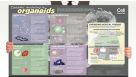 挂图Dynamic Modeling in Organoids Learn more about organoid applications for studying human health

 沪公网安备31010102008431号