若您需要咨询产品或有任何技术问题,请通过官方电话 400 885 9050 或邮箱 info.cn@stemcell.com 与我们联系。

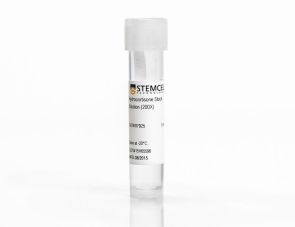
PneumaCult™-Ex 培养基

用于扩增原代人呼吸道上皮细胞的无血清和无BPE培养基
只有 %1
¥2,574.00

产品号 #(选择产品)

产品号 #05008_C

无血清和无BPE培养基用于原代人气道上皮细胞的扩增

产品优势

  • PneumaCult™-Ex是一款成份明确、无BPE的培养基,可为HBECs的扩增提供稳定一致的培养效果
  • 当PneumaCult™-Ex和PneumaCult™-ALI一起使用时,可构成了一个完整的细胞培养体系,用于扩增原代人气道细胞并随后分化为具有黏液纤毛结构的假复层上皮。

产品组分包括

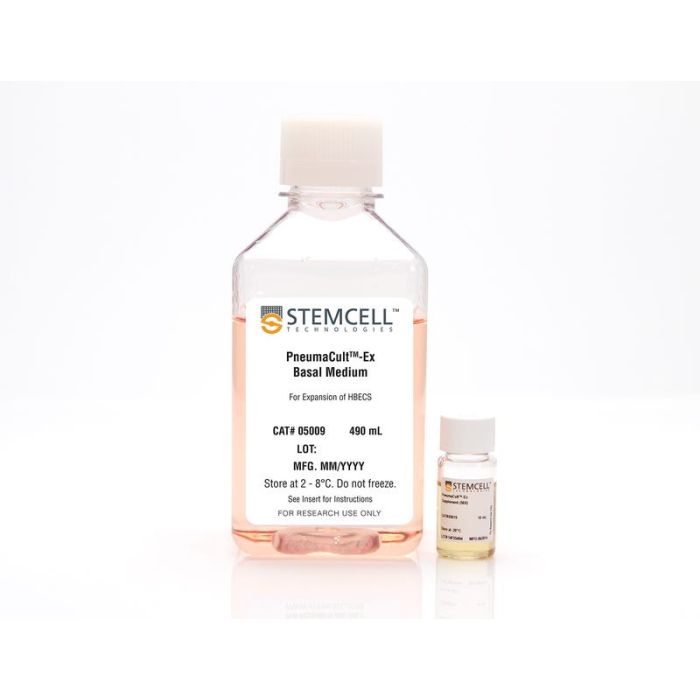
  • PneumaCult™-Ex基础培养基,490mL
  • PneumaCult™-Ex 50X 添加物, 10 mL
Interested in trying STEMCELL's products for respiratory research? Fill out this form to request information about introductory offers.
专为您的实验方案打造的产品
要查看实验方案所需的所有配套产品,请参阅《实验方案与技术文档》

总览

PneumaCult™- Ex是一款成份明确的,不含血清和BPE的细胞培养基,支持人呼吸道上皮细胞的快速扩增。使用PneumaCult™-Ex培养的原代呼吸道上皮细胞在至少3代内迅速扩增,同时保持鹅卵石状形态和基底细胞标记物p63和p75NTR的均匀表达。此外,这些细胞在 PneumaCult™-ALI 的气-液界面条件下可进一步分化,形成具黏液纤毛特征的假复层上皮结构。

PneumaCult™-ALI Medium和PneumaCult™-Ex Plus Medium(产品号 #05040)构成了一个完整、无BPE的人源呼吸道上皮体外建模系统,也与原代人鼻上皮细胞兼容。这一稳定、定义明确的培养系统是开展基础呼吸研究、毒理学研究和药物开发的宝贵工具。

欢迎观看我们的肺部研究课程,了解如何在 ALI 条件下培养人呼吸道上皮细胞,或浏览我们的常见问题解答(FAQs)关于使用PneumaCult™的ALI培养工作流程。


分类
专用培养基
 
细胞类型
气道细胞
 
种属

 
应用
细胞培养,扩增,培养
 
品牌
PneumaCult
 
研究领域
上皮细胞研究
 
制剂类别
无血清
 

实验数据

HBECs Cultured in PneumaCult™-Ex Exhibit Cobblestone Morphology

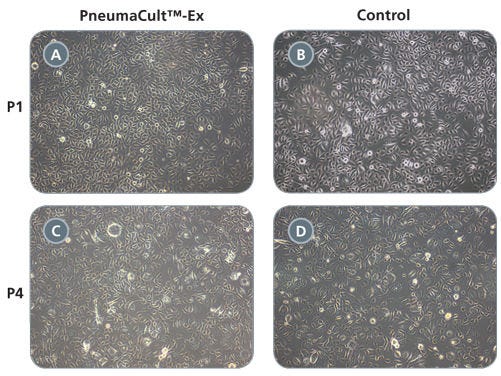
Figure 1. HBECs Cultured in PneumaCult™-Ex Exhibit Cobblestone Morphology

Commercially available, cryopreserved, passage 1 (P1) HBECs were seeded into PneumaCult™-Ex or a Control medium (BEGM™, Lonza). Cells exhibit cobblestone morphology in both culture media, as seen in representative images of confluent cultures 5 days post-seeding (A,B). HBECs cultured for an additional 3 passages in both PneumaCult™-Ex and Control medium continue to expand and retain their normal cobblestone morphology, as shown by representative images of confluent P4 cultures at 7 days post-seeding (C,D). All images were taken through 10X objective.

HBECs Cultured in PneumaCult™-Ex Exhibit Uniform Expression of Basal Cell Markers

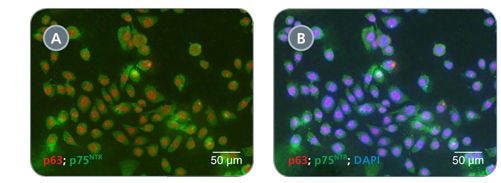
Figure 2. HBECs Cultured in PneumaCult™-Ex Exhibit Uniform Expression of Basal Cell Markers

Passage 3 HBECs cultured in PneumaCult™-Ex demonstrate extensive co-labeling of the basal cell markers p63 (red) and p75NTR (green, A). A representative merged image indicates widespread co-labeling of p63, p75NTR and the nuclear stain DAPI (blue, B).

HBECs Cultured in PneumaCult™-Ex Exhibit Comparable Expansion Rates to Cells Cultured in Control Medium

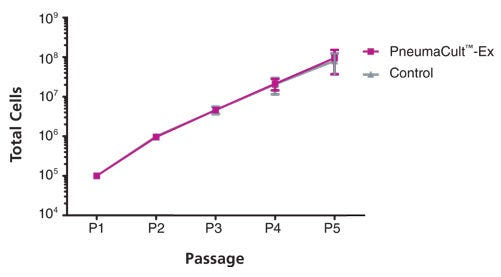
Figure 3. HBECs Cultured in PneumaCult™-Ex Exhibit Comparable Expansion Rates to Cells Cultured in Control Medium

Commercially available, cryopreserved, P1 HBECs were seeded into PneumaCult™-Ex or a Control medium (BEGM™, Lonza). In seven independent donor samples, the average fold expansion over four passages was not significantly different between cells cultured in PneumaCult™-Ex and cells cultured in the Control medium (7.1 ± 1.4 vs. 7.2 ± 1.9, mean ± SD, n = 7, p = 0.9 in paired t-test).

产品说明书及文档

请在《产品说明书》中查找相关支持信息和使用说明,或浏览下方更多实验方案。

Document Type
Product Name
Catalog #
Lot #
Language
Catalog #
05008
Lot #
All
Language
English
Document Type
Safety Data Sheet 1
Catalog #
05008
Lot #
All
Language
English
Document Type
Safety Data Sheet 2
Catalog #
05008
Lot #
All
Language
English

应用领域

本产品专为以下研究领域设计,适用于工作流程中的高亮阶段。探索这些工作流程,了解更多我们为各研究领域提供的其他配套产品。

相关材料与文献

技术资料 (11)

文献 (16)

A substitution at the cytoplasmic tail of the spike protein enhances SARS-CoV-2 infectivity and immunogenicity Y. Li et al. eBioMedicine 2024 Nov

Abstract

Global dissemination of SARS-CoV-2 Omicron sublineages has provided a sufficient opportunity for natural selection, thus enabling beneficial mutations to emerge. Characterisation of these mutations uncovers the underlying machinery responsible for the fast transmission of Omicron variants and guides vaccine development for combating the COVID-19 pandemic. Through systematic bioinformatics analysis of 496,606 sequences of Omicron variants, we obtained 40 amino acid substitutions that occurred with high frequency in the S protein. Utilising pseudoviruses and a trans -complementation system of SARS-CoV-2, we identified the effect of high-frequency mutations on viral infectivity and elucidated the molecular mechanisms. Finally, we evaluated the impact of a key emerging mutation on the immune protection induced by the SARS-CoV-2 VLP mRNA vaccine in a murine model. We identified a proline-to-leucine substitution at the 1263rd residue of the Spike protein, and upon investigating the relative frequencies across multiple Omicron sublineages, we found a trend of increasing frequency for P1263L. The substitution significantly enhances the capacity for S-mediated viral entry and improves the immunogenicity of a virus-like particle mRNA vaccine. Mechanistic studies showed that this mutation is located in the FERM binding motif of the cytoplasmic tail and impairs the interaction between the S protein and the Ezrin/Radixin/Moesin proteins. Additionally, this mutation facilitates the incorporation of S proteins into SARS-CoV-2 virions. This study offers mechanistic insight into the constantly increasing transmissibility of SARS-CoV-2 Omicron variants and provides a meaningful optimisation strategy for vaccine development against SARS-CoV-2. This study was supported by grants from the National Key Research and Development Plan of China (2021YFC2302405, 2022YFC2303200, 2021YFC2300200 and 2022YFC2303400), the National Natural Science Foundation of China (32188101, 32200772, 82422049, 82241082, 32270182, 82372254, 82271872, 82341046, 32100755 and 82102389), Shenzhen Medical Research Fund (B2404002, A2303036), the Shenzhen Bay Laboratory Startup Fund (21330111), Shenzhen San-Ming Project for Prevention and Research on Vector-borne Diseases (SZSM202211023), Yunnan Provincial Science and Technology Project at Southwest United Graduate School (202302AO370010). The New Cornerstone Science Foundation through the New Cornerstone Investigator Program, and the Xplorer Prize from Tencent Foundation.
Tolerance to Haemophilus influenzae infection in human epithelial cells: Insights from a primary cell-based model U. Kappler et al. PLOS Pathogens 2024 Jul

Abstract

Haemophilus influenzae is a human respiratory pathogen and inhabits the human respiratory tract as its only niche. Despite this, the molecular mechanisms that allow H . influenzae to establish persistent infections of human epithelia are not well understood. Here, we have investigated how H . influenzae adapts to the host environment and triggers the host immune response using a human primary cell-based infection model that closely resembles human nasal epithelia (NHNE). Physiological assays combined with dualRNAseq revealed that NHNE from five healthy donors all responded to H . influenzae infection with an initial, ‘unproductive’ inflammatory response that included a strong hypoxia signature but did not produce pro-inflammatory cytokines. Subsequently, an apparent tolerance to large extracellular and intraepithelial burdens of H . influenzae developed, with NHNE transcriptional profiles resembling the pre-infection state. This occurred in parallel with the development of intraepithelial bacterial populations, and appears to involve interruption of NFκB signalling. This is the first time that large-scale, persistence-promoting immunomodulatory effects of H . influenzae during infection have been observed, and we were able to demonstrate that only infections with live, but not heat-killed H . influenzae led to immunomodulation and reduced expression of NFκB-controlled cytokines such as IL-1β, IL-36γ and TNFα. Interestingly, NHNE were able to re-activate pro-inflammatory responses towards the end of the 14-day infection, resulting in release of IL-8 and TNFα. In addition to providing first molecular insights into mechanisms enabling persistence of H . influenzae in the host, our data further indicate the presence of infection stage-specific gene expression modules, highlighting fundamental similarities between immune responses in NHNE and canonical immune cells, which merit further investigation.
Impact of KLF4 on Cell Proliferation and Epithelial Differentiation in the Context of Cystic Fibrosis. L. Sousa et al. International journal of molecular sciences 2020 sep

Abstract

Cystic fibrosis (CF) cells display a more cancer-like phenotype vs. non-CF cells. KLF4 overexpression has been described in CF and this transcriptional factor acts as a negative regulator of wt-CFTR. KLF4 is described as exerting its effects in a cell-context-dependent fashion, but it is generally considered a major regulator of proliferation, differentiation, and wound healing, all the processes that are also altered in CF. Therefore, it is relevant to characterize the differential role of KLF4 in these processes in CF vs. non-CF cells. To this end, we used wt- and F508del-CFTR CFBE cells and their respective KLF4 knockout (KO) counterparts to evaluate processes like cell proliferation, polarization, and wound healing, as well as to compare the expression of several epithelial differentiation markers. Our data indicate no major impact of KLF4 KO in proliferation and a differential impact of KLF4 KO in transepithelial electrical resistance (TEER) acquisition and wound healing in wt- vs. F508del-CFTR cells. In parallel, we also observed a differential impact on the levels of some differentiation markers and epithelial-mesencymal transition (EMT)-associated transcription factors. In conclusion, KLF4 impacts TEER acquisition, wound healing, and the expression of differentiation markers in a way that is partially dependent on the CFTR-status of the cell.

更多信息

更多信息
物种 人类
配方 无血清
质量保证:

产品仅供研究使用,不用于针对人或动物的诊断或治疗。 欲获悉更多关于STEMCELL的质控信息,请访问 STEMCELL.CN/COMPLIANCE.
Copyright © 2025 by STEMCELL Technologies. All rights reserved.

在线联系