若您需要咨询产品或有任何技术问题,请通过官方电话 400 885 9050 或邮箱 info.cn@stemcell.com 与我们联系。

ImmunoCult™ 树突状细胞培养试剂盒

人单核细胞向树突状细胞分化的完整试剂盒
只有 %1
¥10,106.00

产品号 #(选择产品)

产品号 #10985_C

人单核细胞向树突状细胞分化的完整试剂盒

产品优势

  • 无动物源成分和无血清培养基
  • 无需在培养基中添加血清
  • 针对CD14+单核细胞分化为未成熟和成熟的树突状细胞(DC)进行了优化
  • 所需表型的成熟树突状细胞(DC)的高得率
  • 成熟的树突状细胞(DC)具有功能性,可产生促炎细胞因子IL-12,并诱导T细胞增殖

产品组分包括

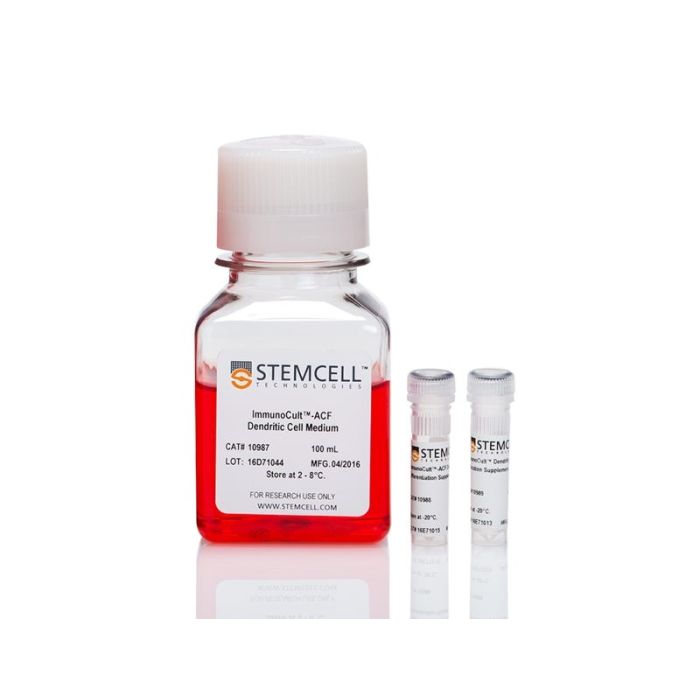
  • ImmunoCult™-ACF树突状细胞基础培养基,100 mL(产品号 #10987)
  • ImmunoCult™-ACF树突状细胞分化添加剂,1 mL(产品号 #10988)
  • ImmunoCult™树突状细胞成熟添加剂,0.5 mL(产品号 #10989)

总览

使用无动物源成分 (ACF) ImmunoCult™ 树突状细胞培养试剂盒,培养并分化人单核细胞为树突状细胞 (DC)。

为了方便起见,该试剂盒包含所有必需成分,可帮助您在 7 天内从人单核细胞中诱导出具有良好活性及功能性的成熟的树突状细胞 (DC):

• ImmunoCult™-ACF 树突状细胞培养基,用于体外培养和分化人单核细胞为树突状细胞 (DC)。

• ImmunoCult™-ACF 树突状细胞分化添加剂,用于支持人单核细胞分化成未成熟树突状细胞。

• ImmunoCult™ 树突状细胞成熟添加剂,用于支持未成熟人树突状细胞的成熟。

有关使用 ImmunoCult™ 树突状细胞培养试剂盒进行培养和分化的更多方案信息,请参阅产品信息表 (PIS)。

包含
ImmunoCult™-ACF树突状细胞培养基仅含有重组蛋白和合成成分
 
分类
专用培养基,添加剂
 
细胞类型
树突状细胞(DCs),单核细胞
 
种属

 
应用
细胞培养,分化
 
品牌
ImmunoCult
 
研究领域
免疫
 
制剂类别
不含动物成分,无血清
 

实验数据

Start: 54% CD4+CXCR3-CCR6+ T Cells

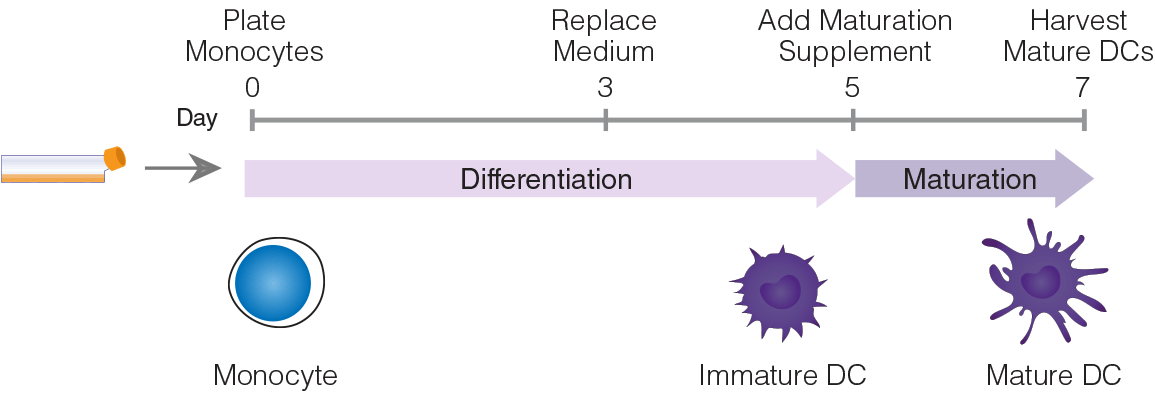
Figure 1. Protocol Diagram.

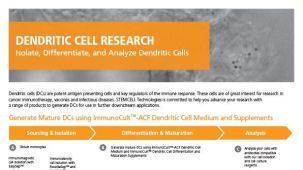
Mature DCs were generated by culturing EasySep™ isolated monocytes at 1 x 10⁶ cells/mL in ImmunoCult™-ACF Dendritic Cell Medium (Catalog #10987) with added ImmunoCult™-ACF Dendritic Cell Differentiation Supplement (Catalog #10988). At day 3, the medium with differentiation supplement was replaced and cells were incubated for 2 more days. At day 5, without changing the medium, ImmunoCult™ Dendritic Cell Maturation Supplement (Catalog #10989) was added to the culture. At day 7, fully mature DCs were harvested for downstream applications.

Start: 54% CD4+CXCR3-CCR6+ T Cells

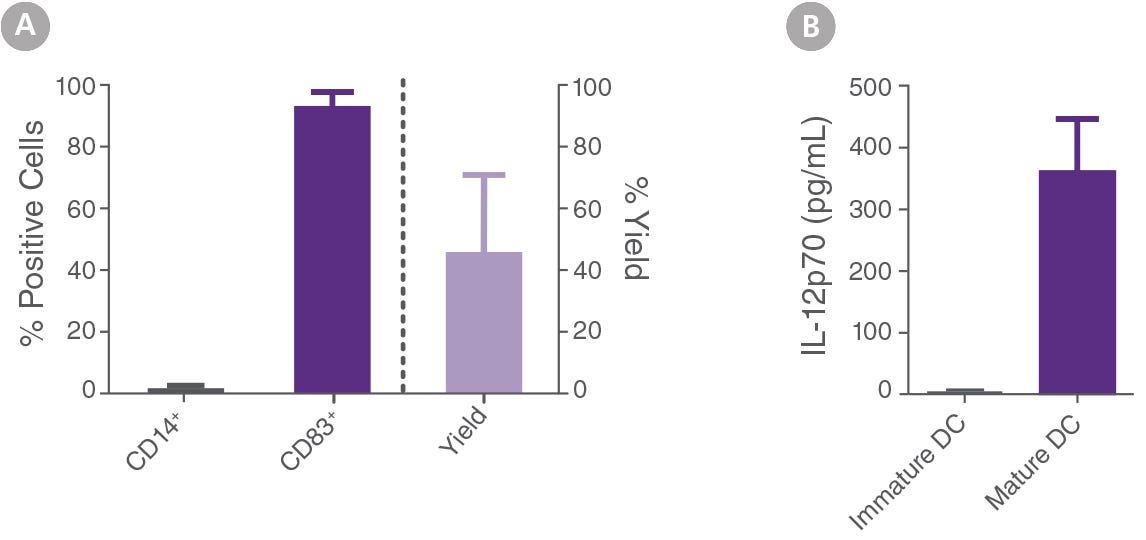
Figure 2. Mature DCs generated with ImmunoCult™-ACF Dendritic Cell Medium with Supplements show desired phenotype.

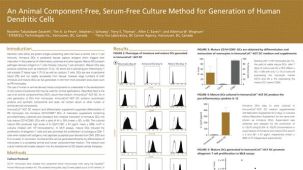
EasySep™ isolated monocytes were cultured and differentiated into mature DCs as described in Figure 1. (A) The percentage of CD14 and CD83 expression in cells at day 7 (mature DCs) was determined by flow cytometry. At day 7, a total of 93 ± 5% of the cells expressed the mature DC marker CD83 and only 1 ± 1% of cells still expressed the monocyte marker CD14 (mean ± SD, n=39). Yield of mature DCs was determined by count of total viable cells at day 7 relative to the count of viable monocytes used for initial culture at day 0. At day 7, the yield of viable mature DCs corresponded to 45 ± 25% (mean ± SD, n=39). (B) Immature DCs were cultured as described in Figure 1. At day 5, cells were cultured with maturation supplement for 2 days (mature DCs) or without maturation supplement (immature DCs). Supernatant was collected at day 7 and IL-12p70 levels were determined by ELISA. Concentrations of IL-12p70 in supernatant of mature and immature DCs were 361 ± 81 and 5 ± 2 pg/mL, respectively (mean ± SEM, n=27).

Start: 54% CD4+CXCR3-CCR6+ T Cells

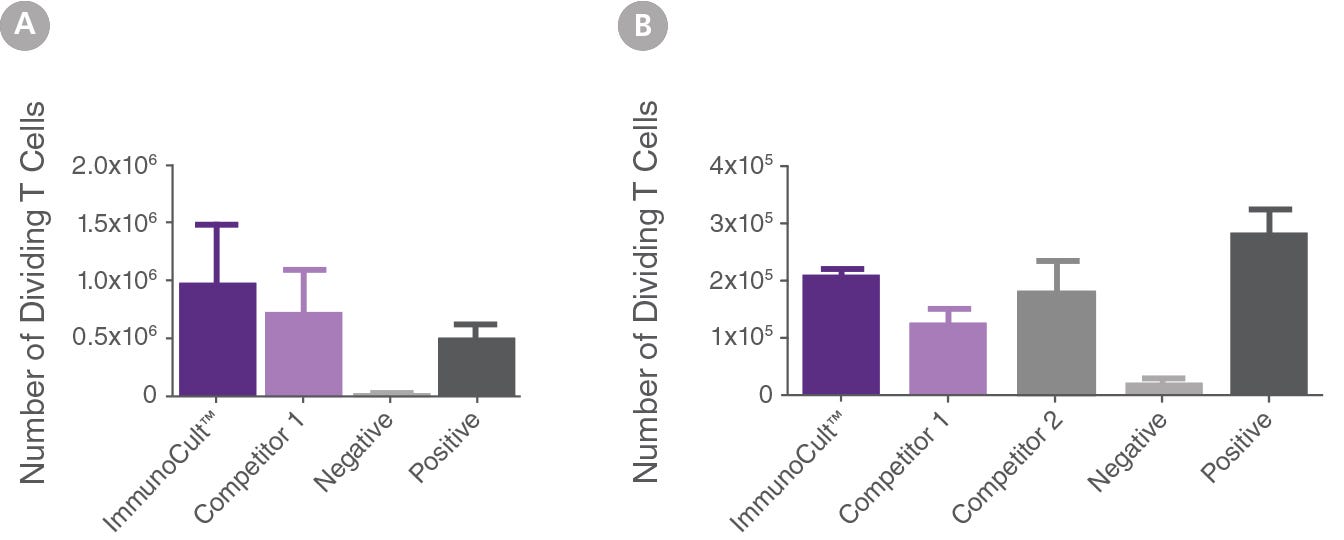
Figure 3. Mature DCs generated with ImmunoCult™-ACF Dendritic Cell Medium and Supplements induce T cell proliferation.

Mature DCs generated with ImmunoCult™-ACF Dendritic Cell Medium and Supplements (ImmunoCult) or other serum-free competitor media (competitor 1 and 2) and corresponding supplements when applicable (competitor 2), were cultured in ImmunoCult™-XF T Cell Expansion Medium with 1 x 10⁵ CFSE labeled (A) allogeneic CD3+ T cells (MLR assay) or (B) autologous CD8+ T cells (antigen-specific T cell response). (A) Cells were cultured at a DC:T cell ratio of 1:25. (B) Prior to culture with T cells, immature DCs were loaded with HLA Class I peptides derived from the human Cytomegalovirus, Epstein-Barr Virus and Influenza Virus (CEF peptide pool) and stimulated with maturation supplement for 2 days. Cells were cultured at a DC:T cell ratio of 1:4 or 1:10. (A,B) CFSE labeled T cells were incubated in media alone (negative control) or with ImmunoCult™ Human CD3/CD28 T Cell Activator (positive control). After 5-7 days in culture the number of dividing T cells ( CD3+CFSElo) was assessed by flow cytometry (mean ± SEM) (A) n=5 (B) n=4 (competitor 1 and 2, n=3). Mature DCs generated in ImmunoCult™-ACF Dendritic Cell Medium induced proliferation of allogeneic and antigen-specific T cells similar to DCs generated in either competitor media. Competitors 1 and 2, include in no particular order, CellGro DC Medium (CellGenix) and PromoCell DC Generation Medium DXF.

产品说明书及文档

请在《产品说明书》中查找相关支持信息和使用说明,或浏览下方更多实验方案。

Document Type
Product Name
Catalog #
Lot #
Language
Catalog #
10985
Lot #
All
Language
English
Document Type
Safety Data Sheet 1
Catalog #
10985
Lot #
All
Language
English
Document Type
Safety Data Sheet 2
Catalog #
10985
Lot #
All
Language
English
Document Type
Safety Data Sheet 3
Catalog #
10985
Lot #
All
Language
English

相关材料与文献

技术资料 (10)

文献 (2)

Novel paired CD13-negative (MT-50.1) and CD13-positive (MT-50.4) HTLV-1-infected T-cell lines with differential regulatory T cell-like activity Y. Egawa et al. Scientific Reports 2024 May

Abstract

Adult T-cell leukemia/lymphoma (ATL) occurs after human T-cell leukemia virus type-1 (HTLV-1) infection with a long latency period exceeding several decades. This implies the presence of immune evasion mechanisms for HTLV-1-infected T cells. Although ATL cells have a CD4 + CD25 + phenotype similar to that of regulatory T cells (Tregs), they do not always possess the immunosuppressive functions of Tregs. Factors that impart effective immunosuppressive functions to HTLV-1-infected cells may exist. A previous study identified a new CD13 + Treg subpopulation with enhanced immunosuppressive activity. We, herein, describe the paired CD13 − (designated as MT-50.1) and CD13 + (MT-50.4) HTLV-1-infected T-cell lines with Treg-like phenotype, derived from the peripheral blood of a single patient with lymphoma-type ATL. The cell lines were found to be derived from HTLV-1-infected non-leukemic cells. MT-50.4 cells secreted higher levels of immunosuppressive cytokines, IL-10 and TGF-β, expressed higher levels of Foxp3, and showed stronger suppression of CD4 + CD25 − T cell proliferation than MT-50.1 cells. Furthermore, the CD13 inhibitor bestatin significantly attenuated MT-50.4 cell growth, while it did not for MT-50.1 cells. These findings suggest that CD13 expression may be involved in the increased Treg-like activity of MT-50.4 cells. Hence, MT-50.4 cells will be useful for in-depth studies of CD13 + Foxp3 + HTLV-1-infected cells. Subject terms: Cancer, Microbiology, Oncology
DNA of neutrophil extracellular traps promote NF-κB-dependent autoimmunity via cGAS/TLR9 in chronic obstructive pulmonary disease J. Chen et al. Signal Transduction and Targeted Therapy 2024 Jun

Abstract

Chronic obstructive pulmonary disease (COPD) is characterised by persistent airway inflammation even after cigarette smoking cessation. Neutrophil extracellular traps (NETs) have been implicated in COPD severity and acute airway inflammation induced by short-term cigarette smoke (CS). However, whether and how NETs contribute to sustained airway inflammation in COPD remain unclear. This study aimed to elucidate the immunoregulatory mechanism of NETs in COPD, employing human neutrophils, airway epithelial cells (AECs), dendritic cells (DCs), and a long-term CS-induced COPD mouse model, alongside cyclic guanosine monophosphate-adenosine monophosphate synthase and toll-like receptor 9 knockout mice ( cGAS -−/− , TLR9 −/− ); Additionally, bronchoalveolar lavage fluid (BALF) of COPD patients was examined. Neutrophils from COPD patients released greater cigarette smoke extract (CSE)-induced NETs (CSE-NETs) due to mitochondrial respiratory chain dysfunction. These CSE-NETs, containing oxidatively-damaged DNA (NETs-DNA), promoted AECs proliferation, nuclear factor kappa B (NF-κB) activation, NF-κB-dependent cytokines and type-I interferons production, and DC maturation, which were ameliorated/reversed by silencing/inhibition of cGAS/TLR9. In the COPD mouse model, blocking NETs-DNA-sensing via cGAS − /− and TLR9 − /− mice, inhibiting NETosis using mitoTEMPO, and degrading NETs-DNA with DNase-I, respectively, reduced NETs infiltrations, airway inflammation, NF-κB activation and NF-κB-dependent cytokines, but not type-I interferons due to IFN-α/β receptor degradation. Elevated NETs components (myeloperoxidase and neutrophil elastase activity) in BALF of COPD smokers correlated with disease severity and NF-κB-dependent cytokine levels, but not type-I interferon levels. In conclusion, NETs-DNA promotes NF-κB-dependent autoimmunity via cGAS/TLR9 in long-term CS exposure-induced COPD. Therefore, targeting NETs-DNA and cGAS/TLR9 emerges as a potential strategy to alleviate persistent airway inflammation in COPD. Subject terms: Inflammation, Respiratory tract diseases

更多信息

更多信息
物种 人类
Contains ImmunoCult™-ACF Dendritic Cell Medium contains only recombinant proteins and synthetic components
配方 不含动物成分, 无血清
质量保证:

产品仅供研究使用,不用于针对人或动物的诊断或治疗。 欲获悉更多关于STEMCELL的质控信息,请访问 STEMCELL.CN/COMPLIANCE.
Copyright © 2025 by STEMCELL Technologies. All rights reserved.

在线联系