Conklin JF et al. ( 2012)
Nature communications 3 May 1244
The RB family is required for the self-renewal and survival of human embryonic stem cells.
The mechanisms ensuring the long-term self-renewal of human embryonic stem cells are still only partly understood,limiting their use in cellular therapies. Here we found that increased activity of the RB cell cycle inhibitor in human embryonic stem cells induces cell cycle arrest,differentiation and cell death. Conversely,inactivation of the entire RB family (RB,p107 and p130) in human embryonic stem cells triggers G2/M arrest and cell death through functional activation of the p53 pathway and the cell cycle inhibitor p21. Differences in E2F target gene activation upon loss of RB family function between human embryonic stem cells,mouse embryonic stem cells and human fibroblasts underscore key differences in the cell cycle regulatory networks of human embryonic stem cells. Finally,loss of RB family function promotes genomic instability in both human and mouse embryonic stem cells,uncoupling cell cycle defects from chromosomal instability. These experiments indicate that a homeostatic level of RB activity is essential for the self-renewal and the survival of human embryonic stem cells.
View Publication
产品类型:
产品号#:
05850
05857
05870
05875
85850
85857
85870
85875
产品名:
mTeSR™1
mTeSR™1
Chen G et al. ( 2014)
PloS one 9 6 e98565
Human umbilical cord-derived mesenchymal stem cells do not undergo malignant transformation during long-term culturing in serum-free medium.
BACKGROUND Human umbilical cord-derived mesenchymal stem cells (hUC-MSCs) are in the foreground as a preferable application for treating diseases. However,the safety of hUC-MSCs after long-term culturing in vitro in serum-free medium remains unclear. METHODS hUC-MSCs were separated by adherent tissue culture. hUC-MSCs were cultured in serum-free MesenCult-XF medium and FBS-bases DMEM complete medium. At the 1st,3rd,5th,8th,10th,and 15th passage,the differentiation of MSCs into osteogenic,chondrogenic,and adipogenic cells was detected,and MTT,surface antigens were measured. Tumorigenicity was analyzed at the 15th passage. Conventional karyotyping was performed at passage 0,8,and 15. The telomerase activity of hUC-MSCs at passage 1-15 was analyzed. RESULTS Flow cytometry analysis showed that very high expression was detected for CD105,CD73,and CD90 and very low expression for CD45,CD34,CD14,CD79a,and HLA-DR. MSCs could differentiate into osteocytes,chondrocytes,and adipocytes in vitro. There was no obvious chromosome elimination,displacement,or chromosomal imbalance as determined from the guidelines of the International System for Human Cytogenetic Nomenclature. Telomerase activity was down-regulated significantly when the culture time was prolonged. Further,no tumors formed in rats injected with hUC-MSCs (P15) cultured in serum-free and in serum-containing conditions. CONCLUSION Our data showed that hUC-MSCs met the International Society for Cellular Therapy standards for conditions of long-term in vitro culturing at P15. Since hUC-MSCs can be safely expanded in vitro and are not susceptible to malignant transformation in serum-free medium,these cells are suitable for cell therapy.
View Publication
产品类型:
产品号#:
05420
05429
05424
产品名:
Huang X et al. (JAN 2016)
Leukemia 30 1 144--53
Activation of OCT4 enhances ex vivo expansion of human cord blood hematopoietic stem and progenitor cells by regulating HOXB4 expression.
Although hematopoietic stem cells (HSC) are the best characterized and the most clinically used adult stem cells,efforts are still needed to understand how to best ex vivo expand these cells. Here we present our unexpected finding that OCT4 is involved in the enhancement of cytokine-induced expansion capabilities of human cord blood (CB) HSC. Activation of OCT4 by Oct4-activating compound 1 (OAC1) in CB CD34(+) cells enhanced ex vivo expansion of HSC,as determined by a rigorously defined set of markers for human HSC,and in vivo short-term and long-term repopulating ability in NSG mice. Limiting dilution analysis revealed that OAC1 treatment resulted in 3.5-fold increase in the number of SCID repopulating cells (SRCs) compared with that in day 0 uncultured CD34(+) cells and 6.3-fold increase compared with that in cells treated with control vehicle. Hematopoietic progenitor cells,as assessed by in vitro colony formation,were also enhanced. Furthermore,we showed that OAC1 treatment led to OCT4-mediated upregulation of HOXB4. Consistently,siRNA-mediated knockdown of HOXB4 expression suppressed effects of OAC1 on ex vivo expansion of HSC. Our study has identified the OCT4-HOXB4 axis in ex vivo expansion of human CB HSC.
View Publication
产品类型:
产品号#:
72292
72602
产品名:
丙戊酸(钠盐)
OAC1
(May 2025)
Stem Cell Research & Therapy 16 12
Genome editing of TXNIP in human pluripotent stem cells for the generation of hepatocyte-like cells and insulin-producing islet-like aggregates
BackgroundThioredoxin-interacting protein (TXNIP) plays a role in regulating endoplasmic reticulum (ER) and oxidative stress,which disrupt glucose homeostasis in diabetes. However,the impact of TXNIP deficiency on the differentiation and functionality of human stem cell-derived somatic metabolic cells remains unclear.MethodsWe used CRISPR-Cas12a genome editing to generate TXNIP-deficient (TXNIP?/?) H1 human embryonic stem cells (H1-hESCs). These cells were differentiated into hepatocyte-like cells (HLCs) and stem-cell-derived insulin-producing islets (SC-islets). The maturation and functionality TXNIP?/? and TXNIP+/+ SC-islets were assessed by implantation under the kidney capsule of male or female NOD-SCID mice.ResultsTXNIP deficiency significantly increased H1-hESC proliferation without affecting pluripotency,viability,or differentiation potential into HLCs and SC-islets. Bulk RNA-sequencing of thapsigargin-treated TXNIP?/? and TXNIP+/+ hESCs revealed differential expression of stress-responsive genes,with enriched apoptosis-related pathways in TXNIP+/+ cells,but minimal transcriptional changes specific to TXNIP deficiency. In HLCs,TXNIP deletion reduced albumin secretion and insulin signalling,as indicated by decreased AKT phosphorylation,while showing no differences in glycolytic activity or lipid metabolism markers. Under thapsigargin-induced ER stress,TXNIP?/? HLCs exhibited transiently reduced eIF2? phosphorylation and lower BiP expression,suggesting compromised adaptive responses to prolonged stress. SC-islets derived from TXNIP?/? hESCs showed comparable viability,endocrine cell composition,and cytokine responses to TXNIP+/+ islets. Following IFN? or IFN? treatment,STAT1 phosphorylation was increased in TXNIP?/? SC-islets,indicating that IFN signalling remained intact despite TXNIP deficiency. Upon implantation into NOD-SCID mice,both TXNIP?/? and TXNIP+/+ SC-islets produced human C-peptide and responded to glucose stimulation. However,TXNIP?/? SC-islets did not demonstrate enhanced glycaemic control or glucose-stimulated insulin secretion compared to controls.ConclusionsOur study demonstrates that TXNIP deficiency does not improve the differentiation or functionality of HLCs and SC-islets. We present the generation and characterisation of TXNIP?/? and TXNIP+/+ H1-hESCs,HLCs,and SC-islets as valuable models for future studies on the role of TXNIP in metabolic cell biology.Supplementary InformationThe online version contains supplementary material available at 10.1186/s13287-025-04314-5.
View Publication
Molecular events contributing to cell death in malignant human hematopoietic cells elicited by an IgG3-avidin fusion protein targeting the transferrin receptor.
We have previously reported that an anti-human transferrin receptor IgG3-avidin fusion protein (anti-hTfR IgG3-Av) inhibits the proliferation of an erythroleukemia-cell line. We have now found that anti-hTfR IgG3-Av also inhibits the proliferation of additional human malignant B and plasma cells. Anti-hTfR IgG3-Av induces internalization and rapid degradation of the TfR. These events can be reproduced in cells treated with anti-hTfR IgG3 cross-linked with a secondary Ab,suggesting that they result from increased TfR cross-linking. Confocal microscopy of cells treated with anti-hTfR IgG3-Av shows that the TfR is directed to an intracellular compartment expressing the lysosomal marker LAMP-1. The degradation of TfR is partially blocked by cysteine protease inhibitors. Furthermore,cells treated with anti-hTfR IgG3-Av exhibit mitochondrial depolarization and activation of caspases 9,8,and 3. The mitochondrial damage and cell death can be prevented by iron supplementation,but cannot be fully blocked by a pan-caspase inhibitor. These results suggest that anti-hTfR IgG3-Av induces lethal iron deprivation,but the resulting cell death does not solely depend on caspase activation. This report provides insights into the mechanism of cell death induced by anti-TfR Abs such as anti-hTfR IgG3-Av,a molecule that may be useful in the treatment of B-cell malignancies such as multiple myeloma.
View Publication
产品类型:
产品号#:
18357
18357RF
产品名:
Thordardottir S et al. (MAY 2014)
Stem cells and development 23 9 955--67
The aryl hydrocarbon receptor antagonist StemRegenin 1 promotes human plasmacytoid and myeloid dendritic cell development from CD34+ hematopoietic progenitor cells.
The superiority of dendritic cells (DCs) as antigen-presenting cells has been exploited in numerous clinical trials,where generally monocyte-derived DCs (Mo-DCs) are injected to induce immunity in patients with cancer or infectious diseases. Despite promising expansion of antigen-specific T cells,the clinical responses following vaccination have been limited,indicating that further improvements of DC vaccine potency are necessary. Pre-clinical studies suggest that vaccination with combination of primary DC subsets,such as myeloid and plasmacytoid blood DCs (mDCs and pDCs,respectively),may result in stronger clinical responses. However,it is a challenge to obtain high enough numbers of primary DCs for immunotherapy,since their frequency in blood is very low. We therefore explored the possibility to generate them from hematopoietic progenitor cells (HPCs). Here,we show that by inhibiting the aryl hydrocarbon receptor with its antagonist StemRegenin 1 (SR1),clinical-scale numbers of functional BDCA2(+)BDCA4(+) pDCs,BDCA1(+) mDCs,and BDCA3(+)DNGR1(+) mDCs can be efficiently generated from human CD34(+) HPCs. The ex vivo-generated DCs were phenotypically and functionally comparable to peripheral blood DCs. They secreted high levels of pro-inflammatory cytokines such as interferon (IFN)-α,interleukin (IL)-12,and tumor necrosis factor (TNF)-α and upregulated co-stimulatory molecules and maturation markers following stimulation with Toll-like receptor (TLR) ligands. Further,they induced potent allogeneic T-cell responses and activated antigen-experienced T cells. These findings demonstrate that SR1 can be exploited to generate high numbers of functional pDCs and mDCs from CD34(+) HPCs,providing an alternative option to Mo-DCs for immunotherapy of patients with cancer or infections.
View Publication
产品类型:
产品号#:
72342
72344
72352
72354
产品名:
StemRegenin 1
StemRegenin 1
StemRegenin 1(盐酸盐)
StemRegenin 1(盐酸盐)
Y. S. Park et al. (mar 2022)
Biochemistry and biophysics reports 29 101214
Enhancement of proliferation of human umbilical cord blood-derived CD34+ hematopoietic stem cells by a combination of hyper-interleukin-6 and small molecules.
Umbilical cord blood (UCB) is an alternative source of allogeneic hematopoietic stem cells (HSCs) for transplantation to treat various hematological disorders. The major limitation to the use of UCB-derived HSCs (UCB-HSCs) in transplantation,however,is the low numbers of HSCs in a unit of cord blood. To overcome this limitation,various cytokines or small molecules have been used to expand UCB-HSCs ex vivo. In this study,we investigated a synergistic effect of the combination of HIL-6,SR1,and UM171 on UCB-HSC culture and found that this combination resulted in the highest number of CD34+ cells. These results suggest that the combination of SR1,UM171 and HIL-6 exerts a synergistic effect in the proliferation of HSCs from UCB and thus,SR1,UM171 and HIL-6 is the most suitable combination for obtaining HSCs from UCB for clinical transplantation.
View Publication
产品类型:
产品号#:
09600
17856
60018
09650
60018PB
60018BT
60018AD
60018FI.1
60018AZ
60018PB.2
60018PS.1
100-0467
60018FI
60018AD.1
60018PB.1
60018PE.1
60018PE
60018PS
60018AZ.1
17856RF
100-1569
产品名:
StemSpan™ SFEM
EasySep™人CD34正选试剂盒 II
抗人CD45抗体,克隆HI30
StemSpan™ SFEM
抗人CD45抗体,克隆HI30,Pacific Blue™
抗人CD45抗体,克隆HI30,Biotin
抗人CD45抗体,clone HI30,Alexa Fluor® 488
抗人CD45抗体,克隆HI30,FITC
抗人CD45抗体,克隆HI30,APC
抗人CD45抗体,克隆HI30,Pacific Blue™
抗人CD45抗体,克隆HI30,PerCP-Cy5.5
抗人CD45抗体,克隆HI30
抗人CD45抗体,克隆HI30,FITC
抗人CD45抗体,克隆HI30,Alexa Fluor® 488
抗人CD45抗体,克隆HI30,Pacific Blue™
抗人CD45抗体,克隆HI30,PE
抗人CD45抗体,克隆HI30,PE
抗人CD45抗体,克隆HI30,PerCP-Cy5.5
抗人CD45抗体,克隆HI30,APC
EasySep™人CD34正选试剂盒 II
EasySep™人CD34正选试剂盒 II
Mirabelli P et al. (JAN 2008)
BMC physiology 8 1 13
Extended flow cytometry characterization of normal bone marrow progenitor cells by simultaneous detection of aldehyde dehydrogenase and early hematopoietic antigens: implication for erythroid differentiation studies.
BACKGROUND: Aldehyde dehydrogenase (ALDH) is a cytosolic enzyme highly expressed in hematopoietic precursors from cord blood and granulocyte-colony stimulating factor mobilized peripheral blood,as well as in bone marrow from patients with acute myeloblastic leukemia. As regards human normal bone marrow,detailed characterization of ALDH+ cells has been addressed by one single study (Gentry et al,2007). The goal of our work was to provide new information about the dissection of normal bone marrow progenitor cells based upon the simultaneous detection by flow cytometry of ALDH and early hematopoietic antigens,with particular attention to the expression of ALDH on erythroid precursors. To this aim,we used three kinds of approach: i) multidimensional analytical flow cytometry,detecting ALDH and early hematopoietic antigens in normal bone marrow; ii) fluorescence activated cell sorting of distinct subpopulations of progenitor cells,followed by in vitro induction of erythroid differentiation; iii) detection of ALDH+ cellular subsets in bone marrow from pure red cell aplasia patients. RESULTS: In normal bone marrow,we identified three populations of cells,namely ALDH+CD34+,ALDH-CD34+ and ALDH+CD34- (median percentages were 0.52,0.53 and 0.57,respectively). As compared to ALDH-CD34+ cells,ALDH+CD34+ cells expressed the phenotypic profile of primitive hematopoietic progenitor cells,with brighter expression of CD117 and CD133,accompanied by lower display of CD38 and CD45RA. Of interest,ALDH+CD34- population disclosed a straightforward erythroid commitment,on the basis of three orders of evidences. First of all,ALDH+CD34- cells showed a CD71bright,CD105+,CD45- phenotype. Secondly,induction of differentiation experiments evidenced a clear-cut expression of glycophorin A (CD235a). Finally,ALDH+CD34- precursors were not detectable in patients with pure red cell aplasia (PRCA). CONCLUSION: Our study,comparing surface antigen expression of ALDH+/CD34+,ALDH-/CD34+ and ALDH+/CD34- progenitor cell subsets in human bone marrow,clearly indicated that ALDH+CD34- cells are mainly committed towards erythropoiesis. To the best of our knowledge this finding is new and could be useful for basic studies about normal erythropoietic differentiation as well as for enabling the employment of ALDH as a red cell marker in polychromatic flow cytometry characterization of bone marrow from patients with aplastic anemia and myelodysplasia.
View Publication
产品类型:
产品号#:
01700
01705
01701
01702
产品名:
ALDEFLUOR™ 试剂盒
ALDEFLUOR™ DEAB试剂, 1.5 mM, 1 mL
ALDEFLUOR™检测缓冲液
Itahana Y et al. ( 2016)
Scientific reports 6 28112
Histone modifications and p53 binding poise the p21 promoter for activation in human embryonic stem cells.
The high proliferation rate of embryonic stem cells (ESCs) is thought to arise partly from very low expression of p21. However,how p21 is suppressed in ESCs has been unclear. We found that p53 binds to the p21 promoter in human ESCs (hESCs) as efficiently as in differentiated human mesenchymal stem cells,however it does not promote p21 transcription in hESCs. We observed an enrichment for both the repressive histone H3K27me3 and activating histone H3K4me3 chromatin marks at the p21 locus in hESCs,suggesting it is a suppressed,bivalent domain which overrides activation by p53. Reducing H3K27me3 methylation in hESCs rescued p21 expression,and ectopic expression of p21 in hESCs triggered their differentiation. Further,we uncovered a subset of bivalent promoters bound by p53 in hESCs that are similarly induced upon differentiation in a p53-dependent manner,whereas p53 promotes the transcription of other target genes which do not show an enrichment of H3K27me3 in ESCs. Our studies reveal a unique epigenetic strategy used by ESCs to poise undesired p53 target genes,thus balancing the maintenance of pluripotency in the undifferentiated state with a robust response to differentiation signals,while utilizing p53 activity to maintain genomic stability and homeostasis in ESCs.
View Publication
产品类型:
产品号#:
05850
05857
05870
05875
85850
85857
85870
85875
产品名:
mTeSR™1
mTeSR™1
Miranda C et al. (DEC 2016)
Biotechnology journal 11 12 1628--1638
Scaling up a chemically-defined aggregate-based suspension culture system for neural commitment of human pluripotent stem cells.
The demand of high cell numbers for applications in cellular therapies and drug screening requires the development of scalable platforms capable to generating highly pure populations of tissue-specific cells from human pluripotent stem cells. In this work,we describe the scaling-up of an aggregate-based culture system for neural induction of human induced pluripotent stem cells (hiPSCs) under chemically-defined conditions. A combination of non-enzymatic dissociation and rotary agitation was successfully used to produce homogeneous populations of hiPSC aggregates with an optimal (140 μm) and narrow distribution of diameters (coefficient of variation of 21.6%). Scalable neural commitment of hiPSCs as 3D aggregates was performed in 50 mL spinner flasks,and the process was optimized using a factorial design approach,involving parameters such as agitation rate and seeding density. We were able to produce neural progenitor cell cultures,that at the end of a 6-day neural induction process contained less than 3% of Oct4-positive cells and that,after replating,retained more than 60% of Pax6-positive neural cells. The results here presented should set the stage for the future generation of a clinically relevant number of human neural progenitors for transplantation and other biomedical applications using controlled,automated and reproducible large-scale bioreactor culture systems.
View Publication
产品类型:
产品号#:
05850
05857
05870
05875
85850
85857
85870
85875
产品名:
mTeSR™1
mTeSR™1
Lei Y et al. (JUN 2014)
Cellular and Molecular Bioengineering 7 2 172--183
Developing defined and scalable 3D culture systems for culturing human pluripotent stem cells at high densities
Human pluripotent stem cells (hPSCs) - including embryonic stem cells (hESCs) and induced pluripotent stem cells (hiPSCs) - are very promising candidates for cell therapies,tissue engineering,high throughput pharmacology screens,and toxicity testing. These applications require large numbers of high quality cells; however,scalable production of human pluripotent stem cells and their derivatives at a high density and under well-defined conditions has been a challenge. We recently reported a simple,efficient,fully defined,scalable,and good manufacturing practice (GMP) compatible 3D culture system based on a thermoreversible hydrogel for hPSC expansion and differentiation. Here,we describe additional design rationale and characterization of this system. For instance,we have determined that culturing hPSCs as a suspension in a liquid medium can exhibit lower volumetric yields due to cell agglomeration and possible shear force-induced cell loss. By contrast,using hydrogels as 3D scaffolds for culturing hPSCs reduces aggregation and may insulate from shear forces. Additionally,hydrogel-based 3D culture systems can support efficient hPSC expansion and differentiation at a high density if compatible with hPSC biology. Finally,there are considerable opportunities for future development to further enhance hydrogel-based 3D culture systems for producing hPSCs and their progeny.
View Publication


 EasySep™小鼠TIL(CD45)正选试剂盒





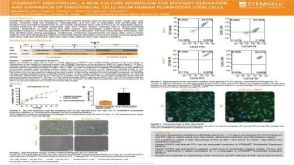 科学海报STEMdiff™ Endothelial: A New Culture Workflow for Efficient Derivation and Expansion of Endothelial Cells From Human Pluripotent Stem Cells
 沪公网安备31010102008431号