Gene expression profiling and localization of Hoechst-effluxing CD45- and CD45+ cells in the embryonic mouse lung.
Hoechst-effluxing cells (side population cells) are a rare subset of cells found in adult tissues that are highly enriched for stem and progenitor cell activity. To identify potential stem and progenitor cells during lung development,we generated gene expression profiles for CD45- and CD45+ side population cells in the embryonic day 17.5 lung. We found that side population cells comprise 1% of total embryonic day 17.5 lung cells (55% CD45+,45% CD45-). Gene profiling data demonstrated an overrepresentation of endothelial genes within the CD45- side population. We used expression of several distinct genes to identify two types of CD45- side population cells: 1) von Willebrand factor+/smooth muscle actin+ cells that reside in the muscular layer of select large vessels and 2) von Willebrand factor+/intercellular adhesion molecule+ cells that reside within the endothelial layer of select small vessels. Gene profiling of the CD45+ side population indicated an overrepresentation of genes associated with myeloid cell differentiation. Consistent with this,culturing CD45+ side population cells was associated with induction of mature dendritic markers (CD86). The microarray results suggested that expression of myeloperoxidase and proteinase-3 might be used to identify CD45+ side population cells. By immunohistochemistry,we found that myeloperoxidase+/proteinase-3+ cells represent a small subset of total CD45+ cells in the embryonic day 17.5 lung and that they reside in the mesenchyme and perivascular regions. This is the first detailed information regarding the phenotype and localization of side population cells in a developing organ.
View Publication
产品类型:
产品号#:
09600
09650
产品名:
StemSpan™ SFEM
StemSpan™ SFEM
Martin GR (DEC 1981)
Proceedings of the National Academy of Sciences of the United States of America 78 12 7634--8
Isolation of a pluripotent cell line from early mouse embryos cultured in medium conditioned by teratocarcinoma stem cells.
This report describes the establishment directly from normal preimplantation mouse embryos of a cell line that forms teratocarcinomas when injected into mice. The pluripotency of these embryonic stem cells was demonstrated conclusively by the observation that subclonal cultures,derived from isolated single cells,can differentiate into a wide variety of cell types. Such embryonic stem cells were isolated from inner cell masses of late blastocysts cultured in medium conditioned by an established teratocarcinoma stem cell line. This suggests that such conditioned medium might contain a growth factor that stimulates the proliferation or inhibits the differentiation of normal pluripotent embryonic cells,or both. This method of obtaining embryonic stem cells makes feasible the isolation of pluripotent cells lines from various types of noninbred embryo,including those carrying mutant genes. The availability of such cell lines should made possible new approaches to the study of early mammalian development.
View Publication
产品类型:
产品号#:
06902
06952
00321
00322
00323
00324
00325
产品名:
Lin P-Y et al. (NOV 2013)
Stem cells and development 23 4 372--379
A synthetic peptide-acrylate surface for production of insulin-producing cells from human embryonic stem cells.
Human embryonic stem cells (hESCs),due to their self-renewal capacity and pluripotency,have become a potential source of transplantable $\$-cells for the treatment of diabetes. However,it is imperative that the derived cells fulfill the criteria for clinical treatment. In this study,we replaced common Matrigel with a synthetic peptide-acrylate surface (Synthemax) to expand undifferentiated hESCs and direct their differentiation in a defined and serum-free medium. We confirmed that the cells still expressed pluripotent markers,had the ability to differentiate into three germ layers,and maintained a normal karyotype after 10 passages of subculture. Next,we reported an efficient protocol for deriving nearly 86% definitive endoderm cells from hESCs under serum-free conditions. Moreover,we were able to obtain insulin-producing cells within 21 days following a simple three-step protocol. The results of immunocytochemical and quantitative gene expression analysis showed that the efficiency of induction was not significantly different between the Synthemax surface and the Matrigel-coated surface. Thus,we provided a totally defined condition from hESC culture to insulin-producing cell differentiation,and the derived cells could be a therapeutic resource for diabetic patients in the future.
View Publication
产品类型:
产品号#:
05850
05857
05870
05875
85850
85857
85870
85875
产品名:
mTeSR™1
mTeSR™1
Roubal I et al. ( 2016)
Methods in molecular biology (Clifton,N.J.) 1341 345--357
Derivation of Neural Precursor Cells from Human Embryonic Stem Cells for DNA Methylomic Analysis.
Embryonic stem cells are self-renewing pluripotent cells with competency to differentiate into all three-germ lineages. Many studies have demonstrated the importance of genetic and epigenetic molecular mechanisms in the maintenance of self-renewal and pluripotency. Stem cells are under unique molecular and cellular regulations different from somatic cells. Proper regulation should be ensured to maintain their unique self-renewal and undifferentiated characteristics. Understanding key mechanisms in stem cell biology will be important for the successful application of stem cells for regenerative therapeutic medicine. More importantly practical use of stem cells will require our knowledge on how to properly direct and differentiate stem cells into the necessary type of cells. Embryonic stem cells and adult stem cells have been used as study models to unveil molecular and cellular mechanisms in various signaling pathways. They are especially beneficial to developmental studies where in vivo molecular/cellular study models are not available. We have derived neural stem cells from human embryonic stem cells as a model to study the effect of teratogen in neural development. We have tested commercial neural differentiation system and successfully derived neural precursor cells exhibiting key molecular features of neural stem cells,which will be useful for experimental application.
View Publication
产品类型:
产品号#:
05850
05857
05870
05875
85850
85857
85870
85875
产品名:
mTeSR™1
mTeSR™1
Seale P et al. (SEP 2000)
Cell 102 6 777--86
Pax7 is required for the specification of myogenic satellite cells.
The paired box transcription factor Pax7 was isolated by representational difference analysis as a gene specifically expressed in cultured satellite cell-derived myoblasts. In situ hybridization revealed that Pax7 was also expressed in satellite cells residing in adult muscle. Cell culture and electron microscopic analysis revealed a complete absence of satellite cells in Pax7(-/-) skeletal muscle. Surprisingly,fluorescence-activated cell sorting analysis indicated that the proportion of muscle-derived stem cells was unaffected. Importantly,stem cells from Pax7(-/-) muscle displayed almost a 10-fold increase in their ability to form hematopoietic colonies. These results demonstrate that satellite cells and muscle-derived stem cells represent distinct cell populations. Together these studies suggest that induction of Pax7 in muscle-derived stem cells induces satellite cell specification by restricting alternate developmental programs.
View Publication
Zhou M et al. (FEB 2010)
Journal of cellular biochemistry 109 3 606--14
Differentiation of mouse embryonic stem cells into hepatocytes induced by a combination of cytokines and sodium butyrate.
There is increasing evidence to suggest that embryonic stem cells (ESCs) are capable of differentiating into hepatocytes in vitro. In this study,we used a combination of cytokines and sodium butyrate in a novel three-step procedure to efficiently direct the differentiation of mouse ESCs into hepatocytes. Mouse ESCs were first differentiated into definitive endoderm cells by 3 days of treatment with Activin A. The definitive endoderm cells were then differentiated into hepatocytes by the addition of acidic fibroblast growth factor (aFGF) and sodium butyrate to the culture medium for 5 days. After 10 days of further in vitro maturation,the morphological and phenotypic markers of hepatocytes were characterized using immunohistochemistry,immunoblotting,and reverse transcription-polymerase chain reaction (RT-PCR). Furthermore,the cells were tested for functions associated with mature hepatocytes,including glycogen storage and indocyanine green uptake and release,and the ratio of hepatic differentiation was determined by counting the percentage of albumin-positive cells. In the presence of medium containing cytokines and sodium butyrate,numerous epithelial cells resembling hepatocytes were observed,and approximately 74% of the cells expressed the hepatic marker,albumin,after 18 days in culture. RT-PCR analysis and immunohistochemistry showed that these cells expressed adult liver cell markers,and had the abilities of glycogen storage and indocyanine green uptake and release. We have developed an efficient method for directing the differentiation of mouse ESCs into cells that exhibit the characteristics of mature hepatocytes. This technique will be useful for research into the molecular mechanisms underlying liver development,and could provide a source of hepatocytes for transplantation therapy and drug screening.
View Publication
产品类型:
产品号#:
72242
产品名:
丁酸钠(Sodium Butyrate)
V. Saint-Criq et al. (sep 2020)
Cells 9 9 2137
Choice of Differentiation Media Significantly Impacts Cell Lineage and Response to CFTR Modulators in Fully Differentiated Primary Cultures of Cystic Fibrosis Human Airway Epithelial Cells.
In vitro cultures of primary human airway epithelial cells (hAECs) grown at air-liquid interface have become a valuable tool to study airway biology under normal and pathologic conditions,and for drug discovery in lung diseases such as cystic fibrosis (CF). An increasing number of different differentiation media,are now available,making comparison of data between studies difficult. Here,we investigated the impact of two common differentiation media on phenotypic,transcriptomic,and physiological features of CF and non-CF epithelia. Cellular architecture and density were strongly impacted by the choice of medium. RNA-sequencing revealed a shift in airway cell lineage; one medium promoting differentiation into club and goblet cells whilst the other enriched the growth of ionocytes and multiciliated cells. Pathway analysis identified differential expression of genes involved in ion and fluid transport. Physiological assays (intracellular/extracellular pH,Ussing chamber) specifically showed that ATP12A and CFTR function were altered,impacting pH and transepithelial ion transport in CF hAECs. Importantly,the two media differentially affected functional responses to CFTR modulators. We argue that the effect of growth conditions should be appropriately determined depending on the scientific question and that our study can act as a guide for choosing the optimal growth medium for specific applications.
View Publication
ETS2 and ERG promote megakaryopoiesis and synergize with alterations in GATA-1 to immortalize hematopoietic progenitor cells.
ETS2 and ERG are transcription factors,encoded on human chromosome 21 (Hsa21),that have been implicated in human cancer. People with Down syndrome (DS),who are trisomic for Hsa21,are predisposed to acute megakaryoblastic leukemia (AMKL). DS-AMKL blasts harbor a mutation in GATA1,which leads to loss of full-length protein but expression of the GATA-1s isoform. To assess the consequences of ETS protein misexpression on megakaryopoiesis,we expressed ETS2,ERG,and the related protein FLI-1 in wild-type and Gata1 mutant murine fetal liver progenitors. These studies revealed that ETS2,ERG,and FLI-1 facilitated the expansion of megakaryocytes from wild-type,Gata1-knockdown,and Gata1s knockin progenitors,but none of the genes could overcome the differentiation block characteristic of the Gata1-knockdown megakaryocytes. Although overexpression of ETS proteins increased the proportion of CD41(+) cells generated from Gata1s-knockin progenitors,their expression led to a significant reduction in the more mature CD42 fraction. Serial replating assays revealed that overexpression of ERG or FLI-1 immortalized Gata1-knockdown and Gata1s knockin,but not wild-type,fetal liver progenitors. Immortalization was accompanied by activation of the JAK/STAT pathway,commonly seen in megakaryocytic malignancies. These findings provide evidence for synergy between alterations in GATA-1 and overexpression of ETS proteins in aberrant megakaryopoiesis.
View Publication
产品类型:
产品号#:
03234
产品名:
MethoCult™ M3234
Hanawa H et al. (JUN 2004)
Blood 103 11 4062--9
Efficient gene transfer into rhesus repopulating hematopoietic stem cells using a simian immunodeficiency virus-based lentiviral vector system.
High-titer,HIV-1-based lentiviral vector particles were found to transduce cytokine-mobilized rhesus macaque CD34(+) cells and clonogenic progenitors very poorly (textless 1%),reflecting the postentry restriction in rhesus cells to HIV infection. To overcome this barrier,we developed a simian immunodeficiency virus (SIV)-based vector system. A single exposure to a low concentration of amphotropic pseudotyped SIV vector particles encoding the green fluorescent protein (GFP) resulted in gene transfer into 68% +/- 1% of rhesus bulk CD34(+) cells and 75% +/- 1% of clonogenic progenitors. Polymerase chain reaction (PCR) analysis of DNA from individual hematopoietic colonies confirmed these relative transduction efficiencies. To evaluate SIV vector-mediated stem cell gene transfer in vivo,3 rhesus macaques underwent transplantation with transduced,autologous cytokine-mobilized peripheral blood CD34(+) cells following myeloablative conditioning. Hematopoietic reconstitution was rapid,and an average of 18% +/- 8% and 15% +/- 7% GFP-positive granulocytes and monocytes,respectively,were observed 4 to 6 months after transplantation,consistent with the average vector copy number of 0.19 +/- 0.05 in peripheral blood leukocytes as determined by real-time PCR. Vector insertion site analysis demonstrated polyclonal reconstitution with vector-containing cells. SIV vectors appear promising for evaluating gene therapy approaches in nonhuman primate models.
View Publication


 EasySep™小鼠TIL(CD45)正选试剂盒




 技术手册In Vitro Proliferation and Differentiation of Mouse and Rat Neural Stem and Progenitor Cells Using NeuroCult™
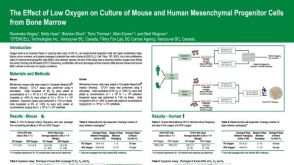 科学海报The Effect of Low Oxygen on Culture of Mouse and Human Mesenchymal Progenitor Cells from Bone Marrow

 沪公网安备31010102008431号