(Nov 2024)
International Journal of Molecular Sciences 25 22
Galectin-1 Induces the Production of Immune-Suppressive Cytokines in Human and Mouse T Cells
Galectin-1 is implicated in several pro-tumourigenic mechanisms and is considered immune-suppressive. The pharmacological inhibition of galectin-1 may be beneficial in cancers in which galectin-1 is overexpressed and driving cancer progression. This study aimed to further characterise the immunosuppressive cytokines influenced by galectin-1 in in vitro immune cell cultures and an in vivo inflammatory model using a recently discovered selective inhibitor of galectin-1,GB1908. To enable a translational approach and link mouse and human pharmacology,anti-CD3/anti-CD28 stimulated T cells cultured from human whole blood and mouse spleens were compared. For in vivo studies of T cell-mediated inflammation,the concanavalin-A (Con-A) mouse model was used to induce a T lymphocyte-driven acute liver injury phenotype. The inhibition of galectin-1 with GB1908 reduced IL-17A,IFNγ and TNFα in a concentration-dependent manner in both mouse and human T cells in vitro. The immunosuppressive cytokines measured in Con-A-treated mice were all upregulated compared to naïve mice. Subsequently,mice treated with GB1908 demonstrated a significant reduction in IL-17A,IFNγ,IL-6 and TNFα compared to vehicle-treated mice. In conclusion,galectin-1 induced the production of several important immune-suppressive cytokines from T cells in vitro and in vivo. This result suggests that,in the context of cancer therapy,a selective galectin-1 could be a viable approach as a monotherapy,or in combination with chemotherapeutic agents and/or checkpoint inhibitors,to enhance the numbers and activity of cytotoxic T cells in the tumour microenvironment of high galectin-1 expressing cancers.
View Publication
Booty MG et al. (FEB 2016)
Journal of Immunology 196 4 1822--31
Multiple Inflammatory Cytokines Converge To Regulate CD8+ T Cell Expansion and Function during Tuberculosis.
The differentiation of effector CD8(+) T cells is a dynamically regulated process that varies during different infections and is influenced by the inflammatory milieu of the host. In this study,we define three signals regulating CD8(+) T cell responses during tuberculosis by focusing on cytokines known to affect disease outcome: IL-12,type I IFN,and IL-27. Using mixed bone marrow chimeras,we compared wild-type and cytokine receptor knockout CD8(+) T cells within the same mouse following aerosol infection with Mycobacterium tuberculosis. Four weeks postinfection,IL-12,type 1 IFN,and IL-27 were all required for efficient CD8(+) T cell expansion in the lungs. We next determined if these cytokines directly promote CD8(+) T cell priming or are required only for expansion in the lungs. Using retrogenic CD8(+) T cells specific for the M. tuberculosis Ag TB10.4 (EsxH),we observed that IL-12 is the dominant cytokine driving both CD8(+) T cell priming in the lymph node and expansion in the lungs; however,type I IFN and IL-27 have nonredundant roles supporting pulmonary CD8(+) T cell expansion. Thus,IL-12 is a major signal promoting priming in the lymph node,but a multitude of inflammatory signals converge in the lung to promote continued expansion. Furthermore,these cytokines regulate the differentiation and function of CD8(+) T cells during tuberculosis. These data demonstrate distinct and overlapping roles for each of the cytokines examined and underscore the complexity of CD8(+) T cell regulation during tuberculosis.
View Publication
产品类型:
产品号#:
19853
19853RF
产品名:
EasySep™小鼠CD8+ T细胞分选试剂盒
RoboSep™ 小鼠CD8+ T细胞分选试剂盒
P. Dey et al. (Apr 2020)
Cancer Discovery 10 608-625
Oncogenic KRAS-driven metabolic reprogramming in pancreatic cancer cells utilizes cytokines from the tumor microenvironment
A hallmark of pancreatic ductal adenocarcinoma (PDAC) is an exuberant stroma comprised of diverse cell types that enable or suppress tumor progression. Here,we explored the role of oncogenic KRAS in protumorigenic signaling interactions between cancer cells and host cells. We show that KRAS mutation (KRAS) drives cell-autonomous expression of type I cytokine receptor complexes (IL2r?–IL4r? and IL2r?–IL13r?1) in cancer cells that in turn are capable of receiving cytokine growth signals (IL4 or IL13) provided by invading Th2 cells in the microenvironment. Early neoplastic lesions show close proximity of cancer cells harboring KRAS and Th2 cells producing IL4 and IL13. Activated IL2r?–IL4r? and IL2r?–IL13r?1 receptors signal primarily via JAK1-STAT6. Integrated transcriptomic,chromatin occupancy,and metabolomic studies identified MYC as a direct target of activated STAT6 and that MYC drives glycolysis. Thus,paracrine signaling in the tumor microenvironment plays a key role in the KRAS-driven metabolic reprogramming of PDAC. SIGNIFICANCE: Type II cytokines,secreted by Th2 cells in the tumor microenvironment,can stimulate cancer cell-intrinsic MYC transcriptional upregulation to drive glycolysis. This KRAS-driven heterotypic signaling circuit in the early and advanced tumor microenvironment enables cooperative protumorigenic interactions,providing candidate therapeutic targets in the KRAS pathway for this intractable disease.
View Publication
产品类型:
产品号#:
100-0820
100-0781
产品名:
PancreaCult™ 类器官启动培养基 (人)
PancreaCult™ 类器官生长培养基 (人)
Sood a et al. (DEC 2011)
Nature nanotechnology 6 12 824--33
Signalling of DNA damage and cytokines across cell barriers exposed to nanoparticles depends on barrier thickness.
The use of nanoparticles in medicine is ever increasing,and it is important to understand their targeted and non-targeted effects. We have previously shown that nanoparticles can cause DNA damage to cells cultured below a cellular barrier without crossing this barrier. Here,we show that this indirect DNA damage depends on the thickness of the cellular barrier,and it is mediated by signalling through gap junction proteins following the generation of mitochondrial free radicals. Indirect damage was seen across both trophoblast and corneal barriers. Signalling,including cytokine release,occurred only across bilayer and multilayer barriers,but not across monolayer barriers. Indirect toxicity was also observed in mice and using ex vivo explants of the human placenta. If the importance of barrier thickness in signalling is a general feature for all types of barriers,our results may offer a principle with which to limit the adverse effects of nanoparticle exposure and offer new therapeutic approaches.
View Publication
Combining lenalidomide with IL-2 family of cytokines enhances activating receptor and perforin/granzyme expression in NK cells
Background: Lenalidomide is an immunomodulatory drug approved in the treatment of autoimmune disease,inflammation,and cancer. Its impact continues to grow due to its diverse spectrum of effects hampered only by toxicities and reduced efficacy. Therefore,development of strategies that enhance function while reducing drawbacks remains a prime goal. Objective and Hypothesis: The mechanisms of action of lenalidomide on the activity of natural killer cells (NK cells) remains understudied yet could be critical for the development of strategies to enhance its efficacy. These cells are critical drivers of anti-tumor immune responses which are often functionally suppressed in malignancies. NK cell and T cell survival and function is driven by the IL-2 family of cytokines (IL-2 or IL-15) and work has shown that lenalidomide potentially works by increasing the secretion of IL-2 by other lymphocytes,such as CD4+ T helper cells. Thus,we hypothesized that improving NK activity with IL-2 family of cytokines could lead to enhanced lenalidomide-induced responses of these cells. Results: We show that lenalidomide does not affect NK cell viability but reduces their proliferation through cell cycle arrest which could be overcome by exogenous addition of IL-2 family of cytokines. Moreover,lenalidomide induced the secretion of IL-2 on isolated NK cells although it also modulated NK receptor expression,such as NKp46,trough downregulation of PI3K/AKT pathway reduction. This was overcome by exogeneous addition of IL-2 family of cytokines increasing natural cytotoxicity,through higher perforin and granzyme expression. Mechanistically,this increased gene and protein expression occurred through the activation of STAT5 by lenalidomide which was also enhanced through the exogenous addition of IL-2 family of cytokines and modulation of IL-2R subunit changes. Conclusions: These data provide a rationale for the combination of lenalidomide with IL-2 family of cytokines to enhance the effectiveness of NK cells.
View Publication
Post-acute sequelae of SARS-CoV-2 cardiovascular symptoms are associated with trace-level cytokines that affect cardiomyocyte function
An estimated 65 million people globally suffer from post-acute sequelae of COVID-19 (PASC),with many experiencing cardiovascular symptoms (PASC-CVS) like chest pain and heart palpitations. This study examines the role of chronic inflammation in PASC-CVS,particularly in individuals with symptoms persisting over a year after infection. Blood samples from three groups—recovered individuals,those with prolonged PASC-CVS and SARS-CoV-2-negative individuals—revealed that those with PASC-CVS had a blood signature linked to inflammation. Trace-level pro-inflammatory cytokines were detected in the plasma from donors with PASC-CVS 18?months post infection using nanotechnology. Importantly,these trace-level cytokines affected the function of primary human cardiomyocytes. Plasma proteomics also demonstrated higher levels of complement and coagulation proteins in the plasma from patients with PASC-CVS. This study highlights chronic inflammation’s role in the symptoms of PASC-CVS. Sinclair et al. explore the contribution of chronic inflammation to cardiovascular symptoms associated with post-acute sequelae of SARS-CoV-2 infection (PASC-CVS). The authors identify trace levels of inflammatory cytokines in individuals with PASC-CVS that impair the function of cardiomyocytes derived from induced pluripotent stem cells.
View Publication


 EasySep™小鼠TIL(CD45)正选试剂盒




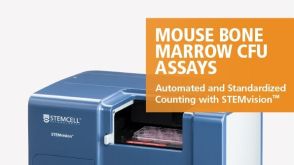 产品手册STEMvision™ Automated and Standardized Counting of Mouse Bone Marrow CFU Assays
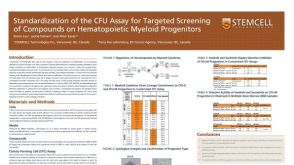 科学海报Standardization of the CFU Assay for Targeted Screening of Compounds on Hematopoietic Myeloid Progenitors
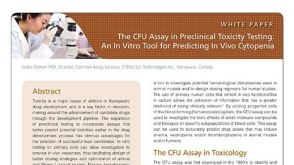 技术公告The CFU Assay in Preclinical Toxicity Testing: An In Vitro Tool for Predicting In Vivo Cytopenia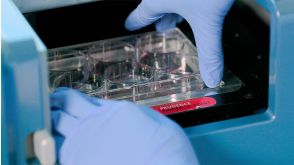



 沪公网安备31010102008431号