Differentiation of human pluripotent stem cells into nephron progenitor cells in a serum and feeder free system.
OBJECTIVES Kidney disease is emerging as a critical medical problem worldwide. Because of limited treatment options for the damaged kidney,stem cell treatment is becoming an alternative therapeutic approach. Of many possible human stem cell sources,pluripotent stem cells are most attractive due to their self-renewal and pluripotent capacity. However,little is known about the derivation of renal lineage cells from human pluripotent stem cells (hPSCs). In this study,we developed a novel protocol for differentiation of nephron progenitor cells (NPCs) from hPSCs in a serum- and feeder-free system. MATERIALS AND METHODS We designed step-wise protocols for differentiation of human pluripotent stem cells toward primitive streak,intermediate mesoderm and NPCs by recapitulating normal nephrogenesis. Expression of key marker genes was examined by RT-PCR,real time RT-PCR and immunocytochemistry. Each experiment was independently performed three times to confirm its reproducibility. RESULTS After modification of culture period and concentration of exogenous factors,hPSCs can differentiate into NPCs that markedly express specific marker genes such as SIX2,GDNF,HOXD11,WT1 and CITED1 in addition to OSR1,PAX2,SALL1 and EYA1. Moreover,NPCs possess the potential of bidirectional differentiation into both renal tubular epithelial cells and glomerular podocytes in defined culture conditions. In particular,approximately 70% of SYN-positive cells were obtained from hPSC-derived NPCs after podocytes induction. NPCs can also form in vitro tubule-like structures in three dimensional culture systems. CONCLUSIONS Our novel protocol for hPSCs differentiation into NPCs can be useful for producing alternative sources of cell replacement therapy and disease modeling for human kidney diseases.
View Publication
产品类型:
产品号#:
05850
05857
05870
05875
85850
85857
85870
85875
产品名:
mTeSR™1
mTeSR™1
Hannoun Z et al. (APR 2010)
Cellular reprogramming 12 2 133--140
The comparison between conditioned media and serum-free media in human embryonic stem cell culture and differentiation.
Human embryonic stem cells (hESCs) offer an inexhaustible supply of human somatic cell types through their ability to self-renew while retaining pluripotency. As such,hESC-derived cell types are important for applications ranging from in vitro modeling to therapeutic use. However,for their full potential to be realized,both the growth of the undifferentiated cells and their derivatives must be performed in defined culture conditions. Many research groups maintain hESCs using mouse embryonic fibroblasts (MEF) and MEF conditioned medium (CM). The use of murine systems to support hESCs has been imperative in developing hESC technology; however,they suffer from some major limitations including lack of definition,xenobiotic nature,batch-to-batch variation,and labor-intensive production. Therefore,hESC culture definition is essential if hESC lines,and their derivatives are to be quality assured and manufactured to GMP. We have initiated the process of standardizing hESC tissue culture and have employed two serum-free media: mTeSR (MT) and Stem Pro (SP). hESCs were maintained in a pluripotent state,for over 30 passages using MT and SP. Additionally,we present evidence that hESCs maintained in MT and SP generate equivalent levels of human hepatic endoderm as observed with CM. This data suggests that MT and SP are effective replacements for MEF-CM in hESC culture,contributing to the standardization of hESC in vitro models and ultimately their application.
View Publication
Lentiviral vectors containing an enhancer-less ubiquitously acting chromatin opening element (UCOE) provide highly reproducible and stable transgene expression in hematopoietic cells.
Ubiquitously acting chromatin opening elements (UCOEs) consist of methylation-free CpG islands encompassing dual divergently transcribed promoters of housekeeping genes that have been shown to confer resistance to transcriptional silencing and to produce consistent and stable transgene expression in tissue culture systems. To develop improved strategies for hematopoietic cell gene therapy,we have assessed the potential of the novel human HNRPA2B1-CBX3 UCOE (A2UCOE) within the context of a self-inactivating (SIN) lentiviral vector. Unlike viral promoters,the enhancer-less A2UCOE gave rise to populations of cells that expressed a reporter transgene at a highly reproducible level. The efficiency of expression per vector genome was also markedly increased in vivo compared with vectors incorporating either spleen focus-forming virus (SFFV) or cytomegalovirus (CMV) promoters,suggesting a relative resistance to silencing. Furthermore,an A2UCOE-IL2RG vector fully restored the IL-2 signaling pathway within IL2RG-deficient human cells in vitro and successfully rescued the X-linked severe combined immunodeficiency (SCID-X1) phenotype in a mouse model of this disease. These data indicate that the A2UCOE displays highly reliable transcriptional activity within a lentiviral vector,largely overcoming insertion-site position effects and giving rise to therapeutically relevant levels of gene expression. These properties are achieved in the absence of classic enhancer activity and therefore may confer a high safety profile.
View Publication
Perez-Campo FM et al. (JUN 2014)
STEM CELLS 32 6 1591--1601
MOZ-Mediated Repression of p16 INK 4 a Is Critical for the Self-Renewal of Neural and Hematopoietic Stem Cells
Although inhibition of p16(INK4a) expression is critical to preserve the proliferative capacity of stem cells,the molecular mechanisms responsible for silencing p16(INK4a) expression remain poorly characterized. Here,we show that the histone acetyltransferase (HAT) monocytic leukemia zinc finger protein (MOZ) controls the proliferation of both hematopoietic and neural stem cells by modulating the transcriptional repression of p16(INK4a) . In the absence of the HAT activity of MOZ,expression of p16(INK4a) is upregulated in progenitor and stem cells,inducing an early entrance into replicative senescence. Genetic deletion of p16(INK4a) reverses the proliferative defect in both Moz(HAT) (-) (/) (-) hematopoietic and neural progenitors. Our results suggest a critical requirement for MOZ HAT activity to silence p16(INK4a) expression and to protect stem cells from early entrance into replicative senescence.
View Publication
产品类型:
产品号#:
05700
05701
05702
05707
产品名:
NeuroCult™ 基础培养基(小鼠和大鼠)
NeuroCult™ 扩增添加物(小鼠和大鼠)
NeuroCult™扩增试剂盒(小鼠和大鼠)
NeuroCult™化学解离试剂盒(小鼠)
(Feb 2024)
STAR Protocols 5 1
Protocol for neurogenin-2-mediated induction of human stem cell-derived neural progenitor cells
SummaryHuman pluripotent stem cell-derived neural progenitor cells (NPCs) are an essential tool for the study of brain development and developmental disorders such as autism. Here,we present a protocol to generate NPCs rapidly and reproducibly from human stem cells using dual-SMAD inhibition coupled with a brief pulse of mouse neurogenin-2 (Ngn2) overexpression. We detail the 48-h induction scheme deployed to produce these cells—termed stem cell-derived Ngn2-accelerated progenitor cells—followed by steps for expansion,purification,banking,and quality assessment.For complete details on the use and execution of this protocol,please refer to Wells et al.1 Graphical abstract Highlights•Brief pulse of Ngn2 induces neural progenitor cells from human stem cells•Guidance on expanding,freezing,and thawing SNaP cells for future use•Immunostaining-based assays assess cell identity and differentiation potential Publisher’s note: Undertaking any experimental protocol requires adherence to local institutional guidelines for laboratory safety and ethics. Human pluripotent stem cell-derived neural progenitor cells (NPCs) are an essential tool for the study of brain development and developmental disorders such as autism. Here,we present a protocol to generate NPCs rapidly and reproducibly from human stem cells using dual-SMAD inhibition coupled with a brief pulse of mouse neurogenin-2 (Ngn2) overexpression. We detail the 48-h induction scheme deployed to produce these cells—termed stem cell-derived Ngn2-accelerated progenitor cells—followed by steps for expansion,purification,banking,and quality assessment.
View Publication
产品类型:
产品号#:
100-0276
100-1130
产品名:
mTeSR™ Plus
mTeSR™ Plus
R. O. Bak et al. (FEB 2018)
Nature protocols 13 2 358--376
CRISPR/Cas9 genome editing in human hematopoietic stem cells.
Genome editing via homologous recombination (HR) (gene targeting) in human hematopoietic stem cells (HSCs) has the power to reveal gene-function relationships and potentially transform curative hematological gene and cell therapies. However,there are no comprehensive and reproducible protocols for targeting HSCs for HR. Herein,we provide a detailed protocol for the production,enrichment,and in vitro and in vivo analyses of HR-targeted HSCs by combining CRISPR/Cas9 technology with the use of rAAV6 and flow cytometry. Using this protocol,researchers can introduce single-nucleotide changes into the genome or longer gene cassettes with the precision of genome editing. Along with our troubleshooting and optimization guidelines,researchers can use this protocol to streamline HSC genome editing at any locus of interest. The in vitro HSC-targeting protocol and analyses can be completed in 3 weeks,and the long-term in vivo HSC engraftment analyses in immunodeficient mice can be achieved in 16 weeks. This protocol enables manipulation of genes for investigation of gene functions during hematopoiesis,as well as for the correction of genetic mutations in HSC transplantation-based therapies for diseases such as sickle cell disease,$\beta$-thalassemia,and primary immunodeficiencies.
View Publication
产品类型:
产品号#:
09605
09655
04435
04445
72912
72914
产品名:
StemSpan™ SFEM II
StemSpan™ SFEM II
MethoCult™ H4435 Enriched
MethoCult™ H4435 Enriched
(Jan 2025)
Cells 14 3
A Recombinase-Mediated Cassette Exchange Platform for a Triple Independent Inducible Expression System for Human Pluripotent Stem Cells
Human pluripotent stem cells (hPSCs) and their differentiated derivatives represent valuable tools for studying development,modeling diseases,and advancing cell therapy. Recent improvements in genome engineering allow for precise modifications of hPSCs,further enhancing their utility in basic and translational research. Here we describe a Recombinase-Mediated Cassette Exchange (RMCE) platform in hPSCs that allows for the highly efficient,rapid,and specific integration of transgenes. The RCME-mediated DNA integration process is nearly 100% efficient,without negatively affecting the pluripotency or karyotypic stability of hPSCs. Taking advantage of this convenient system,we first established a dual inducible expression system based on the Tet-On and Cumate-On systems,allowing for the inducible expression of two transgenes independently. Secondly,we incorporated a Tet-on inducible system,driving the expression of three genes simultaneously. However,two genes also contain independent degron sequences,allowing for precise control over the expression of each gene individually. We demonstrated the utility of these systems in hPSCs,as well as their functionality after differentiation into cells that were representative of the three germ layers. Lastly,we used the triple inducible system to investigate the lineage commitment induced by the pancreatic transcription factors NKX6.1 and PDX1. We found that controlled dual expression,but not individual expression,biases hPSC embryoid body differentiation towards the pancreatic lineage by inducing the expression of the NeuroD program. In sum,we describe a novel genetic engineering platform that allows for the efficient and fast integration of any desired transgene(s) in hPSCs using RMCE. We anticipate that the ability to modulate the expression of three transgenes simultaneously will further accelerate discoveries using stem cell technology.
View Publication
产品类型:
产品号#:
100-0276
100-1130
产品名:
mTeSR™ Plus
mTeSR™ Plus
Renz PF and Beyer TA (FEB 2016)
Methods in molecular biology (Clifton,N.J.) 1341 369--376
A Concise Protocol for siRNA-Mediated Gene Suppression in Human Embryonic Stem Cells.
Human embryonic stem cells hold great promise for future biomedical applications such as disease modeling and regenerative medicine. However,these cells are notoriously difficult to culture and are refractory to common means of genetic manipulation,thereby limiting their range of applications. In this protocol,we present an easy and robust method of gene repression in human embryonic stem cells using lipofection of small interfering RNA (siRNA).
View Publication
产品类型:
产品号#:
05850
05857
05870
05875
05872
05873
07909
07920
85850
85857
85870
85875
100-0483
100-0484
07922
产品名:
IV型胶原酶(1mg /mL)
ACCUTASE™
mTeSR™1
mTeSR™1
Hausser Scientificᵀᴹ 明线血球计数板
ReLeSR™
ACCUTASE™
Irwin EF et al. (OCT 2011)
Biomaterials 32 29 6912--6919
Engineered polymer-media interfaces for the long-term self-renewal of human embryonic stem cells.
We have developed a synthetic polymer interface for the long-term self-renewal of human embryonic stem cells (hESCs) in defined media. We successfully cultured hESCs on hydrogel interfaces of aminopropylmethacrylamide (APMAAm) for over 20 passages in chemically-defined mTeSR™1 media and demonstrated pluripotency of multiple hESC lines with immunostaining and quantitative RT-PCR studies. Results for hESC proliferation and pluripotency markers were both qualitatively and quantitatively similar to cells cultured on Matrigel™-coated substrates. Mechanistically,it was resolved that bovine serum albumin (BSA) in the mTeSR™1 media was critical for cell adhesion on APMAAm hydrogel interfaces. This study uniquely identified a robust long-term culture surface for the self-renewal of hESCs without the use of biologic coatings (e.g.,peptides,proteins,or Matrigel™) in completely chemically-defined media that employed practical culturing techniques amenable to clinical-scale cell expansion.
View Publication


 EasySep™小鼠TIL(CD45)正选试剂盒





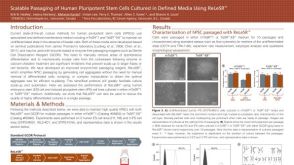 科学海报Scalable Passaging of Human Pluripotent Stem Cells Cultured in Defined Media Using ReLeSR™
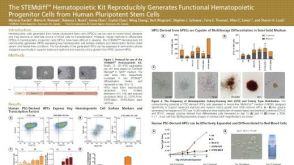 科学海报The STEMdiff™ Hematopoietic Kit Reproducibly Generates Functional Hematopoietic Progenitor Cells from Human Pluripotent Stem Cells
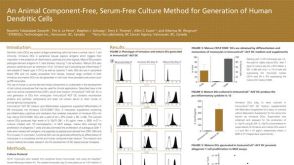 科学海报An Animal Component-Free, Serum-Free Culture Method for Generation of Human Dendritic Cells
 沪公网安备31010102008431号