A specific in vitro bioassay for measuring erythropoietin levels in human serum and plasma.
The accurate measurement of biologically active erythropoietin (Ep) in human serum and plasma using present in vivo and in vitro bioassays is difficult because of the presence of both inhibitors and non-Ep stimulators of erythropoiesis. We have developed a simple procedure to quantitatively purify Ep from serum and plasma for subsequent testing in the phenylhydrazine-treated mouse spleen cell assay. The method involves absorption of Ep to an immobilized high-affinity anti-Ep monoclonal antibody and acid elution of the antibody-bound material. After neutralization,the eluted EP is then tested directly in the in vitro bioassay without interference by other serum proteins. By using magnetic beads as a solid support for the antibody,washing and elution steps can be performed rapidly and efficiently. Recoveries of Ep after this procedure show very little sample-to-sample variation and are consistently between 45% and 55%,which is close to the maximum binding expected for the anti-Ep antibody. Coupled with the 7.4-fold concentration that this procedure affords,there is an overall increase in sensitivity of three- to fourfold,which makes this assay suitable for accurately measuring Ep levels in patients with below-average titers. Results with this magnetic bead assay indicate that accurate and reproducible estimates for Ep levels in the serum and plasma from healthy donors as well as from patients with hematologic disorders can be obtained. Titers of biologically active Ep in the sera from a group of patients with either leukemia or lymphoma were found to be elevated,and the values correlated well with titers of immunoreactive Ep measured in the Ep radioimmunoassay. Because of its specificity and high sensitivity,the magnetic bead assay is a valuable alternative to immunoassays for the measurement of elevated,normal,and even subnormal Ep levels in human serum and plasma.
View Publication
产品类型:
产品号#:
01630
产品名:
促红细胞生成素(EPO) ELISA试剂盒
M. Kang et al. (Oct 2024)
International Journal of Molecular Sciences 25 19
Comparative Analysis of Serum and Serum-Free Medium Cultured Mesenchymal Stromal Cells for Cartilage Repair
Mesenchymal stromal cells (MSCs) are promising candidates for cartilage repair therapy due to their self-renewal,chondrogenic,and immunomodulatory capacities. It is widely recognized that a shift from fetal bovine serum (FBS)-containing medium toward a fully chemically defined serum-free (SF) medium would be necessary for clinical applications of MSCs to eliminate issues such as xeno-contamination and batch-to-batch variation. However,there is a notable gap in the literature regarding the evaluation of the chondrogenic ability of SF-expanded MSCs (SF-MSCs). In this study,we compared the in vivo regeneration effect of FBS-MSCs and SF-MSCs in a rat osteochondral defect model and found poor cartilage repair outcomes for SF-MSCs. Consequently,a comparative analysis of FBS-MSCs and SF-MSCs expanded using two SF media,MesenCult™-ACF (ACF),and Custom StemPro™ MSC SFM XenoFree (XF) was conducted in vitro. Our results show that SF-expanded MSCs constitute variations in morphology,surface markers,senescence status,differentiation capacity,and senescence/apoptosis status. Highly proliferative MSCs supported by SF medium do not always correlate to their chondrogenic and cartilage repair ability. Prior determination of the SF medium’s ability to support the chondrogenic ability of expanded MSCs is therefore crucial when choosing an SF medium to manufacture MSCs for clinical application in cartilage repair.
View Publication
产品类型:
产品号#:
05445
产品名:
MesenCult™ -ACF Plus培养基
Chen X et al. (NOV 2010)
Stem cells and development 19 11 1781--1792
Investigations into the metabolism of two-dimensional colony and suspended microcarrier cultures of human embryonic stem cells in serum-free media.
Metabolic studies of human embryonic stem cells (hESCs) can provide important information for stem cell bioprocessing. To this end,we have examined growth and metabolism of hESCs in both traditional 2-dimensional (2D) colony cultures and 3-dimensional microcarrier cultures using a conditioned medium and 3 serum-free media. The 2D colony cultures plateaued at cell densities of 1.1-1.5 × 10�?� cells/mL at day 6 due to surface limitation. Microcarrier cultures achieved 1.5-2 × 10�?� cells/mL on days 8-10 before reaching a plateau; this growth arrest was not due to surface limitation,but probably due to metabolic limitations. Metabolic analysis of the cultures showed that amino acids (including glutamine) and glucose are in excess and are not limiting cell growth; on the other hand,the high levels of waste products (25 mM lactate and 0.8 mM ammonium) and low pH (6.6) obtained at the last stages of cell propagation could be the causes for growth arrest. hESCs cultured in media supplemented with lactate (up to 28 mM) showed reduced cell growth,whereas ammonium (up to 5 mM) had no effect. Lactate and,to a lesser extent,ammonia affected pluripotency as reflected by the decreasing population of cells expressing pluripotent marker TRA-1-60. Feeding hESC cultures with low concentrations of glucose resulted in lower lactate levels (∼10%) and a higher pH level of 6.7,which leads to a 40% increase in cell density. We conclude that the high lactate levels and the low pH during the last stages of high-density hESC culture may limit cell growth and affect pluripotency. To overcome this limitation,a controlled feed of low levels of glucose and online control of pH can be used.
View Publication
产品类型:
产品号#:
05850
05857
05870
05875
85850
85857
85870
85875
产品名:
mTeSR™1
mTeSR™1
Gentry T et al. (JAN 2007)
Cytotherapy 9 3 259--74
Simultaneous isolation of human BM hematopoietic, endothelial and mesenchymal progenitor cells by flow sorting based on aldehyde dehydrogenase activity: implications for cell therapy.
BACKGROUND: ALDH(br) cells express high aldehyde dehydrogenase (ALDH) activity and have progenitor cell activity in several contexts. We characterized human BM ALDH(br) cells to determine whether cell sorting based on ALDH activity isolates potentially useful populations for cell therapy. METHOD: We measured the expression of ALDH and cell-surface Ag by flow cytometry and compared the ability of sorted ALDH(br),and BM populations remaining after ALDH(br) cells were removed (ALDH(dim) populations),to develop into several cell lineages in culture. RESULTS: The ALDH(br) population comprised 1.2+/-0.8% (mean+/-SD,n=30) nucleated cells and was enriched in cells expressing CD34,CD117,CD105,CD127,CD133 and CD166,and in primitive CD34(+) CD38(-) and CD34(+) CD133(+) progenitors. Most of the CD34(+) and CD133(+) cells were ALDH(dim). ALDH(br) populations had 144-fold more hematopoietic colony-forming activity than ALDH(dim) cells and included all megakaryocyte progenitors. ALDH(br) populations readily established endothelial cell monolayers in cultures. Cells generating endothelial colonies in 7 days were 435-fold more frequent in ALDH(br) than ALDH(dim) populations. CFU-F were 9.5-fold more frequent in ALDH(br) than ALDH(dim) cells,and ALDH(br) cells gave rise to multipotential mesenchymal cell cultures that could be driven to develop into adipocytes,osteoblasts and chondrocytes. DISCUSSION: Hematopoietic,endothelial and mesenchymal progenitor cells can be isolated simultaneously from human BM by cell sorting based on ALDH activity. BM ALDH(br) populations may be useful in several cell therapy applications.
View Publication
产品类型:
产品号#:
01700
01705
01701
01702
产品名:
ALDEFLUOR™ 试剂盒
ALDEFLUOR™ DEAB试剂, 1.5 mM, 1 mL
ALDEFLUOR™检测缓冲液
Vallier L (JAN 2011)
Methods in molecular biology (Clifton,N.J.) 690 57--66
Serum-free and feeder-free culture conditions for human embryonic stem cells.
Human embryonic stem cells (hESCs) are pluripotent cells derived from the embryo at the blastocyst stage. Their embryonic origin confers upon them the capacity to proliferate indefinitely in vitro while maintaining the capacity to differentiate into a large variety of cell types. Based on these properties of self-renewal and pluripotency,hESCs represent a unique source to generate a large quantity of certain specialized cell types with clinical interest for transplantation-based therapy. However,hESCs are usually grown in culture conditions using fetal bovine serum and mouse embryonic fibroblasts,two components that are not compatible with clinical applications. Consequently,the possibility to expand hESCs in serum-free and in feeder-free culture conditions is becoming a major challenge to deliver the clinical promises of hESCs. Here,we describe the basic principles of growing hESCs in a chemically defined medium (CDM) devoid of serum and feeders.
View Publication
Chase LG and Firpo MT (AUG 2007)
Current opinion in chemical biology 11 4 367--72
Development of serum-free culture systems for human embryonic stem cells.
Human embryonic stem cells,because of their unique combination of long-term self-renewal properties and pluripotency,are providing new avenues of investigation of stem cell biology and human development and show promise in providing a new source of human cells for transplantation therapies and pharmaceutical testing. Current methods of propagating these cells using combinations of mouse fibroblast feeder cultures and bovine serum components are inexpensive and,in general,useful. However,the systematic investigation of the regulation of self-renewal and the production of safer sources of cells for transplantation depends on the elimination of animal products and the use of defined culture conditions. Both goals are served by the development of serum-free culture methods for human embryonic stem cells.
View Publication
产品类型:
产品号#:
05850
05857
05870
05875
85850
85857
85870
85875
产品名:
mTeSR™1
mTeSR™1
Chang M-YY et al. (NOV 2015)
Stem cell research 15 3 608--613
Doxycycline supplementation allows for the culture of human ESCs/iPSCs with media changes at 3-day intervals.
Culturing human embryonic stem and induced pluripotent stem cells (hESCs/iPSCs) is one of the most costly and labor-intensive tissue cultures,as media containing expensive factors/cytokines should be changed every day to maintain and propagate undifferentiated hESCs/iPSCs in vitro. We recently reported that doxycycline,an anti-bacterial agent,had dramatic effects on hESC/iPSC survival and promoted self-renewal. In this study,we extended the effects of doxycycline to a more practical issue to save cost and labor in hESC/iPSC cultures. Regardless of cultured cell conditions,hESCs/iPSCs in doxycycline-supplemented media were viable and proliferating for at least 3 days without media change,while none or few viable cells were detected in the absence of doxycycline in the same conditions. Thus,hESCs/iPSCs supplemented with doxycycline can be cultured for a long period of time with media changes at 3-day intervals without altering their self-renewal and pluripotent properties,indicating that doxycycline supplementation can reduce the frequency of media changes and the amount of media required by 1/3. These findings strongly encourage the use of doxycycline to save cost and labor in culturing hESCs/iPSCs.
View Publication
M. Pavel-Dinu et al. ( 2019)
Nature communications 10 1 1634
Gene correction for SCID-X1 in long-term hematopoietic stem cells.
Gene correction in human long-term hematopoietic stem cells (LT-HSCs) could be an effective therapy for monogenic diseases of the blood and immune system. Here we describe an approach for X-linked sSevere cCombined iImmunodeficiency (SCID-X1) using targeted integration of a cDNA into the endogenous start codon to functionally correct disease-causing mutations throughout the gene. Using a CRISPR-Cas9/AAV6 based strategy,we achieve up to 20{\%} targeted integration frequencies in LT-HSCs. As measures of the lack of toxicity we observe no evidence of abnormal hematopoiesis following transplantation and no evidence of off-target mutations using a high-fidelity Cas9 as a ribonucleoprotein complex. We achieve high levels of targeting frequencies (median 45{\%}) in CD34+ HSPCs from six SCID-X1 patients and demonstrate rescue of lymphopoietic defect in a patient derived HSPC population in vitro and in vivo. In sum,our study provides specificity,toxicity and efficacy data supportive of clinical development of genome editing to treat SCID-Xl.
View Publication
Bruserud O et al. (DEC 2000)
Journal of hematotherapy & stem cell research 9 6 923--32
In vitro culture of human acute myelogenous leukemia (AML) cells in serum-free media: studies of native AML blasts and AML cell lines.
The functional characteristics were compared for acute myelogenous leukemia (AML) cells (native blasts and AML cell lines) cultured in three serum-free media (X-vivo 10,X-vivo 15,[Bio-Whitacker,Walkersville,MD] and StemSpan [Stem Cell Technologies,Vancouver,BC,Canada]) and in medium containing 10% inactivated fetal calf serum (FCS). For native AML blasts the following functions were compared: (1) autonomous and cytokine-dependent proliferation; (2) frequency of clonogenic cell; and (3) constitutive cytokine secretion. AML blast proliferation differed between patients independent of the culture medium used,and clonogenic cells were maintained after in vitro culture in all media. In contrast,constitutive cytokine secretion was higher for cells cultured in StemSpan and FCS-containing medium than for cells cultured in the X-vivo media. Native AML blasts incubated in StemSpan also showed a low frequency of apoptotic cells. The three serum-free media could also be used for long-term expansion of well-characterized AML cell lines,but the optimal medium for cell expansion and cytokine secretion differed between cell lines. We conclude that standardized serum-free culture conditions can be used for in vitro studies of native AML blasts and AML cell lines.
View Publication


 EasySep™小鼠TIL(CD45)正选试剂盒





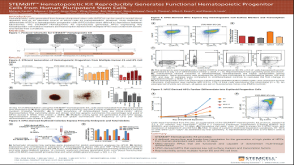 科学海报STEMdiff™ Hematopoietic Kit Reproducibly Generates Functional Hematopoietic Progenitor Cells from Human Pluripotent Stem Cells
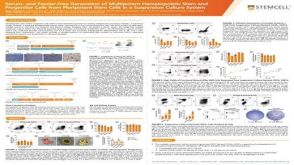 科学海报Serum- and Feeder-Free Generation of Multipotent Hematopoietic Stem and Progenitor Cells from Pluripotent Stem Cells in a Suspension Culture System

 沪公网安备31010102008431号