Martinez-Moczygemba M and Huston DP (OCT 2003)
The Journal of allergy and clinical immunology 112 4 653--65; quiz 666
Biology of common beta receptor-signaling cytokines: IL-3, IL-5, and GM-CSF.
IL-3,IL-5,and GM-CSF are related hematopoietic cytoines that are important for allergic inflammation. The receptors for human IL-5,IL-3,and GM-CSF are members of the hematopoietin receptor superfamily and are comprised of a cytokine-specific alpha chain and the common beta chain that is shared among these cytokines for signaling. Each of these cytokines contributes to the differentiation and function of leukocyte subpopulations and have clinical importance in protective immunity and in the pathophysiology of a spectrum of immunologic diseases that are as diverse as allergy and asthma,pulmonary alveolar proteinosis,neurodegenerative diseases,and malignancies. Delineating the biology of these cytokines is enabling the development of new strategies for diagnosing and treating these diseases and modulating immune responses.
View Publication
Packaged release and targeted delivery of cytokines by migrasomes in circulation
In dynamic systems like the circulatory system,establishing localized cytokine gradients is challenging. Upon lipopolysaccharide (LPS) stimulation,we observed that monocytes release numerous migrasomes enriched with inflammatory cytokines,such as TNF-α and IL-6. These cytokines are transported into migrasomes via secretory carriers,leading to their immediate exocytosis or eventual release from detached migrasomes. We successfully isolated TNF-α and IL-6-enriched,monocyte-derived migrasomes from the blood of LPS-treated mice. Total secretion analysis revealed a substantial amount of TNF-α and IL-6 released in a migrasome-packaged form. Thus,detached,monocyte-derived migrasomes represent a type of extracellular vesicle highly enriched with cytokines. Physiologically,these cytokine-laden migrasomes rapidly accumulate at local sites of inflammation,effectively creating a concentrated source of cytokines. Our research uncovers novel mechanisms for cytokine release and delivery,providing new insights into immune response modulation.
View Publication
产品类型:
产品号#:
19861
19861RF
产品名:
EasySep™小鼠单核细胞分选试剂盒
RoboSep™ 小鼠单核细胞分选试剂盒
C. J. E. Wahlund et al. ( 2020)
Scientific reports 10 1 15328
Sarcoidosis exosomes stimulate monocytes to produce pro-inflammatory cytokines and CCL2.
Pulmonary sarcoidosis has unknown etiology,a difficult diagnostic procedure and no curative treatment. Extracellular vesicles including exosomes are nano-sized entities released from all cell types. Previous studies of exosomes from bronchoalveolar lavage fluid (BALF) of sarcoidosis patients have revealed pro-inflammatory components and abilities,but cell sources and mechanisms have not been identified. In the current study,we found that BALF exosomes from sarcoidosis patients,but not from healthy individuals,induced a dose-dependent elevation of intracellular IL-1$\beta$ in monocytes. Analyses of supernatants showed that patient exosomes also induced release of IL-1$\beta$,IL-6 and TNF from both PBMCs and enriched monocytes,suggesting that the observed effect is direct on monocytes. The potently chemotactic chemokine CCL2 was induced by exosomes from a subgroup of patients,and in a blocking assay the exosome-induced CCL2 was reduced for 13 out of 19 patients by the asthma drug Montelukast,a cysteinyl leukotriene receptor antagonist. Further,reactive oxygen species generation by PBMCs was induced to a higher degree by patient exosomes compared to healthy exosomes. These findings add to an emerging picture of exosomes as mediators and disseminators of inflammation,and open for further investigations of the link between CCL2 and exosomal leukotrienes in sarcoidosis.
View Publication
Lambert AW et al. (JAN 2016)
Molecular cancer research : MCR 14 1 103--113
Tumor Cell-Derived Periostin Regulates Cytokines That Maintain Breast Cancer Stem Cells.
UNLABELLED Basal-like breast cancer (BLBC) is an aggressive subtype of breast cancer which is often enriched with cancer stem cells (CSC),but the underlying molecular basis for this connection remains elusive. We hypothesized that BLBC cells are able to establish a niche permissive to the maintenance of CSCs and found that tumor cell-derived periostin (POSTN),a component of the extracellular matrix,as well as a corresponding cognate receptor,integrin $$(v)$$(3),are highly expressed in a subset of BLBC cell lines as well as in CSC-enriched populations. Furthermore,we demonstrated that an intact periostin-integrin $$3 signaling axis is required for the maintenance of breast CSCs. POSTN activates the ERK signaling pathway and regulates NF-$$B-mediated transcription of key cytokines,namely IL6 and IL8,which in turn control downstream activation of STAT3. In summary,these findings suggest that BLBC cells have an innate ability to establish a microenvironmental niche supportive of CSCs. IMPLICATIONS The findings reported here indicate that POSTN produced by CSCs acts to reinforce the stem cell state through the activation of integrin receptors and the production of key cytokines.
View Publication


 EasySep™小鼠TIL(CD45)正选试剂盒






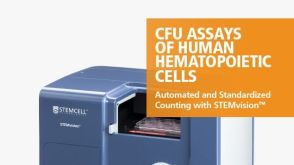 产品手册STEMvision™ Automated and Standardized Counting of CFU Assays of Human Hematopoietic Cells
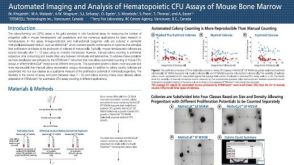 科学海报Automated Imaging and Analysis of Hematopoietic CFU Assays of Mouse Bone Marrow



 沪公网安备31010102008431号