Dynamic molecular network analysis of iPSC-Purkinje cells differentiation delineates roles of ISG15 in SCA1 at the earliest stage
Better understanding of the earliest molecular pathologies of all neurodegenerative diseases is expected to improve human therapeutics. We investigated the earliest molecular pathology of spinocerebellar ataxia type 1 (SCA1),a rare familial neurodegenerative disease that primarily induces death and dysfunction of cerebellum Purkinje cells. Extensive prior studies have identified involvement of transcription or RNA-splicing factors in the molecular pathology of SCA1. However,the regulatory network of SCA1 pathology,especially central regulators of the earliest developmental stages and inflammatory events,remains incompletely understood. Here,we elucidated the earliest developmental pathology of SCA1 using originally developed dynamic molecular network analyses of sequentially acquired RNA-seq data during differentiation of SCA1 patient-derived induced pluripotent stem cells (iPSCs) to Purkinje cells. Dynamic molecular network analysis implicated histone genes and cytokine-relevant immune response genes at the earliest stages of development,and revealed relevance of ISG15 to the following degradation and accumulation of mutant ataxin-1 in Purkinje cells of SCA1 model mice and human patients. Molecular changes in neurodegeneration occur much earlier than previously expected. In this study,dynamic molecular network analysis of iPSC differentiation uncovers a temporal pathway from histone to ISG15 with the earliest molecular changes of SCA1.
View Publication
产品类型:
产品号#:
05990
产品名:
用于hESC/hiPSC维持培养的TeSR™-E8™
X.-Y. Zhang et al. (feb 2022)
Human molecular genetics 31 4 638--650
Exosomal transfer of activated neutrophil-derived lncRNA CRNDE promotes proliferation and migration of airway smooth muscle cells in asthma.
Activated neutrophil-derived exosomes reportedly contribute to the proliferation of airway smooth muscle cells (ASMCs),thereby aggravating the airway wall remodeling during asthma; however,the specific mechanism remains unclear. Lipopolysaccharide (LPS)-EXO and si-CRNDE-EXO were extracted from the media of human neutrophils treated with LPS and LPS??+??si-CRNDE (a siRNA targets long non-coding RNA CRNDE),respectively. Human ASMCs were co-cultured with LPS-EXO or si-CRNDE-EXO,and cell viability,proliferation and migration were measured. The interplay of colorectal neoplasia differentially expressed (CRNDE),inhibitor of nuclear factor kappa B kinase subunit beta (IKK$\beta$) and nuclear receptor subfamily 2 group C member 2 (TAK1) was explored using RNA immunoprecipitation (RIP) and Co-IP assays. A mouse model of asthma was induced using ovalbumin. CRNDE was upregulated in LPS-EXO and successfully transferred from LPS-treated neutrophils to ASMCs through exosome. Mechanically,CRNDE loaded in LPS-EXO reinforced TAK1-mediated IKK$\beta$ phosphorylation,thereby activating the nuclear factor kappa B (NF-$\kappa$B) pathway. Functionally,silencing CRNDE in LPS-EXO,an IKK$\beta$ inhibitor,and an NF-$\kappa$B inhibitor all removed the upregulation of cell viability,proliferation and migration induced by LPS-EXO in ASMCs. In the end,the in vivo experiment demonstrated that CRNDE knockdown in neutrophils effectively reduced the thickness of bronchial smooth muscle in a mouse model for asthma. Activated neutrophils-derived CRNDE was transferred to ASMCs through exosomes and activated the NF-$\kappa$B pathway by enhancing IKK$\beta$ phosphorylation. The latter promoted the proliferation and migration of ASMCs and then contributed to airway remodeling in asthma.
View Publication
CD34+ marrow cells, devoid of T and B lymphocytes, reconstitute stable lymphopoiesis and myelopoiesis in lethally irradiated allogeneic baboons.
CD34+ cells devoid of detectable mature and immature T and B lymphocytes,expressing the CD2,CD10,and CD20 antigens,were isolated from marrows of three pairs of sex-mismatched,mixed lymphocyte culture (MLC) nonreactive,sibling baboons. Reciprocal transplants were performed between members of each pair,using the sex chromosomes,identified by standard cytogenetic techniques,as markers of the transplanted cells. Five animals from these three pairs were transplanted with 0.6 to 2.1 x 10(6)/kg of isolated cryopreserved and/or fresh isolated cells that were greater than 95% to 97% CD34+. Before transplantation,animals were treated with either single (920 or 1,020 cGy) or split (700 cGy x 2) dose total body irradiation. All animals engrafted with donor cells,as demonstrated by cytogenetic analysis of bone marrow metaphase cells 4 weeks after transplantation,with days to white blood cell count (WBC) greater than 500 being 19 +/- 2,to WBC greater than 1,000 23 +/- 2,to absolute neutrophil count greater than 500 24 +/- 3,and to platelets greater than 20,000 30 +/- 7. Three animals died of infectious-related complications at 34,42,and 109 days after transplantation with evidence of host and donor cells (mixed chimerism) in marrow. Two animals remain alive and healthy more than 545 and 455 days after transplantation with stable mixed chimerism in marrow and blood. For these two animals,cytogenetic analysis of granulocyte/macrophage and erythroid colonies derived from marrow precursors between weeks 25 and 42 posttransplant showed evidence of mixed chimerism. Cytogenetic studies of CD2+ T cells and CD20+ B cells isolated from blood of these two animals between weeks 21 and 51 posttransplant showed the presence of mixed chimerism in both lymphocyte populations. Thus,isolated allogeneic CD34+ marrow cells devoid of detectable mature and immature T and B lymphocytes can engraft and reconstitute stable long-term myelopoiesis and lymphopoiesis in lethally irradiated baboons. These results are consistent with the hypothesis that CD34+ marrow cells contain pluripotent hematopoietic stem cells capable of fully reconstituting lymphohematopoiesis in the transplanted host.
View Publication
产品类型:
产品号#:
10413
产品名:
Vieillard V et al. (AUG 2005)
Proceedings of the National Academy of Sciences 102 31 10981--86
NK cytotoxicity against CD4+ T cells during HIV-1 infection: A gp41 peptide induces the expression of an NKp44 ligand
HIV infection leads to a state of chronic immune activation and progressive deterioration in immune function,manifested most recognizably by the progressive depletion of CD4+ T cells. A substantial percentage of natural killer (NK) cells from patients with HIV infection are activated and express the natural cytotoxicity receptor (NCR) NKp44. Here we show that a cellular ligand for NKp44 (NKp44L) is expressed during HIV-1 infection and is correlated with both the progression of CD4+ T cell depletion and the increase of viral load. CD4+ T cells expressing this ligand are highly sensitive to the NK lysis activity mediated by NKp44+ NK cells. The expression of NKp44L is induced by the linear motif NH2-SWSNKS-COOH of the HIV-1 envelope gp41 protein. This highly conserved motif appears critical to the sharp increase in NK lysis of CD4+ T cells from HIV-infected patients. These studies strongly suggest that induction of NKp44L plays a key role in the lysis of CD4+ T cells by activated NK cells in HIV infection and consequently provide a framework for considering how HIV-1 may use NK cell immune surveillance to trigger CD4+ T cells. Understanding this mechanism may help to develop future therapeutic strategies and vaccines against HIV-1 infection.
View Publication
产品类型:
产品号#:
03800
03801
03802
03803
03804
03805
03806
05150
15021
15061
产品名:
ClonaCell™-HY杂交瘤试剂盒
ClonaCell™-HY培养基A
ClonaCell™-HY 培养基 B
ClonaCell™-HY 培养基 C
ClonaCell™-HY 培养基 D
ClonaCell™-HY 培养基 E
ClonaCell™-HY PEG
MyeloCult™ H5100
RosetteSep™人T细胞富集抗体混合物
RosetteSep™人T细胞富集抗体混合物
Liu C et al. (OCT 2014)
Biochemical and Biophysical Research Communications 452 4 895--900
Synergistic contribution of SMAD signaling blockade and high localized cell density in the differentiation of neuroectoderm from H9 cells
Directed neural differentiation of human embryonic stem cells (ESCs) enables researchers to generate diverse neuronal populations for human neural development study and cell replacement therapy. To realize this potential,it is critical to precisely understand the role of various endogenous and exogenous factors involved in neural differentiation. Cell density,one of the endogenous factors,is involved in the differentiation of human ESCs. Seeding cell density can result in variable terminal cell densities or localized cell densities (LCDs),giving rise to various outcomes of differentiation. Thus,understanding how LCD determines the differentiation potential of human ESCs is important. The aim of this study is to highlight the role of LCD in the differentiation of H9 human ESCs into neuroectoderm (NE),the primordium of the nervous system. We found the initially seeded cells form derived cells with variable LCDs and subsequently affect the NE differentiation. Using a newly established method for the quantitative examination of LCD,we demonstrated that in the presence of induction medium supplemented with or without SMAD signaling blockers,high LCD promotes the differentiation of NE. Moreover,SMAD signaling blockade promotes the differentiation of NE but not non-NE germ layers,which is dependent on high LCDs. Taken together,this study highlights the need to develop innovative strategies or techniques based on LCDs for generating neural progenies from human ESCs.
View Publication
产品类型:
产品号#:
05850
05857
05870
05875
07923
85850
85857
85870
85875
产品名:
Dispase (1 U/mL)
mTeSR™1
mTeSR™1
Elliott E and Ginzburg I (JAN 2009)
FEBS letters 583 1 229--34
BAG-1 is preferentially expressed in neuronal precursor cells of the adult mouse brain and regulates their proliferation in vitro.
BAG-1 protein has been well characterized as necessary for proper neuronal development. However,little is known about the function of BAG-1 in the adult brain. In this work,the expression and localization of BAG-1 in the mature mouse brain was studied. The levels of both BAG-1 isoforms decrease significantly in the brain during development. BAG-1 was found preferentially expressed in Neuronal Precursor Cells (NPCs) in the two major niches of neurogenesis. Lentiviral mediated overexpression of BAG-1 increased the proliferation rate of cultured NPCs. In addition,depletion of BAG-1 from NPCs induced a decrease in NPCs proliferation in the presence of a stress hormone,corticosterone. These data suggest a role for BAG-1 in mechanisms of neurogenesis in the adult mouse brain.
View Publication
产品类型:
产品号#:
05700
05701
05702
产品名:
NeuroCult™ 基础培养基(小鼠和大鼠)
NeuroCult™ 扩增添加物(小鼠和大鼠)
NeuroCult™扩增试剂盒(小鼠和大鼠)
Ran D et al. (DEC 2009)
Experimental hematology 37 12 1423--34
Aldehyde dehydrogenase activity among primary leukemia cells is associated with stem cell features and correlates with adverse clinical outcomes.
OBJECTIVE: Animal models have provided evidence for the existence of leukemia stem cells (LSC). However,prospective isolation of human LSC from patients with acute myeloid leukemia (AML),as well as the assessment of their clinical significance,has remained a major challenge. MATERIALS AND METHODS: We have studied the functional characteristics of a subset of leukemia cells that expressed CD34 and high aldehyde dehydrogenase activity (ALDH(br)),which was freshly isolated from the mononuclear cells at the time of diagnosis from the marrow of 68 consecutive patients suffering from AML. RESULTS: The percentage of ALDH(br) cells ranged from 0.01% to 16.0% with a median of 0.5%. Compared to their counterparts with low aldehyde dehydrogenase activity from the same individual patients,the ALDH(br) population showed a significantly higher affinity to human mesenchymal stromal cells (n=12; ptextless0.01),a more than twofold higher proportion of slow-dividing and quiescent cells (n=4; ptextless0.05),higher numbers of long-term culture-initiating cell colonies in vitro (n=25; ptextless0.01),and an enhanced engraftment in the nonobese diabetic/severe combined immunodeficient mouse model (n=3; ptextless0.05). Above all,we found that the frequency of ALDH(br) cells correlated significantly with diminished survival probability (p=0.025) and with adverse cytogenetic factors (ptextless0.05). CONCLUSION: A small proportion of leukemia cells derived from the marrow of patients with AML were ALDH(br) and CD34(+). They demonstrated functional characteristics of LSC and high percentages of these cells among the leukemia cells correlated significantly with poor clinical outcome.
View Publication
产品类型:
产品号#:
01700
01705
01701
01702
产品名:
ALDEFLUOR™ 试剂盒
ALDEFLUOR™ DEAB试剂, 1.5 mM, 1 mL
ALDEFLUOR™检测缓冲液
Valencic E et al. (APR 2010)
Cytotherapy 12 2 154--60
The immunosuppressive effect of Wharton's jelly stromal cells depends on the timing of their licensing and on lymphocyte activation.
BACKGROUND: Mesenchymal stromal cells (MSC) have been proven to have potent immunosuppressive action and hence have been proposed for the treatment of severe Graft Versus Host Disease. However,in most models,MSC were added at the same time of lymphocyte stimulation,which is quite different from what occurs in vivo. AIMS: To investigate how the timing of lymphocyte activation and the exposure to activation-related cytokines (licensing) can influence the immunosuppressive action of Wharton's jelly stromal cells (WJSC). METHODS: WJSC,licensed or not with activation-related cytokines,were added lymphocytes the same time or 24 hours after their stimulation with phytohaemoagglutinin. Proliferation of lymphocytes and cytokines production was measured after three days co-culture. RESULTS: Lymphocytes stimulated in the presence of WJSC displayed a dramatic decrease in proliferation and production of cytokines,in spite of normal expression of activation markers. The suppression was weakened when targeted lymphocytes were seperated by a membrane and partially rescued by the addition of exogenous l-tryptophan,suggesting a major role for indoleamine 2,3-dioxigenase with a probable paracrine effect. Licensing of WJSC increased the immunosuppressive effect,in both contact and non-contact settings. The timing of WJSC licensing was crucial for the immunosuppressive action. Lymphocytes pre-stimulated alone for 24 h,and added afterwards to non-licensed WJSC,showed normal or even increased proliferation. On the other hand,their proliferation was strongly inhibited by licensed WJSC. CONCLUSIONS: WJSC have a potent immunosuppressive function best realized with direct contact,and increased by licensing signals before and during lymphocyte stimulation. Our results could contribute to the set up of new WJSC-based therapies for severe autoimmuno disorders.
View Publication
产品类型:
产品号#:
产品名:
Yañ et al. (NOV 2010)
Experimental cell research 316 19 3109--23
Prostaglandin E2 plays a key role in the immunosuppressive properties of adipose and bone marrow tissue-derived mesenchymal stromal cells.
Mesenchymal stromal cells (MSCs) have important immunosuppressive properties,but the mechanisms and soluble factors involved in these effects remain unclear. We have studied prostaglandin-E2 (PGE2) as a possible candidate implied in adipose tissue-derived MSCs (Ad-MSCs) immunosuppressive properties over dendritic cells and T lymphocytes,compared to bone marrow derived MSCs (BM-MSCs). We found that both MSCs inhibited the maturation of myeloid-DCs and plasmocytoid-DCs. High levels of PGE2 were detected in DCs/MSCs co-cultures. Its blockade with indomethacin (IDM) allowed plasmocytoid-DCs but not myeloid-DCs maturation. Additionally,high levels of PGE2 were found in co-cultures in which Ad-MSCs or BM-MSCs inhibited activated T cells proliferation and pro-inflammatory cytokines production. PGE2 blockade by IDM preserved T lymphocytes proliferation but did not restore the pro-inflammatory cytokines secretion. However,an increased expression of transcription factors and cytokines genes involved in the Th1/Th2 differentiation pathway was detected in the T cells co-cultured with Ad-MSCs,but not with BM-MSCs. In conclusion,we propose that PGE2 is a soluble factor mediating most of the immunosuppressive effects of Ad-MSCs and BM-MSCs over p-DCs maturation and activated T lymphocytes proliferation and cytokine secretion.
View Publication
产品类型:
产品号#:
05401
05402
05411
产品名:
MesenCult™ MSC 基础培养基(人)
MesenCult™ MSC刺激添加物(人)
MesenCult™ 增殖试剂盒(人)
Stadtfeld M et al. (APR 2012)
Nature genetics 44 4 398--405,S1--2
Ascorbic acid prevents loss of Dlk1-Dio3 imprinting and facilitates generation of all-iPS cell mice from terminally differentiated B cells.
The generation of induced pluripotent stem cells (iPSCs) often results in aberrant epigenetic silencing of the imprinted Dlk1-Dio3 gene cluster,compromising the ability to generate entirely iPSC-derived adult mice ('all-iPSC mice'). Here,we show that reprogramming in the presence of ascorbic acid attenuates hypermethylation of Dlk1-Dio3 by enabling a chromatin configuration that interferes with binding of the de novo DNA methyltransferase Dnmt3a. This approach allowed us to generate all-iPSC mice from mature B cells,which have until now failed to support the development of exclusively iPSC-derived postnatal animals. Our data show that transcription factor-mediated reprogramming can endow a defined,terminally differentiated cell type with a developmental potential equivalent to that of embryonic stem cells. More generally,these findings indicate that culture conditions during cellular reprogramming can strongly influence the epigenetic and biological properties of the resultant iPSCs.
View Publication
产品类型:
产品号#:
72132
产品名:
抗坏血酸(Ascorbic Acid)
Ao A et al. (JAN 2012)
PloS one 7 7 e41627
DMH1, a novel BMP small molecule inhibitor, increases cardiomyocyte progenitors and promotes cardiac differentiation in mouse embryonic stem cells.
The possibility of using cell-based therapeutics to treat cardiac failure has generated significant interest since the initial introduction of stem cell-based technologies. However,the methods to quickly and robustly direct stem cell differentiation towards cardiac cell types have been limited by a reliance on recombinant growth factors to provide necessary biological cues. We report here the use of dorsomorphin homologue 1 (DMH1),a second-generation small molecule BMP inhibitor based on dorsomorphin,to efficiently induce beating cardiomyocyte formation in mouse embryonic stem cells (ESCs) and to specifically upregulate canonical transcriptional markers associated with cardiac development. DMH1 differs significantly from its predecessor by its ability to enrich for pro-cardiac progenitor cells that respond to late-stage Wnt inhibition using XAV939 and produce secondary beating cardiomyocytes. Our study demonstrates the utility of small molecules to complement existing in vitro cardiac differentiation protocols and highlights the role of transient BMP inhibition in cardiomyogenesis.
View Publication


 EasySep™小鼠TIL(CD45)正选试剂盒





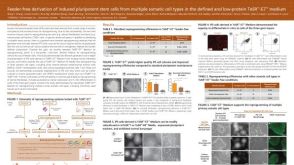 科学海报Feeder-Free Derivation of Induced Pluripotent Stem Cells from Multiple Somatic Cell Types in the Defined and Low-Protein TeSR™-E7™ Medium
 沪公网安备31010102008431号