A. Mostofinejad et al. (Aug 2025)
PLOS Computational Biology 21 8
In silico modeling of directed differentiation of induced pluripotent stem cells to definitive endoderm
Differentiation of embryonic stem cells and induced pluripotent stem cells (iPSCs) into endoderm derivatives,including thyroid,thymus,lungs,liver,and pancreas,has broad implications for disease modeling and therapy. We utilize and expand a model development approach previously outlined by the authors to construct a model for the directed differentiation of iPSCs into definitive endoderm (DE). Assuming discrete intermediate stages in the differentiation process with a homogeneous population in each stage,three lineage models with two,three,and four populations and three growth models are constructed. Additionally,three models for error distribution are defined,resulting in a total of 27 models. Experimental data obtained in vitro are used for model calibration,model selection,and final validation. Model selection suggests that no transitory state during differentiation expresses the DE biomarkers CD117 and CD184,a finding corroborated by existing literature. Additionally,space-limited growth models,such as logistic and Gompertz growth,outperform exponential growth. Validation of the inferred model with leave-out data results in prediction errors of 26.4%. Using the inferred model,it is predicted that the optimal differentiation period is between 1.9 and 2.4 days,plating populations closer to 300 000 cells per well result in the highest yield efficiency,and that iPSC differentiation outpaces the DE proliferation as the main driver of the population dynamics. We also demonstrate that the model can predict the effect of growth modulators on cell population dynamics. Our model serves as a valuable tool for optimizing differentiation protocols,providing insights into developmental biology.
View Publication
产品类型:
产品号#:
05110
85850
85857
产品名:
STEMdiff™定型内胚层检测试剂盒
mTeSR™1
mTeSR™1
S. Zuo et al. (Jul 2024)
Nature Communications 15
C-JUN overexpressing CAR-T cells in acute myeloid leukemia: preclinical characterization and phase I trial
Chimeric antigen receptor (CAR) T cells show suboptimal efficacy in acute myeloid leukemia (AML). We find that CAR T cells exposed to myeloid leukemia show impaired activation and cytolytic function,accompanied by impaired antigen receptor downstream calcium,ZAP70,ERK,and C-JUN signaling,compared to those exposed to B-cell leukemia. These defects are caused in part by the high expression of CD155 by AML. Overexpressing C-JUN,but not other antigen receptor downstream components,maximally restores anti-tumor function. C-JUN overexpression increases costimulatory molecules and cytokines through reinvigoration of ERK or transcriptional activation,independent of anti-exhaustion. We conduct an open-label,non-randomized,single-arm,phase I trial of C-JUN-overexpressing CAR-T in AML ( NCT04835519 ) with safety and efficacy as primary and secondary endpoints,respectively. Of the four patients treated,one has grade 4 (dose-limiting toxicity) and three have grade 1–2 cytokine release syndrome. Two patients have no detectable bone marrow blasts and one patient has blast reduction after treatment. Thus,overexpressing C-JUN endows CAR-T efficacy in AML. Subject terms: Translational research,Leukaemia
View Publication
产品类型:
产品号#:
100-0784
100-0956
10971
10981
10991
产品名:
ImmunoCult™ 人CD3/CD28 T细胞激活剂
ImmunoCult™ XF培养基
ImmunoCult™ 人CD3/CD28 T细胞激活剂
ImmunoCult™ XF 人T细胞扩增培养基,500 mL
ImmunoCult™ 人CD3/CD28 T细胞激活剂
Bruserud &O et al. (JUN 2002)
Haematologica 87 6 584--95
Leptin in human acute myelogenous leukemia: studies of in vivo levels and in vitro effects on native functional leukemia blasts.
BACKGROUND AND OBJECTIVES: Leptin receptors can be expressed by acute myelogenous leukemia (AML) cells,but the functional effects of leptin on native AML blasts have not been characterized in detail. We investigated systemic leptin levels in AML patients and in vitro effects of leptin on cultured AML blasts. DESIGN AND METHODS: Serum leptin levels were compared for patients with untreated AML and healthy controls. Native AML blasts were derived from a large group of consecutive patients,and effects of leptin on proliferation (suspension cultures and colony formation),constitutive cytokine secretion,differentiation and apoptosis regulation were assayed in vitro. RESULTS: Systemic leptin levels were decreased in patients with untreated AML,and leptin levels in acute leukemia patients were not altered during severe chemotherapy-induced cytopenia and complicating febrile neutropenia. In vitro studies demonstrated that leptin increased AML blast release of interleukin (IL) 1beta,IL6,tumor necrosis factor (TNF) alpha and granulocyte-macrophage colony-stimulating factor (GM-CSF). This enhancing effect showed no correlation with CD34 expression and was not dependent on the presence of serum,induction of differentiation or alteration of caspase 3 activity with decreased in vitro apoptosis. Leptin also increased spontaneous AML blast proliferation,whereas divergent effects on blast proliferation were observed in the presence of exogenous cytokines. The in vitro effects were usually observed at concentrations exceeding the systemic levels. INTERPRETATION AND CONCLUSIONS: Our results suggest that systemic leptin levels alone do not have a major influence on native AML blasts,but the systemic levels in combination with local leptin release in the bone marrow may affect the functional characteristics of these cells.
View Publication
Eichler H et al. (JAN 2003)
Stem cells (Dayton,Ohio) 21 2 208--16
Engraftment capacity of umbilical cord blood cells processed by either whole blood preparation or filtration.
Umbilical cord blood (UCB) preparation needs to be optimized in order to develop more simplified procedures for volume reduction,as well as to reduce the amount of contaminating cells within the final stem cell transplant. We evaluated a novel filter device (StemQuick((TM))E) and compared it with our routine buffy coat (BC) preparation procedure for the enrichment of hematopoietic progenitor cells (HPCs). Two groups of single or pooled UCB units were filtered (each n = 6),or equally divided in two halves and processed by filtration and BC preparation in parallel (n = 10). The engraftment capacity of UCB samples processed by whole blood (WB) preparation was compared with paired samples processed by filtration in the nonobese diabetic/severe combined immunodeficient (NOD/SCID) mouse animal model. Filtration of UCB units in the two groups with a mean volume of 87.8 and 120.7 ml,respectively,and nucleated cell (NC) content of 9.7 and 23.8 x 10(8) resulted in a sufficient mean cell recovery for mononucleated cells ([MNCs] 74.2%-77.5%),CD34(+) cells (76.3%-79.0%),and colony-forming cells (64.1%-86.3%). Moreover,we detected a relevant depletion of the transplants for RBCs (89.2%-90.0%) and platelets ([PLTs] 77.5%-86.1%). In contrast,the mean depletion rate using BC processing proved to be significantly different for PLTs (10%,p = 0.03) and RBCs (39.6%,p textless 0.01). The NC composition showed a highly significant increase in MNCs and a decrease in granulocytes after filtration (p textless 0.01),compared with a less significant MNC increase in the BC group (p textless 0.05). For mice transplanted with WB-derived progenitors,we observed a mean of 15.3% +/- 15.5% of human CD45(+) cells within the BM compared with 19.9% +/- 16.8% for mice transplanted with filter samples (p = 0.03). The mean percentage of human CD34(+) cells was 4.2% +/- 3.1% for WB samples and 4.5% +/- 3.2% for filter samples (p = 0.68). As the data of NOD/SCID mice transplantation demonstrated a significant engraftment capacity of HPCs processed by filtration,no negative effect on the engraftment potential of filtered UCB cells versus non-volume-reduced cells from WB transplants was found. The StemQuick((TM))E filter devices proved to be a useful tool for Good Manufacturing Practices conform enrichment of HPCs and MNCs out of UCB. Filtration enables a quick and standardized preparation of a volume-reduced UCB transplant,including a partial depletion of granulocytes,RBCs,and PLTs without the need for centrifugation. Therefore,it seems very probable that filter-processed UCB transplants will also result in sufficient hematopoietic reconstitution in humans.
View Publication
产品类型:
产品号#:
04434
04444
04535
04545
04564
04035
04034
04044
04435
04445
04534
04544
产品名:
MethoCult™ H4434 Classic
MethoCult™ H4434 Classic
MethoCult™ H4535 Enriched,不含EPO
MethoCult™ H4535 Enriched,不含EPO
MethoCult™ H4534 Classic 无 EPO 入门试剂盒
MethoCult™ 不含EPO的H4035 Optimum
MethoCult™ H4034 Optimum
MethoCult™ H4034 Optimum
MethoCult™ H4435 Enriched
MethoCult™ H4435 Enriched
MethoCult™ H4534 Classic(不含 EPO)
MethoCult™ H4534 Classic(不含 EPO)
Thanopoulou E et al. (JUN 2004)
Blood 103 11 4285--93
Engraftment of NOD/SCID-beta2 microglobulin null mice with multilineage neoplastic cells from patients with myelodysplastic syndrome.
The development of immunodeficient mouse xenograft models has greatly facilitated the investigation of some human hematopoietic malignancies,but application of this approach to the myelodysplastic syndromes (MDSs) has proven difficult. We now show that cells from most MDS patients (including all subtypes) repopulate nonobese diabetic-severe combined immunodeficient (scid)/scid-beta2 microglobulin null (NOD/SCID-beta2m(-/-)) mice at least transiently and produce abnormal differentiation patterns in this model. Normal marrow transplants initially produce predominantly erythroid cells and later predominantly B-lymphoid cells in these mice,whereas most MDS samples produced predominantly granulopoietic cells. In 4 of 4 MDS cases,the regenerated cells showed the same clonal markers (trisomy 8,n = 3; and 5q-,n = 1) as the original sample and,in one instance,regenerated trisomy 8(+) B-lymphoid as well as myeloid cells were identified. Interestingly,the enhanced growth of normal marrow obtained in NOD/SCID-beta2m(-/-) mice engineered to produce human interleukin-3,granulocyte-macrophage colony-stimulating factor,and Steel factor was seen only with 1 of 7 MDS samples. These findings support the concept that human MDS originates in a transplantable multilineage hematopoietic stem cell whose genetic alteration may affect patterns of differentiation and responsiveness to hematopoietic growth factors. They also demonstrate the potential of this new murine xenotransplant model for future investigations of MDS.
View Publication
Walker TL et al. (MAY 2008)
The Journal of neuroscience : the official journal of the Society for Neuroscience 28 20 5240--7
Latent stem and progenitor cells in the hippocampus are activated by neural excitation.
The regulated production of neurons in the hippocampus throughout life underpins important brain functions such as learning and memory. Surprisingly,however,studies have so far failed to identify a resident hippocampal stem cell capable of providing the renewable source of these neurons. Here,we report that depolarizing levels of KCl produce a threefold increase in the number of neurospheres generated from the adult mouse hippocampus. Most interestingly,however,depolarizing levels of KCl led to the emergence of a small subpopulation of precursors (approximately eight per hippocampus) with the capacity to generate very large neurospheres (textgreater 250 microm in diameter). Many of these contained cells that displayed the cardinal properties of stem cells: multipotentiality and self-renewal. In contrast,the same conditions led to the opposite effect in the other main neurogenic region of the brain,the subventricular zone,in which neurosphere numbers decreased by approximately 40% in response to depolarizing levels of KCl. Most importantly,we also show that the latent hippocampal progenitor population can be activated in vivo in response to prolonged neural activity found in status epilepticus. This work provides the first direct evidence of a latent precursor and stem cell population in the adult hippocampus,which is able to be activated by neural activity. Because the latent population is also demonstrated to reside in the aged animal,defining the precise mechanisms that underlie its activation may provide a means to combat the cognitive deficits associated with a decline in neurogenesis.
View Publication
产品类型:
产品号#:
05700
05701
05702
产品名:
NeuroCult™ 基础培养基(小鼠和大鼠)
NeuroCult™ 扩增添加物(小鼠和大鼠)
NeuroCult™扩增试剂盒(小鼠和大鼠)
Ammirati E et al. (DEC 2008)
Arteriosclerosis,thrombosis,and vascular biology 28 12 2305--11
Expansion of T-cell receptor zeta dim effector T cells in acute coronary syndromes.
OBJECTIVE: The T-cell receptor zeta (TCR zeta)-chain is a master sensor and regulator of lymphocyte responses. Loss of TCR zeta-chain expression has been documented during infectious and inflammatory diseases and defines a population of effector T cells (TCR zeta(dim) T cells) that migrate to inflamed tissues. We assessed the expression and functional correlates of circulating TCR zeta(dim) T cells in coronary artery disease. METHODS AND RESULTS: We examined the expression of TCR zeta-chain by flow cytometry in 140 subjects. Increased peripheral blood CD4(+) TCR zeta(dim) T cells were found in patients with acute coronary syndromes (ACS,n=66; median 5.3%,interquartile 2.6 to 9.1% of total CD4(+) T cells; Ptextless0.0001) compared to chronic stable angina (CSA,n=32; 1.6%; 1.0 to 4.1%) and controls (n=42; 1.5%; 0.5 to 2.9%). Such increase was significantly greater in ACS patients with elevated levels of C-reactive protein,and it persisted after the acute event. Moreover,TCR zeta(dim) cells were also more represented within CD8(+) T cell,NK,and CD4(+)CD28(null) T cell subsets in ACS compared to CSA and controls. Finally,CD4(+) and CD8(+) TCR zeta(dim) T cells isolated from ACS displayed an enhanced transendothelial migratory capacity. CONCLUSIONS: TCR zeta(dim) T cells,an effector T-cell subset with transendothelial migratory ability,are increased in ACS,and may be implicated in coronary instability.
View Publication
产品类型:
产品号#:
19051
19051RF
产品名:
EasySep™人T细胞富集试剂盒
RoboSep™ 人T细胞富集试剂盒含滤芯吸头
Mostert B et al. (AUG 2009)
Cancer treatment reviews 35 5 463--74
Circulating tumor cells (CTCs): detection methods and their clinical relevance in breast cancer.
The enumeration of circulating tumor cells has long been regarded as an attractive diagnostic tool,as circulating tumor cells are thought to reflect aggressiveness of the tumor and may assist in therapeutic decisions in patients with solid malignancies. However,implementation of this assay into clinical routine has been cumbersome,as a validated test was not available until recently. Circulating tumor cells are rare events which can be detected specifically only by using a combination of surface and intracellular markers,and only recently a number of technical advances have made their reliable detection possible. Most of these new techniques rely on a combination of an enrichment and a detection step. This review addresses the assays that have been described so far in the literature,including the enrichment and detection steps and the markers used in these assays. We have focused on breast cancer as most clinical studies on CTC detection so far have been done in these patients.
View Publication
产品类型:
产品号#:
15122
15162
15127
15167
产品名:
RosetteSep™人CD45去除抗体混合物
RosetteSep™人CD45去除抗体混合物
含抗CD36的 RosetteSep™ CTC富集抗体混合物
含抗CD36的 RosetteSep™ CTC富集抗体混合物
Wang Y et al. (MAY 2005)
Life sciences 77 1 39--51
The plant polyphenol butein inhibits testosterone-induced proliferation in breast cancer cells expressing aromatase.
Chalcones are precursor compounds for flavonoid synthesis in plants,and they can also be synthesized in laboratory. Previous study has documented some of the pharmacological applications of these compounds. Estrogen has long been associated with the initiation and promotion of breast cancer. Inhibiting estrogen synthesis can be effective in the prevention and treatment of the disease. Since most breast cancers received estrogen supplied from local tissues,we employed a breast cancer cell line expressing aromatase to screen for the inhibitory potentials of five hydroxychalcones,i.e. 2-hydroxychalcone,2'-hydroxychalcone,4-hydroxychalcone,4,2',4'-trihydroxy-chalcone (isoquiritigenin),3,4,2',4'-tetrahydroxychalcone (butein). In the preliminary results,butein was found to be the strongest inhibitor among the tested compounds,and its IC(50) value was 3.75 microM. Subsequent enzyme kinetic study revealed that butein acted on aromatase with a mixed type of inhibition and the K(i) value was determined to be 0.32 microM. Cell proliferation assay indicated that the cell number increased by 10 nM-testosterone treatment was significantly reduced by 5 microM butein,and the administration of flutamide could not reverse the effect. The present study illustrated that butein was an aromatase inhibitor and a potential natural alternative for the chemoprevention or therapy of breast cancer.
View Publication
产品类型:
产品号#:
73462
73464
产品名:
Butein
Choi SA et al. (JAN 2014)
European Journal of Cancer 50 1 137--149
Identification of brain tumour initiating cells using the stem cell marker aldehyde dehydrogenase
Aldehyde dehydrogenase (ALDH) has been identified in stem cells from both normal and cancerous tissues. This study aimed to evaluate the potential of ALDH as a universal brain tumour initiating cell (BTIC) marker applicable to primary brain tumours and their biological role in maintaining stem cell status. Cells from various primary brain tumours (24paediatric and 6 adult brain tumours) were stained with Aldefluor and sorted by flow cytometry. We investigated the impact of ALDH expression on BTIC characteristics in vitro and on tumourigenic potential in vivo. Primary brain tumours showed universal expression of ALDH,with 0.3-28.9% of the cells in various tumours identified as ALDH(+). The proportion of CD133(+) cells within ALDH(+) is higher than ALDH cells. ALDH(+) cells generate neurospheres with high proliferative potential,express neural stem cell markers and differentiate into multiple nervous system lineages. ALDH(+) cells tend to show high expression of induced pluripotent stem cell-related genes. Notably,targeted knockdown of ALDH1 by shRNA interference in BTICs potently disturbed their self-renewing ability. After 3months,ALDH(+) cells gave rise to tumours in 93% of mice whereas ALDH cells did not. The characteristic pathology of mice brain tumours from ALDH(+) cells was similar to that of human brain tumours,and these cells are highly proliferative in vivo. Our data suggest that primary brain tumours contain distinct subpopulations of cells that have high expression levels of ALDH and BTIC characteristics. ALDH might be a potential therapeutic target applicable to primary brain tumours.
View Publication


 EasySep™小鼠TIL(CD45)正选试剂盒





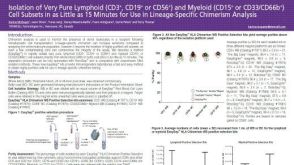 科学海报Isolation of Very Pure Lymphoid (CD3+, CD19+ or CD56+) and Myeloid (CD15+ or CD33/CD66b+) Cell Subsets in as Little as 15 Minutes for Use in Lineage-Specific Chimerism Analysis

 沪公网安备31010102008431号