Sala E et al. (MAY 2008)
Molecular cancer research : MCR 6 5 751--9
BRAF silencing by short hairpin RNA or chemical blockade by PLX4032 leads to different responses in melanoma and thyroid carcinoma cells.
BRAF-activating mutations have been reported in several types of cancer,including melanoma ( approximately 70% of cases),thyroid (30-70%),ovarian (15-30%),and colorectal cancer (5-20%). Mutant BRAF has constitutive kinase activity and causes hyperactivation of the mitogen-activated protein kinase pathway. BRAF silencing induces regression of melanoma xenografts,indicating the essential role of BRAF for cell survival. We set up an inducible short hairpin RNA system to compare the role of oncogenic BRAF in thyroid carcinoma versus melanoma cells. Although BRAF knockdown led to apoptosis in the melanoma cell line A375,the anaplastic thyroid carcinoma cell ARO underwent growth arrest upon silencing,with little or no cell death. Reexpression of the thyroid differentiation marker,sodium iodide symporter,was induced after long-term silencing. The different outcome of BRAF down-regulation in the two cell lines was associated with an opposite regulation of p21(CIP1/WAF1) expression levels in response to the block of the BRAF mitogenic signal. These results were confirmed using a specific BRAF small-molecule inhibitor,PLX4032. Restoration of p21(CIP1/WAF1) expression rescued melanoma cells from death. Altogether,our data indicate that oncogenic BRAF inhibition can have a different effect on cell fate depending on the cellular type. Furthermore,we suggest that a BRAF-independent mechanism of cell survival exists in anaplastic thyroid cancer cells.
View Publication
产品类型:
产品号#:
73332
73334
产品名:
R. A. Wilcox et al. (OCT 2009)
Blood 114 14 2936--44
Monocytes promote tumor cell survival in T-cell lymphoproliferative disorders and are impaired in their ability to differentiate into mature dendritic cells.
A variety of nonmalignant cells present in the tumor microenvironment promotes tumorigenesis by stimulating tumor cell growth and metastasis or suppressing host immunity. The role of such stromal cells in T-cell lymphoproliferative disorders is incompletely understood. Monocyte-derived cells (MDCs),including professional antigen-presenting cells such as dendritic cells (DCs),play a central role in T-cell biology. Here,we provide evidence that monocytes promote the survival of malignant T cells and demonstrate that MDCs are abundant within the tumor microenvironment of T cell-derived lymphomas. Malignant T cells were observed to remain viable during in vitro culture with autologous monocytes,but cell death was significantly increased after monocyte depletion. Furthermore,monocytes prevent the induction of cell death in T-cell lymphoma lines in response to either serum starvation or doxorubicin,and promote the engraftment of these cells in nonobese diabetic/severe combined immunodeficient mice. Monocytes are actively recruited to the tumor microenvironment by CCL5 (RANTES),where their differentiation into mature DCs is impaired by tumor-derived interleukin-10. Collectively,the data presented demonstrate a previously undescribed role for monocytes in T-cell lymphoproliferative disorders.
View Publication
产品类型:
产品号#:
19058
19058RF
100-1525
产品名:
EasySep™人单核细胞富集试剂盒(不去除CD16)
RoboSep™ 人单核细胞富集试剂盒(不去除CD16)含滤芯吸头
EasySep™人单核细胞富集试剂盒(不去除CD16)
Neumeister V et al. (MAY 2010)
The American journal of pathology 176 5 2131--8
In situ identification of putative cancer stem cells by multiplexing ALDH1, CD44, and cytokeratin identifies breast cancer patients with poor prognosis.
A subset of cells,tentatively called cancer stem cells (CSCs),in breast cancer have been associated with tumor initiation,drug resistance,and tumor persistence or aggressiveness. They are characterized by CD44 positivity,CD24 negativity,and/or ALDH1 positivity in flow cytometric studies. We hypothesized that the frequency or density of these cells may be associated with more aggressive tumor behavior. We borrowed these multiplexed,flow-based methods to develop an in situ method to define CSCs in formalin-fixed paraffin-embedded breast cancer tissue,with the goal of assessing the prognostic value of the presence of CSCs in breast cancer. Using a retrospective collection of 321 node-negative and 318 node-positive patients with a mean follow-up time of 12.6 years,we assessed TMAs using the AQUA method for quantitative immunofluorescence. Using a multiplexed assay for ALDH1,CD44,and cytokeratin to measure the coexpression of these proteins,putative CSCs appear in variable sized clusters and in 27 cases (of 490),which showed significantly worse outcome (log rank P = 0.0003). Multivariate analysis showed that this marker combination is independent of tumor size,histological grade,nodal status,ER-,PR,- and HER2-status. In this cohort,ALDH1 expression alone does not significantly predict outcome. We conclude that the multiplexed method of in situ identification of putative CSCs identifies high risk patients in breast cancer.
View Publication
产品类型:
产品号#:
01700
01705
01702
产品名:
ALDEFLUOR™ 试剂盒
ALDEFLUOR™ DEAB试剂, 1.5 mM, 1 mL
ALDEFLUOR™检测缓冲液
Kim S-J et al. (AUG 2010)
Neuroscience letters 479 3 292--6
Omega-3 and omega-6 fatty acids suppress ER- and oxidative stress in cultured neurons and neuronal progenitor cells from mice lacking PPT1.
Reactive oxygen species (ROS) damage brain lipids,carbohydrates,proteins,as well as DNA and may contribute to neurodegeneration. We previously reported that ER- and oxidative stress cause neuronal apoptosis in infantile neuronal ceroid lipofuscinosis (INCL),a lethal neurodegenerative storage disease,caused by palmitoyl-protein thioesterase-1 (PPT1) deficiency. Polyunsaturated fatty acids (PUFA) are essential components of cell membrane phospholipids in the brain and excessive ROS may cause oxidative damage of PUFA leading to neuronal death. Using cultured neurons and neuroprogenitor cells from mice lacking Ppt1,which mimic INCL,we demonstrate that Ppt1-deficient neurons and neuroprogenitor cells contain high levels of ROS,which may cause peroxidation of PUFA and render them incapable of providing protection against oxidative stress. We tested whether treatment of these cells with omega-3 or omega-6 PUFA protects the neurons and neuroprogenitor cells from oxidative stress and suppress apoptosis. We report here that both omega-3 and omega-6 fatty acids protect the Ppt1-deficient cells from ER- as well as oxidative stress and suppress apoptosis. Our results suggest that PUFA supplementation may have neuroprotective effects in INCL.
View Publication
产品类型:
产品号#:
05700
05701
05702
产品名:
NeuroCult™ 基础培养基(小鼠和大鼠)
NeuroCult™ 扩增添加物(小鼠和大鼠)
NeuroCult™扩增试剂盒(小鼠和大鼠)
Qiu W et al. (SEP 2011)
Biochemical and biophysical research communications 413 1 98--104
Activation of non-canonical Wnt/JNK pathway by Wnt3a is associated with differentiation fate determination of human bone marrow stromal (mesenchymal) stem cells.
The canonical Wnt signaling pathway can determine human bone marrow stromal (mesenchymal) stem cell (hMSC) differentiation fate into osteoblast or adipocyte lineages. However,its downstream targets in MSC are not well characterized. Thus,using DNA microarrays,we compared global gene expression patterns induced by Wnt3a treatment in two hMSC lines: hMSC-LRP5(T253) and hMSC-LRP5(T244) cells carrying known mutations of Wnt co-receptor LRP5 (T253I or T244M) that either enhances or represses canonical Wnt signaling,respectively. Wnt3a treatment of hMSC activated not only canonical Wnt signaling,but also the non-canonical Wnt/JNK pathway through upregulation of several non-canonical Wnt components e.g. naked cuticle 1 homolog (NKD1) and WNT11. Activation of the non-canonical Wnt/JNK pathway by anisomycin enhanced osteoblast differentiation whereas its inhibition by SP600125 enhanced adipocyte differentiation of hMSC. In conclusion,canonical and non-canonical Wnt signaling cooperate in determining MSC differentiation fate.
View Publication
产品类型:
产品号#:
72642
产品名:
SP600125
W. Dudka et al. (dec 2022)
BMC cancer 22 1 1254
Targeting integrated stress response with ISRIB combined with imatinib treatment attenuates RAS/RAF/MAPK and STAT5 signaling and eradicates chronic myeloid leukemia cells.
The integrated stress response (ISR) facilitates cellular adaptation to unfavorable conditions by reprogramming the cellular response. ISR activation was reported in neurological disorders and solid tumors; however,the function of ISR and its role as a possible therapeutic target in hematological malignancies still remain largely unexplored. Previously,we showed that the ISR is activated in chronic myeloid leukemia (CML) cells and correlates with blastic transformation and tyrosine kinase inhibitor (TKI) resistance. Moreover,the ISR was additionally activated in response to imatinib as a type of protective internal signaling. Here,we show that ISR inhibition combined with imatinib treatment sensitized and more effectively eradicated leukemic cells both in vitro and in vivo compared to treatment with single agents. The combined treatment specifically inhibited the STAT5 and RAS/RAF/MEK/ERK pathways,which are recognized as drivers of resistance. Mechanistically,this drug combination attenuated both interacting signaling networks,leading to BCR-ABL1- and ISR-dependent STAT5 activation. Consequently,leukemia engraftment in patient-derived xenograft mice bearing CD34+ TKI-resistant CML blasts carrying PTPN11 mutation responsible for hyperactivation of the RAS/RAF/MAPK and JAK/STAT5 pathways was decreased upon double treatment. This correlated with the downregulation of genes related to the RAS/RAF/MAPK,JAK/STAT5 and stress response pathways and was associated with lower expression of STAT5-target genes regulating proliferation,viability and the stress response. Collectively,these findings highlight the effect of imatinib plus ISRIB in the eradication of leukemic cells resistant to TKIs and suggest potential clinical benefits for leukemia patients with TKI resistance related to RAS/RAF/MAPK or STAT5 signaling. We propose that personalized treatment based on the genetic selection of patients carrying mutations that cause overactivation of the targeted pathways and therefore make their sensitivity to such treatment probable should be considered as a possible future direction in leukemia treatment.
View Publication
产品类型:
产品号#:
产品名:
K. Kusaba et al. (Oct 2024)
International Journal of Molecular Sciences 25 20
Targeting Oxidative Phosphorylation with a Novel Thiophene Carboxamide Increases the Efficacy of Imatinib against Leukemic Stem Cells in Chronic Myeloid Leukemia
Patients with chronic myeloid leukemia (CML) respond to tyrosine kinase inhibitors (TKIs); however,CML leukemic stem cells (LSCs) exhibit BCR::ABL kinase-independent growth and are insensitive to TKIs,leading to disease relapse. To prevent this,new therapies targeting CML-LSCs are needed. Rates of mitochondria-mediated oxidative phosphorylation (OXPHOS) in CD34 + CML cells within the primitive CML cell population are higher than those in normal undifferentiated hematopoietic cells; therefore,the inhibition of OXPHOS in CML-LSCs may be a potential cure for CML. NK-128 (C 33 H 61 NO 5 S) is a structurally simplified analog of JCI-20679,the design of which was based on annonaceous acetogenins. NK-128 exhibits antitumor activity against glioblastoma and human colon cancer cells by inhibiting OXPHOS and activating AMP-activated protein kinase (AMPK). Here,we demonstrate that NK-128 effectively suppresses the growth of CML cell lines and that the combination of imatinib and NK-128 is more potent than either alone in a CML xenograft mouse model. We also found that NK-128 inhibits colony formation by CD34 + CML cells isolated from the bone marrow of untreated CML patients. Taken together,these findings suggest that targeting OXPHOS is a beneficial approach to eliminating CML-LSCs,and may improve the treatment of CML.
View Publication
产品类型:
产品号#:
04435
04445
产品名:
MethoCult™ H4435 Enriched
MethoCult™ H4435 Enriched
Trzonkowski P et al. (OCT 2009)
Clinical immunology (Orlando,Fla.) 133 1 22--6
First-in-man clinical results of the treatment of patients with graft versus host disease with human ex vivo expanded CD4+CD25+CD127- T regulatory cells.
Here,we describe a procedure and first-in-man clinical effects of adoptive transfer of ex vivo expanded CD4+CD25+CD127- T regulatory cells (Tregs) in the treatment of graft versus host disease (GvHD). The cells were sorted from buffy coats taken from two family donors,expanded ex vivo and transferred to respective recipients who suffered from either acute or chronic GvHD. The therapy allowed for significant alleviation of the symptoms and reduction of pharmacologic immunosuppression in the case of chronic GvHD,while in the case of grade IV acute GvHD it only transiently improved the condition,for the longest time within all immunosuppressants used nonetheless.
View Publication
产品类型:
产品号#:
19052
19052RF
产品名:
EasySep™人CD4+ T细胞富集试剂盒
RoboSep™ 人CD4+ T细胞富集试剂盒含滤芯吸头
M. Holliday et al. ( 2018)
Stem cell research 33 269--273
Development of induced pluripotent stem cells from a patient with hypertrophic cardiomyopathy who carries the pathogenic myosin heavy chain 7 mutation p.Arg403Gln.
Hypertrophic cardiomyopathy (HCM) is an inherited cardiomyopathy characterized by left ventricular hypertrophy ≥15 mm in the absence of loading conditions. HCM has a prevalence of up to one in 200,and can result in significant adverse outcomes including heart failure and sudden cardiac death. An induced pluripotent stem cell (iPSC) line was generated from peripheral blood mononuclear cells obtained from the whole blood of a 38-year-old female patient with HCM in which genetic testing identified the well-known pathogenic p.Arg403Gln mutation in myosin heavy chain 7. iPSCs express pluripotency markers,demonstrate trilineage differentiation capacity,and display a normal 46,XX female karyotype. This resource will allow further assessment of the pathophysiological development of HCM.
View Publication
SFN 2016,Advances in Drug Discovery 2017,iForum 2017
产品号#:
05790
05792
05793
05794
05795
R1061
R1034
R1088
R1032
产品名:
BrainPhys™神经元培养基
BrainPhys™神经元培养基和SM1试剂盒
BrainPhys™ 神经元培养基N2-A和SM1试剂盒
BrainPhys™原代神经元试剂盒
BrainPhys™ hPSC 神经元试剂盒
Gonç et al. ( 2016)
PloS one 11 3 e0150407
Effect of Melatonin in Epithelial Mesenchymal Transition Markers and Invasive Properties of Breast Cancer Stem Cells of Canine and Human Cell Lines.
Cancer stem cells (CSCs) have been associated with metastasis and therapeutic resistance and can be generated via epithelial mesenchymal transition (EMT). Some studies suggest that the hormone melatonin acts in CSCs and may participate in the inhibition of the EMT. The objectives of this study were to evaluate the formation of mammospheres from the canine and human breast cancer cell lines,CMT-U229 and MCF-7,and the effects of melatonin treatment on the modulation of stem cell and EMT molecular markers: OCT4,E-cadherin,N-cadherin and vimentin,as well as on cell viability and invasiveness of the cells from mammospheres. The CMT-U229 and MCF-7 cell lines were subjected to three-dimensional culture in special medium for stem cells. The phenotype of mammospheres was first evaluated by flow cytometry (CD44+/CD24low/- marking). Cell viability was measured by MTT colorimetric assay and the expression of the proteins OCT4,E-cadherin,N-cadherin and vimentin was evaluated by immunofluorescence and quantified by optical densitometry. The analysis of cell migration and invasion was performed in Boyden Chamber. Flow cytometry proved the stem cell phenotype with CD44+/CD24low/- positive marking for both cell lines. Cell viability of CMT-U229 and MCF-7 cells was reduced after treatment with 1mM melatonin for 24 h (Ptextless0.05). Immunofluorescence staining showed increased E-cadherin expression (Ptextless0.05) and decreased expression of OCT4,N-cadherin and vimentin (Ptextless0.05) in both cell lines after treatment with 1 mM melatonin for 24 hours. Moreover,treatment with melatonin was able to reduce cell migration and invasion in both cell lines when compared to control group (Ptextless0.05). Our results demonstrate that melatonin shows an inhibitory role in the viability and invasiveness of breast cancer mammospheres as well as in modulating the expression of proteins related to EMT in breast CSCs,suggesting its potential anti-metastatic role in canine and human breast cancer cell lines.
View Publication
产品类型:
产品号#:
05620
产品名:
MammoCult™ 人源培养基套装
Jan M et al. (MAR 2011)
Proceedings of the National Academy of Sciences of the United States of America 108 12 5009--14
Prospective separation of normal and leukemic stem cells based on differential expression of TIM3, a human acute myeloid leukemia stem cell marker.
Hematopoietic tissues in acute myeloid leukemia (AML) patients contain both leukemia stem cells (LSC) and residual normal hematopoietic stem cells (HSC). The ability to prospectively separate residual HSC from LSC would enable important scientific and clinical investigation including the possibility of purged autologous hematopoietic cell transplants. We report here the identification of TIM3 as an AML stem cell surface marker more highly expressed on multiple specimens of AML LSC than on normal bone marrow HSC. TIM3 expression was detected in all cytogenetic subgroups of AML,but was significantly higher in AML-associated with core binding factor translocations or mutations in CEBPA. By assessing engraftment in NOD/SCID/IL2Rγ-null mice,we determined that HSC function resides predominantly in the TIM3-negative fraction of normal bone marrow,whereas LSC function from multiple AML specimens resides predominantly in the TIM3-positive compartment. Significantly,differential TIM3 expression enabled the prospective separation of HSC from LSC in the majority of AML specimens with detectable residual HSC function.
View Publication


 EasySep™小鼠TIL(CD45)正选试剂盒





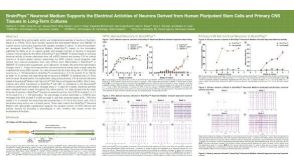 科学海报BrainPhys™ Neuronal Medium Supports the Electrical Activities of Neurons Derived from Human Pluripotent Stem Cells and Primary CNS Tissues in Long-Term Cultures
 沪公网安备31010102008431号