Ebstein F et al. (JUN 2004)
American journal of respiratory and critical care medicine 169 12 1322--30
Cytotoxic T cell responses against mesothelioma by apoptotic cell-pulsed dendritic cells.
Malignant pleural mesothelioma is an uncommon tumor largely confined to the thoracic cavity,which is resistant to conventional therapies,therefore prompting an intensive search for effective treatment alternatives. This study focuses on dendritic cell (DC) vaccination for malignant pleural mesothelioma and evaluates the in vitro efficacy of antigen-loaded DC-based vaccines for the induction of major histocompatibility complex Class I-restricted antimesothelioma cytotoxic T lymphocyte responses. The source of tumor-associated antigens for HLA-A2(+) DCs from healthy donors was apoptotic HLA-A2(-) mesothelioma cells either lacking or expressing heat shock protein 70 according to whether tumor cells were heat shocked or not before ultraviolet-mediated apoptosis. Our results show that both apoptotic preparations were equivalent regarding the responsiveness of DCs to combined treatment with tumor necrosis factor-alpha and poly(inosinic-cytidylic) acid,as determined by similar increased expression of costimulatory molecules and interleukin-12 production. However,only DCs loaded with apoptotic heat shock protein 70-expressing cells were found to be potent in vitro inducers of cytotoxic T lymphocyte activity against HLA-A2(+) mesothelioma cells. Such elicited cytotoxic T lymphocytes also exhibit cytotoxic activity against an HLA-A2(+) melanoma cell line,suggesting recognition of shared antigens. These findings therefore carry the potential of offering an alternative,promising approach for the therapy of patients with malignant pleural mesothelioma.
View Publication
产品类型:
产品号#:
15028
15068
产品名:
RosetteSep™人单核细胞富集抗体混合物
RosetteSep™人单核细胞富集抗体混合物
Houtenbos I et al. (MAR 2006)
Haematologica 91 3 348--55
Leukemia-derived dendritic cells: towards clinical vaccination protocols in acute myeloid leukemia.
The ability of acute myeloid leukemic (AML) blasts to differentiate into leukemic dendritic cells (DC) thus acquiring the potential to present known and unknown leukemic antigens efficiently,holds promise as a possible new treatment for AML patients with minimal residual disease. Recent advances in culture methods have made the clinical use of leukemic DC feasible. However,additional measures appear to be essential in order to potentiate vaccines and to overcome the intrinsic tolerant state of the patients immune system. This review describes ways to improve AML-DC vaccines and discusses critical aspects concerning the development of clinical vaccination protocols.
View Publication
产品类型:
产品号#:
09600
09650
产品名:
StemSpan™ SFEM
StemSpan™ SFEM
Lee-Chang C et al. (APR 2016)
Journal of Immunology 196 8 3385--97
Aging Converts Innate B1a Cells into Potent CD8+ T Cell Inducers.
B cell dysregulation in aging is thought to mostly occur in conventional B2 cells without affecting innate B1 cells. Elderly humans and mice also accumulate 4-1BBL(+)MHC class-I(Hi)CD86(Hi)B cells of unknown origin. In this article,we report that these cells,termed 4BL cells,are activated murine and possibly human B1a cells. The activation is mediated by aging human monocytes and murine peritoneal macrophages. They induce expression and activation of 4-1BBL and IFN-γR1 on B1a cells to subsequently upregulate membrane TNF-α and CD86. As a result,activated B1a/4BL cells induce expression of granzyme B in CD8(+)T cells by targeting TNFR2 via membrane TNF-α and providing costimulation with CD86. Thus,for the first time,to our knowledge,these results indicate that aging affects the function of B1a cells. Upon aging,these cells lose their tumor-supporting activity and become inducers of potentially antitumor and autoimmune CD8(+)T cells.
View Publication
产品类型:
产品号#:
19853
19853RF
19854
19854RF
产品名:
EasySep™小鼠CD8+ T细胞分选试剂盒
RoboSep™ 小鼠CD8+ T细胞分选试剂盒
EasySep™小鼠B细胞分选试剂盒
RoboSep™ 小鼠B细胞分选试剂盒
Gallia GL et al. (FEB 2009)
Molecular cancer therapeutics 8 2 386--93
Inhibition of Akt inhibits growth of glioblastoma and glioblastoma stem-like cells.
A commonly activated signaling cascade in many human malignancies,including glioblastoma multiforme,is the Akt pathway. This pathway can be activated via numerous upstream alterations including genomic amplification of epidermal growth factor receptor,PTEN deletion,or PIK3CA mutations. In this study,we screened phosphatidylinositol 3-kinase/Akt small-molecule inhibitors in an isogenic cell culture system with an activated Akt pathway secondary to a PIK3CA mutation. One small molecule,A-443654,showed the greatest selective inhibition of cells with the mutant phenotype. Based on these findings,this inhibitor was screened in vitro against a panel of glioblastoma multiforme cell lines. All cell lines tested were sensitive to A-443654 with a mean IC(50) of approximately 150 nmol/L. An analogue of A-443654,methylated at a region that blocks Akt binding,was on average 36-fold less active. Caspase assays and dual flow cytometric analysis showed an apoptotic mechanism of cell death. A-443654 was further tested in a rat intracranial model of glioblastoma multiforme. Animals treated intracranially with polymers containing A-443654 had significantly extended survival compared with control animals; animals survived 79% and 43% longer than controls when A-443654-containing polymers were implanted simultaneously or in a delayed fashion,respectively. This small molecule also inhibited glioblastoma multiforme stem-like cells with similar efficacy compared with traditionally cultured glioblastoma multiforme cell lines. These results suggest that local delivery of an Akt small-molecule inhibitor is effective against experimental intracranial glioma,with no observed resistance to glioblastoma multiforme cells grown in stem cell conditions.
View Publication
产品类型:
产品号#:
05751
产品名:
NeuroCult™ NS-A 扩增试剂盒(人)
Sun N et al. (JAN 2009)
Nature protocols 4 8 1192--201
Long term non-invasive imaging of embryonic stem cells using reporter genes.
Development of non-invasive and accurate methods to track cell fate after delivery will greatly expedite transition of embryonic stem (ES) cell therapy to the clinic. In this protocol,we describe the in vivo monitoring of stem cell survival,proliferation and migration using reporter genes. We established stable ES cell lines constitutively expressing double fusion (DF; enhanced green fluorescent protein and firefly luciferase) or triple fusion (TF; monomeric red fluorescent protein,firefly luciferase and herpes simplex virus thymidine kinase (HSVtk)) reporter genes using lentiviral transduction. We used fluorescence-activated cell sorting to purify these populations in vitro,bioluminescence imaging and positron emission tomography (PET) imaging to track them in vivo and fluorescence immunostaining to confirm the results ex vivo. Unlike other methods of cell tracking,such as iron particle and radionuclide labeling,reporter genes are inherited genetically and can be used to monitor cell proliferation and survival for the lifetime of transplanted cells and their progeny.
View Publication
产品类型:
产品号#:
05850
05857
05870
05875
85850
85857
85870
85875
产品名:
mTeSR™1
mTeSR™1
Hale JS et al. (JUN 2010)
Journal of immunology (Baltimore,Md. : 1950) 184 11 5964--8
Cutting Edge: Rag deletion in peripheral T cells blocks TCR revision.
Mature CD4(+)Vbeta5(+) T cells that recognize a peripherally expressed endogenous superantigen are tolerized either by deletion or TCR revision. In Vbeta5 transgenic mice,this latter tolerance pathway results in the appearance of CD4(+)Vbeta5(-)TCRbeta(+) T cells,coinciding with Rag1,Rag2,and TdT expression and the accumulation of V(beta)-DJ(beta) recombination intermediates in peripheral CD4(+) T cells. Because postthymic RAG-dependent TCR rearrangement has remained controversial,we sought to definitively determine whether TCR revision is an extrathymic process that occurs in mature peripheral T cells. We show in this study that Rag deletion in post-positive selection T cells in Vbeta5 transgenic mice blocks TCR revision in vivo and that mature peripheral T cells sorted to remove cells bearing endogenous TCRbeta-chains can express newly generated TCRbeta molecules in adoptive hosts. These findings unambiguously demonstrate postthymic,RAG-dependent TCR rearrangement and define TCR revision as a tolerance pathway that targets mature peripheral CD4(+) T cells.
View Publication
产品类型:
产品号#:
19751
19751RF
产品名:
Calvanese V et al. (AUG 2010)
Proceedings of the National Academy of Sciences of the United States of America 107 31 13736--41
Sirtuin 1 regulation of developmental genes during differentiation of stem cells
The longevity-promoting NAD+-dependent class III histone deacetylase Sirtuin 1 (SIRT1) is involved in stem cell function by controlling cell fate decision and/or by regulating the p53-dependent expression of NANOG. We show that SIRT1 is down-regulated precisely during human embryonic stem cell differentiation at both mRNA and protein levels and that the decrease in Sirt1 mRNA is mediated by a molecular pathway that involves the RNA-binding protein HuR and the arginine methyltransferase coactivator-associated arginine methyltransferase 1 (CARM1). SIRT1 down-regulation leads to reactivation of key developmental genes such as the neuroretinal morphogenesis effectors DLL4,TBX3,and PAX6,which are epigenetically repressed by this histone deacetylase in pluripotent human embryonic stem cells. Our results indicate that SIRT1 is regulated during stem cell differentiation in the context of a yet-unknown epigenetic pathway that controls specific developmental genes in embryonic stem cells.
View Publication
产品类型:
产品号#:
05850
05857
05870
05875
85850
85857
85870
85875
产品名:
mTeSR™1
mTeSR™1
Costantini C et al. (OCT 2010)
International immunology 22 10 827--38
Neutrophil activation and survival are modulated by interaction with NK cells.
It is increasingly evident that neutrophils are able to cross-talk with other leukocytes to shape ongoing inflammatory and immune responses. In this study,we analyzed whether human NK cells may influence the survival and activation of neutrophils under co-culture conditions. We report that NK cells exposed to either IL-15 or IL-18 alone strongly protect the survival of neutrophils via the release of IFNγ and granulocyte macrophage colony-stimulating factor (GM-CSF) plus IFNγ,respectively,and cause a slight up-regulation of neutrophil CD64 and CD11b expression. In comparison,NK cells exposed to both IL-15 and IL-18 show a lesser ability to increase the survival of neutrophils but can more potently up-regulate CD64 and CD11b expression,as well as induce the de novo surface expression of CD69,in neutrophils. Analysis of the events occurring in neutrophil/NK co-cultures exposed to IL-15 plus IL-18 revealed that (i) neutrophil survival is positively affected by NK-derived GM-CSF but negatively influenced by a CD18-dependent neutrophil/NK contact,(ii) NK-derived IFNγ is almost entirely responsible for the induction of CD64,(iii) both soluble factors (primarily GM-CSF) and direct cell-cell contact up-regulate CD11b and CD69 and (iv) NK-derived GM-CSF induces the expression of biologically active heparin-binding EGF-like growth factor (HB-EGF) in neutrophils. Finally,we demonstrate that NK cells can also express HB-EGF when stimulated with either IL-2 or IL-15,yet independently of endogenous GM-CSF. Altogether,our results define a novel interaction within the innate immune system whereby NK cells,by directly modulating neutrophil functions,might contribute to the pathogenesis of inflammatory diseases.
View Publication
产品类型:
产品号#:
19257
19257RF
19055
19055RF
产品名:
EasySep™人NK细胞富集试剂盒
RoboSep™ 人NK细胞富集试剂盒含滤芯吸头
Tolar J et al. (APR 2011)
The Journal of investigative dermatology 131 4 848--56
Induced pluripotent stem cells from individuals with recessive dystrophic epidermolysis bullosa.
Recessive dystrophic epidermolysis bullosa (RDEB) is an inherited blistering skin disorder caused by mutations in the COL7A1 gene-encoding type VII collagen (Col7),the major component of anchoring fibrils at the dermal-epidermal junction. Individuals with RDEB develop painful blisters and mucosal erosions,and currently,there are no effective forms of therapy. Nevertheless,some advances in patient therapy are being made,and cell-based therapies with mesenchymal and hematopoietic cells have shown promise in early clinical trials. To establish a foundation for personalized,gene-corrected,patient-specific cell transfer,we generated induced pluripotent stem (iPS) cells from three subjects with RDEB (RDEB iPS cells). We found that Col7 was not required for stem cell renewal and that RDEB iPS cells could be differentiated into both hematopoietic and nonhematopoietic lineages. The specific epigenetic profile associated with de-differentiation of RDEB fibroblasts and keratinocytes into RDEB iPS cells was similar to that observed in wild-type (WT) iPS cells. Importantly,human WT and RDEB iPS cells differentiated in vivo into structures resembling the skin. Gene-corrected RDEB iPS cells expressed Col7. These data identify the potential of RDEB iPS cells to generate autologous hematopoietic grafts and skin cells with the inherent capacity to treat skin and mucosal erosions that typify this genodermatosis.
View Publication
产品类型:
产品号#:
27845
27945
27840
27865
27940
27965
产品名:
Axlund SD et al. (FEB 2013)
Hormones & cancer 4 1 36--49
Progesterone-inducible cytokeratin 5-positive cells in luminal breast cancer exhibit progenitor properties.
Progestins play a deleterious role in the onset of breast cancer,yet their influence on existing breast cancer and tumor progression is not well understood. In luminal estrogen receptor (ER)- and progesterone receptor (PR)-positive breast cancer,progestins induce a fraction of cells to express cytokeratin 5 (CK5),a marker of basal epithelial and progenitor cells in the normal breast. CK5(+) cells lose expression of ER and PR and are relatively quiescent,increasing their resistance to endocrine and chemotherapy compared to intratumoral CK5(-)ER(+)PR(+) cells. Characterization of live CK5(+) cells has been hampered by a lack of means for their direct isolation. Here,we describe optical (GFP) and bioluminescent (luciferase) reporter models to quantitate and isolate CK5(+) cells in luminal breast cancer cell lines utilizing the human KRT5 gene promoter and a viral vector approach. Using this system,we confirmed that the induction of GFP(+)/CK5(+) cells is specific to progestins,is dependent on PR,can be blocked by antiprogestins,and does not occur with other steroid hormones. Progestin-induced,fluorescence-activated cell sorting-isolated CK5(+) cells had lower ER and PR mRNA,were slower cycling,and were relatively more invasive and sphere forming than their CK5(-) counterparts in vitro. Repeated progestin treatment and selection of GFP(+) cells enriched for a persistent population of CK5(+) cells,suggesting that this transition can be semi-permanent. These data support that in PR(+) breast cancers,progestins induce a subpopulation of CK5(+)ER(-)PR(-) cells with enhanced progenitor properties and have implications for treatment resistance and recurrence in luminal breast cancer.
View Publication


 EasySep™小鼠TIL(CD45)正选试剂盒




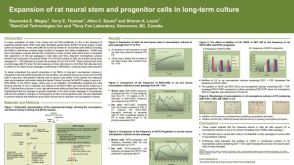 科学海报Expansion of Rat Neural Stem and Progenitor Cells in Long-Term Culture

 沪公网安备31010102008431号