Wildum S et al. (AUG 2006)
Journal of virology 80 16 8047--59
Contribution of Vpu, Env, and Nef to CD4 down-modulation and resistance of human immunodeficiency virus type 1-infected T cells to superinfection.
Human immunodeficiency virus type 1 (HIV-1) utilizes Vpu,Env,and Nef to down-modulate its primary CD4 receptor from the cell surface,and this function seems to be critical for the pathogenesis of AIDS. The physiological relevance of CD4 down-modulation,however,is currently not well understood. In the present study,we analyzed the kinetics of CD4 down-modulation and the susceptibility of HIV-1-infected T cells to superinfection using proviral HIV-1 constructs containing individual and combined defects in vpu,env,and nef and expressing red or green fluorescent proteins. T cells infected with HIV-1 mutants containing functional nef genes expressed low surface levels of CD4 from the first moment that viral gene expression became detectable. In comparison,Vpu and Env had only minor to moderate effects on CD4 during later stages of infection. Consistent with these quantitative differences,Nef inhibited superinfection more efficiently than Vpu and Env. Notably,nef alleles from AIDS patients were more effective in preventing superinfection than those derived from a nonprogressor of HIV-1 infection. Our data suggest that protection against X4-tropic HIV-1 superinfection involves both CD4-independent and CD4-dependent mechanisms of HIV-1 Nef. X4 was effectively down-regulated by simian immunodeficiency virus and HIV-2 but not by HIV-1 Nef proteins. Thus,maximal protection seems to involve an as-yet-unknown mechanism that is independent of CD4 or coreceptor down-modulation. Finally,we demonstrate that superinfected primary T cells show enhanced levels of apoptosis. Accordingly,one reason that HIV-1 inhibits CD4 surface expression and superinfection is to prevent premature cell death in order to expand the period of effective virus production.
View Publication
产品类型:
产品号#:
15022
15062
产品名:
RosetteSep™人CD4+ T细胞富集抗体混合物
RosetteSep™人CD4+ T细胞富集抗体混合物
Snykers S et al. (JAN 2007)
BMC developmental biology 7 24
Chromatin remodeling agent trichostatin A: a key-factor in the hepatic differentiation of human mesenchymal stem cells derived of adult bone marrow.
BACKGROUND The capability of human mesenchymal stem cells (hMSC) derived of adult bone marrow to undergo in vitro hepatic differentiation was investigated. RESULTS Exposure of hMSC to a cocktail of hepatogenic factors [(fibroblast growth factor-4 (FGF-4),hepatocyte growth factor (HGF),insulin-transferrin-sodium-selenite (ITS) and dexamethasone)] failed to induce hepatic differentiation. Sequential exposure to these factors (FGF-4,followed by HGF,followed by HGF+ITS+dexamethasone),however,resembling the order of secretion during liver embryogenesis,induced both glycogen-storage and cytokeratin (CK)18 expression. Additional exposure of the cells to trichostatin A (TSA) considerably improved endodermal differentiation,as evidenced by acquisition of an epithelial morphology,chronological expression of hepatic proteins,including hepatocyte-nuclear factor (HNF)-3beta,alpha-fetoprotein (AFP),CK18,albumin (ALB),HNF1alpha,multidrug resistance-associated protein (MRP)2 and CCAAT-enhancer binding protein (C/EBP)alpha,and functional maturation,i.e. upregulated ALB secretion,urea production and inducible cytochrome P450 (CYP)-dependent activity. CONCLUSION hMSC are able to undergo mesenchymal-to-epithelial transition. TSA is hereby essential to promote differentiation of hMSC towards functional hepatocyte-like cells.
View Publication
产品类型:
产品号#:
72282
72284
产品名:
曲古抑菌素 A(Trichostatin A)
曲古抑菌素 A(Trichostatin A)
Van VQ et al. (OCT 2008)
Journal of immunology (Baltimore,Md. : 1950) 181 8 5204--8
Cutting edge: CD47 controls the in vivo proliferation and homeostasis of peripheral CD4+ CD25+ Foxp3+ regulatory T cells that express CD103.
Peripheral CD103(+)Foxp3(+) regulatory T cells (Tregs) can develop both from conventional naive T cells upon cognate Ag delivery under tolerogenic conditions and from thymic-derived,expanded/differentiated natural Tregs. We here show that CD47 expression,a marker of self on hematopoietic cells,selectively regulated CD103(+)Foxp3(+) Treg homeostasis at the steady state. First,the proportion of effector/memory-like (CD44(high)CD62L(low)) CD103(+)Foxp3(+) Tregs rapidly augmented with age in CD47-deficient mice (CD47(-/-)) as compared with age-matched control littermates. Yet,the percentage of quiescent (CD44(low)CD62L(high)) CD103(-)Foxp3(+) Tregs remained stable. Second,the increased proliferation rate (BrdU incorporation) observed within the CD47(-/-)Foxp3(+) Treg subpopulation was restricted to those Tregs expressing CD103. Third,CD47(-/-) Tregs maintained a normal suppressive function in vitro and in vivo and their increased proportion in old mice led to a decline of Ag-specific T cell responses. Thus,sustained CD47 expression throughout life is critical to avoid an excessive expansion of CD103(+) Tregs that may overwhelmingly inhibit Ag-specific T cell responses.
View Publication
产品类型:
产品号#:
19782
19792
产品名:
Gupta R et al. (MAY 2012)
Molecular endocrinology (Baltimore,Md.) 26 5 859--72
Squelching of ETS2 transactivation by POU5F1 silences the human chorionic gonadotropin CGA subunit gene in human choriocarcinoma and embryonic stem cells.
The subunit genes encoding human chorionic gonadotropin,CGA,and CGB,are up-regulated in human trophoblast. However,they are effectively silenced in choriocarcinoma cells by ectopically expressed POU domain class 5 transcription factor 1 (POU5F1). Here we show that POU5F1 represses activity of the CGA promoter through its interactions with ETS2,a transcription factor required for both placental development and human chorionic gonadotropin subunit gene expression,by forming a complex that precludes ETS2 from interacting with the CGA promoter. Mutation of a POU5F1 binding site proximal to the ETS2 binding site does not alter the ability of POU5F1 to act as a repressor but causes a drop in basal promoter activity due to overlap with the binding site for DLX3. DLX3 has only a modest ability to raise basal CGA promoter activity,but its coexpression with ETS2 can up-regulate it 100-fold or more. The two factors form a complex,and both must bind to the promoter for the combination to be transcriptionally effective,a synergy compromised by POU5F1. Similarly,in human embryonic stem cells,which express ETS2 but not CGA,ETS2 does not occupy its binding site on the CGA promoter but is found instead as a soluble complex with POU5F1. When human embryonic stem cells differentiate in response to bone morphogenetic protein-4 and concentrations of POU5F1 fall and hCG and DLX3 rise,ETS2 then occupies its binding site on the CGA promoter. Hence,a squelching mechanism underpins the transcriptional silencing of CGA by POU5F1 and could have general relevance to how pluripotency is maintained and how the trophoblast lineage emerges from pluripotent precursor cells.
View Publication
产品类型:
产品号#:
05850
05857
05870
05875
85850
85857
85870
85875
产品名:
mTeSR™1
mTeSR™1
D. Gonz\'alez-Serna et al. (jun 2023)
Arthritis & rheumatology (Hoboken,N.J.) 75 6 1007--1020
Identification of Mechanisms by Which Genetic Susceptibility Loci Influence Systemic Sclerosis Risk Using Functional Genomics in Primary T Cells and Monocytes.
OBJECTIVE Systemic sclerosis (SSc) is a complex autoimmune disease with a strong genetic component. However,most of the genes associated with the disease are still unknown because associated variants affect mostly noncoding intergenic elements of the genome. We used functional genomics to translate the genetic findings into a better understanding of the disease. METHODS Promoter capture Hi-C and RNA-sequencing experiments were performed in CD4+ T cells and CD14+ monocytes from 10 SSc patients and 5 healthy controls to link SSc-associated variants with their target genes,followed by differential expression and differential interaction analyses between cell types. RESULTS We linked SSc-associated loci to 39 new potential target genes and confirmed 7 previously known SSc-associated genes. We highlight novel causal genes,such as CXCR5,as the most probable candidate gene for the DDX6 locus. Some previously known SSc-associated genes,such as IRF8,STAT4,and CD247,showed cell type-specific interactions. We also identified 15 potential drug targets already in use in other similar immune-mediated diseases that could be repurposed for SSc treatment. Furthermore,we observed that interactions were directly correlated with the expression of important genes implicated in cell type-specific pathways and found evidence that chromatin conformation is associated with genotype. CONCLUSION Our study revealed potential causal genes for SSc-associated loci,some of them acting in a cell type-specific manner,suggesting novel biologic mechanisms that might mediate SSc pathogenesis.
View Publication
产品类型:
产品号#:
17858
17952
17858RF
100-0694
17952RF
100-0696
产品名:
EasySep™人CD14正选试剂盒II
EasySep™人CD4+ T细胞分选试剂盒
RoboSep™ 人CD14正选试剂盒II
EasySep™人CD14正选试剂盒II
RoboSep™ 人CD4+ T细胞分选试剂盒
EasySep™人CD4+ T细胞分离试剂盒
Kwon et al. (Feb 2025)
International Journal of Molecular Sciences 26 3
Therapeutic Potential of Adina rubella Hance Stem and Picroside III as a Differentiation Inducer in AML Cells via Mitochondrial ROS Accumulation
Acute myeloid leukemia (AML) is characterized by the accumulation of immature myeloid cells and a differentiation block,highlighting the urgent need for novel differentiation-inducing therapies. This study evaluated Adina rubella Hance (ARH) stem as a potent differentiation inducer by systematically screening 200 plant extracts. ARH stem promoted phenotypic differentiation in AML cells. In addition to its differentiation-inducing effects,ARH stem exhibited strong antileukemic activities,such as inhibiting cell proliferation,inducing cell death,and enhancing mitochondrial reactive oxygen species (mtROS) levels,the latter of which is critical for its differentiation-promoting activity. Comparative analysis with the extracts from other parts of the plant confirmed the superior efficacy of the stem extract because of its unique chemical composition. Ultra-high-performance liquid chromatography combined with quadrupole time-of-flight mass spectrometry analysis identified Picroside III as a major active compound within the stem extract,capable of recapitulating ARH stem-induced differentiation and demonstrating significant antileukemic properties. These findings underscore the therapeutic potential of ARH stem and its active component,Picroside III,as promising agents for differentiation-based treatment strategies in AML.
View Publication
Namba T et al. (MAY 2010)
Neuroscience 167 2 372--83
Pigment epithelium-derived factor up-regulation induced by memantine, an N-methyl-D-aspartate receptor antagonist, is involved in increased proliferation of hippocampal progenitor cells.
Memantine is classified as an NMDA receptor antagonist. We recently reported that memantine promoted the proliferation of neural progenitor cells and the production of mature granule neurons in the adult hippocampus. However,the molecular mechanism responsible for the memantine-induced promotion of cellular proliferation remains unknown. In this study we searched for a factor that mediates memantine-induced cellular proliferation,and found that pigment epithelium-derived factor (PEDF),a broad-acting neurotrophic factor,is up-regulated in the dentate gyrus of adult mice after the injection of memantine. PEDF mRNA expression increased significantly by 3.5-fold at 1 day after the injection of memantine. In addition,the expression level of PEDF protein also increased by 1.8-fold at 2 days after the injection of memantine. Immunohistochemical study using anti-PEDF antibody showed that the majority of the PEDF-expressing cells were protoplasmic and perivascular astrocytes. Using a neurosphere assay,we confirmed that PEDF enhanced cellular proliferation under the presence of fibroblast growth factor-2 (FGF-2) and epidermal growth factor (EGF) but was not involved in the multilineage potency of hippocampal progenitor cells. Over expression of PEDF by adeno-associated virus,however,did not stimulate cellular proliferation,suggesting PEDF per se does not promote cellular proliferation in vivo. These findings suggest that the memantine induced PEDF up-regulation is involved in increased proliferation of hippocampal progenitor cells.
View Publication
产品类型:
产品号#:
05700
05701
05702
产品名:
NeuroCult™ 基础培养基(小鼠和大鼠)
NeuroCult™ 扩增添加物(小鼠和大鼠)
NeuroCult™扩增试剂盒(小鼠和大鼠)
Mali P et al. (APR 2010)
Stem cells (Dayton,Ohio) 28 4 713--20
Butyrate greatly enhances derivation of human induced pluripotent stem cells by promoting epigenetic remodeling and the expression of pluripotency-associated genes.
We report here that butyrate,a naturally occurring fatty acid commonly used as a nutritional supplement and differentiation agent,greatly enhances the efficiency of induced pluripotent stem (iPS) cell derivation from human adult or fetal fibroblasts. After transient butyrate treatment,the iPS cell derivation efficiency is enhanced by 15- to 51-fold using either retroviral or piggyBac transposon vectors expressing 4 to 5 reprogramming genes. Butyrate stimulation is more remarkable (textgreater100- to 200-fold) on reprogramming in the absence of either KLF4 or MYC transgene. Butyrate treatment did not negatively affect properties of iPS cell lines established by either 3 or 4 retroviral vectors or a single piggyBac DNA transposon vector. These characterized iPS cell lines,including those derived from an adult patient with sickle cell disease by either the piggyBac or retroviral vectors,show normal karyotypes and pluripotency. To gain insights into the underlying mechanisms of butyrate stimulation,we conducted genome-wide gene expression and promoter DNA methylation microarrays and other epigenetic analyses on established iPS cells and cells from intermediate stages of the reprogramming process. By days 6 to 12 during reprogramming,butyrate treatment enhanced histone H3 acetylation,promoter DNA demethylation,and the expression of endogenous pluripotency-associated genes,including DPPA2,whose overexpression partially substitutes for butyrate stimulation. Thus,butyrate as a cell permeable small molecule provides a simple tool to further investigate molecular mechanisms of cellular reprogramming. Moreover,butyrate stimulation provides an efficient method for reprogramming various human adult somatic cells,including cells from patients that are more refractory to reprogramming.
View Publication
产品类型:
产品号#:
72212
72214
产品名:
RG108
Li Y et al. ( 2010)
American journal of translational research 2 3 296--308
VX680/MK-0457, a potent and selective Aurora kinase inhibitor, targets both tumor and endothelial cells in clear cell renal cell carcinoma.
Aurora kinases are key regulators of cell mitosis and have been implicated in the process of tumorigenesis. In recent years,the Aurora kinases have attracted much interest as promising targets for cancer treatment. Here we report on the roles of Aurora A and Aurora B kinases in clear cell renal cell carcinoma (ccRCC). Using genomewide expression array analysis of 174 patient samples of ccRCC,we found that expression levels of Aurora A and B were significantly elevated in ccRCC compared to normal kidney samples. High expression levels of Aurora A and Aurora B were significantly associated with advanced tumor stage and poor patient survival. Inhibition of Aurora kinase activity with the drug VX680 (also referred to as MK-0457) inhibited ccRCC cell growth in vitro and led to ccRCC cell accumulation in the G2/M phase and apoptosis. Growth of ccRCC xenograft tumors was also inhibited by VX680 treatment,accompanied by a reduction of tumor microvessel density. Analysis of endothelial cell lines demonstrated that VX680 inhibits endothelial cell growth with effects similar to that seen in ccRCC cells. Our findings suggest that VX680 inhibits the growth of ccRCC tumors by targeting the proliferation of both ccRCC tumor cells and tumor-associated endothelial cells. Aurora kinases and their downstream cell cycle proteins have an important role in ccRCC and may be potent prognostic markers and therapy targets for this disease.
View Publication
产品类型:
产品号#:
73282
73284
产品名:
Emre N et al. (JAN 2010)
PLoS ONE 5 8 e12148
The ROCK inhibitor Y-27632 improves recovery of human embryonic stem cells after fluorescence-activated cell sorting with multiple cell surface markers
BACKGROUND: Due to the inherent sensitivity of human embryonic stem cells (hESCs) to manipulations,the recovery and survival of hESCs after fluorescence-activated cell sorting (FACS) can be low. Additionally,a well characterized and robust methodology for performing FACS on hESCs using multiple-cell surface markers has not been described. The p160-Rho-associated coiled kinase (ROCK) inhibitor,Y-27632,previously has been identified as enhancing survival of hESCs upon single-cell dissociation,as well as enhancing recovery from cryopreservation. Here we examined the application of Y-27632 to hESCs after FACS to improve survival in both feeder-dependent and feeder-independent growth conditions. METHODOLOGY/PRINCIPAL FINDINGS: HESCs were sorted using markers for SSEA-3,TRA-1-81,and SSEA-1. Cells were plated after sorting for 24 hours in either the presence or the absence of Y-27632. In both feeder-dependent and feeder-independent conditions,cell survival was greater when Y-27632 was applied to the hESCs after sort. Specifically,treatment of cells with Y-27632 improved post-sort recovery up to four fold. To determine the long-term effects of sorting with and without the application of Y-27632,hESCs were further analyzed. Specifically,hESCs sorted with and without the addition of Y-27632 retained normal morphology,expressed hESC-specific markers as measured by immunocytochemistry and flow cytometry,and maintained a stable karyotype. In addition,the hESCs could differentiate into three germ layers in vitro and in vivo in both feeder-dependent and feeder-independent growth conditions. CONCLUSIONS/SIGNIFICANCE: The application of Y-27632 to hESCs after cell sorting improves cell recovery with no observed effect on pluripotency,and enables the consistent recovery of hESCs by FACS using multiple surface markers. This improved methodology for cell sorting of hESCs will aid many applications such as removal of hESCs from secondary cell types,identification and isolation of stem cell subpopulations,and generation of single cell clones. Finally,these results demonstrate an additional application of ROCK inhibition to hESC research.
View Publication
产品类型:
产品号#:
05850
05857
05870
05875
85850
85857
85870
85875
产品名:
mTeSR™1
mTeSR™1
Liyanage UK et al. (SEP 2002)
Journal of immunology (Baltimore,Md. : 1950) 169 5 2756--61
Prevalence of regulatory T cells is increased in peripheral blood and tumor microenvironment of patients with pancreas or breast adenocarcinoma.
Regulatory T cells (T(reg)) that prevent autoimmune diseases by suppression of self-reactive T cells may also suppress the immune response against cancer. In mice,depletion of T(reg) by Ab therapy leads to more efficient tumor rejection. T(reg)-mediated suppression of antitumor immune responses may partly explain the poor clinical response to vaccine-based immunotherapy for human cancer. In this study,we measured the prevalence of T(reg) that coexpress CD4 and CD25 in the PBLs,tumor-infiltrating lymphocytes,and regional lymph node lymphocytes from 65 patients with either pancreas or breast cancer. In breast cancer patients (n = 35),pancreas cancer patients (n = 30),and normal donors (n = 35),the prevalence of T(reg) were 16.6% (SE 1.22),13.2% (SE 1.13),and 8.6% (SE 0.71) of the total CD4(+) cells,respectively. The prevalence of T(reg) were significantly higher in breast cancer patients (p textless 0.01) and pancreas cancer patients (p textless 0.01) when compared with normal donors. In tumor-infiltrating lymphocytes and lymph node lymphocytes,the T(reg) prevalence were 20.2% (SE 3.93) and 20.1% (SE 4.3),respectively. T(reg) constitutively coexpressed CTLA-4 and CD45RO markers,and secreted TGF-beta and IL-10 but did not secrete IFN-gamma. When cocultured with activated CD8(+) cells or CD4(+)25(-) cells,T(reg) potently suppressed their proliferation and secretion of IFN-gamma. We conclude that the prevalence of T(reg) is increased in the peripheral blood as well as in the tumor microenvironment of patients with invasive breast or pancreas cancers. These T(reg) may mitigate the immune response against cancer,and may partly explain the poor immune response against tumor Ags.
View Publication


 EasySep™小鼠TIL(CD45)正选试剂盒





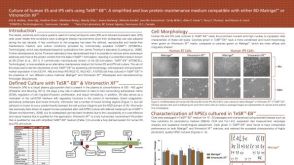 科学海报Culture of Human ES and iPS Cells Using TeSR™-E8™: a Simplified and Low Protein Maintenance Medium Compatible With Vitronectin XF™
 沪公网安备31010102008431号