Xue D et al. (NOV 2016)
Journal of immunology (Baltimore,Md. : 1950)
Semaphorin 4C Protects against Allergic Inflammation: Requirement of Regulatory CD138+ Plasma Cells.
The regulatory properties of B cells have been studied in autoimmune diseases; however,their role in allergic diseases is poorly understood. We demonstrate that Semaphorin 4C (Sema4C),an axonal guidance molecule,plays a crucial role in B cell regulatory function. Mice deficient in Sema4C exhibited increased airway inflammation after allergen exposure,with massive eosinophilic lung infiltrates and increased Th2 cytokines. This phenotype was reproduced by mixed bone marrow chimeric mice with Sema4C deficient only in B cells,indicating that B lymphocytes were the key cells affected by the absence of Sema4C expression in allergic inflammation. We determined that Sema4C-deficient CD19(+)CD138(+) cells exhibited decreased IL-10 and increased IL-4 expression in vivo and in vitro. Adoptive transfer of Sema4c(-/-) CD19(+)CD138(+) cells induced marked pulmonary inflammation,eosinophilia,and increased bronchoalveolar lavage fluid IL-4 and IL-5,whereas adoptive transfer of wild-type CD19(+)CD138(+)IL-10(+) cells dramatically decreased allergic airway inflammation in wild-type and Sema4c(-/-) mice. This study identifies a novel pathway by which Th2-mediated immune responses are regulated. It highlights the importance of plasma cells as regulatory cells in allergic inflammation and suggests that CD138(+) B cells contribute to cytokine balance and are important for maintenance of immune homeostasis in allergic airways disease. Furthermore,we demonstrate that Sema4C is critical for optimal regulatory cytokine production in CD138(+) B cells.
View Publication
产品类型:
产品号#:
19854
19854RF
产品名:
EasySep™小鼠B细胞分选试剂盒
RoboSep™ 小鼠B细胞分选试剂盒
Vasiliou V et al. (FEB 2013)
Chemico-biological interactions 202 1-3 2--10
Aldehyde dehydrogenases: from eye crystallins to metabolic disease and cancer stem cells.
The aldehyde dehydrogenase (ALDH) superfamily is composed of nicotinamide adenine dinucleotide (phosphate) (NAD(P)(+))-dependent enzymes that catalyze the oxidation of aldehydes to their corresponding carboxylic acids. To date,24 ALDH gene families have been identified in the eukaryotic genome. In addition to aldehyde metabolizing capacity,ALDHs have additional catalytic (e.g. esterase and reductase) and non-catalytic activities. The latter include functioning as structural elements in the eye (crystallins) and as binding molecules to endobiotics and xenobiotics. Mutations in human ALDH genes and subsequent inborn errors in aldehyde metabolism are the molecular basis of several diseases. Most recently ALDH polymorphisms have been associated with gout and osteoporosis. Aldehyde dehydrogenase enzymes also play important roles in embryogenesis and development,neurotransmission,oxidative stress and cancer. This article serves as a comprehensive review of the current state of knowledge regarding the ALDH superfamily and the contribution of ALDHs to various physiological and pathophysiological processes.
View Publication
产品类型:
产品号#:
01700
01705
01702
产品名:
ALDEFLUOR™ 试剂盒
ALDEFLUOR™ DEAB试剂, 1.5 mM, 1 mL
ALDEFLUOR™检测缓冲液
Sigova Aa et al. (FEB 2013)
Proceedings of the National Academy of Sciences of the United States of America 110 8 2876--81
Divergent transcription of long noncoding RNA/mRNA gene pairs in embryonic stem cells.
Many long noncoding RNA (lncRNA) species have been identified in mammalian cells,but the genomic origin and regulation of these molecules in individual cell types is poorly understood. We have generated catalogs of lncRNA species expressed in human and murine embryonic stem cells and mapped their genomic origin. A surprisingly large fraction of these transcripts (textgreater60%) originate from divergent transcription at promoters of active protein-coding genes. The divergently transcribed lncRNA/mRNA gene pairs exhibit coordinated changes in transcription when embryonic stem cells are differentiated into endoderm. Our results reveal that transcription of most lncRNA genes is coordinated with transcription of protein-coding genes.
View Publication
产品类型:
产品号#:
05850
05857
05870
05875
85850
85857
85870
85875
产品名:
mTeSR™1
mTeSR™1
Ladner MB et al. (SEP 1988)
Proceedings of the National Academy of Sciences of the United States of America 85 18 6706--10
cDNA cloning and expression of murine macrophage colony-stimulating factor from L929 cells.
A 4-kilobase and a 2-kilobase cDNA clone encoding a murine macrophage colony-stimulating factor have been isolated. Except for 2 amino acid residue differences,these two clones encode the same 520 amino acid residue protein,which is preceded by a 32-amino acid residue signal peptide. The two clones,whose molecular masses correspond to the two transcripts observed in murine L929 fibroblasts,contain 3' untranslated regions that are markedly different in sequence and length. Both clones can be expressed in COS cells and the recombinant protein is active in a mouse bone marrow colony assay.
View Publication
产品类型:
产品号#:
02751
02951
产品名:
Reeves SR et al. (SEP 2014)
The Journal of allergy and clinical immunology 134 3 663----670.e1
BACKGROUND: Airway remodeling might explain lung function decline among asthmatic children. Extracellular matrix (ECM) deposition by human lung fibroblasts (HLFs) is implicated in airway remodeling. Airway epithelial cell (AEC) signaling might regulate HLF ECM expression. OBJECTIVES: We sought to determine whether AECs from asthmatic children differentially regulate HLF expression of ECM constituents. METHODS: Primary AECs were obtained from well-characterized atopic asthmatic (n = 10) and healthy (n = 10) children intubated during anesthesia for an elective surgical procedure. AECs were differentiated at an air-liquid interface for 3 weeks and then cocultured with HLFs from a healthy child for 96 hours. Collagen I (COL1A1),collagen III (COL3A1),hyaluronan synthase (HAS) 2,and fibronectin expression by HLFs and prostaglandin E2 synthase (PGE2S) expression by AECs were assessed by using RT-PCR. TGF-$$1 and TGF-$$2 concentrations in media were measured by using ELISA. RESULTS: COL1A1 and COL3A1 expression by HLFs cocultured with AECs from asthmatic patients was greater than that by HLFs cocultured with AECs from healthy subjects (2.2-fold,P textless .02; 10.8-fold,P textless .02). HAS2 expression by HLFs cocultured with AECs from asthmatic patients was 2.5-fold higher than that by HLFs cocultured with AECs from healthy subjects (P textless .002). Fibronectin expression by HLFs cocultured with AECs from asthmatic patients was significantly greater than that by HLFs alone. TGF-$$2 activity was increased in cocultures of HLFs with AECs from asthmatic patients (P textless .05),whereas PGES2 was downregulated in AEC-HLF cocultures (2.2-fold,P textless .006). CONCLUSIONS: HLFs cocultured with AECs from asthmatic patients showed differential expression of the ECM constituents COL1A1 and COL3A1 and HAS2 compared with HLFs cocultured with AECs from healthy subjects. These findings support a role for altered ECM production in asthmatic airway remodeling,possibly regulated by unbalanced AEC signaling.
View Publication
产品类型:
产品号#:
05001
05021
05022
产品名:
PneumaCult™-ALI 培养基
PneumaCult™-ALI 培养基含12 mm Transwell®插件
PneumaCult™-ALI 培养基含6.5 mm Transwell®插件
S. G. Kellaway et al. (Feb 2024)
Nature Communications 15
Leukemic stem cells activate lineage inappropriate signalling pathways to promote their growth
Acute Myeloid Leukemia (AML) is caused by multiple mutations which dysregulate growth and differentiation of myeloid cells. Cells adopt different gene regulatory networks specific to individual mutations,maintaining a rapidly proliferating blast cell population with fatal consequences for the patient if not treated. The most common treatment option is still chemotherapy which targets such cells. However,patients harbour a population of quiescent leukemic stem cells (LSCs) which can emerge from quiescence to trigger relapse after therapy. The processes that allow such cells to re-grow remain unknown. Here,we examine the well characterised t(8;21) AML sub-type as a model to address this question. Using four primary AML samples and a novel t(8;21) patient-derived xenograft model,we show that t(8;21) LSCs aberrantly activate the VEGF and IL-5 signalling pathways. Both pathways operate within a regulatory circuit consisting of the driver oncoprotein RUNX1::ETO and an AP-1/GATA2 axis allowing LSCs to re-enter the cell cycle while preserving self-renewal capacity. Subject terms: Cancer stem cells,Acute myeloid leukaemia,Target validation
View Publication
产品类型:
产品号#:
04437
04447
产品名:
MethoCult™ Express
MethoCult™ Express
(Apr 2025)
Scientific Reports 15 Suppl 3
Genome editing in spinocerebellar ataxia type 3 cells improves Golgi apparatus structure
Spinocerebellar ataxia type 3 (SCA3) is an autosomal dominant neurodegenerative disease caused by repeat expansion of the CAG trinucleotide within exon 10 of the ATXN3 gene. This mutation results in the production of an abnormal ataxin-3 protein containing an extended polyglutamine tract,referred to as mutant ataxin-3. In this study,we investigated the therapeutic potential of CRISPR/Cas9-mediated genome editing for SCA3. First,we designed a specific single-guide RNA targeting the ATXN3 gene and constructed the corresponding targeting vector. Induced pluripotent stem cells (iPSCs) derived from a SCA3 patient were then electroporated with the CRISPR/Cas9 components. Positive clones were screened and validated by PCR and Sanger sequencing to obtain genome-editing iPSCs (GE-iPSCs). Subsequently,the pluripotency of GE-iPSCs was confirmed,and the effects of genome editing on mutant ataxin-3 protein expression and Golgi apparatus morphology were assessed using Western blotting and immunofluorescence analyses. Our results demonstrated that targeted insertion of polyadenylation signals (PAS) upstream of the abnormal CAG repeats effectively suppressed the production of mutant ataxin-3. This intervention also reduced the formation of neuronal nuclear inclusions in differentiated neurons,restored the structural integrity of the Golgi apparatus (which exhibited a loose and enlarged morphology in SCA3 cells),and increased the expression levels of Golgi structural proteins (GM130 and GORASP2). In conclusion,our findings indicate that the targeted insertion of PAS upstream of the abnormal CAG repeats in the ATXN3 gene represents a promising therapeutic strategy for SCA3 through genome editing.Supplementary InformationThe online version contains supplementary material available at 10.1038/s41598-025-93369-8.
View Publication
产品类型:
产品号#:
08581
08582
85850
85857
产品名:
STEMdiff™SMADi神经诱导试剂盒
STEMdiff™SMADi神经诱导试剂盒,2套
mTeSR™1
mTeSR™1
J. N. Contessa et al. (may 2008)
Cancer research 68 10 3803--9
Inhibition of N-linked glycosylation disrupts receptor tyrosine kinase signaling in tumor cells.
Receptor tyrosine kinases (RTK) are therapeutic targets for the treatment of malignancy. However,tumor cells develop resistance to targeted therapies through the activation of parallel signaling cascades. Recent evidence has shown that redundant or compensatory survival signals responsible for resistance are initiated by nontargeted glycoprotein RTKs coexpressed by the cell. We hypothesized that disrupting specific functions of the posttranslational machinery of the secretory pathway would be an effective strategy to target both primary and redundant RTK signaling. Using the N-linked glycosylation inhibitor,tunicamycin,we show that expression levels of several RTKS (EGFR,ErbB2,ErbB3,and IGF-IR) are exquisitely sensitive to inhibition of N-linked glycosylation. Disrupting this synthetic process reduces both cellular protein levels and receptor activity in tumor cells through retention of the receptors in the endoplasmic reticulum/Golgi compartments. Using U251 glioma and BXPC3 pancreatic adenocarcinoma cell lines,two cell lines resistant to epidermal growth factor receptor-targeted therapies,we show that inhibiting N-linked glycosylation markedly reduces RTK signaling through Akt and radiosensitizes tumor cells. In comparison,experiments in nontransformed cells showed neither a reduction in RTK-dependent signaling nor an enhancement in radiosensitivity,suggesting the potential for a therapeutic ratio between tumors and normal tissues. This study provides evidence that enzymatic steps regulating N-linked glycosylation are novel targets for developing approaches to sensitize tumor cells to cytotoxic therapies.
View Publication


 EasySep™小鼠TIL(CD45)正选试剂盒





 研究综述Mesenchymal Stromal Cells: Markers, Isolation and Culture, Differentiation, and Therapeutic Potential
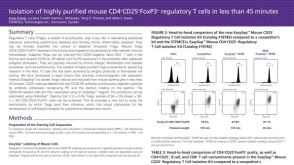 科学海报Isolation of Highly Purified Mouse CD4+CD25+Foxp3+ Regulatory T Cells in Less

 沪公网安备31010102008431号