Li W et al. (MAY 2011)
Proceedings of the National Academy of Sciences of the United States of America 108 20 8299--8304
Rapid induction and long-term self-renewal of primitive neural precursors from human embryonic stem cells by small molecule inhibitors.
Human embryonic stem cells (hESCs) hold enormous promise for regenerative medicine. Typically,hESC-based applications would require their in vitro differentiation into a desirable homogenous cell population. A major challenge of the current hESC differentiation paradigm is the inability to effectively capture and,in the long-term,stably expand primitive lineage-specific stem/precursor cells that retain broad differentiation potential and,more importantly,developmental stage-specific differentiation propensity. Here,we report synergistic inhibition of glycogen synthase kinase 3 (GSK3),transforming growth factor β (TGF-β),and Notch signaling pathways by small molecules can efficiently convert monolayer cultured hESCs into homogenous primitive neuroepithelium within 1 wk under chemically defined condition. These primitive neuroepithelia can stably self-renew in the presence of leukemia inhibitory factor,GSK3 inhibitor (CHIR99021),and TGF-β receptor inhibitor (SB431542); retain high neurogenic potential and responsiveness to instructive neural patterning cues toward midbrain and hindbrain neuronal subtypes; and exhibit in vivo integration. Our work uniformly captures and maintains primitive neural stem cells from hESCs.
View Publication
产品类型:
产品号#:
72052
72054
100-1042
产品名:
CHIR99021
CHIR99021
CHIR99021
Inamdar AA et al. (JAN 2012)
Mycopathologia 173 1 13--20
A Model to Evaluate the Cytotoxicity of the Fungal Volatile Organic Compound 1-octen-3-ol in Human Embryonic Stem Cells
Microbial growth in damp indoor environments has been correlated with risks to human health. This study was aimed to determine the cytotoxicity of 1-octen-3-ol (mushroom alcohol")�
View Publication
产品类型:
产品号#:
05850
05857
05870
05875
07920
85850
85857
85870
85875
07922
产品名:
ACCUTASE™
mTeSR™1
mTeSR™1
ACCUTASE™
Chen D et al. (SEP 2013)
Cancer research 73 18 5821--5833
ANTXR1, a stem cell-enriched functional biomarker, connects collagen signaling to cancer stem-like cells and metastasis in breast cancer.
Cancer stem-like cells are thought to contribute to tumor recurrence. The anthrax toxin receptor 1 (ANTXR1) has been identified as a functional biomarker of normal stem cells and breast cancer stem-like cells. Primary stem cell-enriched basal cells (CD49f(+)/EpCAM(-)/Lin(-)) expressed higher levels of ANTXR1 compared with mature luminal cells. CD49f(+)/EpCAM(-),CD44(+)/EpCAM(-),CD44(+)/CD24(-),or ALDEFLUOR-positive subpopulations of breast cancer cells were enriched for ANTXR1 expression. CD44(+)/CD24(-)/ANTXR1(+) cells displayed enhanced self-renewal as measured by mammosphere assay compared with CD44(+)/CD24(-)/ANTXR1(-) cells. Activation of ANTXR1 by its natural ligand C5A,a fragment of collagen VI $$3,increased stem cell self-renewal in mammosphere assays and Wnt signaling including the expression of the Wnt receptor-lipoprotein receptor-related protein 6 (LRP6),phosphorylation of GSK3$$/$$,and elevated expression of Wnt target genes. RNAi-mediated silencing of ANTXR1 enhanced the expression of luminal-enriched genes but diminished Wnt signaling including reduced LRP6 and ZEB1 expression,self-renewal,invasion,tumorigenicity,and metastasis. ANTXR1 silencing also reduced the expression of HSPA1A,which is overexpressed in metastatic breast cancer stem cells. Analysis of public databases revealed ANTXR1 amplification in medullary breast carcinoma and overexpression in estrogen receptor-negative breast cancers with the worst outcome. Furthermore,ANTXR1 is among the 10% most overexpressed genes in breast cancer and is coexpressed with collagen VI. Thus,ANTXR1:C5A interactions bridge a network of collagen cleavage and remodeling in the tumor microenvironment,linking it to a stemness signaling network that drives metastatic progression.
View Publication
Hackett C et al. ( 2014)
American journal of translational research 6 2 119--28
Transplantation of Fas-deficient or wild-type neural stem/progenitor cells (NPCs) is equally efficient in treating experimental autoimmune encephalomyelitis (EAE).
Studies have shown that neural stem/progenitor cell (NPC) transplantation is beneficial in experimental autoimmune encephalomyelitis (EAE),an established animal model of multiple sclerosis (MS). It is unclear whether NPCs have the ability to integrate into the host CNS to replace lost cells or if their main mechanism of action is via bystander immunomodulation. Understanding the mechanisms by which NPCs exert their beneficial effects as well as exploring methods to increase post-transplantation survival and differentiation is critical to advancing this treatment strategy. Using the EAE model and Fas-deficient (lpr) NPCs,we investigated the effects of altering the Fas system in NPC transplantation therapy. We show that transplantation of NPCs into EAE mice ameliorates clinical symptoms with greater efficacy than sham treatments regardless of cell type (wt or lpr). NPC transplantation via retro-orbital injections significantly decreased inflammatory infiltrates at the acute time point,with a similar trend at the chronic time point. Both wt and lpr NPCs injected into mice with EAE were able to home to sites of CNS inflammation in the periventricular brain and lumbar spinal cord. Both wt and lpr NPCs have the same capacity for inducing apoptosis of Th1 and Th17 cells,and minimal numbers of NPCs entered the CNS. These cells did not express terminal differentiation markers,suggesting that NPCs exert their effects mainly via bystander peripheral immunomodulation.
View Publication
产品类型:
产品号#:
05715
产品名:
NeuroCult™成年中枢神经系统(CNS)组织酶解试剂盒(小鼠和大鼠)
F. A. H. Cooles et al. ( 2018)
Frontiers in immunology 9 755
Phenotypic and Transcriptomic Analysis of Peripheral Blood Plasmacytoid and Conventional Dendritic Cells in Early Drug Na\ive Rheumatoid Arthritis."
Objective Dendritic cells (DCs) are key orchestrators of immune function. To date,rheumatoid arthritis (RA) researchers have predominantly focused on a potential pathogenic role for CD1c+ DCs. In contrast,CD141+ DCs and plasmacytoid DCs (pDCs) have not been systematically examined,at least in early RA. In established RA,the role of pDCs is ambiguous and,since disease duration and treatment both impact RA pathophysiology,we examined pDCs,and CD1c+ and CD141+ conventional DCs (cDCs),in early,drug-na{\{i}}ve RA (eRA) patients. Methods We analyzed the frequency and phenotype of pDCs
View Publication
产品类型:
产品号#:
07801
07811
07851
07861
18060
18061
产品名:
Lymphoprep™
Lymphoprep™
Lymphoprep™
Lymphoprep™
X.-Y. Zhang et al. (feb 2022)
Human molecular genetics 31 4 638--650
Exosomal transfer of activated neutrophil-derived lncRNA CRNDE promotes proliferation and migration of airway smooth muscle cells in asthma.
Activated neutrophil-derived exosomes reportedly contribute to the proliferation of airway smooth muscle cells (ASMCs),thereby aggravating the airway wall remodeling during asthma; however,the specific mechanism remains unclear. Lipopolysaccharide (LPS)-EXO and si-CRNDE-EXO were extracted from the media of human neutrophils treated with LPS and LPS??+??si-CRNDE (a siRNA targets long non-coding RNA CRNDE),respectively. Human ASMCs were co-cultured with LPS-EXO or si-CRNDE-EXO,and cell viability,proliferation and migration were measured. The interplay of colorectal neoplasia differentially expressed (CRNDE),inhibitor of nuclear factor kappa B kinase subunit beta (IKK$\beta$) and nuclear receptor subfamily 2 group C member 2 (TAK1) was explored using RNA immunoprecipitation (RIP) and Co-IP assays. A mouse model of asthma was induced using ovalbumin. CRNDE was upregulated in LPS-EXO and successfully transferred from LPS-treated neutrophils to ASMCs through exosome. Mechanically,CRNDE loaded in LPS-EXO reinforced TAK1-mediated IKK$\beta$ phosphorylation,thereby activating the nuclear factor kappa B (NF-$\kappa$B) pathway. Functionally,silencing CRNDE in LPS-EXO,an IKK$\beta$ inhibitor,and an NF-$\kappa$B inhibitor all removed the upregulation of cell viability,proliferation and migration induced by LPS-EXO in ASMCs. In the end,the in vivo experiment demonstrated that CRNDE knockdown in neutrophils effectively reduced the thickness of bronchial smooth muscle in a mouse model for asthma. Activated neutrophils-derived CRNDE was transferred to ASMCs through exosomes and activated the NF-$\kappa$B pathway by enhancing IKK$\beta$ phosphorylation. The latter promoted the proliferation and migration of ASMCs and then contributed to airway remodeling in asthma.
View Publication
产品类型:
产品号#:
17957
20144
17957RF
产品名:
EasySep™人中性粒细胞分选试剂盒
EasySep™缓冲液
RoboSep™ 人中性粒细胞分选试剂盒
E. Vamva et al. (mar 2022)
STAR protocols 3 1 101228
An optimized measles virus glycoprotein-pseudotyped lentiviral vector production system to promote efficient transduction of human primary B cells.
Measles virus envelope pseudotyped LV (MV-LV) can achieve high B cell transduction rates (up to 50%),but suffers from low titers. To overcome current limitations,we developed an optimized MV-LV production protocol that achieved consistent B cell transduction efficiency up to 75%. We detail this protocol along with analytical assays to assess the results of MV-LV mediated B cell transduction,including flow cytometry for B cell phenotypic characterization and measurement of transduction efficiency,and ddPCR for VCN analysis.
View Publication
产品类型:
产品号#:
17954
20144
17954RF
100-0971
产品名:
EasySep™人B细胞分选试剂盒
EasySep™缓冲液
RoboSep™ 人B细胞分选试剂盒
EasySep™人B细胞分离试剂盒
C. Wang et al. ( 2019)
Molecular nutrition {\&} food research 63 18 e1900262
Human Milk Oligosaccharides Protect against Necrotizing Enterocolitis by Inhibiting Intestinal Damage via Increasing the Proliferation of Crypt Cells.
SCOPE Necrotizing enterocolitis (NEC) is a devastating disease that is highly lethal in premature infants. Human milk oligosaccharides (HMOs) efficiently reduce the incidence of NEC. However,the protective mechanism of HMO treatment is unknown. It is hypothesized that HMOs protect against NEC by inhibiting the damage to intestinal epithelial cells. METHODS AND RESULTS C57BL/6 pups are challenged with hypoxia and cold stress to induce NEC. All pups are sacrificed after 72 h. It is found that HMO administration reduces the concentrations of IL-8 in the serum and ileum of all NEC mice. Ileum toll-like receptor 4 (TLR4) protein expression and nuclear factor kappa-B (NF$\kappa$B) pathway activation are inhibited. The proliferative ability of enterocytes in the ileum is restored as determined by labeling with proliferation markers (Ki67,SOX9). In a 3D culture intestinal crypt organoids study,HMO treatment improves the maturation of organoid cells and increases the ratio of proliferative cells under lipopolysaccharides (LPS) treatment. HMO treatment downregulates TLR4 expression in the organoid cells,thus reducing the effect of LPS. CONCLUSION HMOs protect intestinal epithelial cells from injury by accelerating the turnover of crypt cells by reducing the expression of TLR4 on intestinal epithelial cells.
View Publication
产品类型:
产品号#:
85415
85420
产品名:
SepMate™-15 (IVD)
SepMate™-15 (IVD)
(Apr 2024)
Communications Biology 7
Dynamic molecular network analysis of iPSC-Purkinje cells differentiation delineates roles of ISG15 in SCA1 at the earliest stage
Better understanding of the earliest molecular pathologies of all neurodegenerative diseases is expected to improve human therapeutics. We investigated the earliest molecular pathology of spinocerebellar ataxia type 1 (SCA1),a rare familial neurodegenerative disease that primarily induces death and dysfunction of cerebellum Purkinje cells. Extensive prior studies have identified involvement of transcription or RNA-splicing factors in the molecular pathology of SCA1. However,the regulatory network of SCA1 pathology,especially central regulators of the earliest developmental stages and inflammatory events,remains incompletely understood. Here,we elucidated the earliest developmental pathology of SCA1 using originally developed dynamic molecular network analyses of sequentially acquired RNA-seq data during differentiation of SCA1 patient-derived induced pluripotent stem cells (iPSCs) to Purkinje cells. Dynamic molecular network analysis implicated histone genes and cytokine-relevant immune response genes at the earliest stages of development,and revealed relevance of ISG15 to the following degradation and accumulation of mutant ataxin-1 in Purkinje cells of SCA1 model mice and human patients. Molecular changes in neurodegeneration occur much earlier than previously expected. In this study,dynamic molecular network analysis of iPSC differentiation uncovers a temporal pathway from histone to ISG15 with the earliest molecular changes of SCA1.
View Publication
产品类型:
产品号#:
05990
产品名:
用于hESC/hiPSC维持培养的TeSR™-E8™
J. Jahan et al. (Mar 2024)
Biochemical pharmacology 222
The role of telomerase reverse transcriptase in the mitochondrial protective functions of Angiotensin-(1–7) in diabetic CD34 + cells
Angiotensin (Ang)-(1–7) stimulates vasoprotective functions of diabetic (DB) CD34 + hematopoietic stem/progenitor cells partly by decreasing reactive oxygen species (ROS),increasing nitric oxide (NO) levels and decreasing TGFβ1 secretion. Telomerase reverse transcriptase (TERT) translocates to mitochondria and regulates ROS generation. Alternative splicing of TERT results in variants α-,β- and α-β-TERT,which may oppose functions of full-length (FL) TERT. This study tested if the protective functions of Ang-(1–7) or TGFβ1-silencing are mediated by mitoTERT and that diabetes decreases FL-TERT expression by inducing splicing. CD34 + cells were isolated from the peripheral blood mononuclear cells of nondiabetic (ND,n = 68) or DB (n = 74) subjects. NO and mitoROS levels were evaluated by flow cytometry. TERT splice variants and mitoDNA-lesions were characterized by qPCR. TRAP assay was used for telomerase activity. Decoy peptide was used to block mitochondrial translocation (mitoXTERT). TERT inhibitor or mitoXTERT prevented the effects of Ang-(1–7) on NO or mitoROS levels in DB-CD34 + cells. FL-TERT expression and telomerase activity were lower and mitoDNA-lesions were higher in DB cells compared to ND and were reversed by Ang-(1–7) or TGFβ1-silencing. The prevalence of TERT splice variants,with predominant β-TERT expression,was higher and the expression of FL-TERT was lower in DB cells (n = 25) compared to ND (n = 30). Ang-(1–7) or TGFβ1-silencing decreased TERT-splicing and increased FL-TERT. Blocking of β-splicing increased FL-TERT and protected mitoDNA in DB-cells. The findings suggest that diabetes induces TERT-splicing in CD34 + cells and that β-TERT splice variant largely contributes to the mitoDNA oxidative damage.
View Publication
产品类型:
产品号#:
09600
09650
产品名:
StemSpan™ SFEM
StemSpan™ SFEM
M. B. Mahmoud et al. (Jan 2025)
Scientific Reports 15
Multifactorial approach is needed to unravel the maturation phases of human neurons derived from induced pluripotent stem cells
Neurons derived from induced pluripotent stem cells (h-iPSC-Ns) provide an invaluable model for studying the physiological aspects of human neuronal development under healthy and pathological conditions. However,multiple studies have demonstrated that h-iPSC-Ns exhibit a high degree of functional and epigenetic diversity. Due to the imprecise characterization and significant variation among the currently available maturation protocols,it is essential to establish a set of criteria to standardize models and accurately characterize and define the developmental properties of human neurons derived from iPSCs. In this study,we conducted comprehensive cellular and network level analysis of the functional development of human neurons,generated from iPSCs obtained from healthy young female peripheral blood mononuclear cells by BDNF and GDNF treatment. We provide a thorough description of the maturation process of h-iPSC-Ns over a 10-week in vitro period using conventional whole-cell patch clamp and dynamic clamp techniques,alongside with morphometry and immunocytochemistry. Additionally,we utilized calcium imaging to monitor the progression of synaptic activity and network communication. At the single cell level,human neurons exhibited gradually decreasing membrane resistance in parallel with improved excitability. By the fifth week of maturation,firing profiles were consistent with those of mature regular firing type of neurons. At the network level,fast glutamatergic and depolarizing GABAergic synaptic connections were abundant together with synchronized network activity from the sixth week of maturation. Alterations in the expression of GABA A receptor subunits were also observed during the process of maturation. The sequence of differentiation events was consistent,providing a robust temporal framework to execute experiments at defined stages of neuronal maturation as well as to use a specific set of experiments to assess a culture’s maturation. The uncovered progression of differentiation events provides a powerful tool to aid the planning and designing of targeted experiments during defined stages of neuronal maturation.
View Publication


 EasySep™小鼠TIL(CD45)正选试剂盒





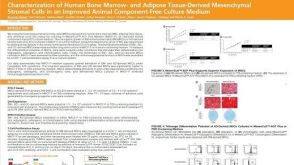 科学海报Characterization of Human Bone Marrow- and Adipose Tissue-Derived Mesenchymal Stromal Cells in an Improved Animal Component-Free Culture Medium
 沪公网安备31010102008431号