J. Yao et al. ( 2020)
Stem cells international 2020 6489396
Human Supernumerary Teeth-Derived Apical Papillary Stem Cells Possess Preferable Characteristics and Efficacy on Hepatic Fibrosis in Mice.
Dental tissue has been acknowledged as an advantaged source for high-quality dental pulp stem cell (DPSC) preparation. However,despite the accomplishment of the separation of DPSCs from permanent teeth and supernumerary teeth,the deficiency of rigorous and systematic clarification on the signatures and efficacy will hinder their prospects in regenerative medicine. In this study,we primitively isolated permanent teeth-derived DPSCs and supernumerary teeth-derived apical papillary stem cells (SCAP-Ss) with parental consent. Immunophenotype of DPSCs and SCAP-Ss was determined by a flow cytometry assay,and the cell viability was verified by multidimensional detections including cell proliferation,cell cycle,apoptosis,and senescence. The migration and clonogenic capacity were examined by a wound healing test and crystal violet staining,respectively. The multilineage differentiation potential was quantitated by utilizing Oil Red O staining and Alizarin Red staining,together with real-time PCR analysis. The efficacy on a mouse hepatic fibrosis model was evaluated by using histologic sections and liver function tests. Herein,we showed that SCAP-Ss exhibited comparable immunophenotype and adipogenic differentiation capacity as DPSCs. However,different from DPSCs,SCAP-Ss exhibited superiority in cell viability and osteogenic differentiation. Simultaneously,injection of DPSCs and SCAP-Ss significantly reduced inflammatory infiltration,enhanced liver-associated gene expression,and finally relieved symptoms of hepatic fibrosis. In conclusion,SCAP-Ss possess preferable characteristics and efficacy on hepatic fibrosis in mice. Our findings suggest that SCAP-Ss are an easily accessible postnatal stem cell source with multifaceted characteristics for regenerative medicine.
View Publication
产品类型:
产品号#:
05412
05465
产品名:
MesenCult™ 脂肪分化试剂盒 (人)
MesenCult™ 成骨细胞分化试剂盒 (人)
Weiss L et al. (NOV 2004)
Blood 104 10 3249--56
Human immunodeficiency virus-driven expansion of CD4+CD25+ regulatory T cells, which suppress HIV-specific CD4 T-cell responses in HIV-infected patients.
The present study demonstrates that CD4(+)CD25(+) T cells,expanded in peripheral blood of HIV-infected patients receiving highly active antiretroviral therapy (HAART),exhibit phenotypic,molecular,and functional characteristics of regulatory T cells. The majority of peripheral CD4(+)CD25(+) T cells from HIV-infected patients expressed a memory phenotype. They were found to constitutively express transcription factor forkhead box P3 (Foxp3) messengers. CD4(+)CD25(+) T cells weakly proliferated to immobilized anti-CD3 monoclonal antibody (mAb) and addition of soluble anti-CD28 mAb significantly increased proliferation. In contrast to CD4(+)CD25(-) T cells,CD4(+)CD25(+) T cells from HIV-infected patients did not proliferate in response to recall antigens and to p24 protein. The proliferative capacity of CD4 T cells to tuberculin,cytomegalovirus (CMV),and p24 significantly increased following depletion of CD4(+)CD25(+) T cells. Furthermore,addition of increasing numbers of CD4(+)CD25(+) T cells resulted in a dose-dependent inhibition of CD4(+)CD25(-) T-cell proliferation to tuberculin and p24. CD4(+)CD25(+) T cells responded specifically to p24 antigen stimulation by expressing transforming growth factor beta (TGF-beta) and interleukin 10 (IL-10),thus indicating the presence of p24-specific CD4(+) T cells among the CD4(+)CD25(+) T-cell subset. Suppressive activity was not dependent on the secretion of TGF-beta or IL-10. Taken together,our results suggest that persistence of HIV antigens might trigger the expansion of CD4(+)CD25(+) regulatory T cells,which might induce a tolerance to HIV in vivo.
View Publication
产品类型:
产品号#:
15022
15062
产品名:
RosetteSep™人CD4+ T细胞富集抗体混合物
RosetteSep™人CD4+ T细胞富集抗体混合物
Zang Y et al. (MAR 2008)
The Journal of biological chemistry 283 10 6201--8
AICAR induces astroglial differentiation of neural stem cells via activating the JAK/STAT3 pathway independently of AMP-activated protein kinase.
Neural stem cell differentiation and the determination of lineage decision between neuronal and glial fates have important implications in the study of developmental,pathological,and regenerative processes. Although small molecule chemicals with the ability to control neural stem cell fate are considered extremely useful tools in this field,few were reported. AICAR is an adenosine analog and extensively used to activate AMP-activated protein kinase (AMPK),a metabolic fuel gauge" of the biological system. In the present study�
View Publication
Molinski SV et al. ( 2017)
EMBO Molecular Medicine 9 9 1224--1243
Orkambi® and amplifier co-therapy improves function from a rare CFTR mutation in gene edited cells and patient tissue
The combination therapy of lumacaftor and ivacaftor (Orkambi®) is approved for patients bearing the major cystic fibrosis (CF) mutation: ΔF508 It has been predicted that Orkambi® could treat patients with rarer mutations of similar theratype"; however a standardized approach confirming efficacy in these cohorts has not been reported. Here we demonstrate that patients bearing the rare mutation: c.3700 A>G causing protein misprocessing and altered channel function-similar to ΔF508-CFTR are unlikely to yield a robust Orkambi® response. While in silico and biochemical studies confirmed that this mutation could be corrected and potentiated by lumacaftor and ivacaftor respectively this combination led to a minor in vitro response in patient-derived tissue. A CRISPR/Cas9-edited bronchial epithelial cell line bearing this mutation enabled studies showing that an "amplifier" compound effective in increasing the levels of immature CFTR protein augmented the Orkambi® response. Importantly this "amplifier" effect was recapitulated in patient-derived nasal cultures-providing the first evidence for its efficacy in augmenting Orkambi® in tissues harboring a rare CF-causing mutation. We propose that this multi-disciplinary approach including creation of CRISPR/Cas9-edited cells to profile modulators together with validation using primary tissue will facilitate therapy development for patients with rare CF mutations.
View Publication
产品类型:
产品号#:
05001
05021
05022
产品名:
PneumaCult™-ALI 培养基
PneumaCult™-ALI 培养基含12 mm Transwell®插件
PneumaCult™-ALI 培养基含6.5 mm Transwell®插件
Halim L et al. (JUL 2017)
Cell reports 20 3 757--770
An Atlas of Human Regulatory T Helper-like Cells Reveals Features of Th2-like Tregs that Support a Tumorigenic Environment.
Regulatory T cells (Tregs) play a pivotal role in maintaining immunological tolerance,but they can also play a detrimental role by preventing antitumor responses. Here,we characterized T helper (Th)-like Treg subsets to further delineate their biological function and tissue distribution,focusing on their possible contribution to disease states. RNA sequencing and functional assays revealed that Th2-like Tregs displayed higher viability and autocrine interleukin-2 (IL-2)-mediated activation than other subsets. Th2-like Tregs were preferentially found in tissues rather than circulation and exhibited the highest migratory capacity toward chemokines enriched at tumor sites. These cellular responses led us to hypothesize that this subset could play a role in maintaining a tumorigenic environment. Concurrently,Th2-like Tregs were enriched specifically in malignant tissues from patients with melanoma and colorectal cancer compared to healthy tissue. Overall,our results suggest that Th2-like Tregs may contribute to a tumorigenic environment due to their increased cell survival,higher migratory capacity,and selective T-effector suppressive ability.
View Publication
产品类型:
产品号#:
15022
15062
产品名:
RosetteSep™人CD4+ T细胞富集抗体混合物
RosetteSep™人CD4+ T细胞富集抗体混合物
H. Migalovich Sheikhet et al. ( 2018)
Frontiers in immunology 9 753
Dysregulated CD25 and Cytokine Expression by gamma$delta$ T Cells of Systemic Sclerosis Patients Stimulated With Cardiolipin and Zoledronate.
Objectives gamma$delta$ T cells,a non-conventional innate lymphocyte subset containing cells that can be activated by lipids and phosphoantigens,are abnormally regulated in systemic sclerosis (SSc). To further evaluate the significance of this dysregulation,we compared how exposure to an autoantigenic lipid,cardiolipin (CL),during co-stimulation with an amino-bisphosphonate (zoledronate,zol),affects the activation and cytokine production of SSc and healthy control (HC) gamma$delta$ T cells. Methods Expression of CD25 on Vgamma$9+,Vdelta$1+,and total CD3+ T cells in cultured peripheral blood mononuclear cells (PBMCs),their binding of CD1d tetramers,and the effect of monoclonal antibody (mAb) blockade of CD1d were monitored by flow cytometry after 4 days of in vitro culture. Intracellular production of IFNgamma$ and IL-4 was assessed after overnight culture. Results Percentages of CD25+ among CD3+ and Vdelta$1+ T cells were elevated significantly in short-term cultured SSc PBMC compared to HC. In SSc but not HC,CL and zol,respectively,suppressed {\%}CD25+ Vgamma$9+ and Vdelta$1+ T cells but,when combined,CL + zol significantly activated both subsets in HC and partially reversed inhibition by the individual reagents in SSc. Importantly,Vdelta$1+ T cells in both SSc and HC were highly reactive with lipid presenting CD1d tetramers,and a CD1d-blocking mAb decreased CL-induced enhancement of {\%}SSc CD25+ Vdelta$1+ T cells in the presence of zol. {\%}IFNgamma$+ cells among Vgamma$9+ T cells of SSc was lower than HC cultured in medium,CL,zol,or CL + zol,whereas {\%}IFNgamma$+ Vdelta$1+ T cells was lower only in the presence of CL or CL + zol. {\%}IL-4+ T cells were similar in SSc and HC in all conditions,with the exception of being increased in SSc Vgamma$9+ T cells in the presence of CL. Conclusion Abnormal functional responses of gamma$delta$ T cell subsets to stimulation by CL and phosphoantigens in SSc may contribute to fibrosis and immunosuppression,characteristics of this disease.
View Publication
产品类型:
产品号#:
07801
07811
07851
07861
18060
18061
产品名:
Lymphoprep™
Lymphoprep™
Lymphoprep™
Lymphoprep™
Vazin T et al. (JAN 2014)
Biomaterials 35 3 941--948
The effect of multivalent Sonic hedgehog on differentiation of human embryonic stem cells into dopaminergic and GABAergic neurons
Stem cell differentiation is regulated by complex repertoires of signaling ligands which often use multivalent interactions,where multiple ligands tethered to one entity interact with multiple cellular receptors to yield oligomeric complexes. One such ligand is Sonic hedgehog (Shh),whose posttranslational lipid modifications and assembly into multimers enhance its biological potency,potentially through receptor clustering. Investigations of Shh typically utilize recombinant,monomeric protein,and thus the impact of multivalency on ligand potency is unexplored. Among its many activities,Shh is required for ventralization of the midbrain and forebrain and is therefore critical for the development of midbrain dopaminergic (mDA) and forebrain gamma-aminobutyric acid (GABA) inhibitory neurons. We have designed multivalent biomaterials presenting Shh in defined spatial arrangements and investigated the role of Shh valency in ventral specification of human embryonic stem cells (hESCs) into these therapeutically relevant cell types. Multivalent Shh conjugates with optimal valencies,compared to the monomeric Shh,increased the percentages of neurons belonging to mDA or forebrain GABAergic fates from 33% to 60% or 52% to 86%,respectively. Thus,multivalent Shh bioconjugates can enhance neuronal lineage commitment of pluripotent stem cells and thereby facilitate efficient derivation of neurons that could be used to treat Parkinson's and epilepsy patients.
View Publication
产品类型:
产品号#:
05850
05857
05870
05875
85850
85857
85870
85875
产品名:
mTeSR™1
mTeSR™1
Greene WA et al. (JUN 2014)
Journal of visualized experiments : JoVE 88 e51589
MicroRNA expression profiles of human iPS cells, retinal pigment epithelium derived from iPS, and fetal retinal pigment epithelium.
The objective of this report is to describe the protocols for comparing the microRNA (miRNA) profiles of human induced-pluripotent stem (iPS) cells,retinal pigment epithelium (RPE) derived from human iPS cells (iPS-RPE),and fetal RPE. The protocols include collection of RNA for analysis by microarray,and the analysis of microarray data to identify miRNAs that are differentially expressed among three cell types. The methods for culture of iPS cells and fetal RPE are explained. The protocol used for differentiation of RPE from human iPS is also described. The RNA extraction technique we describe was selected to allow maximal recovery of very small RNA for use in a miRNA microarray. Finally,cellular pathway and network analysis of microarray data is explained. These techniques will facilitate the comparison of the miRNA profiles of three different cell types.
View Publication
产品类型:
产品号#:
05850
05857
05870
05875
85850
85857
85870
85875
产品名:
mTeSR™1
mTeSR™1
Lian R-L et al. (FEB 2016)
Molecular and cellular biochemistry 413 1-2 69--85
Effects of induced pluripotent stem cells-derived conditioned medium on the proliferation and anti-apoptosis of human adipose-derived stem cells.
Human adipose-derived stem cells (hASCs) become an appealing source for regenerative medicine. However,with the multi-passage or cryopreservation for large-scale growth procedures in terms of preclinical and clinical purposes,hASCs often reveal defective cell viability,which is a major obstacle for cell therapy. In our study,the effects of induced pluripotent stem cells-derived conditioned medium (iPS-CM) on the proliferation and anti-apoptosis in hASCs were investigated. hASCs at passage 1 were identified by the analysis of typical surface antigens with flow cytometry assay and adipogenic and osteogenic differentiation. The effect of iPS-CM on the proliferation in hASCs was analyzed by cell cycle assay and Ki67/P27 quantitative polymerase chain reaction analysis. The effect of iPS-CM on the anti-apoptosis of hASCs irradiated by 468 J/m(2) of ultraviolet C was investigated by annexin v/propidium iodide analysis,mitochondrial membrane potential assay,intracellular reactive oxygen species assay,Western blotting and caspase activity assays. The effect of iPS-CM on the surface antigen expressions of hASCs was analyzed using flow cytometry assay. The levels of Activin A and bFGF in culture supernatant of hASCs with different treatments were also detected by enzyme-linked immunosorbent assay. iPS-CM promoted proliferation and inhibited apoptosis of hASCs. This discovery demonstrates that iPS-CM might be used as one of the available means to overcome the propagation obstacle for hASCs and make for large-scale growth procedures in terms of preclinical and clinical purposes.
View Publication
产品类型:
产品号#:
05850
05857
05870
05875
85850
85857
85870
85875
产品名:
mTeSR™1
mTeSR™1
Kunishima S et al. (MAR 2008)
Blood 111 6 3015--23
Differential expression of wild-type and mutant NMMHC-IIA polypeptides in blood cells suggests cell-specific regulation mechanisms in MYH9 disorders.
MYH9 disorders such as May-Hegglin anomaly are characterized by macrothrombocytopenia and cytoplasmic granulocyte inclusion bodies that result from mutations in MYH9,the gene for nonmuscle myosin heavy chain-IIA (NMMHC-IIA). We examined the expression of mutant NMMHC-IIA polypeptide in peripheral blood cells from patients with MYH9 5770delG and 5818delG mutations. A specific antibody to mutant NMMHC-IIA (NT629) was raised against the abnormal carboxyl-terminal residues generated by 5818delG. NT629 reacted to recombinant 5818delG NMMHC-IIA but not to wild-type NMMHC-IIA,and did not recognize any cellular components of normal peripheral blood cells. Immunofluorescence and immunoblotting revealed that mutant NMMHC-IIA was present and sequestrated only in inclusion bodies within neutrophils,diffusely distributed throughout lymphocyte cytoplasm,sparsely localized on a diffuse cytoplasmic background in monocytes,and uniformly distributed at diminished levels only in large platelets. Mutant NMMHC-IIA did not translocate to lamellipodia in surface activated platelets. Wild-type NMMHC-IIA was homogeneously distributed among megakaryocytes derived from the peripheral blood CD34(+) cells of patients,but coarse mutant NMMHC-IIA was heterogeneously scattered without abnormal aggregates in the cytoplasm. We show the differential expression of mutant NMMHC-IIA and postulate that cell-specific regulation mechanisms function in MYH9 disorders.
View Publication
产品类型:
产品号#:
09600
09650
产品名:
StemSpan™ SFEM
StemSpan™ SFEM
Strainic MG et al. (MAR 2008)
Immunity 28 3 425--35
Locally produced complement fragments C5a and C3a provide both costimulatory and survival signals to naive CD4+ T cells.
Costimulatory signals are critical to T cell activation,but how their effects are mediated remains incompletely characterized. Here,we demonstrate that locally produced C5a and C3a anaphylatoxins interacting with their G protein-coupled receptors (GPCRs),C5aR and C3aR,on APCs and T cells both upstream and downstream of CD28 and CD40L signaling are integrally involved in T cell proliferation and differentiation. Disabling these interactions reduced MHC class II and costimulatory-molecule expression and dramatically diminished T cell responses. Importantly,impaired T cell activation by Cd80-/-Cd86-/- and Cd40-/- APCs was reconstituted by added C5a or C3a. C5aR and C3aR mediated their effects via PI-3 kinase-gamma-dependent AKT phosphorylation,providing a link between GPCR signaling,CD28 costimulation,and T cell survival. These local paracrine and autocrine interactions thus operate constitutively in naive T cells to maintain viability,and their amplification by cognate APC partners thus is critical to T cell costimulation.
View Publication


 EasySep™小鼠TIL(CD45)正选试剂盒





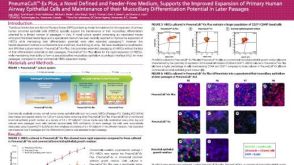 科学海报PneumaCult™-Ex Plus, a Novel Defined and Feeder-Free Medium, Supports the Improved Expansion of Primary Human Airway Epithelial Cells
 沪公网安备31010102008431号