Di Cristofori A et al. (JUL 2015)
Oncotarget 6 19 17514--31
The vacuolar H+ ATPase is a novel therapeutic target for glioblastoma.
The vacuolar H+ ATPase (V-ATPase) is a proton pump responsible for acidification of cellular microenvironments,an activity exploited by tumors to survive,proliferate and resist to therapy. Despite few observations,the role of V-ATPase in human tumorigenesis remains unclear.We investigated the expression of ATP6V0C,ATP6V0A2,encoding two subunits belonging to the V-ATPase V0 sector and ATP6V1C,ATP6V1G1,ATPT6V1G2,ATP6V1G3,which are part of the V1 sector,in series of adult gliomas and in cancer stem cell-enriched neurospheres isolated from glioblastoma (GBM) patients. ATP6V1G1 expression resulted significantly upregulated in tissues of patients with GBM and correlated with shorter patients' overall survival independent of clinical variables.ATP6V1G1 knockdown in GBM neurospheres hampered sphere-forming ability,induced cell death,and decreased matrix invasion,a phenotype not observed in GBM monolayer cultures. Treating GBM organotypic cultures or neurospheres with the selective V-ATPase inhibitor bafilomycin A1 reproduced the effects of ATP6V1G1 siRNA and strongly suppressed expression of the stem cell markers Nestin,CD133 and transcription factors SALL2 and POU3F2 in neurospheres.These data point to ATP6V1G1 as a novel marker of poor prognosis in GBM patients and identify V-ATPase inhibition as an innovative therapeutic strategy for GBM.
View Publication
产品类型:
产品号#:
05750
05751
产品名:
NeuroCult™ NS-A 基础培养基(人)
NeuroCult™ NS-A 扩增试剂盒(人)
Drago D et al. (SEP 2016)
Journal of neuroinflammation 13 1 232
Metabolic determinants of the immune modulatory function of neural stem cells.
BACKGROUND Neural stem cells (NSCs) display tissue trophic and immune modulatory therapeutic activities after transplantation in central nervous system disorders. The intercellular interplay between stem cells and target immune cells is increased in NSCs exposed to inflammatory cues. Here,we hypothesize that inflammatory cytokine signalling leads to metabolic reprogramming of NSCs regulating some of their immune modulatory effects. METHODS NSC lines were prepared from the subventricular zone (SVZ) of 7-12-week-old mice. Whole secretome-based screening and analysis of intracellular small metabolites was performed in NSCs exposed to cocktails of either Th1-like (IFN-γ,500 U/ml; TNF-α,200 U/ml; IL-1β,100 U/ml) or Th2-like (IL-4,IL-5 and IL-13; 10 ng/ml) inflammatory cytokines for 16 h in vitro. Isotopologues distribution of arginine and downstream metabolites was assessed by liquid chromatography/mass spectrometry in NSCs incubated with U-(13)C6 L-arginine in the presence or absence of Th1 or Th2 cocktails (Th1 NSCs or Th2 NSCs). The expression of arginase I and II was investigated in vitro in Th1 NSCs and Th2 NSCs and in vivo in the SVZ of mice with experimental autoimmune encephalomyelitis,as prototypical model of Th1 cell-driven brain inflammatory disease. The effects of the inflammatory cytokine signalling were studied in NSC-lymph node cells (LNC) co-cultures by flow cytometry-based analysis of cell proliferation following pan-arginase inhibition with N(ω)-hydroxy-nor-arginine (nor-NOHA). RESULTS Cytokine-primed NSCs showed significantly higher anti-proliferative effect in co-cultures vs. control NSCs. Metabolomic analysis of intracellular metabolites revealed alteration of arginine metabolism and increased extracellular arginase I activity in cytokine-primed NSCs. Arginase inhibition by nor-NOHA partly rescued the anti-proliferative effects of cytokine-primed NSCs. CONCLUSIONS Our work underlines the use of metabolic profiling as hypothesis-generating tools that helps unravelling how stem cell-mediated mechanisms of tissue restoration become affected by local inflammatory responses. Among different therapeutic candidates,we identify arginase signalling as novel metabolic determinant of the NSC-to-immune system communication.
View Publication
产品类型:
产品号#:
05700
05701
05702
产品名:
NeuroCult™ 基础培养基(小鼠和大鼠)
NeuroCult™ 扩增添加物(小鼠和大鼠)
NeuroCult™扩增试剂盒(小鼠和大鼠)
Fortin JM et al. (MAR 2016)
Scientific Reports 2016 6 6 23579
Transplantation of Defined Populations of Differentiated Human Neural Stem Cell Progeny
Transplantation of Defined Populations of Differentiated Human Neural Stem Cell Progeny
View Publication
产品类型:
产品号#:
05750
05751
产品名:
NeuroCult™ NS-A 基础培养基(人)
NeuroCult™ NS-A 扩增试剂盒(人)
Friedmann-Morvinski D et al. (JAN 2016)
Science advances 2 1 e1501292
Targeting NF-κB in glioblastoma: A therapeutic approach.
Glioblastoma multiforme (GBM) is the most common and lethal form of intracranial tumor. We have established a lentivirus-induced mouse model of malignant gliomas,which faithfully captures the pathophysiology and molecular signature of mesenchymal human GBM. RNA-Seq analysis of these tumors revealed high nuclear factor κB (NF-κB) activation showing enrichment of known NF-κB target genes. Inhibition of NF-κB by either depletion of IκB kinase 2 (IKK2),expression of a IκBαM super repressor,or using a NEMO (NF-κB essential modifier)-binding domain (NBD) peptide in tumor-derived cell lines attenuated tumor proliferation and prolonged mouse survival. Timp1,one of the NF-κB target genes significantly up-regulated in GBM,was identified to play a role in tumor proliferation and growth. Inhibition of NF-κB activity or silencing of Timp1 resulted in slower tumor growth in both mouse and human GBM models. Our results suggest that inhibition of NF-κB activity or targeting of inducible NF-κB genes is an attractive therapeutic approach for GBM.
View Publication
产品类型:
产品号#:
05700
05701
05702
产品名:
NeuroCult™ 基础培养基(小鼠和大鼠)
NeuroCult™ 扩增添加物(小鼠和大鼠)
NeuroCult™扩增试剂盒(小鼠和大鼠)
Gao C et al. (APR 2015)
Neurochemical Research 40 4 818--828
MCT4-Mediated Expression of EAAT1 is Involved in the Resistance to Hypoxia Injury in AstrocyteNeuron co-Cultures
Hypoxic stressors contribute to neuronal death in many brain diseases. Astrocyte processes surround most neurons and are therefore anatomically well-positioned to shield them from hypoxic injury. Excitatory amino acid transporters (EAATs),represent the sole mechanism of active reuptake of glutamate into the astrocytes and neurons and are essential to dampen neuronal excitation following glutamate release at synapses. Glutamate clearance impairment from any factors is bound to result in an increase in hypoxic neuronal injury. The brain energy metabolism under hypoxic conditions depends on monocarboxylate transporters (MCTs) that are expressed by neurons and glia. Previous co-immunoprecipitation experiments revealed that MCT4 directly modulate EAAT1 in astrocytes. The reduction in both surface proteins may act synergistically to induce neuronal hyperexcitability and excitotoxicity. Therefore we hypothesized that astrocytes would respond to hypoxic conditions by enhancing their expression of MCT4 and EAAT1,which,in turn,would enable them to better support neurons to survive lethal hypoxia injury. An oxygen deprivation (OD) protocol was used in primary cultures of neurons,astrocytes,and astrocytes-neurons derived from rat hippocampus,with or without MCT4-targeted short hairpin RNA (shRNA) transfection. Cell survival,expression of MCT4,EAAT1,glial fibrillary acidic protein and neuronal nuclear antigen were evaluated. OD resulted in significant cell death in neuronal cultures and up-regulation of MCT4,EAAT1 expression respectively in primary cell cultures,but no injury in neuron-astrocyte co-cultures and astrocyte cultures. However,neuronal cell death in co-cultures was increased exposure to shRNA-MCT4 prior to OD. These findings demonstrate that the MCT4-mediated expression of EAAT1 is involved in the resistance to hypoxia injury in astrocyte-neuron co-cultures.
View Publication
产品类型:
产品号#:
05711
100-1281
产品名:
NeuroCult™ SM1 神经添加物
NeuroCult™ SM1 神经添加物
Green AL et al. (MAY 2015)
Neuro-oncology 17 5 697--707
Preclinical antitumor efficacy of selective exportin 1 inhibitors in glioblastoma.
BACKGROUND Glioblastoma (GBM) is poorly responsive to current chemotherapy. The nuclear transporter exportin 1 (XPO1,CRM1) is often highly expressed in GBM,which may portend a poor prognosis. Here,we determine the efficacy of novel selective inhibitors of nuclear export (SINE) specific to XPO1 in preclinical models of GBM. METHODS Seven patient-derived GBM lines were treated with 3 SINE compounds (KPT-251,KPT-276,and Selinexor) in neurosphere culture conditions. KPT-276 and Selinexor were also evaluated in a murine orthotopic patient-derived xenograft (PDX) model of GBM. Cell cycle effects were assayed by flow cytometry in vitro and immunohistochemistry in vivo. Apoptosis was determined by terminal deoxynucleotidyl transferase dUTP nick end labeling (TUNEL) and caspase 3/7 activity assays. RESULTS Treatment of GBM neurosphere cultures with KPT-276,Selinexor,and KPT-251 revealed dose-responsive growth inhibition in all 7 GBM lines [range of half-maximal inhibitory concentration (IC50),6-354 nM]. In an orthotopic PDX model,treatment with KPT-276 and Selinexor demonstrated pharmacodynamic efficacy,significantly suppressed tumor growth,and prolonged animal survival. Cellular proliferation was not altered with SINE treatment. Instead,induction of apoptosis was apparent both in vitro and in vivo with SINE treatment,without overt evidence of neurotoxicity. CONCLUSIONS SINE compounds show preclinical efficacy utilizing in vitro and in vivo models of GBM,with induction of apoptosis as the mechanism of action. Selinexor is now in early clinical trials in solid and hematological malignancies. Based on these preclinical data and excellent brain penetration,we have initiated clinical trials of Selinexor in patients with relapsed GBM.
View Publication
产品类型:
产品号#:
05750
05751
产品名:
NeuroCult™ NS-A 基础培养基(人)
NeuroCult™ NS-A 扩增试剂盒(人)
Holmberg Olausson K et al. ( 2014)
PloS one 9 9 e106694
Prominin-1 (CD133) defines both stem and non-stem cell populations in CNS development and gliomas.
Prominin-1 (CD133) is a commonly used cancer stem cell marker in central nervous system (CNS) tumors including glioblastoma (GBM). Expression of Prom1 in cancer is thought to parallel expression and function in normal stem cells. Using RNA in situ hybridization and antibody tools capable of detecting multiple isoforms of Prom1,we find evidence for two distinct Prom1 cell populations in mouse brain. Prom1 RNA is first expressed in stem/progenitor cells of the ventricular zone in embryonic brain. Conversely,in adult mouse brain Prom1 RNA is low in SVZ/SGZ stem cell zones but high in a rare but widely distributed cell population (Prom1(hi)). Lineage marker analysis reveals Prom1(hi) cells are Olig2+Sox2+ glia but Olig1/2 knockout mice lacking oligodendroglia retain Prom1(hi) cells. Bromodeoxyuridine labeling identifies Prom1(hi) as slow-dividing distributed progenitors distinct from NG2+Olig2+ oligodendrocyte progenitors. In adult human brain,PROM1 cells are rarely positive for OLIG2,but express astroglial markers GFAP and SOX2. Variability of PROM1 expression levels in human GBM and patient-derived xenografts (PDX) - from no expression to strong,uniform expression--highlights that PROM1 may not always be associated with or restricted to cancer stem cells. TCGA and PDX data show that high expression of PROM1 correlates with poor overall survival. Within proneural subclass tumors,high PROM1 expression correlates inversely with IDH1 (R132H) mutation. These findings support PROM1 as a tumor cell-intrinsic marker related to GBM survival,independent of its stem cell properties,and highlight potentially divergent roles for this protein in normal mouse and human glia.
View Publication
产品类型:
产品号#:
05750
05751
产品名:
NeuroCult™ NS-A 基础培养基(人)
NeuroCult™ NS-A 扩增试剂盒(人)
Hothi P et al. (OCT 2012)
Oncotarget 3 10 1124--36
High-Throughput Chemical Screens Identify Disulfiram as an Inhibitor of Human Glioblastoma Stem Cells
Glioblastoma Multiforme (GBM) continues to have a poor patient prognosis despite optimal standard of care. Glioma stem cells (GSCs) have been implicated as the presumed cause of tumor recurrence and resistance to therapy. With this in mind,we screened a diverse chemical library of 2,000 compounds to identify therapeutic agents that inhibit GSC proliferation and therefore have the potential to extend patient survival. High-throughput screens (HTS) identified 78 compounds that repeatedly inhibited cellular proliferation,of which 47 are clinically approved for other indications and 31 are experimental drugs. Several compounds (such as digitoxin,deguelin,patulin and phenethyl caffeate) exhibited high cytotoxicity,with half maximal inhibitory concentrations (IC50) in the low nanomolar range. In particular,the FDA approved drug for the treatment of alcoholism,disulfiram (DSF),was significantly potent across multiple patient samples (IC50 of 31.1 nM). The activity of DSF was potentiated by copper (Cu),which markedly increased GSC death. DSF-Cu inhibited the chymotrypsin-like proteasomal activity in cultured GSCs,consistent with inactivation of the ubiquitin-proteasome pathway and the subsequent induction of tumor cell death. Given that DSF is a relatively non-toxic drug that can penetrate the blood-brain barrier,we suggest that DSF should be tested (as either a monotherapy or as an adjuvant) in pre-clinical models of human GBM. Data also support targeting of the ubiquitin-proteasome pathway as a therapeutic approach in the treatment of GBM.
View Publication
产品类型:
产品号#:
05750
05751
产品名:
NeuroCult™ NS-A 基础培养基(人)
NeuroCult™ NS-A 扩增试剂盒(人)
C. P. Couturier et al. (jul 2020)
Nature communications 11 1 3406
Single-cell RNA-seq reveals that glioblastoma recapitulates a normal neurodevelopmental hierarchy.
Cancer stem cells are critical for cancer initiation,development,and treatment resistance. Our understanding of these processes,and how they relate to glioblastoma heterogeneity,is limited. To overcome these limitations,we performed single-cell RNA sequencing on 53586 adult glioblastoma cells and 22637 normal human fetal brain cells,and compared the lineage hierarchy of the developing human brain to the transcriptome of cancer cells. We find a conserved neural tri-lineage cancer hierarchy centered around glial progenitor-like cells. We also find that this progenitor population contains the majority of the cancer's cycling cells,and,using RNA velocity,is often the originator of the other cell types. Finally,we show that this hierarchal map can be used to identify therapeutic targets specific to progenitor cancer stem cells. Our analyses show that normal brain development reconciles glioblastoma development,suggests a possible origin for glioblastoma hierarchy,and helps to identify cancer stem cell-specific targets.
View Publication
产品类型:
产品号#:
05750
05751
产品名:
NeuroCult™ NS-A 基础培养基(人)
NeuroCult™ NS-A 扩增试剂盒(人)
R. Su et al. ( 2018)
Cell 172 2-Jan 90--105.e23
R-2HG Exhibits Anti-tumor Activity by Targeting FTO/m6A/MYC/CEBPA Signaling.
R-2-hydroxyglutarate (R-2HG),produced at high levels by mutant isocitrate dehydrogenase 1/2 (IDH1/2) enzymes,was reported as an oncometabolite. We show here that R-2HG also exerts a broad anti-leukemic activity in vitro and in vivo by inhibiting leukemia cell proliferation/viability and by promoting cell-cycle arrest and apoptosis. Mechanistically,R-2HG inhibits fat mass and obesity-associated protein (FTO) activity,thereby increasing global N6-methyladenosine (m6A) RNA modification in R-2HG-sensitive leukemia cells,which in turn decreases the stability of MYC/CEBPA transcripts,leading to the suppression of relevant pathways. Ectopically expressed mutant IDH1 and S-2HG recapitulate the effects of R-2HG. High levels of FTO sensitize leukemic cells to R-2HG,whereas hyperactivation of MYC signaling confers resistance that can be reversed by the inhibition of MYC signaling. R-2HG also displays anti-tumor activity in glioma. Collectively,while R-2HG accumulated in IDH1/2 mutant cancers contributes to cancer initiation,our work demonstrates anti-tumor effects of 2HG in inhibiting proliferation/survival of FTO-high cancer cells via targeting FTO/m6A/MYC/CEBPA signaling.
View Publication


 EasySep™小鼠TIL(CD45)正选试剂盒





 科学海报Expansion of Rat Neural Stem and Progenitor Cells in Long-Term Culture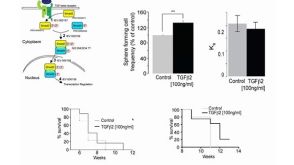

 沪公网安备31010102008431号