The sphingosine 1-phosphate receptor agonist FTY720 supports CXCR4-dependent migration and bone marrow homing of human CD34+ progenitor cells.
The novel immunosuppressant FTY720 activates sphingosine 1-phosphate receptors (S1PRs) that affect responsiveness of lymphocytes to chemokines such as stromal cell-derived factor 1 (SDF-1),resulting in increased lymphocyte homing to secondary lymphoid organs. Since SDF-1 and its receptor CXCR4 are also involved in bone marrow (BM) homing of hematopoietic stem and progenitor cells (HPCs),we analyzed expression of S1PRs and the influence of FTY720 on SDF-1/CXCR4-mediated effects in human HPCs. By reverse transcriptase-polymerase chain reaction (RT-PCR),S1PRs were expressed in mobilized CD34+ HPCs,particularly in primitive CD34+/CD38- cells. Incubation of HPCs with FTY720 resulted in prolonged SDF-1-induced calcium mobilization and actin polymerization,and substantially increased SDF-1-dependent in vitro transendothelial migration,without affecting VLA-4,VLA-5,and CXCR4 expression. In nonobese diabetic-severe combined immunodeficient (NOD/SCID) mice,the number of CD34+/CD38- cells that homed to the BM after 18 hours was significantly raised by pretreatment of animals and cells with FTY720,tending to result in improved engraftment. In addition,in vitro growth of HPCs (week-5 cobblestone area-forming cells [CAFCs]) was 2.4-fold increased. We conclude that activation of S1PRs by FTY720 increases CXCR4 function in HPCs both in vitro and in vivo,supporting homing and proliferation of HPCs. In the hematopoietic microenvironment,S1PRs are involved in migration and maintenance of HPCs by modulating the effects of SDF-1.
View Publication
产品类型:
产品号#:
04230
产品名:
MethoCult™ H4230
Baens M et al. (MAY 2006)
Cancer research 66 10 5270--7
Selective expansion of marginal zone B cells in Emicro-API2-MALT1 mice is linked to enhanced IkappaB kinase gamma polyubiquitination.
The translocation t(11;18)(q21;q21) that generates an API2-MALT1 fusion protein is the most common structural abnormality among the genetic defects reported in mucosa-associated lymphoid tissue (MALT)-type lymphomas,and its presence correlates with the apparent lack of further genetic instability or chromosomal imbalances. Hence,constitutive nuclear factor-kappaB (NF-kappaB) activation induced by the API2-MALT1 fusion protein is considered essential for B-cell transformation. To examine its role in B-cell development and lymphomagenesis,Emu-API2-MALT1 transgenic mice were produced. Our data show that expression of the API2-MALT1 fusion protein alone is not sufficient for the development of lymphoma masses within 50 weeks. Nevertheless,API2-MALT1 expression affected B-cell maturation in the bone marrow and triggered the specific expansion of splenic marginal zone B cells. Polyubiquitination of IkappaB kinase gamma (IKKgamma),indicative for enhanced NF-kappaB activation,was increased in splenic lymphocytes and promoted the survival of B cells ex vivo. In addition,we show that the API2-MALT1 fusion resided in the cholesterol- and sphingolipid-enriched membrane microdomains,termed lipid rafts. We provide evidence that association of the MALT1 COOH terminal with the lipid rafts,which is mediated by the API2 portion,is sufficient to trigger NF-kappaB activation via enhanced polyubiquitination of IKKgamma. Taken together,these data support the hypothesis that the API2-MALT1 fusion protein can contribute to MALT lymphoma formation via increased NF-kappaB activation.
View Publication
产品类型:
产品号#:
03630
产品名:
MethoCult™ M3630
Wunderlich M et al. (SEP 2006)
Blood 108 5 1690--7
Human CD34+ cells expressing the inv(16) fusion protein exhibit a myelomonocytic phenotype with greatly enhanced proliferative ability.
The t(16:16) and inv(16) are associated with FAB M4Eo myeloid leukemias and result in fusion of the CBFB gene to the MYH11 gene (encoding smooth muscle myosin heavy chain [SMMHC]). Knockout of CBFbeta causes embryonic lethality due to lack of definitive hematopoiesis. Although knock-in of CBFB-MYH11 is not sufficient to cause disease,expression increases the incidence of leukemia when combined with cooperating events. Although mouse models are valuable tools in the study of leukemogenesis,little is known about the contribution of CBFbeta-SMMHC to human hematopoietic stem and progenitor cell self-renewal. We introduced the CBFbeta-MYH11 cDNA into human CD34+ cells via retroviral transduction. Transduced cells displayed an initial repression of progenitor activity but eventually dominated the culture,resulting in the proliferation of clonal populations for up to 7 months. Long-term cultures displayed a myelomonocytic morphology while retaining multilineage progenitor activity and engraftment in NOD/SCID-B2M-/- mice. Progenitor cells from long-term cultures showed altered expression of genes defining inv(16) identified in microarray studies of human patient samples. This system will be useful in examining the effects of CBFbeta-SMMHC on gene expression in the human preleukemic cell,in characterizing the effect of this oncogene on human stem cell biology,and in defining its contribution to the development of leukemia.
View Publication
Guerra M et al. (JUL 2015)
Journal of neuropathology and experimental neurology 74 7 653--71
Cell Junction Pathology of Neural Stem Cells Is Associated With Ventricular Zone Disruption, Hydrocephalus, and Abnormal Neurogenesis.
Fetal-onset hydrocephalus affects 1 to 3 per 1,000 live births. It is not only a disorder of cerebrospinal fluid dynamics but also a brain disorder that corrective surgery does not ameliorate. We hypothesized that cell junction abnormalities of neural stem cells (NSCs) lead to the inseparable phenomena of fetal-onset hydrocephalus and abnormal neurogenesis. We used bromodeoxyuridine labeling,immunocytochemistry,electron microscopy,and cell culture to study the telencephalon of hydrocephalic HTx rats and correlated our findings with those in human hydrocephalic and nonhydrocephalic human fetal brains (n = 12 each). Our results suggest that abnormal expression of the intercellular junction proteins N-cadherin and connexin-43 in NSC leads to 1) disruption of the ventricular and subventricular zones,loss of NSCs and neural progenitor cells; and 2) abnormalities in neurogenesis such as periventricular heterotopias and abnormal neuroblast migration. In HTx rats,the disrupted NSC and progenitor cells are shed into the cerebrospinal fluid and can be grown into neurospheres that display intercellular junction abnormalities similar to those of NSC of the disrupted ventricular zone; nevertheless,they maintain their potential for differentiating into neurons and glia. These NSCs can be used to investigate cellular and molecular mechanisms underlying this condition,thereby opening the avenue for stem cell therapy.
View Publication
产品类型:
产品号#:
05771
05772
产品名:
S. Tsai et al. (MAR 2018)
BMC cancer 18 1 335
Development of primary human pancreatic cancer organoids, matched stromal and immune cells and 3D tumor microenvironment models.
BACKGROUND Patient-derived tumor models are the new standard for pre-clinical drug testing and biomarker discovery. However,the emerging technology of primary pancreatic cancer organoids has not yet been broadly implemented in research,and complex organotypic models using organoids in co-culture with stromal and immune cellular components of the tumor have yet to be established. In this study,our objective was to develop and characterize pancreatic cancer organoids and multi-cell type organotypic co-culture models to demonstrate their applicability to the study of pancreatic cancer. METHODS We employed organoid culture methods and flow cytometric,cytologic,immunofluorescent and immunohistochemical methods to develop and characterize patient-derived pancreatic cancer organoids and multi-cell type organotypic co-culture models of the tumor microenvironment. RESULTS We describe the culture and characterization of human pancreatic cancer organoids from resection,ascites and rapid autopsy sources and the derivation of adherent tumor cell monocultures and tumor-associated fibroblasts from these sources. Primary human organoids displayed tumor-like cellular morphology,tissue architecture and polarity in contrast to cell line spheroids,which formed homogenous,non-lumen forming spheres. Importantly,we demonstrate the construction of complex organotypic models of tumor,stromal and immune components of the tumor microenvironment. Activation of myofibroblast-like cancer associated fibroblasts and tumor-dependent lymphocyte infiltration were observed in these models. CONCLUSIONS These studies provide the first report of novel and disease-relevant 3D in-vitro models representing pancreatic tumor,stromal and immune components using primary organoid co-cultures representative of the tumor-microenvironment. These models promise to facilitate the study of tumor-stroma and tumor-immune interaction and may be valuable for the assessment of immunotherapeutics such as checkpoint inhibitors in the context of T-cell infiltration.
View Publication
产品类型:
产品号#:
06005
产品名:
IntestiCult™ 类器官生长培养基 (小鼠)
J. A. Zimmermann et al. (JAN 2017)
Stem cells translational medicine 6 1 223--237
Enhanced Immunosuppression of T Cells by Sustained Presentation of Bioactive Interferon-gamma$ Within Three-Dimensional Mesenchymal Stem Cell Constructs.
The immunomodulatory activity of mesenchymal stem/stromal cells (MSCs) to suppress innate and adaptive immune responses offers a potent cell therapy for modulating inflammation and promoting tissue regeneration. However,the inflammatory cytokine milieu plays a critical role in stimulating MSC immunomodulatory activity. In particular,interferon-gamma$ (IFN-gamma$)-induced expression of indoleamine 2,3-dioxygenase (IDO) is primarily responsible for MSC suppression of T-cell proliferation and activation. Although pretreatment with IFN-gamma$ is commonly used to prime MSCs for immunomodulatory activity prior to transplantation,the transient effects of pretreatment may limit the potential of MSCs to potently modulate immune responses. Therefore,the objective of this study was to investigate whether microparticle-mediated presentation of bioactive IFN-gamma$ within three-dimensional spheroidal MSC aggregates could precisely regulate and induce sustained immunomodulatory activity. Delivery of IFN-gamma$ via heparin-microparticles within MSC aggregates induced sustained IDO expression during 1 week of culture,whereas IDO expression by IFN-gamma$-pretreated MSC spheroids rapidly decreased during 2 days. Furthermore,sustained IDO expression induced by IFN-gamma$-loaded microparticles resulted in an increased and sustained suppression of T-cell activation and proliferation in MSC cocultures with CD3/CD28-activated peripheral blood mononuclear cells. The increased suppression of T cells by MSC spheroids containing IFN-gamma$-loaded microparticles was dependent on induction of IDO and supported by affecting monocyte secretion from pro- to anti-inflammatory cytokines. Altogether,microparticle delivery of IFN-gamma$ within MSC spheroids provides a potent means of enhancing and sustaining immunomodulatory activity to control MSC immunomodulation after transplantation and thereby improve the efficacy of MSC-based therapies aimed at treating inflammatory and immune diseases. Stem Cells Translational Medicine 2017;6:223-237.
View Publication
产品类型:
产品号#:
07933
07953
07949
17858
17858RF
100-0694
产品名:
CryoStor®CS5
CryoStor®CS5
CryoStor®CS5
EasySep™人CD14正选试剂盒II
RoboSep™ 人CD14正选试剂盒II
EasySep™人CD14正选试剂盒II
Salvador MA et al. (DEC 2013)
Clinical cancer research : an official journal of the American Association for Cancer Research 19 23 6520--6531
The histone deacetylase inhibitor abexinostat induces cancer stem cells differentiation in breast cancer with low Xist expression.
PURPOSE Cancer stem cells (CSC) are the tumorigenic cell population that has been shown to sustain tumor growth and to resist conventional therapies. The purpose of this study was to evaluate the potential of histone deacetylase inhibitors (HDACi) as anti-CSC therapies. EXPERIMENTAL DESIGN We evaluated the effect of the HDACi compound abexinostat on CSCs from 16 breast cancer cell lines (BCL) using ALDEFLUOR assay and tumorsphere formation. We performed gene expression profiling to identify biomarkers predicting drug response to abexinostat. Then,we used patient-derived xenograft (PDX) to confirm,in vivo,abexinostat treatment effect on breast CSCs according to the identified biomarkers. RESULTS We identified two drug-response profiles to abexinostat in BCLs. Abexinostat induced CSC differentiation in low-dose sensitive BCLs,whereas it did not have any effect on the CSC population from high-dose sensitive BCLs. Using gene expression profiling,we identified the long noncoding RNA Xist (X-inactive specific transcript) as a biomarker predicting BCL response to HDACi. We validated that low Xist expression predicts drug response in PDXs associated with a significant reduction of the breast CSC population. CONCLUSIONS Our study opens promising perspectives for the use of HDACi as a differentiation therapy targeting the breast CSCs and identified a biomarker to select patients with breast cancer susceptible to responding to this treatment.
View Publication
产品类型:
产品号#:
01700
01705
01702
产品名:
ALDEFLUOR™ 试剂盒
ALDEFLUOR™ DEAB试剂, 1.5 mM, 1 mL
ALDEFLUOR™检测缓冲液
Wang M et al. (MAR 2015)
ACS applied materials & interfaces 7 8 4560--4572
In Vitro Culture and Directed Osteogenic Differentiation of Human Pluripotent Stem Cells on Peptides-Decorated Two Dimensional Microenvironment
Human pluripotent stem cells (hPSCs) are a promising cell source with pluripotency and capacity to differentiate into all human somatic cell types. Designing simple and safe biomaterials with an innate ability to induce osteoblastic lineage from hPSCs is desirable to realize their clinical adoption in bone regenerative medicine. To address the issue,here we developed a fully defined synthetic peptides-decorated two dimensional (2D) microenvironment assisted via polydopamine (pDA) chemistry and subsequent carboxymethyl chitosan (CMC) grafting to enhance the culture and osteogenic potential of hPSCs in vitro. The hPSCs including human embryonic stem cells (hESCs) and human induced pluripotent stem cells (hiPSCs) were successfully cultured on the peptides-decorated surface without Matrigel- and ECM protein-coating and underwent promoted osteogenic differentiation in vitro,determined from the alkaline phosphate (ALP) activity,gene expression,and protein production as well as calcium deposit amount. It was found that directed osteogenic differentiation of hPSCs could be achieved through a peptides-decorated niche. This chemical-defined and safe 2D microenvironment which facilitates proliferation and osteo-differentiation of hPSCs,not only helps to accelerate the translational perspectives of hPSCs,but also provides tissue-specific functions such as directing stem cell differentiation commitment,having great potential in bone tissue engineering and presenting new avenues for bone regenerative medicine.
View Publication
产品类型:
产品号#:
05850
05857
05870
05875
07920
85850
85857
85870
85875
07922
产品名:
ACCUTASE™
mTeSR™1
mTeSR™1
ACCUTASE™
Nijhof IS et al. (OCT 2015)
Leukemia 29 10 2039--49
Upregulation of CD38 expression on multiple myeloma cells by all-trans retinoic acid improves the efficacy of daratumumab.
Daratumumab is an anti-CD38 monoclonal antibody with lytic activity against multiple myeloma (MM) cells,including ADCC (antibody-dependent cellular cytotoxicity) and CDC (complement-dependent cytotoxicity). Owing to a marked heterogeneity of response to daratumumab therapy in MM,we investigated determinants of the sensitivity of MM cells toward daratumumab-mediated ADCC and CDC. In bone marrow samples from 144 MM patients,we observed no difference in daratumumab-mediated lysis between newly diagnosed or relapsed/refractory patients. However,we discovered,next to an expected effect of effector (natural killer cells/monocytes) to target (MM cells) ratio on ADCC,a significant association between CD38 expression and daratumumab-mediated ADCC (127 patients),as well as CDC (56 patients). Similarly,experiments with isogenic MM cell lines expressing different levels of CD38 revealed that the level of CD38 expression is an important determinant of daratumumab-mediated ADCC and CDC. Importantly,all-trans retinoic acid (ATRA) increased CD38 expression levels but also reduced expression of the complement-inhibitory proteins CD55 and CD59 in both cell lines and primary MM samples. This resulted in a significant enhancement of the activity of daratumumab in vitro and in a humanized MM mouse model as well. Our results provide the preclinical rationale for further evaluation of daratumumab combined with ATRA in MM patients.
View Publication
产品类型:
产品号#:
15621
15661
产品名:
RosetteSep™人CD3去除抗体混合物
RosetteSep™人CD3去除抗体混合物
Szewczyk K et al. (JUN 2016)
Human immunology 77 6 449--55
Flow cytometry crossmatch reactivity with pronase-treated T cells induced by non-HLA autoantibodies in human immunodeficiency virus-infected patients.
Pronase treatment is used in the flow cytometry crossmatch (FCXM) to prevent nonspecific antibody binding on B cells. However,we have observed unexpected positive results with pronase-treated T cells in human immunodeficiency virus (HIV)-infected patients. In this study,25 HIV-infected patients without HLA antibodies were tested with pronase-treated and nontreated cells. HIV-positive sera were pretreated with reducing agents and preabsorbed with pronase-treated and nontreated T or B cells before crossmatching. All patients displayed FCXM reactivity with pronase-treated T cells but not with nontreated T cells. None of the patients exhibited FCXM reactivity with pronase-treated and nontreated B cells. These patients displayed FCXM reactivity with pronase-treated CD4+ and CD8+ T cells but not with their nontreated counterparts. Preabsorption with pronase-treated T cells reduced the T cell FCXM reactivity. Preabsorption with pronase-treated B cells or nontreated T and B cells did not have any effect on the T cell FCXM reactivity. Pretreatment with reducing agents did not affect the T cell FCXM reactivity. 15 of 21 HIV-infected kidney allograft recipients with pronase-treated T cell FCXM reactivity display long-term graft survival (1193±631days). These data indicate that HIV-infected patients have nondeleterious autoantibodies recognizing cryptic epitopes exposed by pronase on T cells.
View Publication
产品类型:
产品号#:
17952
17952RF
17953
17953RF
21000
20119
20155
100-0696
100-0710
产品名:
EasySep™人CD4+ T细胞分选试剂盒
RoboSep™ 人CD4+ T细胞分选试剂盒
EasySep™人CD8+ T细胞分选试剂盒
RoboSep™ 人CD8+ T细胞分选试剂盒
RoboSep™- S
RoboSep™ 吸头组件抛光剂
RoboSep™分选管套装(9个塑料管)
EasySep™人CD4+ T细胞分离试剂盒
EasySep™人CD8+ T细胞分选试剂盒
Song Z et al. (JAN 2010)
Clinical cancer research : an official journal of the American Association for Cancer Research 16 2 587--99
Activities of SYK and PLCgamma2 predict apoptotic response of CLL cells to SRC tyrosine kinase inhibitor dasatinib.
PURPOSE: B-cell receptor signaling plays an important role in the pathogenesis of chronic lymphocytic leukemia (CLL). However,blocking B-cell receptor signaling with dasatinib,an inhibitor of SRC kinase,produced variable results in preclinical and clinical studies. We aim to define the molecular mechanisms underlying the differential dasatinib sensitivity and to uncover more effective therapeutic targets in CLL. EXPERIMENTAL DESIGN: Fresh CLL B cells were treated with dasatinib,and cell viability was followed. The CLL cases were then divided into good and poor responders. The cellular response was correlated with the activities of B-cell receptor signaling molecules,as well as with molecular and cytogenetic prognostic factors. RESULTS: Among 50 CLL cases,dasatinib treatment reduced cell viability by 2% to 90%,with an average reduction of 47% on day 4 of culture. The drug induced CLL cell death through the intrinsic apoptotic pathway mediated by reactive oxygen species. Unexpectedly,phosphorylation of SRC family kinases was inhibited by dasatinib in good,as well as poor,responders. As opposed to SRC family kinases,activities of two downstream molecules,SYK and phospholipase Cgamma2,correlate well with the apoptotic response of CLL cells to dasatinib. CONCLUSIONS: Thus,SYK inhibition predicts cellular response to dasatinib. SYK,together with phospholipase Cgamma2,may serve as potential biomarkers to predict dasatinib therapeutic response in patients. From the pathogenic perspective,our study suggests the existence of alternative mechanisms or pathways that activate SYK,independent of SRC kinase activities. The study further implicates that SYK might serve as a more effective therapeutic target in CLL treatment.
View Publication


 EasySep™小鼠TIL(CD45)正选试剂盒





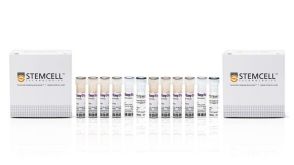 新闻Now Available! Isolate Untouched Human Plasmacytoid Dendritic Cells (pDCs) with EasySep™ Human pDC Enrichment Kit (Catalog #19062)
 沪公网安备31010102008431号