Invasion of glioma cells through confined space requires membrane tension regulation and mechano-electrical coupling via Plexin-B2
Glioblastoma (GBM) is a malignant brain tumor with diffuse infiltration. Here,we demonstrate how GBM cells usurp guidance receptor Plexin-B2 for confined migration through restricted space. Using live-cell imaging to track GBM cells negotiating microchannels,we reveal endocytic vesicle accumulation at cell front and filamentous actin assembly at cell rear in a polarized manner. These processes are interconnected and require Plexin-B2 signaling. We further show that Plexin-B2 governs membrane tension and other membrane features such as endocytosis,phospholipid composition,and inner leaflet surface charge,thus providing biophysical mechanisms by which Plexin-B2 promotes GBM invasion. Together,our studies unveil how GBM cells regulate membrane tension and mechano-electrical coupling to adapt to physical constraints and achieve polarized confined migration. The biomechanical mechanisms enabling the invasive growth of brain tumors remain opaque. Here,Junqueira Alves et al. reveal that the guidance receptor Plexin-B2 controls membrane tension,facilitating confined migration of brain tumor cells.
View Publication
产品类型:
产品号#:
05751
05835
05839
85850
85857
产品名:
NeuroCult™ NS-A 扩增试剂盒(人)
STEMdiff™ 神经诱导培养基
STEMdiff™ 神经诱导培养基
mTeSR™1
mTeSR™1
K. M. Glaser et al. ( 2022)
Frontiers in immunology 13 1039803
Combinatorial depletions of G-protein coupled receptor kinases in immune cells identify pleiotropic and cell type-specific functions.
G-protein coupled receptor kinases (GRKs) participate in the regulation of chemokine receptors by mediating receptor desensitization. They can be recruited to agonist-activated G-protein coupled receptors (GPCRs) and phosphorylate their intracellular parts,which eventually blocks signal propagation and often induces receptor internalization. However,there is growing evidence that GRKs can also control cellular functions beyond GPCR regulation. Immune cells commonly express two to four members of the GRK family (GRK2,GRK3,GRK5,GRK6) simultaneously,but we have very limited knowledge about their interplay in primary immune cells. In particular,we are missing comprehensive studies comparing the role of this GRK interplay for (a) multiple GPCRs within one leukocyte type,and (b) one specific GPCR between several immune cell subsets. To address this issue,we generated mouse models of single,combinatorial and complete GRK knockouts in four primary immune cell types (neutrophils,T cells,B cells and dendritic cells) and systematically addressed the functional consequences on GPCR-controlled cell migration and tissue localization. Our study shows that combinatorial depletions of GRKs have pleiotropic and cell-type specific effects in leukocytes,many of which could not be predicted. Neutrophils lacking all four GRK family members show increased chemotactic migration responses to a wide range of GPCR ligands,whereas combinatorial GRK depletions in other immune cell types lead to pro- and anti-migratory responses. Combined depletion of GRK2 and GRK6 in T cells and B cells shows distinct functional outcomes for (a) one GPCR type in different cell types,and (b) different GPCRs in one cell type. These GPCR-type and cell-type specific effects reflect in altered lymphocyte chemotaxis in vitro and localization in vivo. Lastly,we provide evidence that complete GRK deficiency impairs dendritic cell homeostasis,which unexpectedly results from defective dendritic cell differentiation and maturation in vitro and in vivo. Together,our findings demonstrate the complexity of GRK functions in immune cells,which go beyond GPCR desensitization in specific leukocyte types. Furthermore,they highlight the need for studying GRK functions in primary immune cells to address their specific roles in each leukocyte subset.
View Publication
产品类型:
产品号#:
17668
19851
19854
19851RF
19854RF
17668RF
产品名:
EasySep™小鼠FITC阳性选择试剂盒II
EasySep™小鼠T细胞分选试剂盒
EasySep™小鼠B细胞分选试剂盒
RoboSep™ 小鼠T细胞分选试剂盒
RoboSep™ 小鼠B细胞分选试剂盒
RoboSep™ 小鼠FITC正选试剂盒II
S. Gendreizig et al. (Jul 2024)
Cell Death & Disease 15 7
Human papillomavirus-associated head and neck squamous cell carcinoma cells lose viability during triggered myocyte lineage differentiation
Head and neck squamous cell carcinoma (HNSCC) is a highly malignant disease,and death rates have remained at approximately 50% for decades. New tumor-targeting strategies are desperately needed,and a previous report indicated the triggered differentiation of HPV-negative HNSCC cells to confer therapeutic benefits. Using patient-derived tumor cells,we created a similar HNSCC differentiation model of HPV+ tumor cells from two patients. We observed a loss of malignant characteristics in differentiating cell culture conditions,including irregularly enlarged cell morphology,cell cycle arrest with downregulation of Ki67,and reduced cell viability. RNA-Seq showed myocyte-like differentiation with upregulation of markers of myofibril assembly. Immunofluorescence staining of differentiated and undifferentiated primary HPV+ HNSCC cells confirmed an upregulation of these markers and the formation of parallel actin fibers reminiscent of myoblast-lineage cells. Moreover,immunofluorescence of HPV+ tumor tissue revealed areas of cells co-expressing the identified markers of myofibril assembly,HPV surrogate marker p16,and stress-associated basal keratinocyte marker KRT17,indicating that the observed myocyte-like in vitro differentiation occurs in human tissue. We are the first to report that carcinoma cells can undergo a triggered myocyte-like differentiation,and our study suggests that the targeted differentiation of HPV+ HNSCCs might be therapeutically valuable. Subject terms: Oral cancer,Mechanisms of disease,Cell death
View Publication
产品类型:
产品号#:
05040
产品名:
PneumaCult™-Ex Plus 培养基
S. Cronin et al. (Jun 2024)
iScience 27 7
The immunosuppressive tuberculosis-associated microenvironment inhibits viral replication and promotes HIV-1 latency in CD4 + T cells
Mycobacterium tuberculosis ( Mtb ),the causative agent of tuberculosis (TB),is the most common coinfection among people living with HIV-1. This coinfection is associated with accelerated HIV-1 disease progression and reduced survival. However,the impact of the HIV-1/TB coinfection on HIV-1 replication and latency in CD4 + T cells remains poorly studied. Using the acellular fraction of tuberculous pleural effusion (TB-PE),we investigated whether viral replication and HIV-1 latency in CD4 + T cells are affected by a TB-associated microenvironment. Our results revealed that TB-PE impaired T cell receptor-dependent cell activation and decreased HIV-1 replication in CD4 + T cells. Moreover,this immunosuppressive TB microenvironment promoted viral latency and inhibited HIV-1 reactivation. This study indicates that the TB-induced immune response may contribute to the persistence of the viral reservoir by silencing HIV-1 expression,allowing the virus to persist undetected by the immune system,and increasing the size of the latent HIV-1 reservoir. Subject areas: Immunology,Virology
View Publication
产品类型:
产品号#:
15022
15062
产品名:
RosetteSep™人CD4+ T细胞富集抗体混合物
RosetteSep™人CD4+ T细胞富集抗体混合物
E. Wallén et al. (Jun 2025)
Disease Models & Mechanisms 18 6
Effects of alcohol on the transcriptome, methylome and metabolome of in vitro gastrulating human embryonic cells
Prenatal alcohol exposure (PAE) affects embryonic development,causing a variable fetal alcohol spectrum disorder (FASD) phenotype with neurodevelopmental disorders and birth defects. To explore the effects of PAE on gastrulation,we used an in vitro model with subchronic moderate (20 mM) and severe (70 mM) ethanol exposures during the differentiation of human embryonic stem cells into germ layer cells. We analyzed genome-wide gene expression (mRNA sequencing),DNA methylation (EPIC Illumina microarrays) and metabolome (non-targeted LC-MS) of the endodermal,mesodermal and ectodermal cells. The largest number of ethanol-induced alterations were observed in endodermal cells,whereas the most prominent changes were in ectodermal cells. Methionine metabolism and genes of the main signaling pathways involved in gastrulation and body patterning were affected by ethanol in all germ layers. Many of the altered genes,including BMP4,FGF8,SIX3 and LHX2,have previously been associated with PAE and phenotypes of FASD,like defects in heart and corpus callosum development as well as holoprosencephaly. Our findings support the early origin of alcohol-induced developmental disorders and strengthen the role of methionine cycle in the etiology of FASD.
View Publication
产品类型:
产品号#:
05230
产品名:
STEMdiff™ 三胚层分化试剂盒
V. S. Shah et al. (Jun 2025)
Nature Communications 16
Single cell profiling of human airway identifies tuft-ionocyte progenitor cells displaying cytokine-dependent differentiation bias in vitro
Human airways contain specialized rare epithelial cells including CFTR-rich ionocytes that regulate airway surface physiology and chemosensory tuft cells that produce asthma-associated inflammatory mediators. Here,using a lung cell atlas of 311,748 single cell RNA-Seq profiles,we identify 687 ionocytes (0.45%). In contrast to prior reports claiming a lack of ionocytes in the small airways,we demonstrate that ionocytes are present in small and large airways in similar proportions. Surprisingly,we find only 3 mature tuft cells (0.002%),and demonstrate that previously annotated tuft-like cells are instead highly replicative progenitor cells. These tuft-ionocyte progenitor (TIP) cells produce ionocytes as a default lineage. However,Type 2 and Type 17 cytokines divert TIP cell lineage in vitro,resulting in the production of mature tuft cells at the expense of ionocyte differentiation. Our dataset thus provides an updated understanding of airway rare cell composition,and further suggests that clinically relevant cytokines may skew the composition of disease-relevant rare cells. Subject terms: Interleukins,Systems analysis,Differentiation,Sequencing
View Publication
Comparative characterization of human induced pluripotent stem cells (hiPSC) derived from patients with schizophrenia and autism.
Human induced pluripotent stem cells (hiPSC) provide an attractive tool to study disease mechanisms of neurodevelopmental disorders such as schizophrenia. A pertinent problem is the development of hiPSC-based assays to discriminate schizophrenia (SZ) from autism spectrum disorder (ASD) models. Healthy control individuals as well as patients with SZ and ASD were examined by a panel of diagnostic tests. Subsequently,skin biopsies were taken for the generation,differentiation,and testing of hiPSC-derived neurons from all individuals. SZ and ASD neurons share a reduced capacity for cortical differentiation as shown by quantitative analysis of the synaptic marker PSD95 and neurite outgrowth. By contrast,pattern analysis of calcium signals turned out to discriminate among healthy control,schizophrenia,and autism samples. Schizophrenia neurons displayed decreased peak frequency accompanied by increased peak areas,while autism neurons showed a slight decrease in peak amplitudes. For further analysis of the schizophrenia phenotype,transcriptome analyses revealed a clear discrimination among schizophrenia,autism,and healthy controls based on differentially expressed genes. However,considerable differences were still evident among schizophrenia patients under inspection. For one individual with schizophrenia,expression analysis revealed deregulation of genes associated with the major histocompatibility complex class II (MHC class II) presentation pathway. Interestingly,antipsychotic treatment of healthy control neurons also increased MHC class II expression. In conclusion,transcriptome analysis combined with pattern analysis of calcium signals appeared as a tool to discriminate between SZ and ASD phenotypes in vitro.
View Publication
产品类型:
产品号#:
05110
05832
05835
05839
05790
05792
05793
05794
05795
34811
34850
34815
34821
34825
85850
85857
85870
85875
34860
产品名:
STEMdiff™定型内胚层检测试剂盒
STEMdiff™ 神经花环选择试剂
STEMdiff™ 神经诱导培养基
STEMdiff™ 神经诱导培养基
BrainPhys™神经元培养基
BrainPhys™神经元培养基和SM1试剂盒
BrainPhys™ 神经元培养基N2-A和SM1试剂盒
BrainPhys™原代神经元试剂盒
BrainPhys™ hPSC 神经元试剂盒
AggreWell™ 800 24孔板,1个
AggreWell™ 800 24孔板启动套装
AggreWell™ 800 24孔板,5个
AggreWell™ 800 6孔板,1个
AggreWell™ 800 6孔板,5个
mTeSR™1
mTeSR™1
AggreWell™ 800 6孔板启动套装
T. Li et al. (jul 2020)
Pharmacological research 157 104843
Adipose-derived mesenchymal stem cells and extracellular vesicles confer antitumor activity in preclinical treatment of breast cancer.
Both antitumor and protumor property of mesenchymal stem cells (MSCs) have been demonstrated. We hypothesize that this contradiction is due to the heterogeneity of MSC subsets and that extracellular vesicles (EVs) from distinct MSC subsets can transfer the corresponding antitumor activities. Here we evaluated the antitumor activities of two subsets of adipose-derived mesenchymal stem cells (ADSCs) and ADSC-derived EVs (ADSC-EVs) in immunocompetent syngeneic mouse models of breast cancer. We identified CD90high and CD90low ADSC subsets and demonstrated that CD90high ADSCs could be converted into CD90low ADSCs by stimulation with LPS. CD90low ADSCs and its derived EVs significantly inhibited tumor growth in tumor-bearing mice. Benefit of tumor control were associated with decreased tumor cell proliferation and migration,and enhanced tumor cell apoptosis mediated by ADSC-EVs. Antioncogenic miRNA-16-5p loaded CD90low ADSC-EVs further significantly enhanced antitumor activities. Taken together,this study represents the first attempt to apply our newly identified antitumor ADSCs and its derived EVs in preclinical treatment of breast cancer. This study also provides the evidence that EVs can serve as a novel and effective therapeutics or drug delivery vesicle. This new therapeutic approach could be potentially applicable to breast cancer and many other types of cancer.
View Publication
产品类型:
产品号#:
05513
产品名:
MesenCult™ 扩增试剂盒 (小鼠)
M. Klopotowska et al. (feb 2022)
Cancer immunology research 10 2 228--244
PRDX-1 Supports the Survival and Antitumor Activity of Primary and CAR-Modified NK Cells under Oxidative Stress.
Oxidative stress,caused by the imbalance between reactive species generation and the dysfunctional capacity of antioxidant defenses,is one of the characteristic features of cancer. Here,we quantified hydrogen peroxide in the tumor microenvironment (TME) and demonstrated that hydrogen peroxide concentrations are elevated in tumor interstitial fluid isolated from murine breast cancers in vivo,when compared with blood or normal subcutaneous fluid. Therefore,we investigated the effects of increased hydrogen peroxide concentration on immune cell functions. NK cells were more susceptible to hydrogen peroxide than T cells or B cells,and by comparing T,B,and NK cells' sensitivities to redox stress and their antioxidant capacities,we identified peroxiredoxin-1 (PRDX1) as a lacking element of NK cells' antioxidative defense. We observed that priming with IL15 protected NK cells' functions in the presence of high hydrogen peroxide and simultaneously upregulated PRDX1 expression. However,the effect of IL15 on PRDX1 expression was transient and strictly dependent on the presence of the cytokine. Therefore,we genetically modified NK cells to stably overexpress PRDX1,which led to increased survival and NK cell activity in redox stress conditions. Finally,we generated PD-L1-CAR NK cells overexpressing PRDX1 that displayed potent antitumor activity against breast cancer cells under oxidative stress. These results demonstrate that hydrogen peroxide,at concentrations detected in the TME,suppresses NK cell function and that genetic modification strategies can improve CAR NK cells' resistance and potency against solid tumors.
View Publication
S. A. Ramos,H. A. Russ (May 2026)
Bio-protocol 16 9
Generation of Functional Patient-Specific Thymus Organoids From Human Pluripotent Stem Cells (hPSCs) Using Air–Liquid Interface Culture
The thymus is critical for the establishment of a functional and self-tolerant adaptive immune system,but it involutes with age,resulting in reduced naive T-cell output. Generation of a functional human thymus from human pluripotent stem cells (hPSCs) is an attractive regenerative medicine strategy. Direct differentiation of thymic epithelial progenitors (TEPs) from hPSCs has been demonstrated in vitro,but functional thymic epithelial cells (TECs) develop only after transplantation of TEPs in vivo. Functional human reaggregated thymic organoid cultures (RTOCs) and artificial thymic organoids (ATOs) cultured at the air–liquid interface support T-cell development in vitro and in vivo and permit the interrogation of human thymic function and T-cell development. However,these approaches require access to primary human tissues or murine bone marrow stromal cells,are allogeneic,and do not support negative selection. Recently,we reported the directed differentiation of induced PSCs (iPSCs) to functional thymic epithelial progenitors (TEPs) that support murine T-cell development after transplantation in nude mice. Here,we combined hPSC-derived TEPs,hematopoietic progenitor cells (HPCs),and mesenchymal cells,differentiated from the same hPSC line,and generated functional isogenic stem cell–derived thymic organoids (sTOs). Our revised protocol improves our TEP differentiation process and allows the generation of functional isogenic,patient-specific thymic organoids in vitro.
View Publication
产品类型:
产品号#:
100-0276
100-0483
100-0484
100-1130
产品名:
mTeSR™ Plus
Hausser Scientificᵀᴹ 明线血球计数板
ReLeSR™
mTeSR™ Plus
Jä et al. (SEP 2010)
Proceedings of the National Academy of Sciences of the United States of America 107 37 16280--5
Isolation and killing of candidate chronic myeloid leukemia stem cells by antibody targeting of IL-1 receptor accessory protein.
Chronic myeloid leukemia (CML) is genetically characterized by the Philadelphia (Ph) chromosome,formed through a reciprocal translocation between chromosomes 9 and 22 and giving rise to the constitutively active tyrosine kinase P210 BCR/ABL1. Therapeutic strategies aiming for a cure of CML will require full eradication of Ph chromosome-positive (Ph(+)) CML stem cells. Here we used gene-expression profiling to identify IL-1 receptor accessory protein (IL1RAP) as up-regulated in CML CD34(+) cells and also in cord blood CD34(+) cells as a consequence of retroviral BCR/ABL1 expression. To test whether IL1RAP expression distinguishes normal (Ph(-)) and leukemic (Ph(+)) cells within the CML CD34(+)CD38(-) cell compartment,we established a unique protocol for conducting FISH on small numbers of sorted cells. By using this method,we sorted cells directly into drops on slides to investigate their Ph-chromosome status. Interestingly,we found that the CML CD34(+)CD38(-)IL1RAP(+) cells were Ph(+),whereas CML CD34(+)CD38(-)IL1RAP(-) cells were almost exclusively Ph(-). By performing long-term culture-initiating cell assays on the two cell populations,we found that Ph(+) and Ph(-) candidate CML stem cells could be prospectively separated. In addition,by generating an anti-IL1RAP antibody,we provide proof of concept that IL1RAP can be used as a target on CML CD34(+)CD38(-) cells to induce antibody-dependent cell-mediated cytotoxicity. This study thus identifies IL1RAP as a unique cell surface biomarker distinguishing Ph(+) from Ph(-) candidate CML stem cells and opens up a previously unexplored avenue for therapy of CML.
View Publication


 EasySep™小鼠TIL(CD45)正选试剂盒





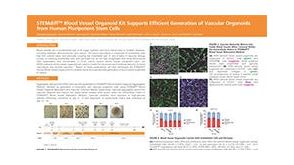 科学海报STEMdiff™ Blood Vessel Organoid Kit Supports Efficient Generation of Vascular Organoids from Human Pluripotent Stem Cells
 沪公网安备31010102008431号