Evaluation of Stem Cell-Derived Red Blood Cells as a Transfusion Product Using a Novel Animal Model.
Reliance on volunteer blood donors can lead to transfusion product shortages,and current liquid storage of red blood cells (RBCs) is associated with biochemical changes over time,known as 'the storage lesion'. Thus,there is a need for alternative sources of transfusable RBCs to supplement conventional blood donations. Extracorporeal production of stem cell-derived RBCs (stemRBCs) is a potential and yet untapped source of fresh,transfusable RBCs. A number of groups have attempted RBC differentiation from CD34+ cells. However,it is still unclear whether these stemRBCs could eventually be effective substitutes for traditional RBCs due to potential differences in oxygen carrying capacity,viability,deformability,and other critical parameters. We have generated ex vivo stemRBCs from primary human cord blood CD34+ cells and compared them to donor-derived RBCs based on a number of in vitro parameters. In vivo,we assessed stemRBC circulation kinetics in an animal model of transfusion and oxygen delivery in a mouse model of exercise performance. Our novel,chronically anemic,SCID mouse model can evaluate the potential of stemRBCs to deliver oxygen to tissues (muscle) under resting and exercise-induced hypoxic conditions. Based on our data,stem cell-derived RBCs have a similar biochemical profile compared to donor-derived RBCs. While certain key differences remain between donor-derived RBCs and stemRBCs,the ability of stemRBCs to deliver oxygen in a living organism provides support for further development as a transfusion product.
View Publication
产品类型:
产品号#:
70008
70008.1
70008.2
70008.3
70008.4
70008.5
70008.6
200-0000
200-0001
200-0002
产品名:
冻存的人脐带血CD34+细胞
冻存的人脐带血CD34+细胞
冻存的人脐带血CD34+细胞
冻存的人脐带血CD34+细胞
冻存的人脐带血CD34+细胞
冻存的人脐带血CD34+细胞
冻存的人脐带血CD34+细胞
冻存的人脐带血CD34+细胞
冻存的人脐带血CD34+细胞
Zhou S et al. ( 2017)
PloS one 12 1 e0169899
Reprogramming Malignant Cancer Cells toward a Benign Phenotype following Exposure to Human Embryonic Stem Cell Microenvironment.
The embryonic microenvironment is well known to be non-permissive for tumor development because early developmental signals naturally suppress the expression of proto-oncogenes. In an analogous manner,mimicking an early embryonic environment during embryonic stem cell culture has been shown to suppress oncogenic phenotypes of cancer cells. Exosomes derived from human embryonic stem cells harbor substances that mirror the content of the cells of origin and have been reported to reprogram hematopoietic stem/progenitor cells via horizontal transfer of mRNA and proteins. However,the possibility that these embryonic stem cells-derived exosomes might be the main effectors of the anti-tumor effect mediated by the embryonic stem cells has not been explored yet. The present study aims to investigate whether exosomes derived from human embryonic stem cells can reprogram malignant cancer cells to a benign stage and reduce their tumorigenicity. We show that the embryonic stem cell-conditioned medium contains factors that inhibit cancer cell growth and tumorigenicity in vitro and in vivo. Moreover,we demonstrate that exosomes derived from human embryonic stem cells display anti-proliferation and pro-apoptotic effects,and decrease tumor size in a xenograft model. These exosomes are also able to transfer their cargo into target cancer cells,inducing a dose-dependent increase in SOX2,OCT4 and Nanog proteins,leading to a dose-dependent decrease of cancer cell growth and tumorigenicity. This study shows for the first time that human embryonic stem cell-derived exosomes play an important role in the tumor suppressive activity displayed by human embryonic stem cells.
View Publication
Y.-H. Chang et al. ( 2017)
Immunity 47 5 943--958.e9
Dichotomous Expression of TNF Superfamily Ligands on Antigen-Presenting Cells Controls Post-priming Anti-viral CD4+ T Cell Immunity.
T cell antigen-presenting cell (APC) interactions early during chronic viral infection are crucial for determining viral set point and disease outcome,but how and when different APC subtypes contribute to these outcomes is unclear. The TNF receptor superfamily (TNFRSF) member GITR is important for CD4+ T cell accumulation and control of chronic lymphocytic choriomeningitis virus (LCMV). We found that type I interferon (IFN-I) induced TNFSF ligands GITRL,4-1BBL,OX40L,and CD70 predominantly on monocyte-derived APCs and CD80 and CD86 predominantly on classical dendritic cells (cDCs). Mice with hypofunctional GITRL in Lyz2+ cells had decreased LCMV-specific CD4+ T cell accumulation and increased viral load. GITR signals in CD4+ T cells occurred after priming to upregulate OX40,CD25,and chemokine receptor CX3CR1. Thus IFN-I (signal 3) induced a post-priming checkpoint (signal 4) for CD4+ T cell accumulation,revealing a division of labor between cDCs and monocyte-derived APCs in regulating T cell expansion.
View Publication
产品类型:
产品号#:
18559
18559RF
19765
19765RF
19852
19852RF
产品名:
EasySep™小鼠Naïve CD4+ T细胞分选试剂盒
RoboSep™ 小鼠Naïve CD4+ T细胞分选试剂盒
EasySep™小鼠CD4+ T细胞分选试剂盒
RoboSep™ 小鼠CD4+ T细胞分选试剂盒
Erceg S et al. (MAY 2008)
PLoS ONE 3 5 e2122
Differentiation of human embryonic stem cells to regional specific neural precursors in chemically defined medium conditions.
BACKGROUND: Human embryonic stem cells (hESC) provide a unique model to study early events in human development. The hESC-derived cells can potentially be used to replace or restore different tissues including neuronal that have been damaged by disease or injury.backslashnbackslashnMETHODOLOGY AND PRINCIPAL FINDINGS: The cells of two different hESC lines were converted to neural rosettes using adherent and chemically defined conditions. The progenitor cells were exposed to retinoic acid (RA) or to human recombinant basic fibroblast growth factor (bFGF) in the late phase of the rosette formation. Exposing the progenitor cells to RA suppressed differentiation to rostral forebrain dopamine neural lineage and promoted that of spinal neural tissue including motor neurons. The functional characteristics of these differentiated neuronal precursors under both,rostral (bFGF) and caudalizing (RA) signals were confirmed by patch clamp analysis.backslashnbackslashnCONCLUSIONS/SIGNIFICANCE: These findings suggest that our differentiation protocol has the capacity to generate region-specific and electrophysiologically active neurons under in vitro conditions without embryoid body formation,co-culture with stromal cells and without presence of cells of mesodermal or endodermal lineages.
View Publication
产品类型:
产品号#:
05850
05857
05870
05875
85850
85857
85870
85875
产品名:
mTeSR™1
mTeSR™1
Abranches E et al. (JAN 2009)
PloS one 4 7 e6286
Neural differentiation of embryonic stem cells in vitro: a road map to neurogenesis in the embryo.
BACKGROUND The in vitro generation of neurons from embryonic stem (ES) cells is a promising approach to produce cells suitable for neural tissue repair and cell-based replacement therapies of the nervous system. Available methods to promote ES cell differentiation towards neural lineages attempt to replicate,in different ways,the multistep process of embryonic neural development. However,to achieve this aim in an efficient and reproducible way,a better knowledge of the cellular and molecular events that are involved in the process,from the initial specification of neuroepithelial progenitors to their terminal differentiation into neurons and glial cells,is required. METHODOLOGY/PRINCIPAL FINDINGS In this work,we characterize the main stages and transitions that occur when ES cells are driven into a neural fate,using an adherent monolayer culture system. We established improved conditions to routinely produce highly homogeneous cultures of neuroepithelial progenitors,which organize into neural tube-like rosettes when they acquire competence for neuronal production. Within rosettes,neuroepithelial progenitors display morphological and functional characteristics of their embryonic counterparts,namely,apico-basal polarity,active Notch signalling,and proper timing of production of neurons and glia. In order to characterize the global gene activity correlated with each particular stage of neural development,the full transcriptome of different cell populations that arise during the in vitro differentiation protocol was determined by microarray analysis. By using embryo-oriented criteria to cluster the differentially expressed genes,we define five gene expression signatures that correlate with successive stages in the path from ES cells to neurons. These include a gene signature for a primitive ectoderm-like stage that appears after ES cells enter differentiation,and three gene signatures for subsequent stages of neural progenitor development,from an early stage that follows neural induction to a final stage preceding terminal differentiation. CONCLUSIONS/SIGNIFICANCE Overall,our work confirms and extends the cellular and molecular parallels between monolayer ES cell neural differentiation and embryonic neural development,revealing in addition novel aspects of the genetic network underlying the multistep process that leads from uncommitted cells to differentiated neurons.
View Publication
产品类型:
产品号#:
72792
72794
产品名:
LY411575
LY411575
Muntasell A et al. (JUN 2010)
Blood 115 25 5170--9
Inhibition of NKG2D expression in NK cells by cytokines secreted in response to human cytomegalovirus infection.
The NKG2D receptor activates natural killer (NK) cell cytotoxicity and cytokine production on recognition of self-molecules induced by cellular stress under different conditions such as viral infections. The importance of NKG2D in the immune response to human cytomegalovirus (HCMV) is supported by the identification of several viral molecules that prevent the expression of NKG2D ligands by infected cells. In this study we report that,paradoxically,a significant,selective,and transient reduction of NKG2D expression on NK cells is detected during HCMV infection of peripheral blood mononuclear cells if needed. Antagonizing type I interferon (IFN),interleukin-12 (IL-12),and IFNgamma prevented HCMV-induced down-regulation of surface NKG2D. Moreover,treatment of purified NK cells with recombinant IFNbeta1 and IL-12 mimicked the effect,supporting a direct role of these cytokines in regulating NKG2D surface expression in NK cells. The loss of NKG2D expression selectively impaired NK-cell cytotoxicity against cells expressing NKG2D ligands but preserved the response triggered through other activating receptors. These results support that down-regulation of NKG2D expression on NK cells by cytokines with a key role in antiviral immune response may constitute a physiologic mechanism to control NK-cell reactivity against normal cells expressing NKG2D ligands in the context of inflammatory responses to viral infections.
View Publication
产品类型:
产品号#:
19055
19055RF
产品名:
EasySep™人NK细胞富集试剂盒
RoboSep™ 人NK细胞富集试剂盒含滤芯吸头
Matsumura-Takeda K et al. (APR 2007)
Stem cells (Dayton,Ohio) 25 4 862--70
CD41+/CD45+ cells without acetylcholinesterase activity are immature and a major megakaryocytic population in murine bone marrow.
Murine megakaryocytes (MKs) are defined by CD41/CD61 expression and acetylcholinesterase (AChE) activity; however,their stages of differentiation in bone marrow (BM) have not been fully elucidated. In murine lineage-negative (Lin(-))/CD45(+) BM cells,we found CD41(+) MKs without AChE activity (AChE(-)) except for CD41(++) MKs with AChE activity (AChE(+)),in which CD61 expression was similar to their CD41 level. Lin(-)/CD41(+)/CD45(+)/AChE(-) MKs could differentiate into AChE(+),with an accompanying increase in CD41/CD61 during in vitro culture. Both proplatelet formation (PPF) and platelet (PLT) production for Lin(-)/CD41(+)/CD45(+)/AChE(-) MKs were observed later than for Lin(-)/CD41(++)/CD45(+)/AChE(+) MKs,whereas MK progenitors were scarcely detected in both subpopulations. GeneChip and semiquantitative polymerase chain reaction analyses revealed that the Lin(-)/CD41(+)/CD45(+)/AChE(-) MKs are assigned at the stage between the progenitor and PPF preparation phases in respect to the many MK/PLT-specific gene expressions,including beta1-tubulin. In normal mice,the number of Lin(-)/CD41(+)/CD45(+)/AChE(-) MKs was 100 times higher than that of AChE(+) MKs in BM. When MK destruction and consequent thrombocytopenia were caused by an antitumor agent,mitomycin-C,Lin(-)/CD41(+)/CD45(+)/AChE(-) MKs led to an increase in AChE(+) MKs and subsequent PLT recovery with interleukin-11 administration. It was concluded that MKs in murine BM at least in part consist of immature Lin(-)/CD41(+)/CD45(+)/AChE(-) MKs and more differentiated Lin(-)/CD41(++)/CD45(+)/AChE(+) MKs. Immature Lin(-)/CD41(+)/CD45(+)/AChE(-) MKs are a major MK population compared with AChE(+) MKs in BM and play an important role in rapid PLT recovery in vivo.
View Publication
产品类型:
产品号#:
03231
04960
04902
04900
04961
04901
04963
04962
04970
04971
产品名:
MethoCult™ M3231
MegaCult™-C胶原和无细胞因子培养基
胶原蛋白溶液
MegaCult™-C无细胞因子培养基
MegaCult™-C胶原和含细胞因子培养基
MegaCult™-C含细胞因子培养基
双室载玻片套件
MegaCult™-C CFU-Mk染色试剂盒
MegaCult™-C无细胞因子全套试剂盒
MegaCult™-C含细胞因子全套试剂盒
B. Kuo et al. (nov 2018)
Cellular signalling 51 23--33
The LPA2 receptor agonist Radioprotectin-1 spares Lgr5-positive intestinal stem cells from radiation injury in murine enteroids.
Rapidly proliferating cells are highly sensitive to ionizing radiation and can undergo apoptosis if the oxidative and genotoxic injury exceed the defensive and regenerative capacity of the cell. Our earlier work has established the antiapoptotic action of the growth factor-like lipid mediator lysophosphatidic acid (LPA). Activation of the LPA2 GPCR has been hypothesized to elicit antiapoptotic and regenerative actions of LPA. Based on this hypothesis we developed a novel nonlipid agonist of LPA2,which we designated Radioprotectin-1 (RP-1). We tested RP-1 at the six murine LPA GPCR subtypes using the transforming growth factor alpha shedding assay and found that it had a 25 nM EC50 that is similar to that of LPA18:1 at 32 nM. RP-1 effectively reduced apoptosis induced by gamma-irradiation and the radiomimetic drug Adriamycin only in cells that expressed LPA2 either endogenously or after transfection. RP-1 reduced gamma-H2AX levels in irradiated mouse embryonic fibroblasts transduced with the human LPA2 GPCR but was ineffective in vector transduced MEF control cells and significantly increased clonogenic survival after gamma-irradiation. gamma-Irradiation induced the expression of lpar2 transcripts that was further enhanced by RP-1 exposure within 30 min after irradiation. RP-1 decreased the mortality of C57BL/6 mice in models of the hematopoietic and gastrointestinal acute radiation syndromes. Using Lgr5-EGFP-CreER;Tdtomatoflox transgenic mice,we found that RP-1 increased the survival and growth of intestinal enteroids via the enhanced survival of Lgr5+ intestinal stem cells. Taken together,our results suggest that the LPA2-specific agonist RP-1 exerts its radioprotective and radiomitigative action through specific activation of the upregulated LPA2 GPCR in Lgr5+ stem cells.
View Publication
Mallon BS et al. (MAR 2014)
Stem Cell Research 12 2 376--386
Comparison of the molecular profiles of human embryonic and induced pluripotent stem cells of isogenic origin
Many studies have compared the genetic and epigenetic profiles of human induced pluripotent stem cells (hiPSCs) to human embryonic stem cells (hESCs) and yet the picture remains unclear. To address this,we derived a population of neural precursor cells (NPCs) from the H1 (WA01) hESC line and generated isogenic iPSC lines by reprogramming. The gene expression and methylation profile of three lines were compared to the parental line and intermediate NPC population. We found no gene probe with expression that differed significantly between hESC and iPSC samples under undifferentiated or differentiated conditions. Analysis of the global methylation pattern also showed no significant difference between the two PSC populations. Both undifferentiated populations were distinctly different from the intermediate NPC population in both gene expression and methylation profiles. One point to note is that H1 is a male line and so extrapolation to female lines should be cautioned. However,these data confirm our previous findings that there are no significant differences between hESCs and hiPSCs at the gene expression or methylation level.
View Publication
产品类型:
产品号#:
05850
05857
05870
05875
85850
85857
85870
85875
产品名:
mTeSR™1
mTeSR™1
Mike AK et al. (JAN 2014)
Cellular physiology and biochemistry 33 1 205--21
Small molecule cardiogenol C upregulates cardiac markers and induces cardiac functional properties in lineage-committed progenitor cells.
BACKGROUND/AIMS: Cell transplantation into the heart is a new therapy after myocardial infarction. Its success,however,is impeded by poor donor cell survival and by limited transdifferentiation of the transplanted cells into functional cardiomyocytes. A promising strategy to overcome these problems is the induction of cardiomyogenic properties in donor cells by small molecules. METHODS: Here we studied cardiomyogenic effects of the small molecule compound cardiogenol C (CgC),and structural derivatives thereof,on lineage-committed progenitor cells by various molecular biological,biochemical,and functional assays. RESULTS: Treatment with CgC up-regulated cardiac marker expression in skeletal myoblasts. Importantly,the compound also induced cardiac functional properties: first,cardiac-like sodium currents in skeletal myoblasts,and secondly,spontaneous contractions in cardiovascular progenitor cell-derived cardiac bodies. CONCLUSION: CgC induces cardiomyogenic function in lineage-committed progenitor cells,and can thus be considered a promising tool to improve cardiac repair by cell therapy.
View Publication


 EasySep™小鼠TIL(CD45)正选试剂盒





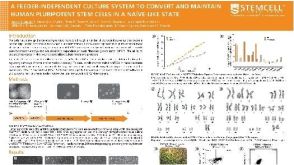 科学海报A Feeder-Independent Culture System to Convert and Maintain Human Pluripotent Stem Cells in a Naïve-Like State
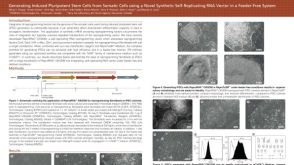 科学海报Generating iPSCs from Somatic Cells using a Novel Synthetic Self-Replicating RNA Vector in a Feeder-Free System
 沪公网安备31010102008431号