Sammar M et al. (JUL 1994)
International immunology 6 7 1027--36
Heat-stable antigen (CD24) as ligand for mouse P-selectin.
Heat-stable antigen (HSA)/CD24 is a cell surface molecule expressed by many cell types in the mouse. The molecule has an unusual structure because of its small protein core and extensive glycosylation. In order to study the functional role of the HSA-associated glycoconjugates we have isolated different forms of HSA. Using lectin analysis we provide evidence for extensive heterogeneity in carbohydrate composition and sialic acid linkage. Several HSA forms were recognized by mouse P-selectin-IgG but not E-selectin-IgG in ELISA. As expected,P-selectin-IgG also bound to L2/HNK-1-positive neural glycoproteins (L2-glycoproteins) and sulfatides but not to gangliosides and other control glycoproteins. The binding of P-selectin-IgG to L2-glycoproteins and HSA required bivalent cations. The reactivity to HSA was sensitive to sialidase treatment whereas the binding to L2-glycoproteins was not. Studies with alpha 2-6 sialytransferase indicated that alpha 2-6 linked sialic acid was not involved in the P-selectin binding to HSA. Surprisingly,an L2/HNK-1 specific antibody was found to cross-react with some HSA glycoforms and its binding correlated with P-selectin-IgG reactivity. L2/HNK-1-positive or L2/HNK-1-negative HSA glycoforms were also analyzed after coating to polystyrene beads. Only the L2/HNK-1-positive HSA coated beads were reactive with P-selectin-IgG and could bind to activated bend3 endothelioma cells expressing P-selectin whereas the L2/HNK-1-negative HSA beads did not. It is suggested that in its L2/HNK-1 modified form the HSA molecule on leukocytes could represent a ligand for P-selectin on endothelial cells or platelets.
View Publication
产品类型:
产品号#:
01434
产品名:
Wognum AW et al. (OCT 1990)
Blood 76 7 1323--9
A specific in vitro bioassay for measuring erythropoietin levels in human serum and plasma.
The accurate measurement of biologically active erythropoietin (Ep) in human serum and plasma using present in vivo and in vitro bioassays is difficult because of the presence of both inhibitors and non-Ep stimulators of erythropoiesis. We have developed a simple procedure to quantitatively purify Ep from serum and plasma for subsequent testing in the phenylhydrazine-treated mouse spleen cell assay. The method involves absorption of Ep to an immobilized high-affinity anti-Ep monoclonal antibody and acid elution of the antibody-bound material. After neutralization,the eluted EP is then tested directly in the in vitro bioassay without interference by other serum proteins. By using magnetic beads as a solid support for the antibody,washing and elution steps can be performed rapidly and efficiently. Recoveries of Ep after this procedure show very little sample-to-sample variation and are consistently between 45% and 55%,which is close to the maximum binding expected for the anti-Ep antibody. Coupled with the 7.4-fold concentration that this procedure affords,there is an overall increase in sensitivity of three- to fourfold,which makes this assay suitable for accurately measuring Ep levels in patients with below-average titers. Results with this magnetic bead assay indicate that accurate and reproducible estimates for Ep levels in the serum and plasma from healthy donors as well as from patients with hematologic disorders can be obtained. Titers of biologically active Ep in the sera from a group of patients with either leukemia or lymphoma were found to be elevated,and the values correlated well with titers of immunoreactive Ep measured in the Ep radioimmunoassay. Because of its specificity and high sensitivity,the magnetic bead assay is a valuable alternative to immunoassays for the measurement of elevated,normal,and even subnormal Ep levels in human serum and plasma.
View Publication
Bruserud O et al. (DEC 2000)
Journal of hematotherapy & stem cell research 9 6 923--32
In vitro culture of human acute myelogenous leukemia (AML) cells in serum-free media: studies of native AML blasts and AML cell lines.
The functional characteristics were compared for acute myelogenous leukemia (AML) cells (native blasts and AML cell lines) cultured in three serum-free media (X-vivo 10,X-vivo 15,[Bio-Whitacker,Walkersville,MD] and StemSpan [Stem Cell Technologies,Vancouver,BC,Canada]) and in medium containing 10% inactivated fetal calf serum (FCS). For native AML blasts the following functions were compared: (1) autonomous and cytokine-dependent proliferation; (2) frequency of clonogenic cell; and (3) constitutive cytokine secretion. AML blast proliferation differed between patients independent of the culture medium used,and clonogenic cells were maintained after in vitro culture in all media. In contrast,constitutive cytokine secretion was higher for cells cultured in StemSpan and FCS-containing medium than for cells cultured in the X-vivo media. Native AML blasts incubated in StemSpan also showed a low frequency of apoptotic cells. The three serum-free media could also be used for long-term expansion of well-characterized AML cell lines,but the optimal medium for cell expansion and cytokine secretion differed between cell lines. We conclude that standardized serum-free culture conditions can be used for in vitro studies of native AML blasts and AML cell lines.
View Publication
Bryja V et al. ( 2006)
Nature protocols 1 4 2082--2087
Derivation of mouse embryonic stem cells.
Here we describe a simple and efficient protocol for derivation of germline chimera-competent mouse embryonic stem cells (mESCs) from embryonic day 3.5 (E3.5) blastocysts. The protocol involves the use of early-passage mouse embryonic fibroblast feeders (MEF) and the alternation of fetal bovine serum- and serum replacement (SR)-containing media. As compared to other available protocols for mESCs derivation,our protocol differs in the combination of commercial availability of all reagents,technical simplicity and high efficiency. mESC lines are derived with approximately 50% efficiency (50 independent mESC lines derived from 96 blastocysts). We believe that this protocol could be a good starting point for (i) setting up the derivation of mESC lines in a laboratory and (ii) incorporating further steps to improve efficiency or adapt the protocol to other applications. The whole process (from blastocyst extraction to the freezing of mESC line) usually takes between 15 and 20 d.
View Publication
产品类型:
产品号#:
73272
73274
100-1048
产品名:
丝裂霉素C
丝裂霉素C
Kang M and Han Y-M (APR 2014)
PloS one 9 4 e94888
Differentiation of human pluripotent stem cells into nephron progenitor cells in a serum and feeder free system.
OBJECTIVES Kidney disease is emerging as a critical medical problem worldwide. Because of limited treatment options for the damaged kidney,stem cell treatment is becoming an alternative therapeutic approach. Of many possible human stem cell sources,pluripotent stem cells are most attractive due to their self-renewal and pluripotent capacity. However,little is known about the derivation of renal lineage cells from human pluripotent stem cells (hPSCs). In this study,we developed a novel protocol for differentiation of nephron progenitor cells (NPCs) from hPSCs in a serum- and feeder-free system. MATERIALS AND METHODS We designed step-wise protocols for differentiation of human pluripotent stem cells toward primitive streak,intermediate mesoderm and NPCs by recapitulating normal nephrogenesis. Expression of key marker genes was examined by RT-PCR,real time RT-PCR and immunocytochemistry. Each experiment was independently performed three times to confirm its reproducibility. RESULTS After modification of culture period and concentration of exogenous factors,hPSCs can differentiate into NPCs that markedly express specific marker genes such as SIX2,GDNF,HOXD11,WT1 and CITED1 in addition to OSR1,PAX2,SALL1 and EYA1. Moreover,NPCs possess the potential of bidirectional differentiation into both renal tubular epithelial cells and glomerular podocytes in defined culture conditions. In particular,approximately 70% of SYN-positive cells were obtained from hPSC-derived NPCs after podocytes induction. NPCs can also form in vitro tubule-like structures in three dimensional culture systems. CONCLUSIONS Our novel protocol for hPSCs differentiation into NPCs can be useful for producing alternative sources of cell replacement therapy and disease modeling for human kidney diseases.
View Publication
产品类型:
产品号#:
05850
05857
05870
05875
85850
85857
85870
85875
产品名:
mTeSR™1
mTeSR™1
Chang M-YY et al. (NOV 2015)
Stem cell research 15 3 608--613
Doxycycline supplementation allows for the culture of human ESCs/iPSCs with media changes at 3-day intervals.
Culturing human embryonic stem and induced pluripotent stem cells (hESCs/iPSCs) is one of the most costly and labor-intensive tissue cultures,as media containing expensive factors/cytokines should be changed every day to maintain and propagate undifferentiated hESCs/iPSCs in vitro. We recently reported that doxycycline,an anti-bacterial agent,had dramatic effects on hESC/iPSC survival and promoted self-renewal. In this study,we extended the effects of doxycycline to a more practical issue to save cost and labor in hESC/iPSC cultures. Regardless of cultured cell conditions,hESCs/iPSCs in doxycycline-supplemented media were viable and proliferating for at least 3 days without media change,while none or few viable cells were detected in the absence of doxycycline in the same conditions. Thus,hESCs/iPSCs supplemented with doxycycline can be cultured for a long period of time with media changes at 3-day intervals without altering their self-renewal and pluripotent properties,indicating that doxycycline supplementation can reduce the frequency of media changes and the amount of media required by 1/3. These findings strongly encourage the use of doxycycline to save cost and labor in culturing hESCs/iPSCs.
View Publication


 EasySep™小鼠TIL(CD45)正选试剂盒






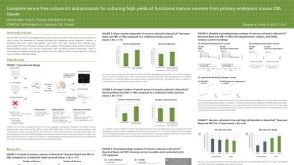 科学海报Complete Serum-Free Culture Kit and Protocols for Culturing High Yields of Functional Mature Neurons from Primary Embryonic Mouse CNS Tissues
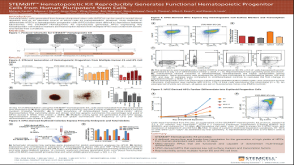 科学海报STEMdiff™ Hematopoietic Kit Reproducibly Generates Functional Hematopoietic Progenitor Cells from Human Pluripotent Stem Cells

 沪公网安备31010102008431号