Bhattacharyya S and Khanduja KL (APR 2010)
Acta biochimica et biophysica Sinica 42 4 237--42
New hope in the horizon: cancer stem cells.
The major goal of researchers and oncologists is to develop promising ground for novel therapeutic strategies to prevent recurrence or relapse of cancer. Recent evidences suggest that a subset of cells called cancer stem cells (CSCs) are present within the tumor mass which possess tumorigenic capacity and may be responsible for propagation,relapse,and metastatic dissemination. These cells have certain stem cell-like properties,e.g. quiescence,selfrenewal,asymmetric division,and multidrug resistance which allow them to drive tumor growth and evade conventional therapies. A number of markers and assays have been designed to isolate and characterize the CSC population from the bulk tumor. The objective now is to selectively target the CSCs in order to eliminate the tumor from root,overcoming the emergence of clones capable of evading traditional therapy. This approach may help in increasing the overall disease-free survival in some cancers.
View Publication
产品类型:
产品号#:
01700
01705
01702
产品名:
ALDEFLUOR™ 试剂盒
ALDEFLUOR™ DEAB试剂, 1.5 mM, 1 mL
ALDEFLUOR™检测缓冲液
Chen S et al. (JAN 2004)
Journal of the American Chemical Society 126 2 410--1
Dedifferentiation of lineage-committed cells by a small molecule.
Combinatorial libraries were screened for molecules that induce mouse myogenic lineage committed cells to dedifferentiate in vitro. A 2,6-disubstituted purine,reversine,was discovered that induces lineage reversal of C2C12 cells to become multipotent progenitor cells which can redifferentiate into osteoblasts and adipocytes. This and other such molecules are likely to provide new insights into the molecular mechanisms that control cellular dedifferentiation and may ultimately be useful to in vivo stem cell biology and therapy.
View Publication
产品类型:
产品号#:
72612
72614
产品名:
逆转素(Reversine)
逆转素(Reversine)
Chen S et al. (JUN 2007)
Proceedings of the National Academy of Sciences of the United States of America 104 25 10482--7
Reversine increases the plasticity of lineage-committed mammalian cells.
Previously,a small molecule,reversine,was identified that reverses lineage-committed murine myoblasts to a more primitive multipotent state. Here,we show that reversine can increase the plasticity of C2C12 myoblasts at the single-cell level and that reversine-treated cells gain the ability to differentiate into osteoblasts and adipocytes under lineage-specific inducing conditions. Moreover,reversine is active in multiple cell types,including 3T3E1 osteoblasts and human primary skeletal myoblasts. Biochemical and cellular experiments suggest that reversine functions as a dual inhibitor of nonmuscle myosin II heavy chain and MEK1,and that both activities are required for reversine's effect. Inhibition of MEK1 and nonmuscle myosin II heavy chain results in altered cell cycle and changes in histone acetylation status,but other factors also may contribute to the activity of reversine,including activation of the PI3K signaling pathway.
View Publication
Naive embryonic stem cells hold great promise for research and therapeutics as they have broad and robust developmental potential. While such cells are readily derived from mouse blastocysts it has not been possible to isolate human equivalents easily,although human naive-like cells have been artificially generated (rather than extracted) by coercion of human primed embryonic stem cells by modifying culture conditions or through transgenic modification. Here we show that a sub-population within cultures of human embryonic stem cells (hESCs) and induced pluripotent stem cells (hiPSCs) manifests key properties of naive state cells. These naive-like cells can be genetically tagged,and are associated with elevated transcription of HERVH,a primate-specific endogenous retrovirus. HERVH elements provide functional binding sites for a combination of naive pluripotency transcription factors,including LBP9,recently recognized as relevant to naivety in mice. LBP9-HERVH drives hESC-specific alternative and chimaeric transcripts,including pluripotency-modulating long non-coding RNAs. Disruption of LBP9,HERVH and HERVH-derived transcripts compromises self-renewal. These observations define HERVH expression as a hallmark of naive-like hESCs,and establish novel primate-specific transcriptional circuitry regulating pluripotency.
View Publication
产品类型:
产品号#:
05850
05857
05870
05875
85850
85857
85870
85875
产品名:
mTeSR™1
mTeSR™1
Zhou T et al. (JUL 2011)
Journal of the American Society of Nephrology : JASN 22 7 1221--1228
Generation of induced pluripotent stem cells from urine
Forced expression of selected transcription factors can transform somatic cells into embryonic stem cell (ESC)-like cells,termed induced pluripotent stem cells (iPSCs). There is no consensus regarding the preferred tissue from which to harvest donor cells for reprogramming into iPSCs,and some donor cell types may be more prone than others to accumulation of epigenetic imprints and somatic cell mutations. Here,we present a simple,reproducible,noninvasive method for generating human iPSCs from renal tubular cells present in urine. This procedure eliminates many problems associated with other protocols,and the resulting iPSCs display an excellent ability to differentiate. These data suggest that urine may be a preferred source for generating iPSCs.
View Publication
产品类型:
产品号#:
05850
05857
05870
05875
05920
85850
85857
85870
85875
产品名:
mTeSR™1
mTeSR™1
Wu X et al. (JAN 2018)
Cell 172 3 423--438.e25
Intrinsic Immunity Shapes Viral Resistance of Stem Cells.
Stem cells are highly resistant to viral infection compared to their differentiated progeny; however,the mechanism is mysterious. Here,we analyzed gene expression in mammalian stem cells and cells at various stages of differentiation. We find that,conserved across species,stem cells express a subset of genes previously classified as interferon (IFN) stimulated genes (ISGs) but that expression is intrinsic,as stem cells are refractory to interferon. This intrinsic ISG expression varies in a cell-type-specific manner,and many ISGs decrease upon differentiation,at which time cells become IFN responsive,allowing induction of a broad spectrum of ISGs by IFN signaling. Importantly,we show that intrinsically expressed ISGs protect stem cells against viral infection. We demonstrate the in vivo importance of intrinsic ISG expression for protecting stem cells and their differentiation potential during viral infection. These findings have intriguing implications for understanding stem cell biology and the evolution of pathogen resistance.
View Publication
Orellana DI et al. (OCT 2016)
EMBO molecular medicine 8 10 1197--1211
Coenzyme A corrects pathological defects in human neurons of PANK2-associated neurodegeneration.
Pantothenate kinase-associated neurodegeneration (PKAN) is an early onset and severely disabling neurodegenerative disease for which no therapy is available. PKAN is caused by mutations in PANK2,which encodes for the mitochondrial enzyme pantothenate kinase 2. Its function is to catalyze the first limiting step of Coenzyme A (CoA) biosynthesis. We generated induced pluripotent stem cells from PKAN patients and showed that their derived neurons exhibited premature death,increased ROS production,mitochondrial dysfunctions-including impairment of mitochondrial iron-dependent biosynthesis-and major membrane excitability defects. CoA supplementation prevented neuronal death and ROS formation by restoring mitochondrial and neuronal functionality. Our findings provide direct evidence that PANK2 malfunctioning is responsible for abnormal phenotypes in human neuronal cells and indicate CoA treatment as a possible therapeutic intervention.
View Publication
产品类型:
产品号#:
05850
05857
05870
05875
05872
05873
85850
85857
85870
85875
100-0483
100-0484
产品名:
mTeSR™1
mTeSR™1
Hausser Scientificᵀᴹ 明线血球计数板
ReLeSR™
Litvinov SV et al. (APR 1994)
The Journal of cell biology 125 2 437--46
Ep-CAM: a human epithelial antigen is a homophilic cell-cell adhesion molecule.
The epithelial glycoprotein 40 (EGP40,also known as GA733-2,ESA,KSA,and the 17-1A antigen),encoded by the GA-733-2 gene,is expressed on the baso-lateral cell surface in most human simple epithelia. The protein is also expressed in the vast majority of carcinomas and has attracted attention as a tumor marker. The function of the protein is unknown. We demonstrate here that EGP40 is an epithelium-specific intercellular adhesion molecule. The molecule mediates,in a Ca(2+)-independent manner,a homophilic cell-cell adhesion of murine cells transfected with the complete EGP40 cDNA. Two murine cell lines were tested for the effects of EGP40 expression: fibroblastic L cells and dedifferentiated mammary carcinoma L153S cells. The expression of the EGP40 protein causes morphological changes in cultures of transfected cells--increasing intercellular adhesion of the transfectants--and has a clear effect on cell aggregating behavior in suspension aggregation assays. EGP40 directs sorting in mixed cell populations,in particular,causes segregation of the transfectants from the corresponding parental cells. EGP40 expression suppresses invasive colony growth of L cells in EHS-matrigel providing tight adhesions between cells in growing colonies. EGP40 can thus be considered a new member of the intercellular adhesion molecules. In its biological behavior EGP40 resembles to some extent the molecules of the immunoglobulin superfamily of cell adhesion molecules (CAMs),although no immunoglobulin-like repeats are present in the EGP40 molecule. Certain structural similarities in general organization of the molecule exist between EGP40 and the lin-12/Notch proteins. A possible role of this adhesion molecule in formation of architecture of epithelial tissues is discussed. To reflect the function of the molecule the name Ep-CAM for EGP40 seems appropriate.
View Publication
产品类型:
产品号#:
01420
01421
产品名:
Ingersoll MA et al. (JAN 2010)
Blood 115 3 e10--9
Comparison of gene expression profiles between human and mouse monocyte subsets.
Blood of both humans and mice contains 2 main monocyte subsets. Here,we investigated the extent of their similarity using a microarray approach. Approximately 270 genes in humans and 550 genes in mice were differentially expressed between subsets by 2-fold or more. More than 130 of these gene expression differences were conserved between mouse and human monocyte subsets. We confirmed numerous of these differences at the cell surface protein level. Despite overall conservation,some molecules were conversely expressed between the 2 species' subsets,including CD36,CD9,and TREM-1. Other differences included a prominent peroxisome proliferator-activated receptor gamma (PPARgamma) signature in mouse monocytes,which is absent in humans,and strikingly opposed patterns of receptors involved in uptake of apoptotic cells and other phagocytic cargo between human and mouse monocyte subsets. Thus,whereas human and mouse monocyte subsets are far more broadly conserved than currently recognized,important differences between the species deserve consideration when models of human disease are studied in mice.
View Publication
产品类型:
产品号#:
15028
15068
产品名:
RosetteSep™人单核细胞富集抗体混合物
RosetteSep™人单核细胞富集抗体混合物
Kumagai H et al. (MAY 2013)
Biochemical and Biophysical Research Communications 434 4 710--716
Identification of small molecules that promote human embryonic stem cell self-renewal
Human embryonic stem cells (hESCs) and induced pluripotent cells have the potential to provide an unlimited source of tissues for regenerative medicine. For this purpose,development of defined/xeno-free culture systems under feeder-free conditions is essential for the expansion of hESCs. Most defined/xeno-free media for the culture of hESCs contain basic fibroblast growth factor (bFGF). Therefore,bFGF is thought to have an almost essential role for the expansion of hESCs in an undifferentiated state. Here,we report identification of small molecules,some of which were neurotransmitter antagonists (trimipramine and ethopropazine),which promote long-term hESC self-renewal without bFGF in the medium. The hESCs maintained high expression levels of pluripotency markers,had a normal karyotype after 20 passages,and could differentiate into all three germ layers. ?? 2013 Elsevier Inc.
View Publication


 EasySep™小鼠TIL(CD45)正选试剂盒





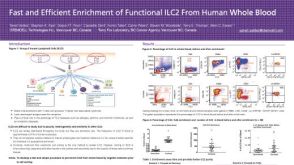 科学海报Fast and Efficient Enrichment of Functional ILC2 From Human Whole Blood

 沪公网安备31010102008431号