Akhmetshina A et al. ( 2008)
FASEB journal : official publication of the Federation of American Societies for Experimental Biology 22 7 2214--2222
Dual inhibition of c-abl and PDGF receptor signaling by dasatinib and nilotinib for the treatment of dermal fibrosis.
Abelson kinase (c-abl) and platelet-derived growth factor (PDGF) are key players in the pathogenesis of systemic sclerosis (SSc). The aim of the present study was to evaluate the antifibrotic potential of dasatinib and nilotinib,2 novel inhibitors of c-abl and PDGF,which are well tolerated and have recently been approved. Dasatinib and nilotinib dose-dependently reduced the mRNA and protein levels of extracellular matrix proteins in human stimulated dermal fibroblasts from SSc patients (IC(50) of 0.5-2.0 nM for dasatinib and 0.8-2.5 nM for nilotinib). In a mouse model of bleomycin-induced dermal fibrosis,dasatinib and nilotinib potently reduced the dermal thickness,the number of myofibroblasts,and the collagen content of the skin in a dose-dependent manner at well-tolerated doses. These data indicate that dasatinib and nilotinib potently inhibit the synthesis of extracellular matrix in vitro and in vivo at biologically relevant concentrations. Thus,we provide the first evidence that dasatinib and nilotinib might be promising drugs for the treatment of patients with SSc.
View Publication
产品类型:
产品号#:
73082
73084
产品名:
达沙替尼
达沙替尼
Aliahmad P et al. (OCT 2010)
Nature immunology 11 10 945--52
Shared dependence on the DNA-binding factor TOX for the development of lymphoid tissue-inducer cell and NK cell lineages.
TOX is a DNA-binding factor required for development of CD4(+) T cells,natural killer T cells and regulatory T cells. Here we document that both natural killer (NK) cell development and lymphoid tissue organogenesis were also inhibited in the absence of TOX. We found that the development of lymphoid tissue-inducer cells,a rare subset of specialized cells that has an integral role in lymphoid tissue organogenesis,required TOX. Tox was upregulated considerably in immature NK cells in the bone marrow,consistent with the loss of mature NK cells in the absence of this nuclear protein. Thus,many cell lineages of the immune system share a TOX-dependent step for development.
View Publication
产品类型:
产品号#:
19756
19756RF
产品名:
M. G. Poulos et al. (Mar 2024)
Stem Cell Reviews and Reports 20 4
Complementary and Inducible creER T2 Mouse Models for Functional Evaluation of Endothelial Cell Subtypes in the Bone Marrow
In the adult bone marrow (BM),endothelial cells (ECs) are an integral component of the hematopoietic stem cell (HSC)-supportive niche,which modulates HSC activity by producing secreted and membrane-bound paracrine signals. Within the BM,distinct vascular arteriole,transitional,and sinusoidal EC subtypes display unique paracrine expression profiles and create anatomically-discrete microenvironments. However,the relative contributions of vascular endothelial subtypes in supporting hematopoiesis is unclear. Moreover,constitutive expression and off-target activity of currently available endothelial-specific and endothelial-subtype-specific murine cre lines potentially confound data analysis and interpretation. To address this,we describe two tamoxifen-inducible cre -expressing lines,Vegfr3-creER T2 and Cx40-creER T2,that efficiently label sinusoidal/transitional and arteriole endothelium respectively in adult marrow,without off-target activity in hematopoietic or perivascular cells. Utilizing an established mouse model in which cre -dependent recombination constitutively-activates MAPK signaling within adult endothelium,we identify arteriole ECs as the driver of MAPK-mediated hematopoietic dysfunction. These results define complementary tamoxifen-inducible creER T2 -expressing mouse lines that label functionally-discrete and non-overlapping sinusoidal/transitional and arteriole EC populations in the adult BM,providing a robust toolset to investigate the differential contributions of vascular subtypes in maintaining hematopoietic homeostasis. The online version contains supplementary material available at 10.1007/s12015-024-10703-9.
View Publication
产品类型:
产品号#:
03434
03444
产品名:
MethoCult™ GF M3434
MethoCult™ GF M3434
J. S. Z. Lee et al. (May 2025)
Scientific Reports 15
Transition from manual to automated processes for autologous T cell therapy manufacturing using bioreactor with expandable culture area
Transition from the manual processes that are performed during the initial research and development (R&D) stage to automated processes for later and commercial stage cell therapy manufacturing can be challenging. It often requires significant effort,time,and costs – which hinders the therapy’s access to the clinic. To ease this transition,we have developed a novel and flexible manufacturing platform,Bioreactor with Expandable Culture Area (BECA),that aims to support both R&D and manufacturing to accelerate cell therapies from bench to bedside. This report introduces two models in this manufacturing platform: BECA-S for manual small-scale operation at R&D phase and BECA-Auto for functionally closed and automated scaled-out operation at manufacturing phase. We employed these two models to streamline transition of the T cell culture process from manual to automated and reported insignificant differences in the culture outcome between the two. Our work represents the first detailed development and demonstration of a standalone cell manufacturing platform that facilitates a seamless transition between manual and automated processing for autologous T cell therapy manufacturing.
View Publication
产品类型:
产品号#:
100-0784
10971
10991
产品名:
ImmunoCult™ 人CD3/CD28 T细胞激活剂
ImmunoCult™ 人CD3/CD28 T细胞激活剂
ImmunoCult™ 人CD3/CD28 T细胞激活剂
M. Kono et al. ( 2022)
Oncoimmunology 11 1 2021619
Immunomodulation via FGFR inhibition augments FGFR1 targeting T-cell based antitumor immunotherapy for head and neck squamous cell carcinoma.
Fibroblast growth factor receptor 1 (FGFR1) is overexpressed in multiple types of solid tumors,including head and neck squamous cell carcinoma (HNSCC). Being associated with poor prognosis,FGFR1 is a potential therapeutic target for aggressive tumors. T cell-based cancer immunotherapy has played a central role in novel cancer treatments. However,the potential of antitumor immunotherapy targeting FGFR1 has not been investigated. Here,we showed that FGFR-tyrosine kinase inhibitors (TKIs) augmented antitumor effects of immune checkpoint inhibitors in an HNSCC mouse model and upregulated tumoral MHC class I and MHC class II expression in vivo and in vitro. This upregulation was associated with the mitogen-activated protein kinase signaling pathway,which is a crucial pathway for cancer development through FGFR signaling. Moreover,we identified an FGFR1-derived peptide epitope (FGFR1305-319) that could elicit antigen-reactive and multiple HLA-restricted CD4+ T cell responses. These T cells showed direct cytotoxicity against tumor cells that expressed FGFR1. Notably,FGFR-TKIs augmented antitumor effects of FGFR1-reactive T cells against human HNSCC cells. These results indicate that the combination of FGFR-TKIs with immunotherapy,such as an FGFR1-targeting peptide vaccine or immune checkpoint inhibitor,could be a novel and robust immunologic approach for treating patients with FGFR1-expressing cancer cells.
View Publication
产品类型:
产品号#:
17952
17952RF
100-0696
产品名:
EasySep™人CD4+ T细胞分选试剂盒
RoboSep™ 人CD4+ T细胞分选试剂盒
EasySep™人CD4+ T细胞分离试剂盒
Norman JM et al. (OCT 2011)
Nature immunology 12 10 975--83
The antiviral factor APOBEC3G enhances the recognition of HIV-infected primary T cells by natural killer cells.
APOBEC3G (A3G) is an intrinsic antiviral factor that inhibits the replication of human immunodeficiency virus (HIV) by deaminating cytidine residues to uridine. This causes guanosine-to-adenosine hypermutation in the opposite strand and results in inactivation of the virus. HIV counteracts A3G through the activity of viral infectivity factor (Vif),which promotes degradation of A3G. We report that viral protein R (Vpr),which interacts with a uracil glycosylase,also counteracted A3G by diminishing the incorporation of uridine. However,this process resulted in activation of the DNA-damage–response pathway and the expression of natural killer (NK) cell–activating ligands. Our results show that pathogen-induced deamination of cytidine and the DNA-damage response to virus-mediated repair of the incorporation of uridine enhance the recognition of HIV-infected cells by NK cells.
View Publication
产品类型:
产品号#:
17755
产品名:
Harris MA et al. (DEC 2008)
Cancer research 68 24 10051--9
Cancer stem cells are enriched in the side population cells in a mouse model of glioma.
The recent identification of cancer stem cells (CSCs) in multiple human cancers provides a new inroad to understanding tumorigenesis at the cellular level. CSCs are defined by their characteristics of self-renewal,multipotentiality,and tumor initiation upon transplantation. By testing for these defining characteristics,we provide evidence for the existence of CSCs in a transgenic mouse model of glioma,S100beta-verbB;Trp53. In this glioma model,CSCs are enriched in the side population (SP) cells. These SP cells have enhanced tumor-initiating capacity,self-renewal,and multipotentiality compared with non-SP cells from the same tumors. Furthermore,gene expression analysis comparing fluorescence-activated cell sorting-sorted cancer SP cells to non-SP cancer cells and normal neural SP cells identified 45 candidate genes that are differentially expressed in glioma stem cells. We validated the expression of two genes from this list (S100a4 and S100a6) in primary mouse gliomas and human glioma samples. Analyses of xenografted human glioblastoma multiforme cell lines and primary human glioma tissues show that S100A4 and S100A6 are expressed in a small subset of cancer cells and that their abundance is positively correlated to tumor grade. In conclusion,this study shows that CSCs exist in a mouse glioma model,suggesting that this model can be used to study the molecular and cellular characteristics of CSCs in vivo and to further test the CSC hypothesis.
View Publication
产品类型:
产品号#:
05703
05704
产品名:
NeuroCult™ 分化添加物(小鼠和大鼠)
NeuroCult™ 分化试剂盒(小鼠和大鼠)
Lian RH et al. (MAY 2002)
Journal of immunology (Baltimore,Md. : 1950) 168 10 4980--7
Orderly and nonstochastic acquisition of CD94/NKG2 receptors by developing NK cells derived from embryonic stem cells in vitro.
In mice there are two families of MHC class I-specific receptors,namely the Ly49 and CD94/NKG2 receptors. The latter receptors recognize the nonclassical MHC class I Qa-1(b) and are thought to be responsible for the recognition of missing-self and the maintenance of self-tolerance of fetal and neonatal NK cells that do not express Ly49. Currently,how NK cells acquire individual CD94/NKG2 receptors during their development is not known. In this study,we have established a multistep culture method to induce differentiation of embryonic stem (ES) cells into the NK cell lineage and examined the acquisition of CD94/NKG2 by NK cells as they differentiate from ES cells in vitro. ES-derived NK (ES-NK) cells express NK cell-associated proteins and they kill certain tumor cell lines as well as MHC class I-deficient lymphoblasts. They express CD94/NKG2 heterodimers,but not Ly49 molecules,and their cytotoxicity is inhibited by Qa-1(b) on target cells. Using RT-PCR analysis,we also report that the acquisition of these individual receptor gene expressions during different stages of differentiation from ES cells to NK cells follows a predetermined order,with their order of acquisition being first CD94; subsequently NKG2D,NKG2A,and NKG2E; and finally,NKG2C. Single-cell RT-PCR showed coexpression of CD94 and NKG2 genes in most ES-NK cells,and flow cytometric analysis also detected CD94/NKG2 on most ES-NK cells,suggesting that the acquisition of these receptors by ES-NK cells in vitro is nonstochastic,orderly,and cumulative.
View Publication
产品类型:
产品号#:
06902
06952
00321
00322
00323
00324
00325
产品名:
Frazer-Abel AA et al. (NOV 2004)
The Journal of pharmacology and experimental therapeutics 311 2 758--69
Nicotine activates nuclear factor of activated T cells c2 (NFATc2) and prevents cell cycle entry in T cells.
We used primary peripheral blood T cells,a population that exists in G(0) and can be stimulated to enter the cell cycle synchronously,to define more precisely the effects of nicotine on pathways that control cell cycle entry and progression. Our data show that nicotine decreased the ability of T cells to transit through the G(0)/G(1) boundary (acquire competence) and respond to progression signals. These effects were due to nuclear factor of activated T cells c2 (NFATc2)-dependent repression of cyclin-dependent kinase 4 (CDK4) expression. Growth arrest at the G(0)/G(1) boundary was further enforced by inhibition of cyclin D2 expression and by increased expression and stabilization of p27Kip1. Intriguingly,T cells from habitual users of tobacco products and from NFATc2-deficient mice constitutively expressed CDK4 and were resistant to the antiproliferative effects of nicotine. These results indicate that nicotine impairs T cell cycle entry through NFATc2-dependent mechanisms and suggest that,in the face of chronic nicotine exposure,selection may favor cells that can evade these effects. We postulate that cross talk between nicotinic acetylcholine receptors and growth factor receptor-activated pathways offers a novel mechanism by which nicotine may directly impinge on cell cycle progression. This offers insight into possible reasons that underlie the unique effects of nicotine on distinct cell types and identifies new targets that may be useful control tobacco-related diseases.
View Publication
产品类型:
产品号#:
19751
19751RF
产品名:
Wang X et al. (JUL 2013)
mAbs 5 4 540--4
Generation and characterization of a unique reagent that recognizes a panel of recombinant human monoclonal antibody therapeutics in the presence of endogenous human IgG
Pharmacokinetic (PK) and immunohistochemistry (IHC) assays are essential to the evaluation of the safety and efficacy of therapeutic monoclonal antibodies (mAb) during drug development. These methods require reagents with a high degree of specificity because low concentrations of therapeutic antibody need to be detected in samples containing high concentrations of endogenous human immunoglobulins. Current assay reagent generation practices are labor-intensive and time-consuming. Moreover,these practices are molecule-specific and so only support one assay for one program at a time. Here,we describe a strategy to generate a unique assay reagent,10C4,that preferentially recognizes a panel of recombinant human mAbs over endogenous human immunoglobulins. This panel-specific" feature enables the reagent to be used in PK and IHC assays for multiple structurally-related therapeutic mAbs. Characterization revealed that the 10C4 epitope is conformational�
View Publication
Development of a primary human co-culture model of inflamed airway mucosa
Neutrophil breach of the mucosal surface is a common pathological consequence of infection. We present an advanced co-culture model to explore neutrophil transepithelial migration utilizing airway mucosal barriers differentiated from primary human airway basal cells and examined by advanced imaging. Human airway basal cells were differentiated and cultured at air-liquid interface (ALI) on the underside of 3 μm pore-sized transwells,compatible with the study of transmigrating neutrophils. Inverted ALIs exhibit beating cilia and mucus production,consistent with conventional ALIs,as visualized by micro-optical coherence tomography (μOCT). μOCT is a recently developed imaging modality with the capacity for real time two- A nd three-dimensional analysis of cellular events in marked detail,including neutrophil transmigratory dynamics. Further,the newly devised and imaged primary co-culture model recapitulates key molecular mechanisms that underlie bacteria-induced neutrophil transepithelial migration previously characterized using cell line-based models. Neutrophils respond to imposed chemotactic gradients,and migrate in response to Pseudomonas aeruginosa infection of primary ALI barriers through a hepoxilin A3-directed mechanism. This primary cell-based co-culture system combined with μOCT imaging offers significant opportunity to probe,in great detail,micro-anatomical and mechanistic features of bacteria-induced neutrophil transepithelial migration and other important immunological and physiological processes at the mucosal surface.
View Publication


 EasySep™小鼠TIL(CD45)正选试剂盒





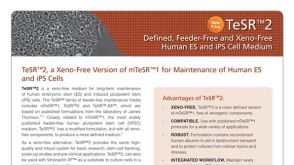 产品手册TeSR™2 Defined Feeder-Free and Xeno-Free Human ES and iPS Cell Medium
 沪公网安备31010102008431号