Targeting PRDX1 impairs acute myeloid leukemic blasts and stem cells by disrupting redox homeostasis
Acute myeloid leukemia (AML) is an aggressive hematologic malignancy with a poor prognosis and limited therapeutic options. Leukemic stem cells (LSCs),which drive disease progression and confer resistance to therapy,pose a significant challenge to conventional treatment strategies. In this study,we identified and characterized the inhibitory mechanisms of TH37,a small molecule derived from traditional Chinese medicine,which selectively targets AML blasts and LSCs. Our analyses identified peroxiredoxin 1 (PRDX1),an enzyme that catalyzes the breakdown of hydrogen peroxide (a reactive oxygen species),as the primary molecular target of TH37. We demonstrated that TH37 directly interacts with PRDX1,inhibiting its enzymatic activity and thereby elevating intracellular reactive oxygen species levels in AML cells. PRDX1 was found to be overexpressed in AML,and its expression correlated with poor prognosis and the activation of AML- and cancer-associated pathways. Targeting PRDX1,either through lentiviral short-hairpin RNA-mediated silencing or TH37 treatment,induced apoptosis,reduced colony formation,and impaired the engraftment and growth of AML cells in immunodeficient mouse models. Furthermore,TH37 synergized with conventional chemotherapeutic agent to significantly reduce the viability and colony-forming capacity of AML cells. These findings demonstrate the critical role of PRDX1 in AML pathogenesis and highlight its potential as a key therapeutic target to improve clinical outcomes for AML patients.
View Publication
产品类型:
产品号#:
100-1569
17856
17856RF
产品名:
EasySep™人CD34正选试剂盒 II
EasySep™人CD34正选试剂盒 II
EasySep™人CD34正选试剂盒 II
S. Peltonen et al. (Nov 2024)
Fluids and Barriers of the CNS 21 1
Mutated LRRK2 induces a reactive phenotype and alters migration in human iPSC-derived pericyte-like cells
Pericytes play a crucial role in controlling inflammation and vascular functions in the central nervous system,which are disrupted in Parkinson’s disease (PD). Still,there is a lack of studies on the impact of pericytes on neurodegenerative diseases,and their involvement in the pathology of PD is unclear. Our objective was to investigate the molecular and functional differences between healthy pericytes and pericytes with the LRRK2 G2019S mutation,which is one of the most common mutations associated with PD. Our study employed pericyte-like cells obtained from induced pluripotent stem cells produced from PD patients with the LRRK2 G2019S mutation as well as from healthy individuals. We examined the gene expression profiles of the cells and analyzed how the alterations reflect on their functionality. We have shown differences in the expression of genes related to inflammation and angiogenesis. Furthermore,we observe modified migration speed in PD pericyte-like cells as well as enhanced secretion of inflammatory mediators,such as soluble VCAM-1 and MCP-1,in these pericyte-like cells following exposure to proinflammatory stimuli. In summary,our findings support the notion that pericytes play a role in the inflammatory and vascular changes observed in PD. Further investigation of pericytes could provide valuable insight into understanding the pathogenesis of PD. The online version contains supplementary material available at 10.1186/s12987-024-00592-y.
View Publication
产品类型:
产品号#:
05270
05275
产品名:
STEMdiff™ APEL™2 培养基
STEMdiff™ APEL™2 培养基
O. Drummond-Guy et al. (Mar 2025)
Frontiers in Oncology 15
Polysialic acid is upregulated on activated immune cells and negatively regulates anticancer immune activity
Suppression of anticancer immune function is a key driver of tumorigenesis. Identifying molecular pathways that inhibit anticancer immunity is critical for developing novel immunotherapeutics. One such molecule that has recently been identified is the carbohydrate polysialic acid (polySia),whose expression is dramatically upregulated on both cancer cells and immune cells in breast cancer patient tissues. The role of polySia in the anticancer immune response,however,remains incompletely understood. In this study,we profile polySia expression on both healthy primary immune cells and on infiltrating immune cells in the tumour microenvironment (TME). These studies reveal polySia expression on multiple immune cell subsets in patient breast tumors. We find that stimulation of primary T-cells and macrophages in vitro induces a significant upregulation of polySia expression. We subsequently show that polySia is appended to a range of different carrier proteins within these immune cells. Finally,we find that selective removal of polySia can significantly potentiate killing of breast cancer cells by innate immune cells. These studies implicate polySia as a significant negative regulator of anticancer immunity.
View Publication
产品类型:
产品号#:
100-0956
10981
产品名:
ImmunoCult™ XF培养基
ImmunoCult™ XF 人T细胞扩增培养基,500 mL
E. Keltsch et al. (Jul 2025)
Immunity & Ageing : I & A 22 6
Aging modulates the immunosuppressive, polarizing and metabolic functions of blood-derived myeloid-derived suppressor cells (MDSCs)
Immunosenescence describes the gradual remodeling of immune responses,leading to disturbed immune homeostasis and increased susceptibility of older adults for infections,neoplasia and autoimmunity. Decline in cellular immunity is associated with intrinsic changes in the T cell compartment,but can be further pushed by age-related changes in cells regulating T cell immunity. Myeloid-derived suppressor cells (MDSCs) are potent inhibitors of T cell activation and function,whose induction requires chronic inflammation. Since aging is associated with low grade inflammation (inflammaging) and increased myelopoiesis,age-induced changes in MDSC induction and function in relation to T cell immunity were analyzed. MDSC numbers and functions were compared between “healthy” young and old adults,who were negatively diagnosed for severe acute and chronic diseases known to induce MDSC accumulation. MDSCs were either isolated from peripheral blood or generated in vitro from blood-derived CD14 cells. Aging was associated with significantly increased MDSC numbers in the monocytic- (M-) and polymorphonuclear (PMN-) MDSC subpopulations. MDSCs could be induced more efficiently from CD14 cells of old donors and these MDSCs inhibited CD3/28-induced T cell proliferation significantly better than MDSCs induced from young donors. Serum factors of old donors supported MDSC induction comparable to serum factors from young donors,but increased immunosuppressive activity of MDSCs was only achieved by serum from old donors. Elevated immunosuppressive activity of MDSCs from old donors was associated with major metabolic changes and increased intracellular levels of neutral and oxidized lipids known to promote immunosuppressive functions. Independent of age,MDSC-mediated suppression of T cell proliferation required direct MDSC– T cell contact. Besides their increased ability to inhibit activation-induced T cell proliferation,MDSCs from old donors strongly shift the immune response towards Th2 immunity and might thereby further contribute to impaired cell-mediated immunity during aging. These results indicate that immunosenescence of innate immunity comprises accumulation and functional changes in the MDSC compartment,which directly impacts T cell functions and contribute to age-associated impaired T cell immunity. Targeting MDSCs during aging might help to maintain functional T cell responses and increase the chance of healthy aging. The online version contains supplementary material available at 10.1186/s12979-025-00524-w.
View Publication
产品类型:
产品号#:
15028
15068
产品名:
RosetteSep™人单核细胞富集抗体混合物
RosetteSep™人单核细胞富集抗体混合物
A. D. D. Lima et al. (Jun 2025)
Cells 14 13
Regulatory T Cells Boost Efficacy of Post-Infarction Pluripotent Stem Cell-Derived Cardiovascular Progenitor Cell Transplants
Cell therapy is promising for heart failure treatment,with growing interest in cardiovascular progenitor cells (CPCs) from pluripotent stem cells. A major challenge is managing the immune response,due to their allogeneic source. Regulatory T cells (Treg) offer an alternative to pharmacological immunosuppression by inducing immune tolerance. This study assesses whether Treg therapy can mitigate the xeno-immune response,improving cardiac outcomes in a mouse model of human CPC intramyocardial transplantation. CPCs stimulated immune responses in allogeneic and xenogeneic settings,causing proliferation in T cell subsets. Tregs showed immunosuppressive effects on T lymphocyte populations when co-cultured with CPCs. Post infarction,CPCs were transplanted intramyocardially into an immune-competent mouse model 3 weeks after myocardial infarction. Human or murine Tregs were intravenously administered on transplantation day and three days later. Control groups received CPCs without Tregs or saline (PBS). CPCs with Tregs improved LV systolic function in three weeks,linked to reduced myocardial fibrosis and enhanced angiogenesis. This was accompanied by decreased splenocyte NK cell populations and pro-inflammatory cytokine levels in cardiac tissue. Treg therapy with CPC transplantation enhances cardiac functional and structural outcomes in mice. Though it does not directly avert graft rejection,it primarily affects NKG2D+ cytotoxic cells,indicating systemic immune modulation and remote heart repair benefits.
View Publication
Treating activated regulatory T cells with pramipexole protects human dopaminergic neurons from 6?OHDA?induced degeneration
AbstractBackgroundParkinson's disease (PD) is a chronic neurodegenerative disorder characterized by the loss of dopaminergic neurons in the substantia nigra,which promotes a sustained inflammatory environment in the central nervous system. Regulatory T cells (Tregs) play an important role in the control of inflammation and might play a neuroprotective role. Indeed,a decrease in Treg number and function has been reported in PD. In this context,pramipexole,a dopaminergic receptor agonist used to treat PD symptoms,has been shown to increase peripheral levels of Treg cells and improve their suppressive function. The aim of this work was to determine the effect of pramipexole on immunoregulatory Treg cells and its possible neuroprotective effect on human dopaminergic neurons differentiated from human embryonic stem cells.MethodsTreg cells were sorted from white blood cells of healthy human donors. Assays were performed with CD3/CD28?activated and non?activated Treg cells treated with pramipexole at concentrations of 2 or 200 ng/mL. These regulatory cells were co?cultured with in vitro?differentiated human dopaminergic neurons in a cytotoxicity assay with 6?hydroxydopamine (6?OHDA). The role of interleukin?10 (IL?10) was investigated by co?culturing activated IL?10?producing Treg cells with neurons. To further investigate the effect of treatment on Tregs,gene expression in pramipexole?treated,CD3/CD28?activated Treg cells was determined by Fluidigm analysis.ResultsPramipexole?treated CD3/CD28?activated Treg cells showed significant protective effects on dopaminergic neurons when challenged with 6?OHDA. Pramipexole?treated activated Treg cells showed neuroprotective capacity through mechanisms involving IL?10 release and the activation of genes associated with regulation and neuroprotection.ConclusionAnti?CD3/CD28?activated Treg cells protect dopaminergic neurons against 6?OHDA?induced damage. In addition,activated,IL?10?producing,pramipexole?treated Tregs also induced a neuroprotective effect,and the supernatants of these co?cultures promoted axonal growth. Pramipexole?treated,activated Tregs altered their gene expression in a concentration?dependent manner,and enhanced TGF??related dopamine receptor regulation and immune?related pathways. These findings open new perspectives for the development of immunomodulatory therapies for the treatment of PD. Pramipexole?treated,activated regulatory T cells protect dopaminergic neurons against 6 OHDA damage and promote primary neurite length. This could be due to the production of the regulatory cytokine IL?10 and an increased expression of genes related to regulation and neuroprotection.
View Publication
产品类型:
产品号#:
100-0784
10971
10991
15022
15062
85850
85857
产品名:
ImmunoCult™ 人CD3/CD28 T细胞激活剂
ImmunoCult™ 人CD3/CD28 T细胞激活剂
ImmunoCult™ 人CD3/CD28 T细胞激活剂
RosetteSep™人CD4+ T细胞富集抗体混合物
RosetteSep™人CD4+ T细胞富集抗体混合物
mTeSR™1
mTeSR™1
(Dec 2024)
Stem Cell Research & Therapy 15 15
Matrix-free human lung organoids derived from induced pluripotent stem cells to model lung injury
BackgroundOrganoids,as near-physiological 3D culture systems,offer new opportunities to study the pathogenesis of various organs in mimicking the cellular complexity and functionality of human organs.MethodHere we used a quite simple and very practicable method to successfully generate induced pluripotent stem cell (iPSC)-derived human lung organoids (LuOrg) in a matrix-free manner as an alternative to the widely used preclinical mouse models in order to investigate normal lung damage in detail and as close as possible to the patient. We performed detailed morphological and molecular analyses,including bulk and single cell RNA sequencing,of generated lung organoids and evaluated the quality and robustness of our model as a potential in vitro platform for lung diseases,namely radiation-induced lung injury.ResultsA matrix-free method for differentiation of iPSCs can be used to obtain lung organoids that morphologically reflect the target tissue of the human lung very well,especially with regard to the cellular composition. The different cellular fates were investigated following the genotoxic stress induced by radiation and revealed further insights in the radiation-sensitivity of the different lung cells. Finally,we provide cellular gene sets found to be induced in the different lung organoid cellular subsets after irradiation,which could be used as additional RT response and particularly senescence gene sets in future studies.ConclusionBy establishing these free-floating LuOrgs for the investigation of cancer therapeutic approaches as a new and patient-oriented in vitro platform particularly in experimental radiooncology,not only a reduction in the number of experimental animals,but also an adequately and meaningfully replacement of corresponding animal experiments can be achieved.
View Publication
产品类型:
产品号#:
85850
85857
产品名:
mTeSR™1
mTeSR™1
(Nov 2024)
Nature Communications 15
The nutrient-sensing Rag-GTPase complex in B cells controls humoral immunity via TFEB/TFE3-dependent mitochondrial fitness
Germinal center (GC) formation,which is an integrant part of humoral immunity,involves energy-consuming metabolic reprogramming. Rag-GTPases are known to signal amino acid availability to cellular pathways that regulate nutrient distribution such as the mechanistic target of rapamycin complex 1 (mTORC1) pathway and the transcription factors TFEB and TFE3. However,the contribution of these factors to humoral immunity remains undefined. Here,we show that B cell-intrinsic Rag-GTPases are critical for the development and activation of B cells. RagA/RagB deficient B cells fail to form GCs,produce antibodies,and to generate plasmablasts during both T-dependent (TD) and T-independent (TI) humoral immune responses. Deletion of RagA/RagB in GC B cells leads to abnormal dark zone (DZ) to light zone (LZ) ratio and reduced affinity maturation. Mechanistically,the Rag-GTPase complex constrains TFEB/TFE3 activity to prevent mitophagy dysregulation and maintain mitochondrial fitness in B cells,which are independent of canonical mTORC1 activation. TFEB/TFE3 deletion restores B cell development,GC formation in Peyer’s patches and TI humoral immunity,but not TD humoral immunity in the absence of Rag-GTPases. Collectively,our data establish the Rag GTPase-TFEB/TFE3 pathway as a likely mTORC1 independent mechanism to coordinating nutrient sensing and mitochondrial metabolism in B cells. Rag-GTPases play roles in sensing nutrient availability,and it is not fully known how they contribute to energy-consuming immunological processes such as the B cell response. Here authors show that genomic deletion fo RagA/RagB distrupts both T-dependent and T-independent humoral immune responses,independent of mechanistic target of rapamycin complex 1 but involving the transcription factors TFEB and TFE3.
View Publication
J. Gibo et al. (jan 2005)
Laboratory investigation; a journal of technical methods and pathology 85 1 75--89
Camostat mesilate attenuates pancreatic fibrosis via inhibition of monocytes and pancreatic stellate cells activity.
Camostat mesilate (CM),an oral protease inhibitor,has been used clinically for the treatment of chronic pancreatitis in Japan. However,the mechanism by which it operates has not been fully understood. Our aim was to evaluate the therapeutic efficacy of CM in the experimental pancreatic fibrosis model induced by dibutyltin dichloride (DBTC),and we also determined the effect of CM on isolated monocytes and panceatic stellate cells (PSCs). In vivo,chronic pancreatitis was induced in male Lewis rats by single administration of 7 mg/kg DBTC and a special diet containing 1 mg/g CM was fed to the DBTC+CM-treated group from day 7,while the DBTC-treated group rats were fed a standard diet. At days 0,7,14 and 28,the severity of pancreatitis and fibrosis was examined histologically and enzymologically in both groups. In vitro,monocytes were isolated from the spleen of a Lewis rat,and activated with lipopolysaccharide stimulation. Thereafter,the effect of CM on monocyte chemoattractant protein-1 (MCP-1) and tumor necrosis factor-alpha (TNF-alpha) production from monocytes was examined. Subsequently,cultured rat PSCs were exposed to CM and tested to see whether their proliferation,MCP-1 production and procollagen alpha1 messenger RNA expression was influenced by CM. In vivo,the oral administration of CM inhibited inflammation,cytokines expression and fibrosis in the pancreas. The in vitro study revealed that CM inhibited both MCP-1 and TNF-alpha production from monocytes,and proliferation and MCP-1 production from PSCs. However,procollagen alpha1 expression in PSCs was not influenced by CM. These results suggest that CM attenuated DBTC-induced rat pancreatic fibrosis via inhibition of monocytes and PSCs activity.
View Publication
产品类型:
产品号#:
100-0552
产品名:
Z. Liu et al. (oct 2020)
Developmental cell 55 2 224--236.e6
Super-Resolution Microscopy and FIB-SEM Imaging Reveal Parental Centriole-Derived, Hybrid Cilium in Mammalian Multiciliated Cells.
Motile cilia are cellular beating machines that play a critical role in mucociliary clearance,cerebrospinal fluid movement,and fertility. In the airways,hundreds of motile cilia present on the surface of a multiciliated epithelia cell beat coordinately to protect the epithelium from bacteria,viruses,and harmful particulates. During multiciliated cell differentiation,motile cilia are templated from basal bodies,each extending a basal foot-an appendage linking motile cilia together to ensure coordinated beating. Here,we demonstrate that among the many motile cilia of a multiciliated cell,a hybrid cilium with structural features of both primary and motile cilia is harbored. The hybrid cilium is conserved in mammalian multiciliated cells,originates from parental centrioles,and its cellular position is biased and dependent on ciliary beating. Furthermore,we show that the hybrid cilium emerges independently of other motile cilia and functions in regulating basal body alignment.
View Publication


 EasySep™小鼠TIL(CD45)正选试剂盒





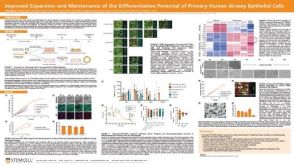 科学海报Improved Expansion and Maintenance of the Differentiation Potential of Primary Human Airway Epithelial Cells

 沪公网安备31010102008431号